
The Edit · Founder Insights
Will Lifting Heavy Make Me Bulky? The Myth-Busting Science Guide for Women and Runners
No, lifting heavy will not make you bulky. The hypertrophy that creates a visibly larger physique requires three conditions that the typical woman, runner, or executive lifting twice a week is not meeting. Here is the science, the female physiology, the runner's calorie-balance reality, and the Catalyst training prescription that produces strength without size gain.
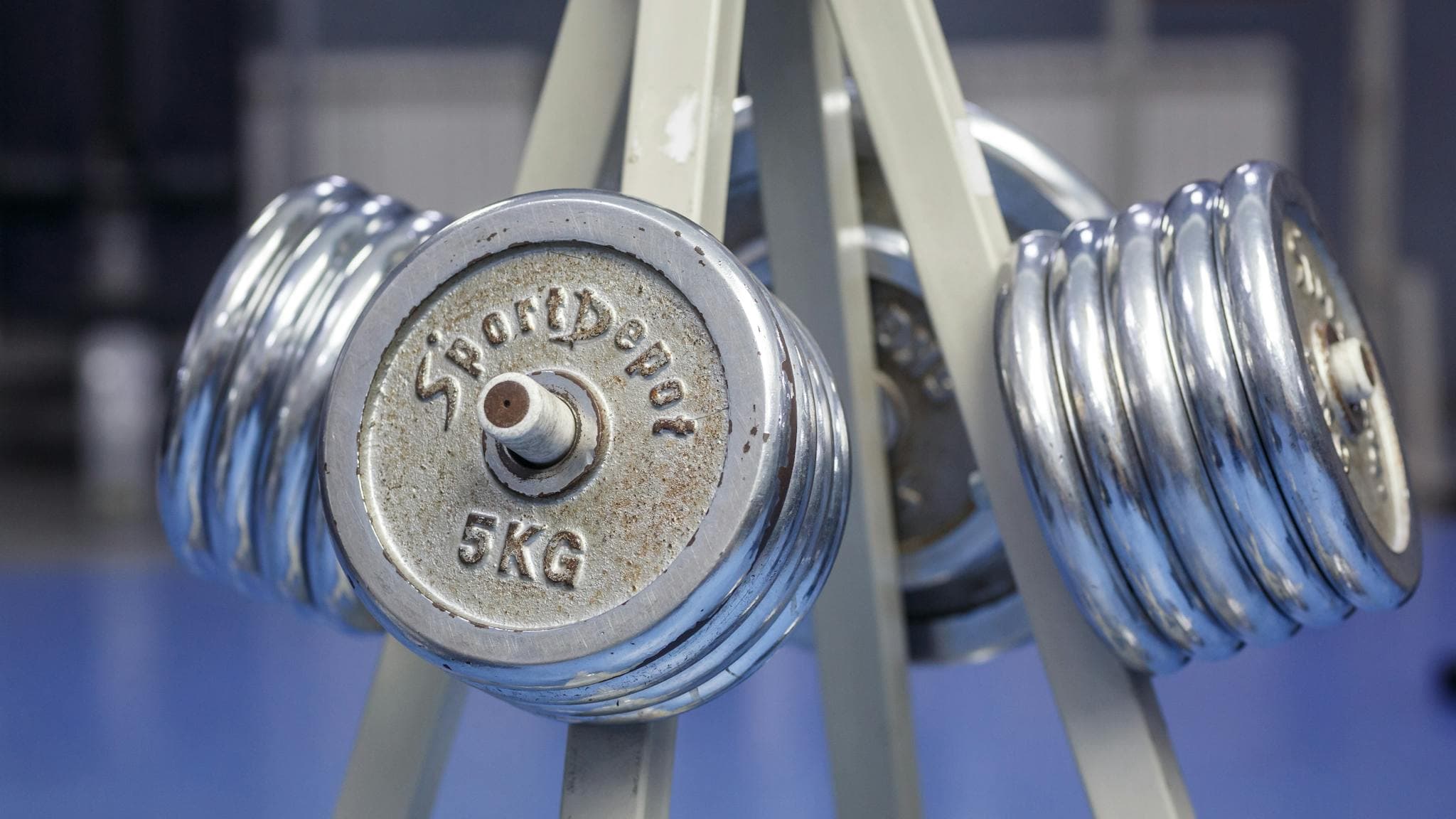
No, lifting heavy will not make you bulky. The hypertrophy that produces a visibly larger physique requires three conditions that the typical woman, runner, or executive lifting twice a week is not meeting. You need a sustained calorie surplus of 250 to 500 kcal per day, weekly training volume of 12 to 20 hard sets per muscle group at hypertrophy rep ranges, and a hormonal environment that supports it (high testosterone, sufficient growth hormone, adequate recovery). Heavy strength training in the 3 to 6 rep range, two to three times a week, on maintenance calories, produces measurable gains in strength, bone density, and metabolic health, with negligible change to clothing size. The "long lean" physique most women and runners say they want is actually the look of a moderately strength-trained body at a healthy body fat percentage. The training that gets you there is the training you have been avoiding.
TL;DR
- Hypertrophy needs three conditions stacked: calorie surplus, hypertrophy-specific volume, and a hormonal environment that supports it. Heavy strength training on its own meets none of those.
- Women have 10 to 30 times less testosterone than men, capping the rate of cross-sectional muscle growth at roughly half what is possible for men over the same training period.
- Runners cannot gain meaningful size while running 25-plus km per week. Concurrent endurance training blunts the molecular signal for hypertrophy (Wilson et al., 2012), and running burns the calorie surplus that hypertrophy requires.
- "Heavy" in our sense is 3 to 6 reps at RPE 8 to 9, twice a week. "Bodybuilding pump" is 8 to 15 reps for 12 to 20 sets per muscle group per week with a calorie surplus, deliberately. The two protocols are not the same thing.
- Catalyst's typical female client over 12 to 24 weeks of heavy strength work gains 4 to 8 percent in deadlift and squat, drops 2 to 4 percent body fat, gains Skeletal Muscle Index, and stays in the same dress size.
Quick-reference table
| # | The belief | The reality | What actually happens |
|---|---|---|---|
| 1 | "Lifting heavy makes you bulky" | Hypertrophy needs three conditions: surplus calories, hypertrophy-specific volume, supportive hormones | Heavy strength work on maintenance calories builds strength and bone, not size |
| 2 | "Women will get bulky like men" | Women have 10 to 30 times less testosterone | Visible muscle gain in women is ~50 percent of male rates over the same period |
| 3 | "Heavy weights are dangerous for women" | The 3 to 6 rep range is the most form-controlled, neurologically efficient rep range | Lower injury rate than high-rep hypertrophy training (Schoenfeld et al., 2017) |
| 4 | "Running and lifting both make me bigger" | Concurrent running blunts the hypertrophy signal (interference effect) | Running 25+ km/week effectively caps hypertrophy |
| 5 | "I want long lean muscles, not bulky ones" | Muscle shape is genetic; "long lean" is a body fat percentage, not a training style | Heavy strength + moderate calorie intake produces the "lean" aesthetic |
| 6 | "Lifting twice a week will change my body shape in 8 weeks" | Visible size change requires 16-plus weeks of dedicated hypertrophy + surplus | First 12 weeks of heavy training is mostly neural, not muscular |
| 7 | "I will lose my running pace if I lift heavy" | Heavy strength training improves running economy by 4 to 8 percent | Faster, not slower, at the same heart rate (Beattie et al., 2014) |
| 8 | "Pilates and yoga are enough for strength" | Bodyweight + light-resistance work cannot drive Type II fibre adaptation past month three | Strength stalls; bone density gains plateau without progressive overload |
The "lifting heavy will make me bulky" belief is one of the most persistent reasons women, runners, and longevity-focused executives stay away from the training they would benefit from most. It is also one of the easiest beliefs to debunk with peer-reviewed evidence, and yet it survives because the alternative recommendation, more cardio and lighter weights, is easier to sell. The result is a generation of women in their thirties and forties walking into Singapore studios with low bone density, declining grip strength, and worsening Skeletal Muscle Index numbers, all of which are reversible with the training they have been told to avoid.
The science is unambiguous. The resistance-training evidence base (Schoenfeld et al., 2017; ACSM, 2018) is clear that for visible cross-sectional muscle growth a person needs to accumulate 10 to 20 hard sets per muscle group per week, in the 6 to 15 rep range, with the total daily calorie intake exceeding the daily energy expenditure by 200 to 500 kcal, for a minimum of 12 to 16 weeks. Two heavy strength sessions per week at 3 to 6 reps on maintenance calories meets approximately zero of those conditions. What it does produce is a 15 to 40 percent improvement in maximal strength, a 1 to 3 percent gain in bone mineral density per year for women over 40 (Watson et al., 2018), and a measurable improvement in the Body Composition pillar of the Catalyst Healthspan Assessment, with no change in clothing size.
The female physiology side of the question is similarly settled. Women have circulating testosterone levels of 15 to 70 ng/dL compared to the male range of 280 to 1,100 ng/dL (Endocrine Society Clinical Practice Guideline, 2018). That hormonal environment caps the rate of cross-sectional area gain in women at roughly half the male rate over an identical training and nutrition stimulus. The "I will get big like a bodybuilder" fear is biologically implausible without exogenous hormones or, at minimum, several years of dedicated hypertrophy training on a deliberate calorie surplus. Most women who claim they have grown bigger from lifting are describing the temporary muscle swelling (sarcoplasmic engorgement plus glycogen-bound water) that subsides within 48 hours of stopping the training, which is not size gain in any biologically meaningful sense.
The runner side is the third common worry, and the answer is that running is mechanically and metabolically incompatible with accidental size gain. Runners covering 25-plus km per week burn the calorie surplus hypertrophy requires, and the molecular signalling cascade for endurance adaptation (AMPK, PGC-1α) directly blunts the cascade for muscle growth (mTOR, S6K1), an effect known as concurrent training interference (Wilson et al., 2012, Journal of Strength and Conditioning Research). The cardiovascular and orthopaedic benefits of adding heavy strength to a running programme are substantial; the size gain is functionally zero. Jeremy, who has run 25-plus marathons and three HYROX podiums while squatting and deadlifting heavy, looks like a marathon runner, not a powerlifter, because the running constrains the hypertrophy ceiling regardless of how hard he lifts.
What follows is the seven-item breakdown of why each piece of the myth fails, the body composition data from our female Catalyst clients, and the training prescription that produces strength, bone density, and the body shape most women say they want without producing visible size gain. The post closes with the FAQ that captures the questions Bervin and Dr Luqman Haris get every week from the women and runners walking into the studio for the first time.
1. Hypertrophy requires three conditions, and heavy lifting alone meets none of them
Visible muscle growth (the kind that changes how you look in a fitted shirt) is a specific physiological event, not a generic response to "lifting weights." For the cross-sectional area of a muscle to measurably increase, three independent conditions have to stack at the same time. Volume, surplus, and hormonal environment. Each one is necessary; none is sufficient. Two strength sessions per week at heavy loads meet at most one.
The first condition is hypertrophy-specific weekly training volume. The dose-response literature (Schoenfeld, Ogborn, and Krieger, 2017, Journal of Sports Sciences) is clear that visible size gain requires roughly 10 to 20 hard sets per muscle group per week, performed in the 6 to 15 rep range at RPE 7 to 9. Two heavy strength sessions of compound lifts (squat, deadlift, press, row) at 3 to 5 reps deliver roughly 4 to 6 hard sets per muscle group per week, in a rep range that biases neural adaptation over hypertrophy. The session is doing entirely different physiological work.
The second condition is sustained calorie surplus. A muscle cannot be built out of nothing; the substrate has to come from food. The protein synthesis literature (Phillips and Van Loon, 2011, Journal of Sports Sciences) consistently shows that net positive muscle protein balance over 24 hours requires 1.6 to 2.2 grams of protein per kilogram of bodyweight, distributed across 3 to 4 feeding occasions, on top of a daily energy intake that exceeds expenditure by 200 to 500 kcal. Women and runners on maintenance or slight-deficit calories (the typical pattern for Singapore clients managing weight or training for an endurance event) simply do not provide the substrate for size gain regardless of how hard the strength session is.
The third condition is the hormonal environment. Testosterone, growth hormone, insulin-like growth factor 1, and circulating cortisol all participate in the anabolic versus catabolic balance that decides whether protein synthesis exceeds protein breakdown across the day. Women with normal physiology, runners with chronically elevated cortisol from endurance training, and adults in chronic energy deficit all sit in a hormonal environment that biases toward maintenance or modest gain, not visible hypertrophy. The hormonal environment that produces a visibly larger physique is the one bodybuilders deliberately engineer through diet, training, and (in some cases) pharmacology. It does not happen by accident from twice-weekly heavy strength training.
What heavy strength training on maintenance calories DOES produce is a different set of adaptations. Increased neural drive (your brain learns to recruit more motor units in the same muscle), increased tendon stiffness and connective tissue quality, increased bone mineral density (1 to 3 percent per year for women over 40, Watson et al., 2018), and improved insulin sensitivity. Those changes register on a DEXA scan as a small uptick in lean mass (typically 1 to 2 kg over 16 weeks) and a meaningful drop in visceral fat. They register on a tape measure as essentially no change. They register on a 4-Pillar Assessment as a substantial improvement in the Strength and Body Composition pillars.
Do it yourself
Strength training builds the exact shape most people are after, and it is a programme you can run. The Muscle + Fat Loss Protocol is the 12-week plan our coaches use, medically reviewed by Dr Luqman Haris, MBBS, with every lift on video.
2. Why female physiology caps the rate of size gain at roughly half the male rate
The hormonal floor that drives visible muscle growth in men sits 10 to 30 times higher than in women. Adult males have circulating total testosterone in the range of 280 to 1,100 ng/dL; adult females are in the 15 to 70 ng/dL range (Endocrine Society Clinical Practice Guideline, 2018). That hormonal gap is the single largest physiological reason men gain visible size faster than women on an identical training and nutrition protocol.
The data is consistent across the resistance-training literature. Meta-analyses of long-term resistance-training studies in untrained adults show that men gain cross-sectional muscle area at roughly twice the rate of women over 12 to 24 weeks of identical training (Roberts et al., 2020, Journal of Strength and Conditioning Research). The absolute strength gain in women is large in percentage terms (often 40 to 60 percent in the first 6 months), but the size-of-muscle change is much smaller. The strength gain comes overwhelmingly from neural adaptation in the first 12 weeks; the muscle-size component only becomes a meaningful contributor after the neural adaptation plateaus, at which point the rate of size gain in women slows further because the hormonal environment is not biased toward continued hypertrophy.
What this means for the woman walking into a Singapore studio in her thirties or forties is straightforward. You will get stronger, sometimes dramatically. Your deadlift will go from 30 kg to 80 kg over 16 to 24 weeks; your squat from 20 kg to 60 kg; your overhead press will double. Your bone mineral density will improve, your grip strength will climb, your posture will visibly straighten. Your dress size will, in most cases, stay the same or drop by one (because the small lean-mass gain is more than offset by fat loss, particularly visceral fat). Your clothes will fit differently. Your waist-to-height ratio will drop. None of that is visible size gain.
The few women who genuinely add visible muscle size at a rate that surprises them are usually doing one of three things. Eating in a deliberate calorie surplus while training 4 to 5 times a week at hypertrophy-specific volume; training under specialist guidance with a deliberate physique-development goal (bikini, figure, bodybuilding competition); or have a personal genetic profile that responds unusually well to resistance training (the "easy gainer" phenotype, which is rare in either sex). For everyone else, the rate of visible size change from twice-weekly heavy strength training is too slow to be a real concern over any reasonable timeframe.
We covered this directly on the female personal trainer page: there is a long marketing tradition in Singapore fitness of treating women's training as a categorically different protocol, lighter loads, more cardio, fewer compounds. The evidence does not support that pattern. Women respond to progressive resistance training the same way men do; the rate of cross-sectional area change is lower, and the strength gain is large in percentage terms. We programme the same compound lifts (squat, hinge, push, pull) for female members as we do for male members, with the load brackets set by the Movement Pattern Strength Assessment in the 4-Pillar Healthspan Assessment.
3. The interference effect: why runners cannot accidentally get big
Concurrent training, the practice of combining endurance work and resistance work in the same training block, has been studied since Hickson's 1980 paper in the European Journal of Applied Physiology established what is now known as the interference effect. The short version: high-volume endurance training blunts the molecular signal for muscle hypertrophy. The longer version is mechanistic and worth understanding because it is the reason runners cannot accidentally get bigger from adding a strength block.
Endurance training upregulates AMPK (5' AMP-activated protein kinase), which activates the PGC-1α pathway that drives mitochondrial biogenesis, fat oxidation enzyme expression, and slow-twitch fibre adaptation. The same AMPK signal directly inhibits the mTOR (mechanistic target of rapamycin) pathway that drives muscle protein synthesis and cross-sectional area growth (Wilson et al., 2012; Coffey and Hawley, 2017, Journal of Physiology). A runner covering 25-plus km per week, particularly with any tempo or interval volume, is signalling AMPK chronically, which directly compresses the hypertrophy window even when the strength sessions are programmed perfectly.
The empirical literature backs this up. Wilson et al.'s 2012 meta-analysis found that runners doing concurrent strength training gained roughly 50 percent less muscle size than matched controls doing strength training alone. They gained roughly the same strength (the neural adaptation is preserved), but the size component was substantially blunted. Runners doing more than 5 hours of endurance work per week showed almost no hypertrophy response to added resistance training, while still gaining strength and orthopaedic resilience.
This is why elite distance runners look like distance runners regardless of how hard they lift. Jeremy's squat and deadlift numbers would be respectable in a recreational powerlifting context, and he has run a sub-3-hour marathon. The two adaptations coexist; the size signal stays compressed because the running volume keeps AMPK chronically elevated. The same pattern holds for our HYROX-prep athletes, our half-marathon clients, and the executive runners who hit the strength floor twice a week between their morning Zone 2 sessions.
For runners specifically, the practical message is the inverse of the size-gain fear: you are not getting big from lifting because you cannot get big while running 25-plus km a week. What you are getting is the strength and tendon stiffness that improves your running economy by 4 to 8 percent (Beattie et al., 2014, Sports Medicine), faster Heart Rate Recovery from improved aerobic capacity, lower injury rate from balanced muscle development, and protection against the lean-mass loss that chronic endurance training otherwise produces. The Catalyst runners' programme typically pairs three runs (one long, one tempo or interval, one easy) with two strength sessions, and we have not seen a single client gain size from that pattern in five years of running it.
4. What "heavy" actually means in a strength programme
The word "heavy" is doing a lot of work in this conversation, and it is worth being precise. The "heavy" of a strength programme designed to build maximal strength, bone density, and neuromuscular efficiency is a specific prescription: 3 to 6 reps per set at RPE 8 to 9 (where 10 is the rep at which you would fail), 3 to 5 sets per compound lift, with 90 to 180 seconds of rest between sets, performed twice per week per movement pattern. That is the protocol that drives the strength and bone adaptations we want for healthspan, longevity, and the Catalyst Strength pillar.
The "heavy" of a bodybuilding hypertrophy programme is a different prescription entirely. It is 8 to 15 reps per set at RPE 7 to 9, 3 to 5 sets per exercise, 4 to 6 exercises per muscle group per session, performed 2 to 3 times per week per muscle group, on a sustained calorie surplus, for 16-plus weeks of dedicated training. The two protocols feel different in the gym, look different in a programming spreadsheet, and produce different physiological outcomes.
The confusion happens because both protocols use barbells and both produce post-session muscle soreness and short-term swelling. The actual muscle adaptation differs sharply. Three sets of five at 85 percent of your 1-rep max recruits high-threshold motor units, produces minimal metabolic stress, and drives neural and tendon adaptation. Four sets of twelve at 60 percent of your 1-rep max recruits a broader range of motor units, produces high metabolic stress (the "pump"), and drives sarcoplasmic and contractile protein synthesis. The first is the standard Catalyst prescription for women, runners, and longevity-focused executives. The second is the standard bodybuilding prescription. Both are legitimate; they produce different outcomes.
For a Catalyst woman or runner, the typical weekly structure is two strength sessions of 45 to 60 minutes each, built around the four foundational movement patterns: a hinge (deadlift, Romanian deadlift, or hip thrust), a squat (back squat, front squat, or split squat), a push (overhead press, bench, or dumbbell press), and a pull (chin-up, row, or pulldown). Loads are set from the Movement Pattern Strength Assessment baseline and progressed 2 to 5 percent per week for the first 16 weeks, then by perceived effort and Healthspan Report markers thereafter. The total weekly volume per muscle group lands in the 6 to 10 hard sets range, which is well below the hypertrophy threshold of 10 to 20 sets. This is by design.
We covered the dose-response curve for the strength training that actually changes longevity outcomes in three hours a week of real strength. The protocol does not need to be more than three hours per week, and it does not need to be in the hypertrophy rep range, to produce the strength and bone adaptations that protect you across the decades. More volume in the hypertrophy range is the bodybuilding pathway; it is a different choice with a different physiological outcome.
5. The body composition outcome of heavy lifting on a moderate calorie intake
The clearest way to answer "what will actually happen to my body if I lift heavy twice a week" is to look at the body composition trajectory of our typical female client across 12 to 24 weeks of training. The pattern is consistent enough that we can describe it with confidence.
In the first 12 weeks, the changes are mostly internal. Deadlift improves from a starting load of roughly 0.5 to 0.8 times bodyweight to 1.0 to 1.2 times bodyweight; squat improves from 0.4 to 0.6 to 0.8 to 1.0 times bodyweight; overhead press from 0.2 to 0.3 times bodyweight to 0.4 to 0.5 times bodyweight. Heart Rate Recovery typically improves by 4 to 8 beats per minute. Grip strength improves by 15 to 25 percent. The InBody (or, for our more diagnostically rigorous clients, the DEXA scan) shows a lean mass gain of 0.5 to 1.5 kg and a fat mass loss of 1 to 3 kg, depending on starting body composition and nutrition adherence. Clothing fit is the same or slightly looser; visible muscle definition increases at the shoulders and quadriceps.
In weeks 12 to 24, the pattern continues. Strength gains slow but persist (typically 3 to 5 percent per month rather than 8 to 10 percent per month in the early phase). Lean mass continues to creep up by 0.5 to 1 kg over the 12-week block. Body fat drops another 1 to 2 percent. The visible change is in posture and shoulder definition, not in dress size. The 6-month before-and-after photos we keep for clients (who consent to them) tend to show a similar bodyweight and clothing size, with a measurably different posture, narrower waist, and visibly stronger upper back. The Healthspan Score moves substantially (typically 1.0 to 1.5 points on the 10-point scale), driven by improvements across all four pillars.
What does NOT happen in any clinically meaningful way across this 24-week block is visible cross-sectional muscle size gain that would change clothing size upward. We have seen one or two women out of several hundred over the years who genuinely added size that surprised them; in each case, they were eating in a deliberate calorie surplus alongside the heavy lifting, often as part of a winter training block for a strength sport. For the typical client lifting twice a week on maintenance calories, the size change is below the threshold of perception over any reasonable timeframe.
The body composition outcome that most women describe as their goal, "I want to be leaner and stronger without getting bigger," is precisely what the heavy strength + moderate calorie protocol produces. The aesthetic is small waist, defined shoulders, visible quad sweep, no change in clothing size, dramatic improvement in posture, and a strength baseline that translates directly into independence and resilience across the decades. This is also the body composition profile that the Skeletal Muscle Index and waist-to-height ratio literature identifies as the lowest all-cause mortality range for women in midlife.
6. Why "long lean" is a body fat number, not a training style
The aesthetic that gets called "long and lean" in the Pilates and yoga marketing register is actually a specific body fat percentage at moderate muscle mass, achievable through any training modality that includes progressive resistance work plus moderate calorie management. Muscle shape is determined by your genetic muscle attachment points (the length of the muscle belly relative to the tendon), and you cannot meaningfully change muscle shape through training. You can change how much muscle and how much fat sits on top of that fixed muscle architecture.
The "long lean" look is most reliably produced by training that builds enough muscle to give the visible shape (firm shoulders, defined quadriceps, narrow waist, glute development) combined with a body fat percentage in the 19 to 24 percent range for women (Gallagher et al., 2000, American Journal of Clinical Nutrition, on healthy body fat reference ranges). What it is not produced by is bodyweight Pilates or yoga alone, which provide limited progressive overload past the first 3 to 6 months of practice and therefore cannot continue to drive the muscle development that the aesthetic requires.
The marketing claim that Pilates or yoga produces a "longer leaner" muscle than weight training is biomechanically false. The muscle belly cannot lengthen; the tendon cannot shorten; the resting length of a muscle is set by the anatomical insertion points. What Pilates and yoga DO produce is improved flexibility, improved postural awareness, and modest strength gains in the first 6 months of practice. They do not produce the bone density gain, the strength baseline, or the sustained body composition change that progressive resistance training produces. They can be excellent complements to a strength programme; they are not substitutes for one.
What the heavy strength + moderate nutrition stack produces is a body composition that, in our experience over five years of female clients, lands close to what most women describe as "long and lean" within 16 to 24 weeks. The waist becomes narrower because visceral fat drops and core stability improves. The shoulders become more defined because deltoids actually have visible mass. The quadriceps develop the sweep that produces the visible line from hip to knee. The glutes develop because they are progressively loaded in the squat and deadlift pattern. None of those changes increase clothing size; in most cases they reduce it by one.
The body composition data we see on InBody and DEXA scans across our female client base supports this directly. The clients who land closest to the "long lean" aesthetic they describe are the ones training heavy twice a week with one cardio session, eating in a 100 to 300 kcal deficit, sleeping 7-plus hours, and managing stress. The clients who stay further from that aesthetic are usually undertraining (bodyweight or light-dumbbell work only), under-eating in a way that drops lean mass alongside fat mass, or doing too much cardio relative to strength volume. The training prescription, not the body shape goal, is what matters; the goal takes care of itself.
7. When you WOULD gain visible size, and how to avoid it
For completeness, here is the bodybuilding protocol that DOES produce visible size gain, so you can recognise it and not do it by accident. It is a specific pattern with three independent components, and all three need to be present simultaneously.
First, training volume. Bodybuilding-style hypertrophy programmes typically prescribe 10 to 20 hard sets per muscle group per week, distributed across 2 to 3 sessions per week per muscle group. A typical bodybuilding leg day might include 4 sets of squats, 4 sets of leg press, 3 sets of Romanian deadlifts, 3 sets of leg curls, 3 sets of leg extensions, and 4 sets of calf raises, all in the 8 to 15 rep range at RPE 7 to 9. That is roughly 21 sets in a single session, and it would be repeated 2 days later for a second 21-set leg day. Two heavy strength sessions of 45 to 60 minutes per week across all major movement patterns is delivering perhaps 6 to 10 sets per muscle group, well below this threshold.
Second, sustained calorie surplus. Hypertrophy-focused training blocks typically prescribe a 250 to 500 kcal daily surplus for women (slightly higher for men), with deliberate carbohydrate intake around training (40 to 80 grams of carbohydrate within 90 minutes of the session) and protein intake of 1.8 to 2.2 grams per kilogram of bodyweight per day. This is a deliberate, tracked nutritional protocol that requires conscious calorie surplus. It does not happen by accident; most adult women in Singapore are eating at maintenance or slight deficit by default, which is the opposite of what hypertrophy requires.
Third, training experience and recovery capacity. Visible size gain in the first 12 weeks of resistance training is mostly water and glycogen, not actual muscle protein accumulation; the real cross-sectional area increase takes 16 to 24 weeks of dedicated work to become visually obvious. Most women considering a strength block are far below the training-age threshold where size gain becomes a real concern over a single block.
If you want to avoid accidental size gain (the reverse question to the one this article opens with), the prescription is straightforward. Cap weekly hard sets per muscle group at 8 to 10. Train in the 3 to 6 rep range two days per week, not the 8 to 15 rep range. Eat at maintenance or slight deficit (use an estimated daily energy expenditure calculator or the body composition number from your Healthspan Assessment as the baseline). Include 2 to 3 hours of cardiovascular work per week to maintain the AMPK signalling that suppresses hypertrophy. Sleep 7-plus hours per night to keep cortisol in the catabolic-favouring range during the day. Done.
For most readers, this is the prescription you are already accidentally following. The size-gain fear is the inverted version of a protocol you are not on. The real risk is the opposite direction: under-training relative to bone density, grip strength, and skeletal muscle index requirements, which is what shows up in the sarcopenia data and the four numbers that predict how well you will age.
How to programme strength training without size gain
The Catalyst prescription for women, runners, and longevity-focused executives who want strength, bone density, and metabolic improvements without size gain is consistent across the population. It is built off the data from the 4-Pillar Healthspan Assessment, and it shares a common structure regardless of the individual's starting baseline.
Two strength sessions per week of 45 to 60 minutes each, programmed around the four foundational movement patterns. A hinge (the deadlift or Romanian deadlift family), a squat (back squat, front squat, or split squat), a push (overhead press or bench press), and a pull (chin-up or row). Loads at 80 to 90 percent of your tested 1-rep max for sets of 3 to 5 reps; 3 to 5 working sets per lift; 90 to 180 seconds rest between sets. Progressive overload of 2.5 to 5 kg per fortnight in the early phase, then by perceived effort and Healthspan Report markers in the maintenance phase.
Cardio support: 2 to 3 sessions of Zone 2 work per week (40 to 60 minutes each), plus one optional HIIT session if the schedule allows. Running, cycling, or rowing all work; the choice is personal preference and joint history. We covered the optimal cardio windows for Singapore in our piece on the best time to run for fat loss.
Protein intake: 1.6 to 2.0 grams per kilogram of bodyweight per day, distributed across 3 to 4 feeding occasions, with at least 25 grams of leucine-rich protein within 90 minutes of the strength session. Total daily calories at maintenance or slight deficit (100 to 300 kcal below estimated expenditure), not surplus. This is the nutrition prescription that supports strength gain without driving hypertrophy. Our nutrition coaching integrates with the strength programme for clients who want the macronutrient targeting done for them.
Recovery: 7-plus hours of sleep, stress management of some kind (the parasympathetic-favouring practices, not more exercise), and one full rest day per week. Massage and recovery work as needed; the recovery programme integrates with the training block for clients who carry chronic tightness or are training for an event.
Where the prescription differs across populations: women over 50 and post-injury clients work through the over-50 programme and the post-injury programme respectively, which adjust the load progression and movement selection without changing the underlying structure. Runners follow the runners' programme, which integrates the strength work around the running calendar so the two adaptations support each other. Executives anchor their two weekly sessions around lunchtimes or early mornings out of our CBD studio. Clients with a back-pain history work through the rehab programme first, then transition to the standard strength prescription once the movement quality is restored.
Every client starts with the Catalyst Healthspan Assessment. Sixty minutes in studio, four pillars measured (Body Composition, Cardiorespiratory Fitness, Stability, Strength), and a printed Healthspan Report you keep regardless of whether you train with us. The data sets the load brackets, the progression schedule, and the priority order. We do not guess.
The body shape most women describe as their goal is precisely what heavy strength training on maintenance calories produces. The training you have been avoiding is the training that gets you there.
Frequently asked questions
Q. If I lift heavy will I get bulky?
No. Visible muscle size gain requires three conditions to stack at the same time: 10 to 20 hard sets per muscle group per week in the 6 to 15 rep range, a sustained 200 to 500 kcal daily calorie surplus, and a supportive hormonal environment, sustained for 16-plus weeks. Heavy strength training in the 3 to 6 rep range twice a week on maintenance calories meets approximately zero of those conditions. What it produces is strength, bone density, and metabolic improvement, with no meaningful change in clothing size.
Q. How often should women lift, and how heavy?
Twice a week, at loads in the 80 to 90 percent range of your tested 1-rep max, for sets of 3 to 6 reps, across the four foundational movement patterns (hinge, squat, push, pull). Total session length 45 to 60 minutes. This delivers the strength, bone density, and Body Composition improvements that the ACSM guidelines (2018) identify as the longevity dose. More than this in volume is the bodybuilding pathway; less than this is below the threshold for sustained adaptation.
Q. Can I lift heavy and run without affecting either?
Yes, and the combination is the most evidence-supported general training prescription for adults under 60. Heavy strength training improves running economy by 4 to 8 percent (Beattie et al., 2014), reduces injury rate, and protects lean mass during high-volume endurance blocks. The molecular interference effect (Wilson et al., 2012) blunts size gain from the strength work, which is a feature rather than a bug if your goal is not size gain. The Catalyst runners' programme typically pairs three runs per week with two strength sessions.
Q. Will I lose my running pace if I add heavy strength training?
No. The peer-reviewed literature on concurrent training in distance runners consistently shows that adding 2 to 3 strength sessions per week improves running economy (energy cost per unit distance), reduces injury rate, and either maintains or improves performance at distances from 5km to marathon (Berryman et al., 2018, International Journal of Sports Physiology and Performance). The runners who lose pace from adding strength work are usually doing too much volume or training too close to race events; structured periodisation around the race calendar prevents this. Jeremy programmes these blocks for our running clients.
Q. How soon will I see changes from heavy strength training?
Strength changes show in week 2 to 4 (the early neural adaptation is fast). Posture and visible shoulder definition show by week 8 to 12. Body composition changes on InBody or DEXA show by week 12 to 16. Bone density gains show on DEXA at the 6-month rescan. Heart Rate Recovery and Skeletal Muscle Index changes on the Healthspan Report show at the 16-week Checkpoint. The visible change in how clothes fit (which is what most clients are asking about when they ask this question) typically shows at the 12 to 16 week mark, and it is usually a slight tightening at the shoulders and a slight loosening at the waist, not a change in dress size.
The "lifting heavy will make me bulky" belief is one of the most expensive myths in women's and runners' fitness. It costs sustained bone density, grip strength, Skeletal Muscle Index, and metabolic resilience across the decades, all of which are produced by the training the myth makes people avoid. The science is clear: hypertrophy needs three conditions stacked, not just one, and heavy strength training on maintenance calories meets none of them. What it produces is the body composition outcome most women say they want and the longevity outcome most adults eventually realise matters more than the aesthetic. The training prescription is simple, repeatable, and supported by twenty years of resistance-training research. The barrier is the belief, not the protocol.
If you want the diagnostic that tells you exactly where your Strength and Body Composition baselines sit, the load brackets your body is ready for, and the periodisation that produces the outcome you actually want, that is what the Catalyst Healthspan Assessment exists to deliver. Sixty minutes in studio, four pillars measured, and you walk out with a printed Healthspan Report you keep regardless of whether you train with us. Book the assessment, or read the full breakdown of our personal training programme.
Citations
- American College of Sports Medicine. (2018). ACSM's Guidelines for Exercise Testing and Prescription (10th ed.). Wolters Kluwer.
- Beattie, K., Carson, B.P., Lyons, M., Rossiter, A., and Kenny, I.C. (2014). The effect of strength training on performance indicators in distance runners. Sports Medicine, 44(6), 845-865.
- Berryman, N., Mujika, I., Arvisais, D., Roubeix, M., Binet, C., and Bosquet, L. (2018). Strength training for middle- and long-distance performance: a meta-analysis. International Journal of Sports Physiology and Performance, 13(1), 57-63.
- Coffey, V.G. and Hawley, J.A. (2017). Concurrent exercise training: do opposites distract? Journal of Physiology, 595(9), 2883-2896.
- Endocrine Society. (2018). Clinical Practice Guideline: Testosterone Therapy in Men with Hypogonadism. Journal of Clinical Endocrinology and Metabolism, 103(5), 1715-1744.
- Gallagher, D., Heymsfield, S.B., Heo, M., Jebb, S.A., Murgatroyd, P.R., and Sakamoto, Y. (2000). Healthy percentage body fat ranges: an approach for developing guidelines based on body mass index. American Journal of Clinical Nutrition, 72(3), 694-701.
- Hickson, R.C. (1980). Interference of strength development by simultaneously training for strength and endurance. European Journal of Applied Physiology, 45(2-3), 255-263.
- Phillips, S.M. (2014). A brief review of critical processes in exercise-induced muscular hypertrophy. Sports Medicine, 44(S1), 71-77.
- Phillips, S.M. and Van Loon, L.J.C. (2011). Dietary protein for athletes: from requirements to optimum adaptation. Journal of Sports Sciences, 29(S1), S29-S38.
- Roberts, B.M., Nuckols, G., and Krieger, J.W. (2020). Sex differences in resistance training: a systematic review and meta-analysis. Journal of Strength and Conditioning Research, 34(5), 1448-1460.
- Schoenfeld, B.J., Ogborn, D., and Krieger, J.W. (2017). Dose-response relationship between weekly resistance training volume and increases in muscle mass: a systematic review and meta-analysis. Journal of Sports Sciences, 35(11), 1073-1082.
- Watson, S.L., Weeks, B.K., Weis, L.J., Harding, A.T., Horan, S.A., and Beck, B.R. (2018). High-Intensity Resistance and Impact Training Improves Bone Mineral Density and Physical Function in Postmenopausal Women With Osteopenia and Osteoporosis. Journal of Bone and Mineral Research, 33(2), 211-220.
- Wewege, M., van den Berg, R., Ward, R.E., and Keech, A. (2017). The effects of high-intensity interval training vs. moderate-intensity continuous training on body composition in overweight and obese adults: a systematic review and meta-analysis. Obesity Reviews, 18(6), 635-646.
- Wilson, J.M., Marin, P.J., Rhea, M.R., Wilson, S.M.C., Loenneke, J.P., and Anderson, J.C. (2012). Concurrent training: a meta-analysis examining interference of aerobic and resistance exercises. Journal of Strength and Conditioning Research, 26(8), 2293-2307.