The Edit · Founder Insights
What is a Boutique Gym in Singapore? A 2026 Guide for Executives Evaluating Premium Personal Training
A 2026 guide to what a boutique gym actually is in Singapore, written for executives evaluating premium training options. Seven dimensions that separate boutique from big-box, what the SGD 150 to 350 per-session segment buys you, and how to pick the right one for a 10-year horizon.
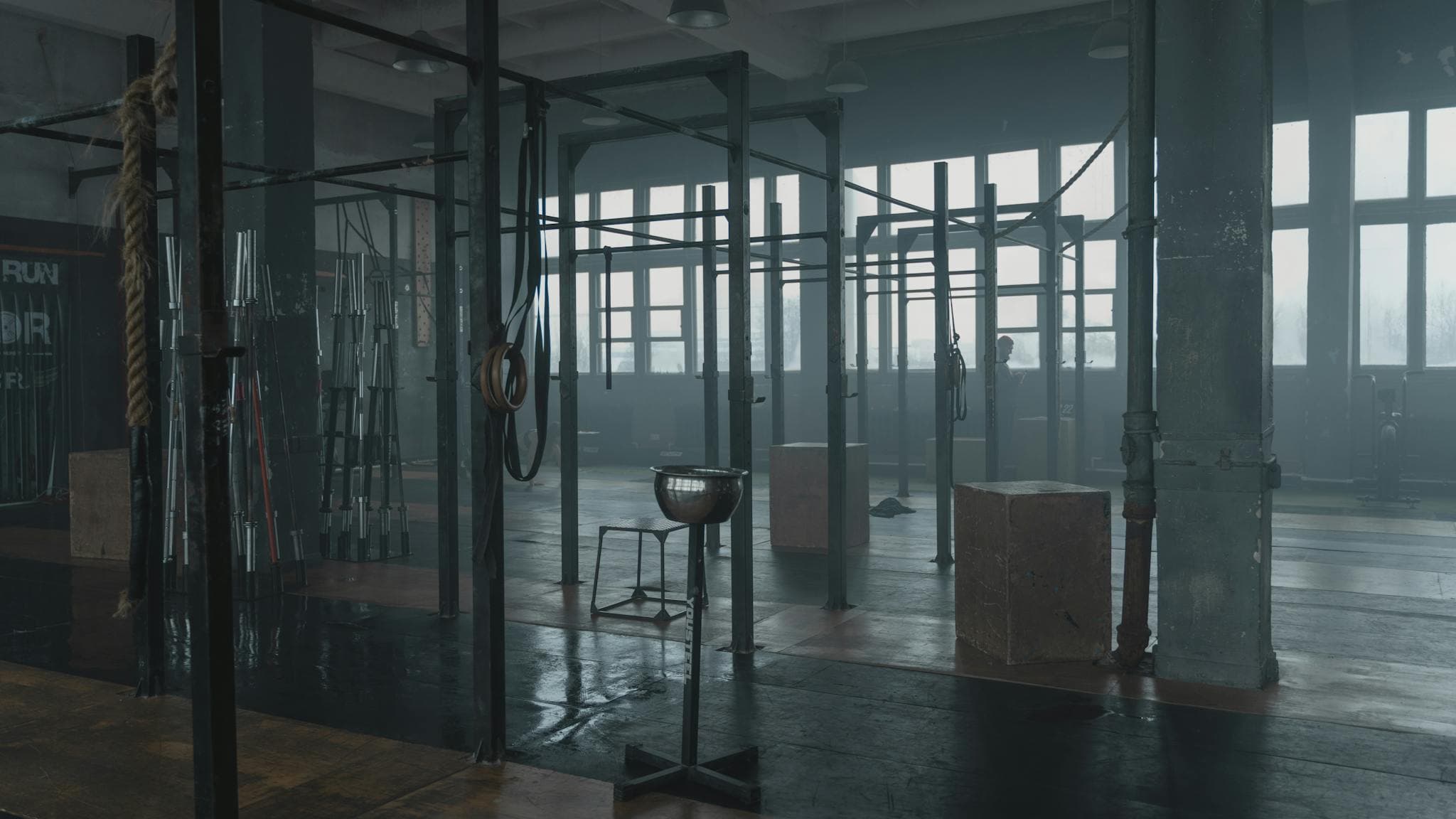
A boutique gym in Singapore is a small, specialised personal-training studio under 5,000 square feet that runs on a coaching-led operating model rather than a floor-traffic one. Member-to-trainer ratios sit between 1:1 and 1:8, equipment is hand-picked rather than catalogue-ordered, programming is bespoke rather than templated, and per-session rates sit in the SGD 150 to 350 range against the SGD 50 to 100 range at the high-membership-volume chains. For a Singapore executive evaluating premium training options in 2026, the boutique segment is not a marketing label, it is a different product category. This guide explains the seven dimensions that decide whether a studio is genuinely boutique, what each dimension is actually worth, and how to pick the one that matches the way you intend to train for the next ten years.
TL;DR
- A boutique gym is defined by operating model, not square footage alone. Member-to-trainer ratio, equipment selection discipline, programming model, and coaching tenure are the load-bearing variables.
- Singapore's boutique segment splits into three sub-tiers: small-group studios (1:6 to 1:12 ratio, SGD 60 to 90 per class), boutique personal-training studios (1:2 to 1:4, SGD 120 to 180 per session), and premium private studios (1:1, SGD 150 to 350 per session).
- The high-membership-volume chains compete on price and convenience. Boutiques compete on coaching-density and programme quality. They are not substitutes for each other, they solve different problems.
- The single highest-yield diagnostic when evaluating a boutique is the depth of the intake process. A studio that sells a package before measuring anything is not boutique by the operational definition, regardless of how the lobby looks.
- Pricing per session is only a useful number in the context of weekly frequency, programme period length, and what you walk out with at the end of it. A SGD 200 session that produces measurable Healthspan progress is cheaper than a SGD 80 session that does not.
Quick-reference table
| # | Dimension | Big-box commercial gym | Boutique gym | Premium private studio |
|---|---|---|---|---|
| 1 | Member-to-trainer ratio | 1:50 to 1:200 | 1:6 to 1:12 (group) or 1:2 to 1:4 (PT) | 1:1 |
| 2 | Per-session rate | n/a (membership SGD 50-200/mo) | SGD 60-90 (group), SGD 120-180 (PT) | SGD 150-350 |
| 3 | Equipment selection | Catalogue-ordered, replicated across sites | Curated, modality-specific | Hand-picked, build-specified |
| 4 | Programming model | Generic, app-driven | Templated with modifications | Bespoke, data-led |
| 5 | Diagnostic intake | None to brief | Brief assessment | Multi-pillar baseline + Checkpoint re-test |
| 6 | Studio environment | High density, shared floor | Medium density, scheduled blocks | Private to whichever session is running |
| 7 | Pricing model | Monthly auto-renewal | Pack-of-N classes or PT packages | Pack-of-N PT, upfront |
The word "boutique" gets used loosely in the Singapore fitness market. A 4,000 square foot floor with twelve treadmills and a class schedule will sometimes call itself a boutique. So will a 1,200 square foot personal-training studio with five coaches and no group classes at all. So will a 9,000 square foot multi-floor wellness destination at a hotel. The label is doing different work in each case, and the operating model behind each is different too. For a senior professional in Singapore who is past the gym-hopping phase and now evaluating where to spend SGD 1,500 to 4,000 a month on the training infrastructure that will hold up their body for the next two decades, the label is less useful than the underlying variables.
The variables that actually matter are operational, not aesthetic. Member-to-trainer ratio decides whether a coach can read your movement on every set or only watch a class. Equipment selection discipline decides whether the floor was filled by a wholesale catalogue order or by someone who knows what is genuinely useful for a programme. Coaching model decides whether your session is a customised piece of work or a template adapted by 5 percent. Diagnostic cadence decides whether the programme is built around what your body shows or what is trending. These four variables, plus three more covered below, separate genuine boutiques from gyms that look the part.
We built Catalyst Performance at Manulife Tower in 2025 to occupy the highest-coaching-density tier of this market. Bervin Manoharan spent over a decade opening multiple 25,000 to 30,000 square foot gyms in Singapore, personally hiring and training more than a hundred personal trainers, and overseeing recurring personal training revenue of more than SGD 8 million per year before founding Catalyst. He had seen what the volume model produced at scale and chose to build the opposite, a private gym in Singapore with hand-picked Watson UK and Keiser USA equipment, multi-pillar diagnostic intake, and coaches who bring years of hands-on experience rather than months. The same operational variables we used to design Catalyst are the ones below. Whether you train with us or somewhere else, these are the questions worth asking before you sign anything. The wider private market, coached studios, capped memberships and hourly floors, is mapped in our private gym guide.
1. Member-to-trainer ratio: the variable that defines the category
The member-to-trainer ratio is the single variable that separates a boutique from a high-volume gym, and within the boutique segment it is what separates a group-class studio from a private personal-training studio. The big-box commercial chains in Singapore typically operate at 1:50 to 1:200 ratios during peak hours, where the trainer on the floor is responsible for general supervision, not for the work any individual member is doing. Group-class boutiques run 1:6 to 1:12, where the trainer can correct movement but cannot meaningfully programme around an individual. Boutique personal-training studios run 1:2 to 1:4, where the trainer rotates between two or three clients on adjacent stations. A premium private studio runs 1:1, where the trainer is reading every set of every exercise and writing the programme around what your body shows that day.
Meaningful biomechanical correction, which is the primary driver of training outcomes for adults over 35 wanting to extend healthspan rather than peak for a single event, requires a coach observing the movement directly under load. At ratios above 1:4 the coach can correct gross movement patterns but cannot reliably catch the micro-asymmetries that compound into injury or stall progress. For a healthy 30-year-old training general fitness, 1:8 group classes are entirely sufficient. For a 45-year-old executive with a degenerative disc, a previous surgery, or a sport-specific goal, 1:1 is the only ratio where the coaching is actually doing the work.
The ratio also drives pricing in a near-linear way. Group classes amortise the coach's hour across 6 to 12 members; PT studios across 2 to 4; private studios across 1. The per-session rate at SGD 60 to 90 for group, SGD 120 to 180 for PT, and SGD 150 to 350 for private reflects this directly. There is no operator in Singapore meaningfully undercutting that pricing geometry without compromising one of the variables further down this list. When you see a "boutique" studio offering 1:1 personal training at SGD 80 per session, the gap is usually closed by the coach being newer, the programme being template-driven, or the intake being skipped entirely.
For most senior professionals evaluating their first boutique commitment, the practical question is not "1:1 or group" but "which ratio will my training actually require." The answer comes out of an honest diagnostic. If your movement is asymmetric, you have a history of injury, or your goal involves performance under specific conditions (a HYROX race, returning to a sport, post-surgery rehab), the higher coaching-density tier is doing work the lower tier cannot. If you are an asymptomatic adult with a general fitness goal and no time constraints, the lower-density tier delivers most of the value at a meaningfully lower cost.
2. Equipment quality and selection discipline
The second variable is whether the equipment on the floor was selected piece by piece or ordered as a fit-out package. Commercial chains in Singapore install the same Life Fitness racks, Technogym treadmills, and standard plate-loaded machines across every site, ordered at scale through equipment-supplier contracts. The result is functional but indistinct. A 1,200 square foot boutique with the same catalogue order is operating at the equipment level of a commercial chain in a smaller box, regardless of what the marketing says.
Genuine boutique equipment selection is a function of who chose what is on the floor. At the high end of the segment, fit-outs come from manufacturers that specialist coaches actually choose to buy from on the basis of build quality and biomechanics rather than supplier-volume discounts. Watson, UK, which builds strength platforms in small batches with obsessive attention to manufacturing tolerance, is one of these. Keiser, USA, whose pneumatic resistance allows velocity-based training and power work that traditional plates cannot match, is another. Eleiko, Sorinex, Rogue Echo, Concept2, Tonal: each carries an opinion about what the coaching can do with it. A studio that has multiple specialist manufacturers represented, in a configuration that reflects actual programme needs rather than equipment-floor logic, was assembled by someone who knew the work.
The diagnostic question is straightforward: who chose what is on the floor, and why is it there. At the Catalyst studio above Telok Ayer MRT, every piece of equipment was specified by Bervin, drawing on his experience opening multiple 25,000 to 30,000 square foot gyms and his refusal to let a floor fill up with equipment that does not earn its place. The Watson strength platforms are there because the manufacturing tolerance is consistent enough to load high-asymmetry hinge patterns safely; the Keiser pneumatics are there because variable-resistance velocity work is part of the programme for older adults rebuilding power output. Where redundancy matters (squat racks, dumbbells in the working ranges), there are multiples. Where it does not (machine variations that duplicate work the free weights already cover), there are none.
For an executive evaluating studios, the practical filter is to walk the floor and ask the lead coach to explain why three specific pieces of equipment are there. If the answer is operational ("this rack lets us run heavy hip hinges with an attentive spotter on the same platform"), the selection discipline is intact. If the answer is brand-name ("this is the latest from Brand X"), the selection was probably supplier-led. The depth of equipment knowledge correlates strongly with the depth of coaching knowledge, because the people who chose the floor and the people who programme on it are usually the same.
3. Coaching model and the bespoke-versus-template line
The third variable is whether the programme you run is built around your body and your goals, or whether it is a template applied to you with cosmetic modifications. The distinction matters more than it sounds. Templated programmes are not bad; they are how commercial gyms scale and how group classes maintain quality across instructors. But a templated programme is not what the boutique price point is buying you, and a studio that charges SGD 180 a session for a template lifted from an app is overcharging by the gap between the two.
A genuinely bespoke programme is built from a multi-input baseline. At the high end of the segment, the inputs include body composition (DEXA or InBody scan with InBodyXL or equivalent, not a bathroom scale), cardiorespiratory fitness (a sub-maximal step test or VO2 estimate), stability and movement quality (Y-Balance test, single-leg loading assessment, joint range-of-motion screen), strength (1RM proxies or rep-max testing at multiple exercises across the main movement patterns), training history (sport-specific background, injury history, current pain points), and goals with a defined time horizon (next race, surgical recovery, life-stage transition, longevity orientation). A coach who has those inputs writes a programme that targets the specific deficits each input reveals. A coach who does not have them is writing a generic programme and adjusting for the client's preferences.
We codified our version of this at Catalyst as the Catalyst Healthspan Assessment, a 60-minute in-studio evaluation across the four pillars (Body Composition, Cardiorespiratory Fitness, Stability, Strength) that produces a Healthspan Score and a printed Healthspan Report. It is complimentary and you walk out with it whether you train with us or not. The point of formalising the assessment is to make the diagnostic step explicit rather than rolled into a sales conversation. We wrote about the four pillars in depth in our piece on what Singapore's best personal trainers should actually be tracking.
The practical filter when evaluating a studio is the intake conversation. A boutique that genuinely runs a bespoke model will spend the first session, sometimes two, measuring before prescribing. A studio that sells you a package on the first call, before measuring anything, is operating at the template tier regardless of the per-session rate. There are exceptions for clients with very specific known goals (a returning athlete who has been measured elsewhere, a referral from a physiotherapist with the relevant data already documented), but in the default case, a multi-input baseline is the line between bespoke and templated.
4. Diagnostic cadence and the Healthspan Assessment differentiator
The fourth variable is how often the programme gets re-measured against the body. A one-off intake assessment, however thorough, is a snapshot. The programme that follows from it produces adaptations over weeks, and without a re-test the studio has no objective signal for whether the adaptations are landing as expected. Boutiques that take the diagnostic process seriously re-test on a defined cadence. Studios that do the intake then never measure again are operating in the dark from session two onwards, regardless of how good the intake was.
The cadence that the research supports is roughly quarterly for the foundational metrics and ongoing for the per-session ones. Body composition shifts on a multi-month timescale and re-testing more frequently than every 12 to 16 weeks produces noise rather than signal (American College of Sports Medicine, 2021). Cardiorespiratory metrics (Heart Rate Recovery, resting heart rate, sub-maximal step test) shift faster and can be re-tested every 8 to 12 weeks for clients in an active progression. Strength benchmarks (rep maxes at the main lifts) are re-tested at the end of each training block, typically every 8 to 12 weeks. Movement quality benchmarks (Y-Balance, single-leg loading) are re-tested every 12 to 16 weeks unless an injury or surgery resets the baseline.
At Catalyst we run the formal re-test as the Checkpoint, every 16 weeks, against the same four pillars measured at the baseline. The Healthspan Score moves up or down, and the programme rebalances accordingly. Between Checkpoints, per-session benchmarks (working weights, Heart Rate Recovery, perceived exertion at standardised efforts) are tracked in the session log so the coach has a continuous read on whether the work is producing the adaptation. The combination of the 16-week formal re-test and the per-session tracking is what allows the programme to evolve without guesswork.
For an executive evaluating studios, the diagnostic question is simply: how often, and on what metrics, will you re-test me. A studio that has a clear answer to this question, with a documented protocol, is operating in the boutique tier. A studio whose answer is "we'll see how you're feeling" is not. The cost difference between a studio that re-tests on cadence and one that does not is rarely visible in the per-session price, but the difference in 12-month training outcomes is the largest single variable in this guide.
5. Studio environment and density
The fifth variable is the physical environment, and specifically how dense it is during the hours you would actually train. A 5,000 square foot floor with twelve clients at 6:30am is not a boutique environment regardless of the equipment or the coaching ratio on paper. A 1,500 square foot floor with three clients at the same hour is. The variable that matters is concurrent occupancy at peak, not floor area or member roster size.
The big-box commercial chains in Singapore can run dozens of concurrent occupants during the 6 to 8am peak in the CBD. Boutiques in the group-class tier run at a single class capacity, roughly 6 to 12. Boutique PT studios with 2 to 4 coaches on at peak run a handful of clients at a time. Premium private studios with a 1:1 booking model and a small number of training stations run just one to a few concurrent sessions. The lower the density, the more the floor and the equipment behave as if they were yours for the session.
For most boutique offerings the lower-density environment is part of what the per-session premium is paying for. There is no waiting for a squat rack. There is no chase for a working pair of dumbbells. There is no parallel conversation distracting your coach. The training time is denser even when the session length is the same, because the friction of equipment access and ambient noise is absent. Across the same arrival-to-shower window, a low-density boutique converts far more of the time into actual coaching-and-loading work, because the minutes a peak-hour commercial floor loses to queueing for a rack or a working pair of dumbbells simply are not lost here.
At Catalyst the booking model is appointment-only with no drop-ins, no day passes, and no open-floor hours. The space is private to whichever 1:1 sessions are running, which means at most three or four concurrent sessions across the floor at peak and often just one or two. The contrast with the commercial CBD gyms is intentional, the layout, the equipment selection, and the booking model are all built around the personal training relationship rather than floor traffic. Our page on private personal training in Singapore covers this trade-off in more depth.
6. Pricing model: per-session, per-package, or per-membership
The sixth variable is how the studio charges, and the pricing model is itself a signal of the operating model. Commercial gyms charge monthly memberships because their economics depend on roster size and floor utilisation. Boutique group studios charge per-class or per-pack because their economics depend on class fill rates. Boutique personal-training studios charge per-session in upfront packages because their economics depend on coaching hours sold. The price you see is downstream of the model behind it.
The Singapore market is unusual in that the boutique-PT segment sits in the SGD 120 to 350 per-session range with substantial variance driven by coach tenure, studio overhead, and intake depth. The first-time client rate at Catalyst is SGD 163.50 per session, with package size determined after the Healthspan Assessment when the coach has the data to recommend a structure that fits the training requirements. A studio at the top of that range, SGD 300 or more per session, is usually paying for a more senior coach, a more expensive lease (some of the highest-end premium private studios sit in trophy CBD towers), or both. A studio at SGD 120 is usually amortising a less senior coach across more clients per hour, or operating with thinner intake and re-test cadence.
The per-session number alone is a misleading filter without the surrounding context. The useful comparison is per-session rate multiplied by weekly frequency multiplied by the period over which you intend to train, against the measurable progress you walk away with. Twelve months of two sessions per week at SGD 160 (roughly SGD 16,600) that produces a measurable Healthspan Score gain, a strength benchmark improvement, and a body composition shift is materially different from twelve months of three sessions per week at SGD 100 (roughly SGD 15,600) that produces no formal measurement at all. The headline rate is the smaller variable; the outcome per dollar is the larger one. We covered the full per-session economics in our dedicated piece on personal trainer cost in Singapore.
For executives doing the maths properly, the package-versus-membership question matters less than the diagnostic-cadence question above it. A package is just a billing structure. A re-test protocol is the actual lever that decides whether the training is producing what you are paying it to produce. Studios that price aggressively but skip the diagnostic are usually optimising for client volume, not training outcomes, and the per-session number is therefore the wrong filter to apply.
7. Founder involvement and coach tenure
The seventh variable is who designed the studio's approach and how long the coaches have been with it. Boutique gyms in their first 18 months are often founder-led, where the person who built the operating model is also the person you train with or who supervises the coach you train with. After 18 months the studio either institutionalises that approach into a documented programme that other coaches can deliver consistently, or it drifts toward whichever coaching style the highest-volume trainer happens to bring. The studios that institutionalise tend to retain their boutique character; the studios that drift tend to converge toward the commercial-gym mean.
The diagnostic for institutionalisation is whether the studio has a documented methodology and whether coach tenure is measured in years rather than months. High annual coach turnover is a strong signal that the studio's coaching standards are not durably encoded; coaches who stay only do so when the system around them supports the work. The big-box commercial chains in Singapore tend to churn through coaches quickly, which is consistent with the volume-driven model. Genuine boutiques retain their coaches far longer.
At Catalyst the methodology is the 4-Pillar Healthspan Assessment and the Checkpoint re-test cadence, documented as a coaching protocol that every coach is trained against. The founding team is Bervin Manoharan, Dr Luqman Haris (MBBS, Head of Training Systems), and Jeremy Soh (Head of Performance and Operations). Every coach on the floor brings a minimum of five years of experience training people in the industry, and much of the team worked together for close to a decade at one of Singapore's largest big-box gyms before regrouping here. The protocol they deliver is the one Bervin codified at founding. The studio's identity is not coupled to which specific coach is on shift at 6am; the identity is in the methodology, which is what made it institutionalisable in the first place.
For an executive evaluating studios, the practical filter is to ask two questions during the intake conversation: who designed the programming approach, and how long has the coach you would train with been at the studio. If the answers are coherent (the approach has a name, a documented protocol, and the coach has been delivering it for over a year), the studio is in the institutionalised tier. If the answers are vague (the approach is "whatever the coach prefers" and tenure is a few months), the studio is in the drift tier regardless of how recent the fit-out is.
When a boutique gym is the wrong call
A boutique gym is not the right answer for everyone, and it is worth being honest about who it is wrong for. The big-box commercial chain is an excellent product for the casual member who wants equipment access, group classes, and a place to train near home or work, and for the younger trainee with no metabolic or musculoskeletal complications who responds well to almost any structured stimulus. If you train two or three times a week on your own and you are progressing, a chain membership is hard to beat on value, and the premium of a boutique studio is not yet worth paying.
Where the boutique model earns its premium is a specific segment: the 40-and-up professional whose body has started to feel different, who wants the assessment data behind the training, and who is optimising for the next two decades rather than the next eight weeks. In our own intake conversations, most new members in their late 40s and 50s did not come from doing nothing, they came from a chain membership they had outgrown. The chain was the stepping stone, not the alternative. If that pattern does not describe you, keep training where you are: the premium only pays off once the data layer and the coaching cadence are things you genuinely need.
How to pick the boutique gym that is right for you
The seven variables above are the operational ones. Picking the right boutique for a specific person depends on three further inputs that the studio itself cannot decide for you.
First, your training horizon. A boutique is the right tier when you intend to train consistently for years, not weeks. The per-session premium is only economic over a horizon long enough for the diagnostic depth, the bespoke programming, and the re-test cadence to compound. If your horizon is a 12-week transformation around a wedding or a beach holiday, a commercial-chain transformation programme is more efficient. If your horizon is a 10-year healthspan orientation through your 40s and 50s, the boutique tier is what the maths actually supports. We wrote in more depth about this longevity-over-aesthetics framing in our piece on why we did not build another body transformation gym.
Second, your training requirements. A young, asymptomatic adult with a general fitness goal does not require 1:1 coaching to make progress; a 50-year-old executive with a degenerative disc, a previous shoulder surgery, and a sub-3-hour marathon ambition does. Match the coaching density to the complexity of the body you are training. Most senior professionals who arrive at Catalyst have one or two complicating factors (post-surgical, sport-specific, longevity-oriented around a family history of cardiometabolic disease) that make the 1:1 tier the appropriate one. Some do not, and we tell them so during the consultation. Our injury rehabilitation, recovery, and nutrition services are scoped against this kind of complexity.
Third, your willingness to be measured. Boutique training is data-led. You will know your body composition, your cardiorespiratory baseline, your strength benchmarks, and your movement asymmetries within the first two weeks, and you will see them re-measured every quarter. For some clients this is the entire appeal; for others it is uncomfortable. The discomfort is usually the leading indicator of where the work is, but a client who does not want to be measured is genuinely better served by a less-diagnostic operating model. The honest filter is whether you want a coach reading numbers off your body and adjusting against them, or whether you want a coach running you through a session and asking how you feel.
The Catalyst Healthspan Assessment exists partly to make this filter explicit. Sixty minutes in studio, four pillars measured, a Healthspan Score and a printed Report you keep regardless of whether you train with us. If the diagnostic feels right, the rest of the operating model that surrounds it will too. If it does not, you have a measured baseline you can use elsewhere. Either way the question of which boutique matches you gets resolved in data rather than in marketing. The Why Catalyst page covers the full operational case for the studio if you want to go deeper before booking.
A boutique is the right tier when you intend to train consistently for years, not weeks. The per-session premium is only economic over a horizon long enough for the diagnostic depth, the bespoke programming, and the re-test cadence to compound.
Frequently asked questions
Q. What size is a boutique gym in Singapore typically?
Most genuine boutiques in Singapore sit between 800 and 5,000 square feet. The Lifefitness industry definition pegs the upper bound around 3,500 square feet (Lifefitness, 2024), but Singapore floor plates in CBD towers can push slightly larger while still operating at boutique density. Floor area alone is not the defining variable; concurrent occupancy at peak and member-to-trainer ratio are. A 4,500 square foot studio with three concurrent sessions at peak is operating at boutique density. A 1,800 square foot studio with twelve concurrent group-class attendees is operating closer to a small commercial-chain density.
Q. Is a boutique gym worth the cost over a regular gym?
The honest answer is "it depends on the horizon and the goal." For an asymptomatic adult with a general fitness goal who is happy to follow a self-directed programme, a commercial-chain membership at SGD 80 to 150 per month is the efficient choice. For a senior professional with a 10-year healthspan orientation, complicating factors (post-surgical, sport-specific, longevity-oriented), and a willingness to be measured and re-measured, the boutique segment is doing work the membership tier cannot. The per-session premium is only economic over a horizon where the diagnostic depth, the bespoke programming, and the re-test cadence compound into measurable outcomes, typically 12 to 24 months minimum.
Q. How much does a boutique gym in Singapore charge per session?
Roughly SGD 60 to 90 for boutique group classes (small-group fitness, spin studios, pilates, HIIT), SGD 120 to 180 for boutique personal-training studios (1:2 to 1:4 coaching ratio), and SGD 150 to 350 for premium private studios (1:1 coaching). Catalyst's first-time client rate is SGD 163.50 per session, with package size determined after the complimentary Healthspan Assessment. Studios meaningfully below the segment's per-session pricing are usually closing the gap by amortising less senior coaches across more clients, running thinner intake, or skipping the re-test cadence.
Q. What is the difference between a boutique gym and a personal training studio?
The boutique-gym category is broader and includes group-class studios, small-group PT, and 1:1 PT. A personal-training studio specifically operates at the higher coaching-density tier of the boutique segment, typically 1:1 or 1:2, with no group classes and no general-membership floor access. Catalyst is in the latter category, a private 1:1 studio above Telok Ayer MRT at Manulife Tower with appointment-only booking and no drop-ins. A boutique pilates or spin studio is also "boutique" but operates at a different coaching density and addresses different training requirements. Our personal training service page covers the 1:1 model in more depth.
Q. How do I tell if a Singapore studio calling itself boutique is actually one?
Three diagnostic questions answer it. First, what is the member-to-trainer ratio at peak, and does it stay in the boutique range (1:8 or lower for group, 1:4 or lower for PT). Second, what is the intake process, and does it include a multi-input baseline before any programme is prescribed. Third, what is the re-test cadence, and is there a documented protocol for measuring progress every 8 to 16 weeks against the same metrics. A studio with coherent answers to all three is genuinely boutique. A studio that is vague on any of them is operating at a lower tier regardless of how the lobby looks or what the marketing says.
Q. Which Singapore neighbourhood should I look in for a boutique gym?
The boutique and premium private studios cluster in and around the CBD, where executive demand is concentrated. If you work in the financial district, the practical filter is commute time from your office rather than the neighbourhood name. Catalyst sits inside Manulife Tower above Telok Ayer MRT, within a short walk of most of the CBD: the Tanjong Pagar, Telok Ayer, Raffles Place, and Marina Bay pages cover the door-to-door logistics from each. Outside the CBD, boutique density thins out, so expect a smaller field and a longer commute trade-off.
The boutique tier of the Singapore fitness market is a different product category from the high-membership-volume chains, not just a more expensive version of the same thing. The seven variables that define it (coaching ratio, equipment selection, programming model, diagnostic cadence, studio density, pricing model, founder and coach tenure) describe an operating model built around the personal training relationship rather than around floor traffic. For an executive whose horizon is the next ten years and whose body has the complexity that comes with being 35-plus, the boutique segment is doing work the membership tier cannot. The label by itself is not the proof; the operational variables are. Ask the seven questions above before you sign anything, and the right boutique for your specific training requirements will reveal itself in the answers.
The Catalyst Healthspan Assessment is the entry point. Sixty minutes in studio, four pillars measured, a Healthspan Score and a printed Healthspan Report you walk out with regardless of whether you train with us. It is the diagnostic that the seven variables above describe, run end-to-end so you can feel the operational depth of a boutique-tier studio rather than read about it. Book the complimentary assessment, or read more about the studio at Manulife Tower. If you are working specifically out of the CBD, our CBD personal training, Telok Ayer, and Marina Bay pages cover the commute-friendly logistics.
Q. I have a gym membership I have not used in a year. Should I cancel it before joining a boutique studio?
Yes, and the year of non-use is the signal. The membership has stopped producing value, and cancelling first cleans up both the financial picture and the quiet background tax of feeling you should be using it. Many members tell us the moment they cancelled the unused membership and committed to a proper assessment was the moment training actually started. Keeping a chain membership alongside a boutique studio only makes sense if the chain genuinely complements it, for example cardio at the chain and assessment-driven strength work at the studio, not duplicate access to the same weights.
Citations
- American College of Sports Medicine. (2021). ACSM's Guidelines for Exercise Testing and Prescription (11th ed.). Wolters Kluwer.
- Life Fitness. (2024). Boutique Gyms: What They Are and Why They Are Gaining Steam. Retrieved from lifefitness.com.
- Garber, C.E., et al. (2011). Quantity and Quality of Exercise for Developing and Maintaining Cardiorespiratory, Musculoskeletal, and Neuromotor Fitness in Apparently Healthy Adults. Medicine and Science in Sports and Exercise, 43(7), 1334-1359.