The Edit · Founder Insights
Strength Training for Menopause in Singapore: The Evidence
Strength training for menopause in Singapore: why heavy resistance work, not walking or light bands, is the exercise that defends bone and muscle as oestrogen falls.
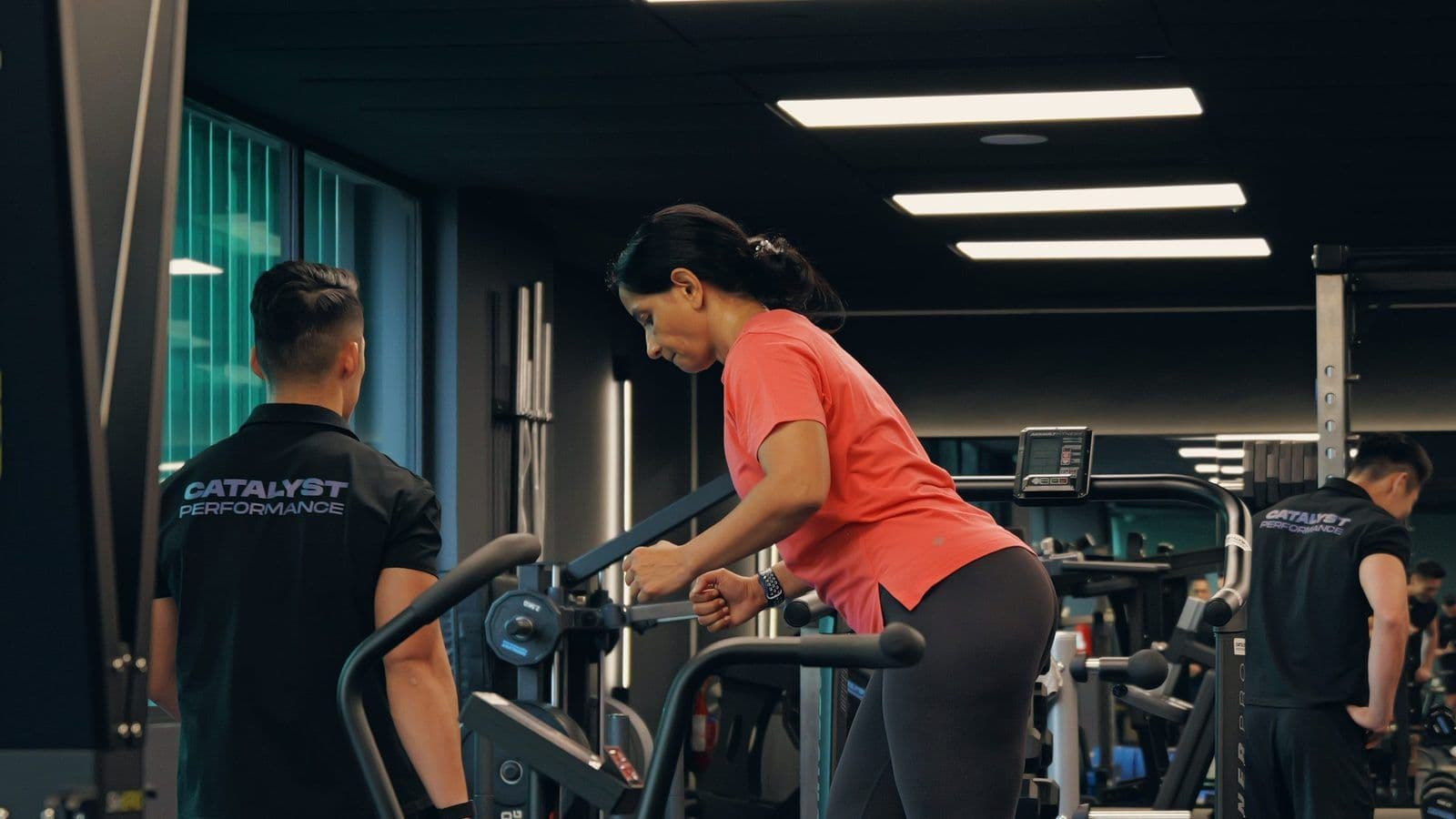
Strength training is the single most effective thing a woman in perimenopause or beyond can do to slow the muscle and bone loss that the menopause transition accelerates. As oestrogen falls, both tissues come under pressure at the same time: bone resorption outpaces formation, and skeletal muscle thins faster than it did a decade earlier. Heavy resistance training, paired with adequate protein, is the one stimulus with strong randomised-trial evidence behind it for defending both. Walking helps your heart. Light bands and gentle mobility help your balance. Neither moves the needle on bone density the way loaded, progressive strength work does. This is a forward-looking decision: the strength and bone you build in your 40s and 50s is what carries you, capable and independent, into the decades ahead. If you want that work coached, our personal trainer for menopause in Singapore programme runs from Manulife Tower in the CBD.
TL;DR
- Oestrogen decline in perimenopause speeds up loss of both bone and muscle; the two declines run in parallel, not in sequence.
- Around the final menstrual period, women lose spine bone density at roughly 2% to 2.5% per year, and Singapore's hip-fracture rates are among the highest in Asia.
- Heavy resistance training plus impact loading is the exercise stimulus with the strongest trial evidence for raising bone density after menopause (the LIFTMOR trial).
- Progressive strength training is also a leading intervention against menopause-related muscle loss, and works best with 1.2 to 1.6 grams of protein per kilogram of body weight per day.
- Heavy lifting is safe for women in their 50s, 60s and 70s when it is screened, supervised and progressed; the risk lies in unsupervised loading, not in the load itself.
Why menopause hits bone and muscle at the same time
For most women, perimenopause begins somewhere in the mid-40s, and the menopause transition itself spans several years on either side of the final period. The defining hormonal change is a fall in oestrogen, and oestrogen does far more than regulate the menstrual cycle. It is a structural hormone for two tissues that matter enormously for how well you age: bone and skeletal muscle.
In bone, oestrogen restrains the cells that break bone down. When oestrogen falls, those resorbing cells become more active and the cells that build bone cannot keep pace. The result is a net loss. The large multi-ethnic SWAN cohort tracked bone density around the final menstrual period and found spine bone loss running at roughly 2% to 2.5% per year through that transmenopausal window, with the spine, where the more metabolically active trabecular bone sits, affected faster than the hip (Greendale et al., SWAN, Journal of Bone and Mineral Research). Across the five to seven years around menopause, many women lose a meaningful fraction of their lifetime bone mass.
Muscle follows a similar curve. Declining oestrogen is associated with accelerated loss of muscle mass and strength, and the loss begins in perimenopause rather than waiting for the postmenopausal years (estrogen-deficiency sarcopenia review, Journal of Exercise Rehabilitation). Women carry less muscle than men to begin with, so the same proportional loss leaves a thinner margin. This matters because muscle is not only about strength. It is the body's largest site of glucose disposal, a major contributor to metabolic rate, and the tissue that keeps you steady on your feet and able to catch yourself when you stumble.
The practical takeaway is that these two declines are not separate problems to solve one at a time. They share a cause, they run on the same clock, and, conveniently, they respond to the same intervention. Loaded, progressive strength training is the one stimulus that addresses both at once. The same logic drives our broader piece on why women need strength training, not just Pilates, after 40.
Do it yourself
Strength, bone and muscle through menopause come from a structured plan run consistently. The Muscle + Fat Loss Protocol is the 12-week programme our coaches use, medically reviewed by Dr Luqman Haris, MBBS.
What the evidence actually shows about exercise and bone
There is a persistent and unhelpful belief that the right exercise for menopausal bone health is gentle: walking, yoga, light resistance bands. These activities have real value for cardiovascular health, balance and general wellbeing. What they do not do, on their own, is meaningfully raise bone mineral density, because bone only remodels in response to mechanical loads well above what daily life provides.
The clearest evidence on what does work comes from the LIFTMOR trial (Watson et al., 2018, published in the Journal of Bone and Mineral Research). Researchers in Australia took postmenopausal women with low bone mass, the group conventional advice would steer firmly away from a barbell, and supervised them through eight months of high-intensity resistance and impact training: twice-weekly, 30-minute sessions of heavy compound lifting at more than 85% of one-repetition maximum (the deadlift, back squat and overhead press, performed as five sets of five), combined with jumping and controlled landings. The lifting group showed statistically significant gains in lumbar spine and femoral neck bone mineral density compared with a low-intensity home programme, and improved physical function alongside it (LIFTMOR trial, PubMed).
The two stimuli that did the work are worth naming, because they tell you what to look for in a programme. The first is high mechanical strain, which heavy compound lifting drives through the spine and hip. The second is high strain rate, the quality that impact loading adds through jumping and landing. Both sit well above the threshold that walking or light, high-repetition work can reach. This is precisely why LIFTMOR paired a heavy barbell with jumping, rather than prescribing a longer walk.
For peri- and post-menopausal women in Singapore specifically, the stakes are not abstract. Age-adjusted osteoporotic-fracture rates among women over 50 in Singapore are among the highest in Asia and approaching those of the USA and Europe (International Osteoporosis Foundation, Asia statistics). A hip fracture in later life is not a clean break that heals and is forgotten; it is one of the sharpest predictors of lost independence. Bone you defend in your 50s is the buffer that keeps a stumble at 70 from becoming a life-altering event. This is the core of what we build at Catalyst, and it is the focus of our menopause and bone-density training work in the CBD.
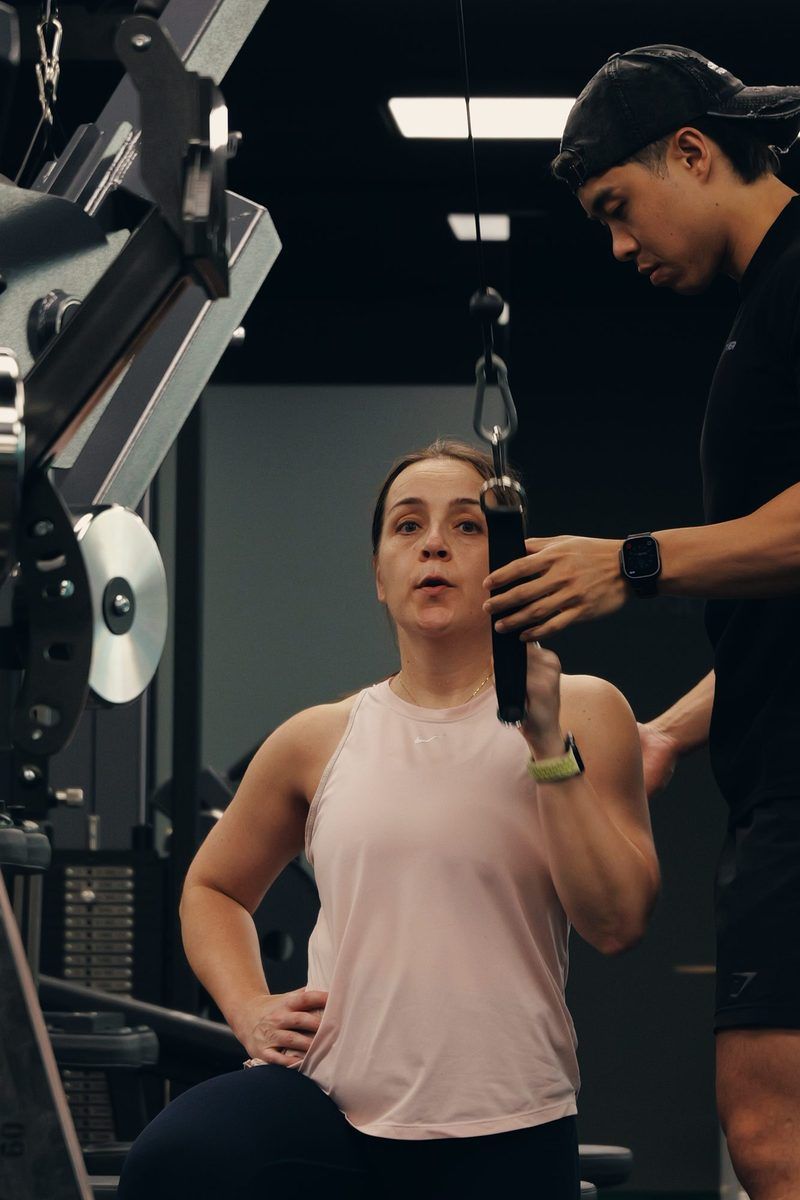 Heavy, progressive resistance training is the one stimulus with strong randomised-trial evidence behind it for defending bone and muscle.
Muscle, not just bone: the case for resistance training
Bone tends to get the headlines in menopause coverage, but muscle is the quieter, more consequential story for day-to-day capability. Sarcopenia, the age-related loss of muscle mass and function, accelerates through the menopause transition, and the same oestrogen decline that strips bone also blunts the muscle's ability to maintain and rebuild itself.
The evidence on the fix is reassuringly consistent. Progressive resistance training is described across the literature as a leading intervention for defending muscle strength and function against age- and menopause-related decline in middle-aged women (resistance training and menopause body composition, BMC Women's Health). Importantly, "progressive" is the operative word, and the same study is a useful caution: post-menopausal women reliably gain strength from resistance training, but building muscle mass back can require higher training volumes than the conventional minimum. Picking up the same pair of two-kilogram dumbbells twice a week for two years does not progressively load anything; the body adapts and then stalls. The stimulus has to keep climbing, which is exactly what supervised programming is designed to manage safely.
Why does this matter beyond aesthetics? Muscle is functional insurance. Grip strength and leg strength track closely with the ability to live independently, and strength is one of the better-evidenced markers of how well a person is ageing. A woman who maintains her strength through menopause keeps the capacity to carry, climb, lift and recover from a fall. A woman who lets it erode, on the assumption that lighter is safer, often arrives at her 70s with far less reserve than she realises. The forward-looking frame is the honest one: you are training the body you will live in for the next several decades, not just the one in the mirror today.
Protein: the other half of the equation
Resistance training is the signal; protein is the building material. Train hard and under-eat protein, and you leave a large part of the adaptation on the table. The two work together, and for women in and beyond menopause the protein side is frequently the weaker link.
The most widely cited expert guidance comes from the PROT-AGE Study Group (Bauer et al., 2013, Journal of the American Medical Directors Association), which recommended that healthy older adults consume 1.0 to 1.2 grams of protein per kilogram of body weight per day, rising to 1.2 to 1.5 grams for those who are active, training, or managing illness (PROT-AGE position paper, PubMed). For a woman who is strength training through menopause, the practical target sits in the 1.2 to 1.6 gram range; a meta-analysis of protein intake in healthy adults found that intakes toward the upper end of that band, combined with resistance exercise, add lean mass and strength beyond training alone (protein and muscle systematic review, Journal of Cachexia, Sarcopenia and Muscle).
In real terms, for a 60-kilogram woman that is roughly 75 to 95 grams of protein a day, spread across meals rather than loaded into one. That is more than most women eat by default, and it usually means treating protein as the anchor of each plate: eggs or fish at breakfast, a palm-sized portion of a protein source at lunch and dinner, and protein-forward snacks if appetite allows. The total across the day matters more than precise timing around a workout. This is one of the first things our coaches and nutrition support flag, because a woman who lifts well but eats 50 grams of protein a day is quietly capping her own results.
Is heavy lifting safe after 50?
This is the question that stops most women before they start, and the honest answer is that the evidence base has reversed over the last decade. The fear is understandable. The instinct that a 58-year-old with low bone mass should avoid a heavy barbell feels protective. The data say the opposite, with one crucial condition: supervision.
In LIFTMOR, the participants were postmenopausal women with osteopenia or osteoporosis, mean age around 65, lifting at more than 85% of their one-rep maximum, twice a week, for eight months. This is the exact population conventional caution would forbid from heavy lifting. The trial recorded only one minor adverse event, a low-back spasm, and no osteoporotic fractures from the training (LIFTMOR trial, PubMed). The follow-on Onero programme, delivered across many sites in everyday practice, has reproduced that safety profile in larger numbers.
The reason this works is that the risk in heavy lifting is not the load; it is unscreened, unsupervised, poorly progressed load. A barbell loaded to the right weight for a screened individual, lifted with coached technique and built up gradually, is a controlled and measurable stimulus. The same barbell loaded on a guess, with no movement screen and no progression plan, is where injuries come from. This is precisely why a programme for a menopausal woman should begin with a thorough assessment, not with a weight on a bar. At Catalyst, every member moves through the 4-Pillar Healthspan Assessment before any meaningful load is introduced, and progression is led by what the data show, not by a template.
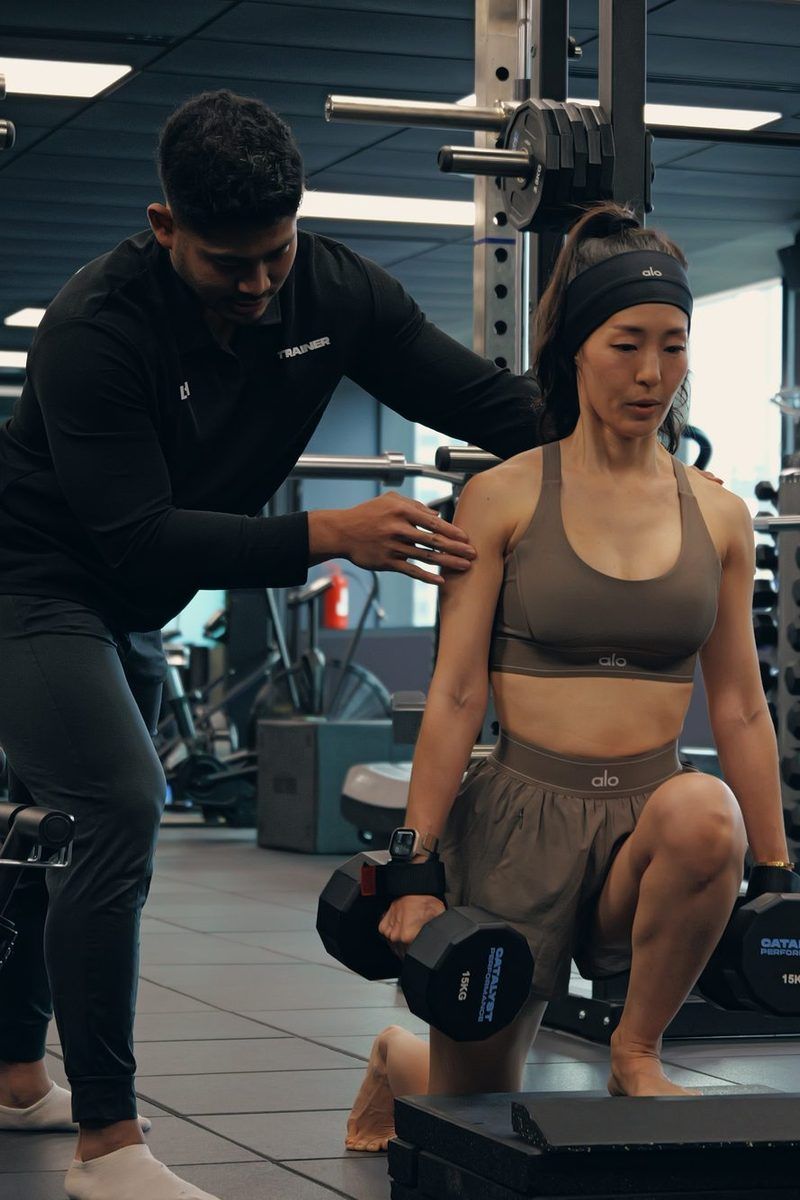 Properly coached, the load is the medicine: programmed for a peri- or post-menopausal body, then re-tested.
What a sensible programme looks like in Singapore
A well-built strength programme for a peri- or post-menopausal woman has a recognisable shape. It is built around heavy compound lifts (squat, hinge, press and pull patterns) progressed over months, not weeks. It includes some impact loading where screening allows, because impact adds the strain-rate signal that lifting alone does not fully cover. It runs two to three supervised sessions a week, which is enough to drive adaptation without overwhelming recovery. And it is paired with the protein target above, because the training and the nutrition are not separable. If you are not yet in the menopause years but already past 40, the same loading logic applies, and we lay it out in our guide to strength training after 50.
In a Singapore context, two practical points are worth knowing. The first is DEXA. A recent DEXA scan (within the last 12 months) gives the bone mineral density, T-score and Z-score values that should shape the programming directly, and it is widely available here, from public-hospital radiology through a GP or specialist referral, to private imaging providers and screening clinics, including options in the CBD itself. A body-composition reading helps too, and we explain the difference between the two scans in DEXA vs InBody in Singapore. Bone changes slowly relative to the scan's own measurement error, so a repeat every one to two years is the sensible monitoring interval, not every few months. The second is climate and logistics: the indoor, air-conditioned, CBD-located reality of a Singapore working week makes a supervised studio session a more reliable habit than an outdoor regime that the weather can derail.
This is the model Catalyst is built around, a healthspan and longevity focused training studio in the CBD that programmes 1:1 strength work for women through the menopause transition, calibrated to the LIFTMOR-style evidence and coordinated with each member's own clinicians. The studio's training systems are designed by Dr Luqman Haris, MBBS, our Co-Founder and Head of Training Systems, which is part of why the medical-coordination layer is taken seriously rather than treated as a disclaimer. To be clear about what that means in practice: the studio is founder-led and its method is founder-designed, while your sessions are delivered by our coaching team.
How this fits with HRT and other options
Strength training is not a competitor to medical management of menopause; it is the foundation that everything else sits on top of. Hormone replacement therapy (HRT) and bone-specific pharmacotherapy such as bisphosphonates or denosumab provide their own, well-evidenced bone-density support, and a woman who is prescribed them should remain firmly under her prescribing clinician's care. Training works alongside these, not instead of them. The plan should be built around your medication schedule, your recent labs and any specific guidance from your gynaecologist or endocrinologist. We coordinate; we do not substitute, and nothing in this article is medical advice or a reason to change a prescription.
It is also worth being even-handed about the gentler alternatives, because they are not worthless, they are simply mis-prescribed when offered as the whole answer. A good pilates studio or reformer class is excellent for spinal mobility, core control and movement quality, and many women genuinely enjoy it. A yoga practice supports balance, flexibility and stress regulation. Regular walking and Zone 2 cardio protect the heart. The honest position is that these are valuable complements that sit below the loading threshold required to change bone mineral density, and that none of them progressively loads muscle the way heavy resistance training does. The mistake is not doing them; it is doing only them and assuming the bone and muscle question is handled.
Comparison: how the common options stack up
| Dimension | Heavy resistance + impact training | Pilates / yoga | Walking / general cardio | HRT / bone pharmacotherapy |
|---|---|---|---|---|
| Raises bone mineral density | Strong randomised-trial evidence (LIFTMOR) | Minimal direct effect on BMD | Minimal direct effect on BMD | Yes, via a different mechanism; clinician-prescribed |
| Builds and preserves muscle | A leading intervention for menopause-related muscle loss | Improves control and mobility, limited mass gain | Negligible muscle-building stimulus | Supports but does not build muscle |
| Improves balance and fall resilience | Yes, through strength and coordination | Yes, a recognised strength | Modest | Indirect |
| Needs medical screening first | Yes, screening and supervision are the safety mechanism | Generally low-barrier | Generally low-barrier | Always clinician-managed |
| Role in a menopause plan | Foundation | Valuable complement | Valuable complement | Medical layer, coordinated with training |
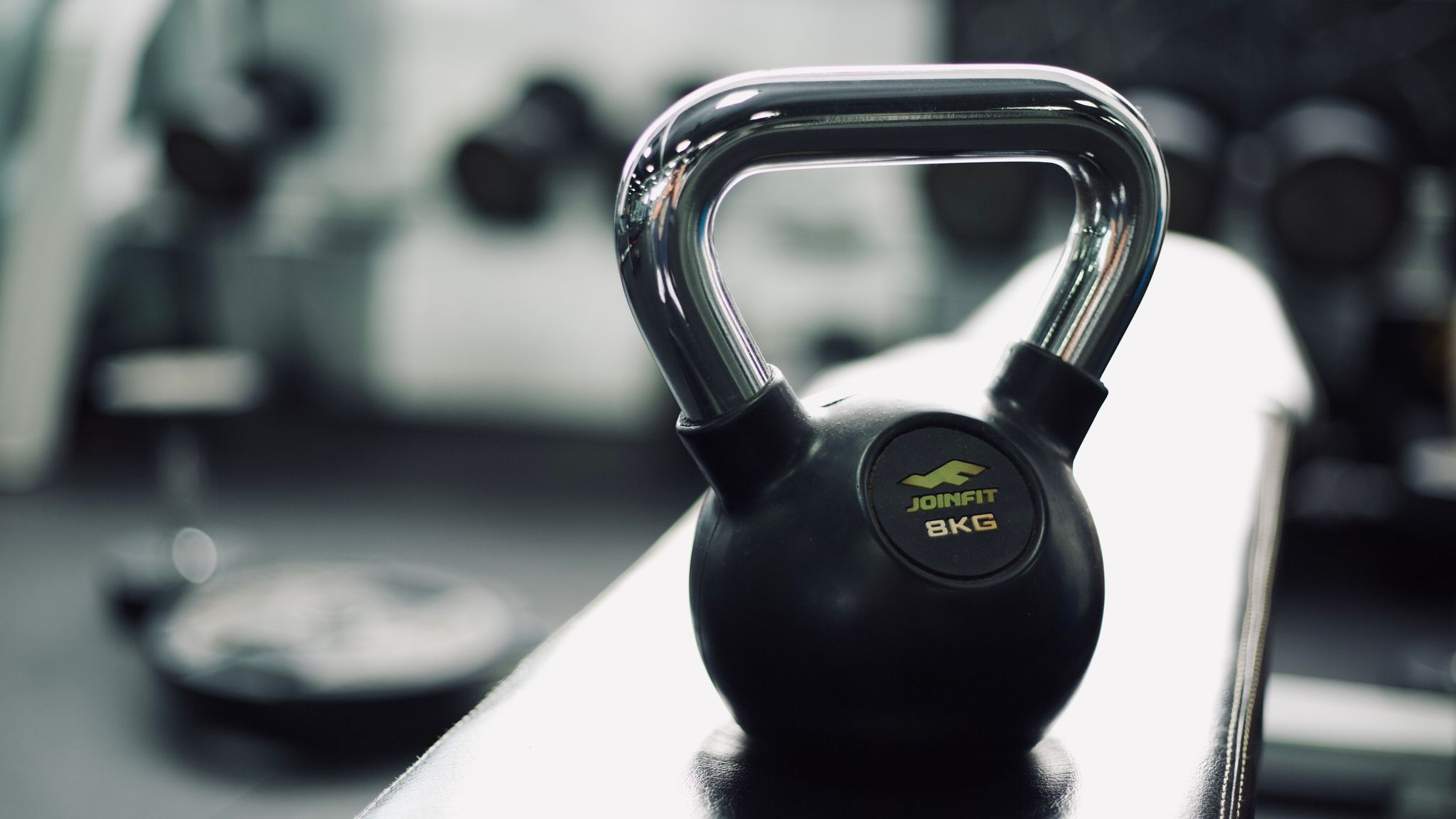 Light bands and gentle mobility help your balance. They do not move the needle on bone density the way loaded work does.
The table is not arguing that strength training is the only thing a menopausal woman should do. It is showing that strength training is the one column that addresses both bone and muscle directly, which is why it belongs at the base of the plan rather than at the edge of it.
Frequently asked questions
Q. When should I start strength training for menopause?
The earlier the better, and perimenopause is not too soon. Bone and muscle loss begin during the transition, not after it, so the window to defend what you have opens in your 40s. Starting later still works; the women in the LIFTMOR trial were postmenopausal, mean age around 65, and gained bone. There is no age at which beginning supervised strength training stops being worthwhile.
Q. Will heavy lifting make me bulky?
No. Women have far lower levels of the hormones that drive large increases in muscle size, and the menopause transition lowers them further. Progressive strength training in this context builds usable strength and defends muscle and bone; it does not produce the outcome the question worries about. What it produces is capability.
Q. I have osteoporosis already. Is it too dangerous to lift?
The opposite is closer to the truth, provided it is screened and supervised. The LIFTMOR participants had osteopenia or osteoporosis and lifted heavy with no osteoporotic fractures from the programme. The danger is unsupervised loading without a movement screen and a progression plan. Start with an assessment, bring a recent DEXA report, and let a coach calibrate the load to you.
Q. How is this different from a regular gym programme?
It is calibrated to the menopause context and coordinated with your medical care. The lifts are progressed against your bone-density data, impact loading is dosed to your screening, protein targets are set deliberately, and the whole plan is built to work alongside any HRT or bone medication you are on. It is the difference between a generic template and a programme designed for the body you are training.
Q. Do I need a DEXA scan before I start?
It is strongly recommended but not mandatory to begin an assessment. A DEXA within the last 12 months gives the bone-density numbers that shape the programming, and it is widely available in Singapore through public and private pathways. If you have a report, bring it; if you do not, an assessment can still begin and a scan can follow.
Menopause accelerates the loss of bone and muscle through a single hormonal change, and a single intervention answers both: progressive, heavy strength training, supported by enough protein and coordinated with your medical care. The gentler options have their place as complements, and HRT and bone medication do real work on their own track. But the base of a sensible menopause plan, the part that defends the strength and the skeleton you will carry into the decades ahead, is the part you have to load. If you want that built properly and supervised, our menopause and bone-density training in the CBD is designed around exactly this evidence, and for women outside Singapore the same progressive, supervised approach is available through our online coaching.
This article is for general education and is not medical advice. Speak to your GP, gynaecologist or endocrinologist before starting a new exercise programme, particularly if you have diagnosed osteoporosis, a previous fragility fracture, or are managing other medical conditions.
Citations
Watson, S. L., Weeks, B. K., Weis, L. J., Harding, A. T., Horan, S. A., & Beck, B. R. (2018). High-Intensity Resistance and Impact Training Improves Bone Mineral Density and Physical Function in Postmenopausal Women With Osteopenia and Osteoporosis: The LIFTMOR Randomized Controlled Trial. Journal of Bone and Mineral Research, 33(2), 211-220. pubmed.ncbi.nlm.nih.gov/28975661
Bauer, J., Biolo, G., Cederholm, T., et al. (2013). Evidence-based recommendations for optimal dietary protein intake in older people: a position paper from the PROT-AGE Study Group. Journal of the American Medical Directors Association, 14(8), 542-559. pubmed.ncbi.nlm.nih.gov/23867520
Cho, E. J., Choi, Y., Jung, S. J., & Kwak, H. B. (2022). Role of exercise in oestrogen deficiency-induced sarcopenia. Journal of Exercise Rehabilitation, 18(1), 2-9. pmc.ncbi.nlm.nih.gov/articles/PMC8934617
Isenmann, E., Kaluza, D., Havers, T., et al. (2023). Resistance training alters body composition in middle-aged women depending on menopause: a 20-week control trial. BMC Women's Health, 23, 526. pmc.ncbi.nlm.nih.gov/articles/PMC10559623
Nunes, E. A., Colenso-Semple, L., McKellar, S. R., et al. (2022). Systematic review and meta-analysis of protein intake to support muscle mass and function in healthy adults. Journal of Cachexia, Sarcopenia and Muscle, 13(2), 795-810. pmc.ncbi.nlm.nih.gov/articles/PMC8978023
Greendale, G. A., Sowers, M., Han, W., et al. (2012). Bone Mineral Density Loss in Relation to the Final Menstrual Period in a Multiethnic Cohort: Results from the Study of Women's Health Across the Nation (SWAN). Journal of Bone and Mineral Research, 27(1), 111-118. pubmed.ncbi.nlm.nih.gov/18160467
International Osteoporosis Foundation. Key statistics for Asia (osteoporotic-fracture incidence; Singapore). osteoporosis.foundation/facts-statistics/key-statistic-for-asia