The Edit · Founder Insights
HIIT or Strength Training After 40 in Singapore: The Evidence
HIIT sharpens VO2 max and burns fat after 40, but it does not build the muscle and bone that protect your decades. You need both. Here is the evidence.
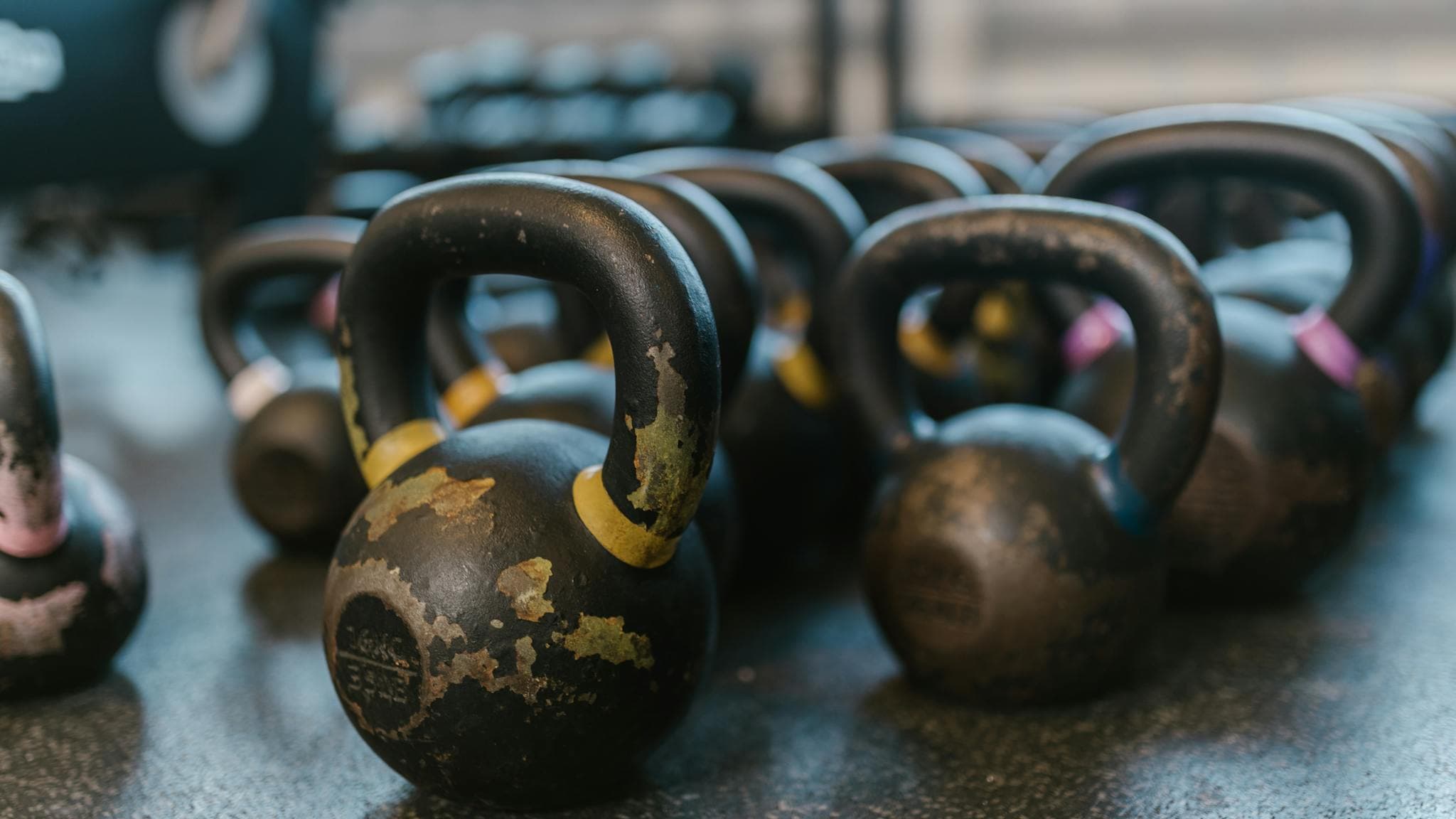
If you have time for only one kind of training after 40 in Singapore, the honest answer is that neither HIIT nor strength training alone covers what your body needs. High-intensity interval training is one of the most efficient ways to raise VO2 max and improve metabolic health, and it does this reliably even in older adults. It does not build or preserve the muscle and bone that decide whether you stay strong, steady, and independent into your 50s and beyond. Progressive resistance training does that, and HIIT cannot substitute for it. The trained answer is both, with strength as the structural pillar you cannot skip.
TL;DR
- HIIT produces a large, significant rise in cardiorespiratory fitness in older adults, and a small but real edge even against other exercise modes.
- Aerobic work, including HIIT-style training, is the better tool for cutting fat mass, but it does not build lean muscle the way resistance training does.
- Progressive resistance training is the modality that reliably improves strength and physical function in ageing adults, the gains that protect against falls and frailty.
- Resistance and combined training are the modalities the bone evidence singles out for protecting bone mineral density after midlife, with combined training highlighted as particularly effective.
- The choice is not HIIT versus strength. It is HIIT plus strength, with strength training as the non-negotiable base.
Why this is the wrong question
HIIT or strength is framed as a competition, and the framing is the problem. The two train different physiological systems toward different healthspan outcomes. Cardiorespiratory fitness governs how much oxygen your body can move and use, which sets your reserve against disease and decline. Muscle and bone govern whether you can carry, climb, catch yourself, and live independently. Asking which is better is like asking whether a car needs an engine or brakes.
After 40 the stakes sharpen because both systems start declining if left alone. Cardiorespiratory fitness drifts down, and muscle mass and bone density fall year on year without a loading stimulus. The right question is not which one to pick. It is how to cover both efficiently when training time is limited, and the evidence points to a clear split of labour.
What HIIT genuinely does
HIIT earns its reputation on cardiorespiratory fitness. A 2024 systematic review and meta-analysis in Sports Medicine - Open by Liang and colleagues pooled the trials of HIIT in older adults and found a large, significant increase in cardiorespiratory fitness versus non-exercise controls (Hedges g = 0.774, 95 percent CI 0.506 to 1.041). That is a meaningful effect on the single fitness measure most tightly linked to how well you age.
The same review found that HIIT held a small but statistically significant advantage even against other exercise modes (g = 0.228, 95 percent CI 0.067 to 0.383). In plain terms: interval training is not just better than doing nothing, it edges out steady-state work for raising VO2 max in this age group. If your goal is cardiorespiratory reserve, HIIT is a legitimate, time-efficient tool, and the data backs it after middle age, not just in young athletes.
VO2 max matters because it is the strongest single fitness predictor of how long and how well you live, which is why we assess cardiorespiratory fitness at the start of training rather than guessing. We cover the measurement question, and why most Singapore clinics test it wrongly for untrained adults, in our piece on the VO2 max test in Singapore. HIIT is one of the cleanest ways to move that number. So far the case for HIIT is strong. The problem is what it does not touch.
The muscle gap HIIT leaves open
Aerobic training, the family HIIT belongs to, is good at cutting fat. It is not good at building muscle. The cleanest evidence comes from the STRRIDE-AT/RT randomised trial, reported by Willis and colleagues in the Journal of Applied Physiology in 2012, which compared aerobic training, resistance training, and the two combined in overweight and obese adults. Aerobic training beat resistance training for reducing fat mass and total body mass. That is the half of the story HIIT advocates tell.
The other half is decisive. In the same trial, resistance training, and the combined programme, was what increased lean body mass. Resistance training alone did not significantly reduce fat or body mass, and aerobic training alone did not build lean mass. Each modality did one job. If you train only HIIT, you can lose fat and still be losing the muscle underneath it, which is exactly the trap that worries me for adults past 40 chasing a smaller number on the scale.
Cardio decides how much fat you carry. Strength decides how much of you is left to carry it.
This is why fat loss and muscle preservation have to be planned together rather than assumed. We go deeper on holding muscle while cutting fat in our guide to body recomposition after 40. The short version: a HIIT-only week can leave you lighter and weaker at the same time, and weaker is the direction that costs you later.
What strength training protects
The gains that matter most after 40 are not aesthetic. They are functional: the strength to rise from a chair, the power to catch a stumble, the capacity to keep doing both at 70. A 2021 systematic review and meta-analysis of randomised trials in European Review of Aging and Physical Activity by Chen and colleagues looked at resistance training in older adults who already had sarcopenia, the age-related loss of muscle. Resistance training significantly improved muscle strength, including handgrip and knee-extension strength, and physical performance, including gait speed and timed-up-and-go.
One detail in that review sharpens the whole argument. In adults who were already sarcopenic, resistance training reliably improved strength and function but did not significantly increase skeletal muscle mass. The reading is not that resistance training fails to build mass. It is that once muscle is far gone, you are training to recover function rather than to regrow what was lost. That makes the case for starting before you lose it, not after. Strength training in your 40s and 50s defends the muscle and the function you still have, when defending it is far easier than clawing it back.
This is the ground HIIT cannot cover. No amount of interval work on a bike or a rower delivers the progressive mechanical load that drives strength and functional adaptation. The mortality story everyone repeats about cardio is real, but it sits alongside a function story that only loading can write. Sarcopenia, and how to screen for it early, is the subject of our Singapore guide to muscle loss.
The bone argument
Bone is the part of this no one feels until it breaks. After midlife, and especially after menopause, bone mineral density falls, and a fall that would have bruised you at 40 can fracture a hip at 65. The signal bone responds to is mechanical loading. A 2025 meta-analysis in Archives of Osteoporosis by Hejazi and colleagues compared aerobic, resistance, and combined training on bone mineral density in postmenopausal women.
The review found that regular exercise improved bone mineral density at the lumbar spine, femoral neck, and trochanter, the sites that matter for hip and spine fractures, and it singled out combined aerobic-plus-resistance training as the particularly effective strategy. The reading for anyone training after 40 is that loading earns its place in the week, not that you drop conditioning: resistance training and combined training are the modalities the bone evidence puts forward, so a programme that includes meaningful load is the one that protects the skeleton you want to keep into later decades. That is why loading is non-negotiable, not optional.
How to combine both after 40
The practical answer is to keep both, and to refuse to let HIIT crowd strength out. A workable week for most adults past 40 is two to three resistance sessions built on progressive load, plus one or two shorter conditioning sessions where the intervals live. Strength is the foundation the week is built on, and conditioning is layered on top, not the other way round. The biggest mistake I see is treating a sweaty HIIT class as a complete programme. It trains your lungs and leaves your skeleton and your muscle underserved.
You do not need a large volume of strength work to get the structural benefit, which is the point of our piece on the minimum effective dose of three hours a week. A focused, progressively loaded strength programme of a few hours weekly covers the muscle and bone side, while a modest amount of interval conditioning covers the cardiorespiratory side. Both fit inside a normal working week in the CBD.
This split is exactly why we measure before we prescribe. The Catalyst Healthspan Assessment tests four pillars, body composition, cardiorespiratory fitness, stability, and strength, so we can see which system is lagging rather than defaulting you into whichever training you already like. If your cardiorespiratory number is low, conditioning carries more of the early load. If your strength and body composition are the gap, the programme leans there first. The evidence says you need both pillars; the assessment tells us how to weight them for you.
Frequently asked questions
Q. Is HIIT enough on its own after 40?
No. HIIT is excellent for raising VO2 max and cutting fat, and the evidence in older adults supports it strongly. But it does not build or preserve lean muscle, and resistance and combined training are the modalities the bone evidence singles out for protecting bone mineral density. Those benefits depend on progressive load. A HIIT-only programme after 40 can leave you fitter on paper while quietly losing the muscle that protects your independence. Pair it with strength work.
Q. Which is better for longevity, HIIT or strength training?
Neither alone. They protect different systems. HIIT improves cardiorespiratory fitness, the strongest single fitness predictor of mortality. Strength training protects muscle, function, and bone, which decide whether you stay independent as you age. The longevity answer is to train both, with resistance training as the structural base and interval conditioning layered on top. Picking one means leaving a major healthspan system untrained.
Q. Does HIIT improve VO2 max in older adults?
Yes, and significantly. A 2024 meta-analysis in Sports Medicine - Open found HIIT produced a large increase in cardiorespiratory fitness in older adults versus non-exercise controls, and a small but real edge even against other exercise modes. So if your goal is to move your VO2 max number, HIIT is a legitimate and time-efficient tool well into middle age and beyond, provided you are cleared to train at intensity.
Q. How many strength sessions a week do I need after 40?
For most adults, two to three progressive resistance sessions a week are enough to defend muscle, strength, and function, alongside one or two shorter conditioning sessions. You do not need daily lifting to get the structural benefit. A focused, progressively loaded few hours a week covers the muscle and bone side. The key is consistent load that increases over time, not volume for its own sake.
Q. Can strength training reverse muscle loss I have already had?
It can recover a large amount of strength and physical function, which is what matters most for daily life and independence. The evidence in already-sarcopenic adults shows resistance training reliably improves strength and performance, though regrowing lost muscle mass at that stage is harder and less certain. That is the case for starting before significant loss, in your 40s and 50s, when defending muscle is far easier than rebuilding it.
Citations
Liang, W., Wang, X., Cheng, S., Jiao, J., Zhu, X., & Duan, Y. (2024). Effects of High-Intensity Interval Training on the Parameters Related to Physical Fitness and Health of Older Adults: A Systematic Review and Meta-Analysis. Sports Medicine - Open, 10(1), article 98. pmc.ncbi.nlm.nih.gov
Willis, L. H., Slentz, C. A., Bateman, L. A., Shields, A. T., Piner, L. W., Bales, C. W., Houmard, J. A., & Kraus, W. E. (2012). Effects of aerobic and/or resistance training on body mass and fat mass in overweight or obese adults. Journal of Applied Physiology, 113(12), 1831-1837. pubmed.ncbi.nlm.nih.gov
Chen, N., He, X., Feng, Y., Ainsworth, B. E., & Liu, Y. (2021). Effects of resistance training in healthy older people with sarcopenia: a systematic review and meta-analysis of randomized controlled trials. European Review of Aging and Physical Activity, 18, article 23. pmc.ncbi.nlm.nih.gov
Hejazi, K., Rahimi, G. R. M., & Hofmeister, M. (2025). Impact of exercise modalities on bone health: a meta-analysis of aerobic, resistance, and combined training on bone mineral density in postmenopausal women. Archives of Osteoporosis, 20(1), 105. pubmed.ncbi.nlm.nih.gov