The Edit · Founder Insights
On a GLP-1 in Singapore? Keep Your Muscle While You Lose Fat
Roughly 25 to 39% of the weight lost on a GLP-1 is muscle, not fat. Here is how to keep it in Singapore, with strength training and enough protein.
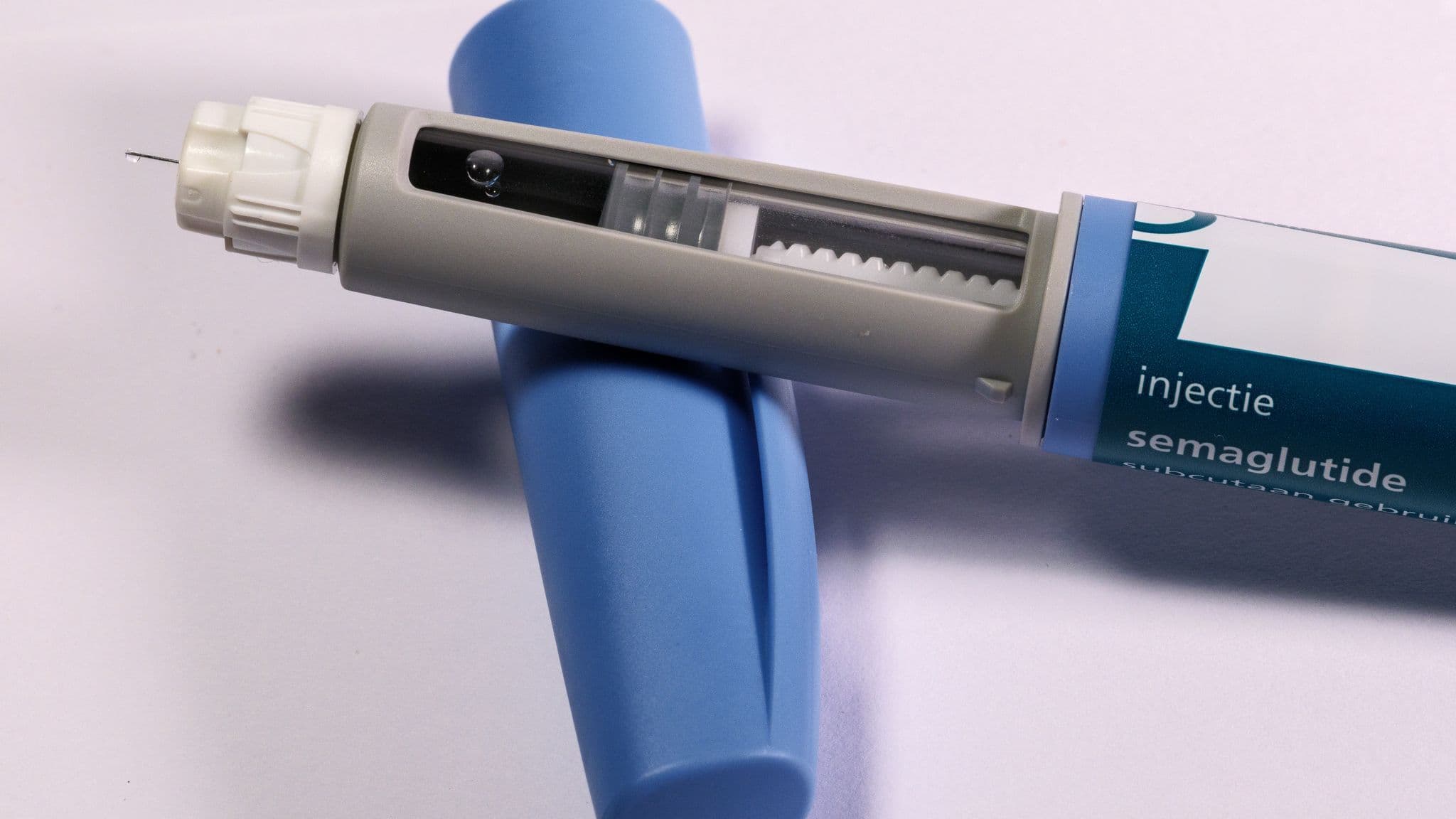
If you are losing weight on a GLP-1 in Singapore, somewhere between a quarter and 40% of what you lose will be muscle, not fat, unless you train to keep it. The medication is efficient at removing weight, but it does not choose fat over muscle on your behalf. The evidence is consistent: pair the drug with two to three strength sessions a week and enough protein, and you protect the muscle that carries you into your 50s, 60s and beyond.
TL;DR
- Roughly 25 to 39% of the weight lost on a GLP-1 is lean mass, not fat, depending on the drug and the person.
- Tirzepatide trials show about 25% of weight lost as lean mass; semaglutide trials sit nearer the top of that range.
- Muscle lost in your 40s and beyond is hard to rebuild, and it protects your strength, bones, metabolism and independence.
- Resistance training two to three times a week, plus protein around 1.2 to 1.6 grams per kilogram a day, preserves most of that muscle.
- In a randomised trial, adding exercise to GLP-1-class treatment preserved lean mass and improved insulin sensitivity and fitness, which the drug alone did not.
What a GLP-1 does to your body composition
GLP-1 receptor agonists like semaglutide (sold as Ozempic and Wegovy) and the dual GLP-1 and GIP agonist tirzepatide (Mounjaro) produce weight loss that no diet reliably matches. The question is what comes off. A 2024 review in the Lancet Diabetes and Endocrinology put it plainly: across the major trials, 25 to 39% of the total weight lost was lean mass rather than fat.
The drug you are on moves you within that range. In the SURMOUNT-1 body-composition substudy, about a quarter of the weight lost on tirzepatide was lean mass. In the semaglutide STEP 1 analysis, total lean body mass fell by 9.7%, and lean tissue made up close to 40% of the weight lost. Either way, a meaningful share of your hard-won loss is muscle leaving the body.
Do it yourself
You can run the muscle-protecting half yourself. The GLP-1 Muscle Protocol is the 12-week strength-and-protein plan our coaches use, medically reviewed by Dr Luqman Haris, MBBS, with every movement on video. Yours to follow at your own pace.
Why losing muscle after 40 is the real risk
If you are in your 40s or older, you are already losing muscle to age. Adults lose muscle mass, and strength faster still, from midlife onward, a process that ends in sarcopenia if nothing intervenes. A GLP-1 layered on top accelerates that loss at exactly the stage of life when muscle is hardest to rebuild.
Muscle is not cosmetic. It is the tissue that keeps you strong and steady, supports bone density, clears glucose from your blood, and decides whether you carry your own life into your 60s and 70s without help. Losing fat improves the numbers on a screening report. Losing muscle quietly erodes the thing those numbers are meant to protect. That distinction is what we build every body-recomposition plan after 40 around.
The drug decides how much weight you lose. You decide how much of it is muscle.
The fix: strength training and enough protein
The intervention is not exotic. The same Lancet review recommends resistance training and adequate protein as the two levers that protect muscle during medically induced weight loss. Resistance training is the signal that tells the body to keep the muscle it would otherwise shed. Protein is the raw material it needs to do so.
The trial evidence backs this. In a randomised controlled trial in the New England Journal of Medicine, people maintaining weight loss with a GLP-1-class drug who also exercised preserved lean mass and improved their insulin sensitivity and cardiorespiratory fitness, results the medication alone did not deliver. The combination, not the drug by itself, produced the healthy body.
In practice that means two to three resistance sessions a week, loaded properly and progressed over time, and a protein target around 1.2 to 1.6 grams per kilogram of body weight per day, spread across meals. The protein target is harder than it sounds on a GLP-1, because the drug suppresses appetite, so protein has to be deliberate and eaten first. This is the core of how we coach clients training on a GLP-1. It is also why a generic plan tends to fall short on a GLP-1: we looked at what an AI chatbot gets wrong when it writes a workout plan, and this is exactly the case it misses.
How GLP-1 medications are accessed in Singapore
GLP-1 medications are prescription-only in Singapore, so the path starts with a medical consultation, not a purchase. Both Wegovy (semaglutide) and Mounjaro (tirzepatide) are HSA-approved for weight management, and a doctor assesses suitability against clinical criteria, typically a body mass index at or above 30, or at or above 27.5 with a weight-related condition, before prescribing and supervising the dose titration.
Access runs through GP and weight-management clinics, hospital endocrinology, and MOH-registered telehealth platforms. Established providers such as Parkway Shenton prescribe through clinician-run programmes, and several MOH-registered telehealth services offer remote consultations with delivery. Expect a monthly cost roughly between SGD 350 and SGD 1,500, depending on the drug, the dose and the clinic. We are not a medical provider and do not prescribe; that is a conversation for your doctor. What we add is the other half of the equation, the training and protein that keep the weight you lose from being muscle.
What this looks like in Singapore
GLP-1 medications are prescribed in Singapore through licensed clinics and GPs, and uptake among time-poor executives and professionals has risen sharply. The pattern we see at our CBD studio is consistent: someone starts a GLP-1, the weight comes off fast, the clothes fit, and the body-composition scan six months later shows the muscle has gone with it. By then, some of that loss is difficult to recover.
We programme around the medication, not against it. Every client starts with the Catalyst Healthspan Assessment, which measures body composition, strength, stability and cardiorespiratory fitness, so we have a real baseline before the weight moves. From there it is two to three coached strength sessions a week, a protein plan built around the appetite suppression, and a re-test to confirm the scale is dropping fat while the muscle holds. For clients over 50, that muscle is the difference between losing weight and ageing well, and we treat it that way.
Frequently asked questions
Q. What should I do about muscle loss on a GLP-1 in Singapore?
Train against it deliberately: two to three resistance sessions a week plus 1.2 to 1.6 grams of protein per kilogram a day preserve most of the muscle a GLP-1 would otherwise take with the fat. Start with a body-composition baseline (a Catalyst Healthspan Assessment or DEXA/InBody scan) so you can see the muscle holding, not just the scale moving.
Q. Does a GLP-1 make you lose muscle?
Yes. Across the major trials, 25 to 39% of the total weight lost on a GLP-1 is lean mass rather than fat, according to a 2024 Lancet Diabetes and Endocrinology review. The drug removes weight efficiently but does not preferentially spare muscle, so without resistance training a meaningful share of what you lose is muscle.
Q. Where can I get a GLP-1 in Singapore?
GLP-1 medications are prescription-only here, so you start with a doctor's consultation rather than an online purchase. Both Wegovy and Mounjaro are HSA-approved for weight management and are prescribed through GP and weight-management clinics, hospital endocrinology, and MOH-registered telehealth platforms, after an assessment against clinical criteria such as your BMI. Catalyst does not prescribe; speak to a doctor about whether one is right for you.
Q. How much protein should I eat on a GLP-1 in Singapore?
Aim for roughly 1.2 to 1.6 grams of protein per kilogram of body weight per day, spread across your meals. This is harder on a GLP-1 because the medication suppresses appetite, so protein has to be planned and eaten first at each meal rather than left to chance.
Q. How often should I strength train while on a GLP-1?
Two to three resistance sessions a week is enough for most people, provided the load is meaningful and progressed over time. The goal is to give the body a reason to keep its muscle while you are in a calorie deficit, which light or occasional movement does not achieve.
Q. Can I keep my muscle on a GLP-1 if I am over 50?
Yes, and it matters more, not less. Muscle is harder to rebuild with age, so protecting it during GLP-1 weight loss is what keeps you strong and independent into your 60s and beyond. The approach is the same: measure your baseline, train with real load two to three times a week, and hit your protein target.
Citations
Prado, C. M., Phillips, S. M., Gonzalez, M. C., & Heymsfield, S. B. (2024). Muscle matters: the effects of medically induced weight loss on skeletal muscle. The Lancet Diabetes & Endocrinology, 12(11), 785-787. thelancet.com
Look, M., et al. (2025). Body composition changes during weight reduction with tirzepatide in the SURMOUNT-1 study of adults with obesity or overweight. Diabetes, Obesity and Metabolism. dom-pubs.onlinelibrary.wiley.com
Wilding, J. P. H., et al. (2021). Impact of Semaglutide on Body Composition in Adults With Overweight or Obesity: Exploratory Analysis of the STEP 1 Study. Journal of the Endocrine Society, 5(Supplement 1), A16. academic.oup.com
Lundgren, J. R., Janus, C., Jensen, S. B. K., et al. (2021). Healthy Weight Loss Maintenance with Exercise, Liraglutide, or Both Combined. New England Journal of Medicine, 384(18), 1719-1730. doi.org/10.1056/NEJMoa2028198