
The Edit · Founder Insights
Grip Strength: The Cheapest Mortality Test in Medicine
Grip strength predicts all-cause mortality more strongly than systolic blood pressure. Why it matters, how to test it, and the simple training that improves it.
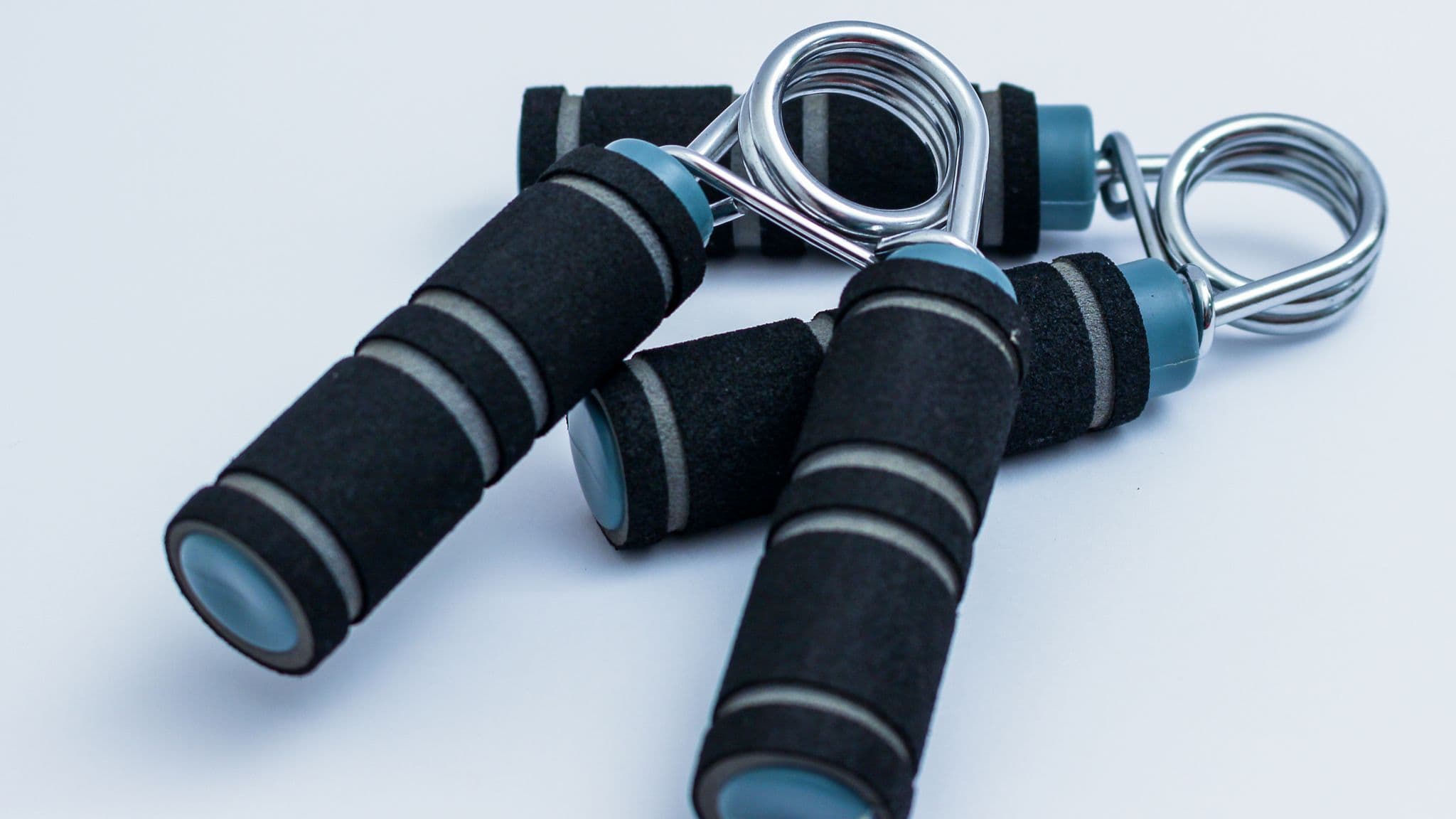
Grip strength is the single most cost-effective measurement in clinical longevity medicine. It correlates with whole-body strength, predicts all-cause mortality more strongly than systolic blood pressure, and requires only a handheld dynamometer and 30 seconds of effort to measure. Below 28 kg in men or 18 kg in women is the AWGS 2019 diagnostic threshold for sarcopenia. The good news: grip strength is trainable at any age.
TL;DR
- Grip strength predicts all-cause mortality more strongly than systolic blood pressure across multiple large cohort studies.
- The PURE study (140,000 adults, 17 countries) found every 5 kg drop in handgrip strength carried a 16% increase in mortality risk over four years.
- AWGS 2019 thresholds: below 28 kg in men, below 18 kg in women is the diagnostic floor for sarcopenia.
- Three grip types matter: crush (squeezing), pinch (thumb-to-fingers), support (sustained hold).
- Training is simple: free weights instead of machines, farmer's carries, dead hangs, fat grips, and stop using straps too early.
Why grip strength matters more than you think
Your handshake, your ability to open a jar, your hang time on a pull-up bar, these everyday signals carry more clinical information than most people realise. Grip strength is not a niche fitness metric. It is one of the strongest predictors of overall strength, late-life independence, and longevity in the medical literature.
What grip strength tells us, in clinical terms: how robust the neuromuscular system is, how well-preserved Type II muscle fibres are, and how the cardiovascular system has been maintained over decades. It correlates with quadriceps strength, with respiratory muscle strength, with bone density. It is a single 30-second test that proxies a constellation of health metrics that would otherwise take a hospital visit.
For Catalyst Performance, grip strength is one of the four pillars of the Healthspan Assessment. We measure it on every member at baseline, retest at the 16-week Checkpoint, and use it as one of the inputs to the 0-10 Healthspan Score.
The evidence: what the research actually shows
Three large cohort studies established grip strength's place in clinical medicine.
The PURE study, published in The Lancet in 2015, followed 140,000 adults across 17 countries. The headline finding: every 5 kg drop in handgrip strength carried a 16% increase in all-cause mortality risk over four years. The signal held after controlling for age, sex, education, employment status, and physical activity. Grip strength outperformed systolic blood pressure as a mortality predictor in the same cohort.
A 2018 BMJ analysis of nearly half a million UK Biobank participants by Celis-Morales and colleagues confirmed and extended the finding. Lower grip strength was associated with higher risk of all-cause mortality, cardiovascular disease, respiratory disease, and various cancers. The hazard ratios were dose-responsive, lower grip, higher risk, in a clean linear pattern.
Clinical guidelines have followed the evidence. The Asian Working Group for Sarcopenia 2019 consensus places grip strength below 28 kg in men or 18 kg in women as the diagnostic floor for sarcopenia. Singapore's 2022 Clinical Practice Guidelines for Sarcopenia endorse the same thresholds. The handheld dynamometer has become standard kit in geriatric clinics across the country.
The three types of grip strength
Before training grip, understand that it is not one capacity but three. Each responds to different stimuli and shows up in different real-world tasks.
Crush grip. Squeezing an object that fills your hand: a handshake, a stress ball, the barbell during a heavy press. This is the type measured by handheld dynamometers and the type tracked by AWGS thresholds.
Pinch grip. Holding objects between fingers and thumb: plates, bags, a thick book. Pinch grip relies heavily on thumb strength, which is consistently undertrained in commercial-gym programmes that focus on barbell work.
Support grip. Maintaining a hold for time under load: deadlifts, farmer's carries, pull-up bar hangs. Support grip is the type that fails first during heavy compound lifts and the type that translates most directly to real-life tasks like carrying groceries up stairs.
Training across all three types ensures comprehensive grip development. A grip programme that only does crush work (e.g. squeezing a stress ball) will leave pinch and support behind, and the underlying capacity will lag in real-world use.
Grip strength is the closest thing in clinical medicine to a free mortality scan. It takes 30 seconds, costs nothing, and predicts more than the readings you get at most annual physicals.
How to test grip strength (and what your number means)
The standard tool is a handheld dynamometer. Camry, Jamar, and similar brands cost SGD 100-200 for clinical-grade models. The standard protocol: standing, arm at the side, elbow flexed slightly less than 90 degrees, three trials per hand with 60-second rest between, take the maximum.
Reference values from AWGS 2019 (the relevant standard for Asian adults):
- Men: below 28 kg is the sarcopenia threshold. Above 40 kg is robust for most ages. Above 50 kg is athletic.
- Women: below 18 kg is the sarcopenia threshold. Above 26 kg is robust. Above 32 kg is athletic.
These are population-level cut-offs, not personal targets. A 70-year-old at 35 kg is in better shape than a 40-year-old at 30 kg, even though both are above the sarcopenia threshold. The trajectory matters as much as the absolute number, a 30 kg measurement that has been declining year over year is a different signal than a 30 kg measurement that has been stable for a decade. The population benchmarks behind these thresholds are tracked on Catalyst's fitness and longevity statistics page.
The Catalyst Healthspan Assessment uses a Camry digital dynamometer integrated into the broader strength and stability evaluation. The number is reported alongside SMI, waist-to-height ratio, and the other pillar metrics so the picture is complete rather than fragmented.
How to train grip strength: 6 evidence-based approaches
Grip is trainable at every age. The interventions below are simple, well-evidenced, and integrate easily into a standard strength programme.
1. Train with free weights, not just machines. Barbells and dumbbells challenge grip continuously throughout a lift. Deadlifts, rows, and presses all develop hand and forearm strength as a by-product. Machine-based work removes most of this stimulus.
2. Add farmer's carries. Carry heavy dumbbells or kettlebells for distance, 20-40 metres per set. Farmer's carries build support grip, develop core stability, and mimic real-life loaded-carrying tasks. Two to three sets at the end of a session is enough.
3. Use pull-up bar hangs. Dead hangs, active hangs, and pull-ups train open-hand grip while strengthening the shoulders and posterior chain. Aim for accumulated 60-90 seconds of hang time per session, broken into multiple sets.
4. Incorporate pinch-grip work. Hold weight plates together between fingers and thumb for time. Two 20 kg plates pinched together is a meaningful starting load. Builds the thumb strength that most gym programmes ignore.
5. Leverage grip tools. Spring-loaded grip trainers target crush grip directly. Fat grips or thick-bar attachments expand the bar diameter, forcing the hand into a more demanding open-hand position during normal lifts.
6. Don't rely on lifting straps too soon. Lifting straps are useful for advanced lifters working at loads that exceed their grip's natural ceiling. Used too early, they bypass the grip-development stimulus and stunt the underlying capacity. Most adults should not use straps at all for the first year of structured strength training.
Curious where your own grip lands? Our free grip strength test checks your number against the AWGS threshold for your sex in seconds.
Frequently asked questions
Q. How long does it take to improve grip strength?
Measurable strength gains in grip-specific work typically appear within 4-6 weeks of consistent training. The peak gain in handgrip strength clusters around 19 weeks per the resistance-training literature in older adults. The earlier you start, the easier the trajectory; the intervention works at every age.
Q. What is a good grip strength score?
Per AWGS 2019, the diagnostic floor for sarcopenia is 28 kg in men and 18 kg in women. Above 40 kg in men and 26 kg in women is robust for most ages. Athletic populations can exceed 50 kg in men and 32 kg in women. The trajectory matters: a stable number over years is a better signal than a single high reading on one good day.
Q. Does grip strength really predict longevity?
Yes, across multiple large cohort studies (PURE, UK Biobank, Health and Retirement Study). The signal is strong, dose-responsive, and independent of most other cardiovascular risk factors. The Lancet PURE study found every 5 kg drop in grip strength carried a 16% increase in all-cause mortality risk. Grip strength outperformed systolic blood pressure as a mortality predictor in the same cohort.
Q. Is grip strength the same as forearm strength?
Closely related but not identical. Forearm muscles drive most of the hand-closing force, but grip strength also involves intrinsic hand muscles, finger flexor tendons, and neuromuscular coordination. Training that targets only forearms (wrist curls, reverse curls) develops part of the picture; comprehensive grip training (crush, pinch, support) develops all of it.
Q. Should I train grip strength every day?
No. Grip muscles need recovery like every other muscle group. Two to three sessions per week of grip-specific work, integrated into a standard strength programme, is the canonical dose. Daily grip work is more likely to cause forearm tendonitis than to accelerate strength gain.
Citations
Leong DP, Teo KK, Rangarajan S, et al. (2015). Prognostic value of grip strength: findings from the Prospective Urban Rural Epidemiology (PURE) study. The Lancet, 386(9990), 266–273. pubmed.ncbi.nlm.nih.gov
Celis-Morales CA, Welsh P, Lyall DM, et al. (2018). Associations of grip strength with cardiovascular, respiratory, and cancer outcomes and all cause mortality: prospective cohort study of half a million UK Biobank participants. BMJ, 361:k1651. pubmed.ncbi.nlm.nih.gov
Chen LK, Woo J, Assantachai P, et al. (2020). Asian Working Group for Sarcopenia: 2019 Consensus Update on Sarcopenia Diagnosis and Treatment. Journal of the American Medical Directors Association, 21(3), 300–307. jamda.com
Lim WS, Cheong CY, Lim JP, et al. (2022). Singapore Clinical Practice Guidelines for Sarcopenia. The Journal of Frailty & Aging, 11(4), 348–369. springer.com