The Edit · Founder Insights
Can ChatGPT Write a Workout Plan? The Four Things It Misses
Can ChatGPT write a workout plan? We tested four AI tools and read the output the way a coach does. Here is what AI gets right, and what it misses.
Yes, ChatGPT can write a workout plan, and the plan will look credible. The harder question is whether a credible-looking plan is the same thing as a safe, progressive programme a qualified coach in Singapore will stand behind, and in 2026 the honest answer is still no.
TL;DR
- General AI tools (ChatGPT, Perplexity, Claude, Gemini) are fast, free and genuinely useful for ideas, definitions and quick questions, and they produce a structured plan in seconds.
- In our test, every tool returned a plausible plan, and every plan shared the same gaps: no health screening, generic progression, no way to see your form, and no memory of you between sessions.
- Independent research backs this up. ChatGPT exercise advice was only 41.2 percent comprehensive against gold-standard guidelines, and coaching experts rated AI training plans a median 2 out of 5 on minimal input.
- On a GLP-1 medication the stakes rise sharply, because 25 to 39 percent of the weight lost is muscle, and a no-review plan is least equipped to protect it.
- A plan a real professional builds and stands behind is a different product: medically reviewed, demonstrated on video, finite and progressive, with a human who carries the outcome.
How a coach-built plan compares to an AI one
| Dimension | A coach-built Catalyst Protocol | A plan from a general AI tool |
|---|---|---|
| Who built it | Coaches who have hired and trained over 100 trainers across two decades on the gym floor | A language model assembling plausible text from training data |
| Medical review | Reviewed by Dr Luqman Haris, MBBS, co-founder and Head of Training Systems | None; the output carries no clinical sign-off |
| Watches your form | Optional Coach Check: a video review of your three main lifts | Cannot see you, cannot correct technique |
| Movement demonstrations | Every movement demonstrated on video by the coaches who wrote it | Text descriptions, or links to videos it did not make |
| Plan shape | A finite, progressive 12-week programme with a defined endpoint | A fresh answer each prompt, with no built-in progression or end |
| Accountability | A named team that carries the outcome | No author who has coached a body and owns the result |
Why so many people now ask ChatGPT to write a workout plan
It makes complete sense that the first stop is now a chatbot. A personal trainer in Singapore is a real monthly commitment, and a free tool answers at midnight, never judges the question, and produces a tidy week-by-week table on demand. For a general fitness question, this is a good thing, and we say so plainly: these tools have lowered the barrier to starting, and starting is most of the battle.
The tension sits underneath the tidy table. A workout plan is not just information; it is a set of instructions you will load your joints and spine under, several times a week, for months. The quality you cannot see in the output is exactly the quality that matters: whether the load is appropriate for your body, whether the progression is real, and whether anyone competent has checked that it is safe for you specifically. So we ran a test.
What we tested, and how
In 2026 we gave the same prompt to four widely used tools: ChatGPT, Perplexity, Claude and Gemini. The prompt was deliberately ordinary, the kind a real member would type: build me a 12-week strength programme, I am 45, training three times a week, and I am on semaglutide for weight loss. We then read each plan the way we read any programme that lands on the studio floor: is the structure sound, is the progression genuine, are the loads and movements appropriate, and what is missing that a competent coach would never leave out. The lens is our coaching team, with two decades on the floor between our founders and over 100 trainers hired and developed, not a checklist downloaded for the occasion.
What the tools got right
This is the part the louder articles skip, so we will lead with it. The outputs were fast, well organised and reasonable on the surface. Each tool split the week sensibly, named real compound movements, and structured the twelve weeks into phases. Claude and Gemini both surfaced an unprompted note to check with a doctor before starting, which is the correct instinct. As a way to learn what a training week can look like, or to get unstuck on terminology, these tools are genuinely helpful, and a beginner who follows a reasonable AI plan and simply moves more will usually be better off than one who does nothing.
We want to be precise here, because fairness is the whole point. The tools are not careless, and they are not dangerous in the abstract. They are very good at producing something that reads like expertise. The gap is not in the prose. It is in everything the prose cannot do.
What a coach sees that the output misses
Read the same four plans as a coach, and the difference between an AI personal trainer and a real one is consistent.
The progression is decoration, not a plan. Each output said to increase the weight each week, but none defined the starting load, the rep target that triggers a jump, or a deload to manage fatigue. Progressive overload is the entire mechanism of getting stronger, and add weight when you can is not a programme, it is a slogan. This is the single most common failure, and it is invisible unless you already know what a real progression model looks like.
There is no clinical eye. In our test, none of the four asked a screening question about injuries, conditions or medications before prescribing. That tracks with the research: a peer-reviewed evaluation found AI exercise advice only 41.2 percent comprehensive against gold-standard guidelines, and the screening it did offer was frequently off-target (Zaleski et al., JMIR Medical Education, 2024). A separate expert panel rated a minimal-input ChatGPT plan a median of 2 out of 5, rising to 4 only once a coach fed in far more detail (Düking et al., 2024). The plan can sound certain and still be wrong, because confidence and correctness are not the same signal.
It cannot watch you move. The most important variable in whether a programme helps or hurts is how you actually perform the lift, and no chatbot can see your hips shift or your bar path drift. A TIME writer who followed a ChatGPT plan made exactly this point: the tool could not check her form, and could not explain why it chose what it chose (Heimlich, TIME).
It has no memory of you. Open a new chat and the tool starts fresh. It does not know you tweaked your shoulder in week three, that Tuesdays are impossible, or that you out-progressed the plan a month ago. A coach, or online coaching that puts a real person on the other side of the screen, is a relationship over time. A prompt is a single transaction.
The GLP-1 case, where the gap is widest
The clearest example of why this matters is the one in our test prompt. On a GLP-1 medication such as semaglutide or tirzepatide, the central risk is not the number on the scale, it is what the weight is made of. Across major trials, roughly 25 to 39 percent of the weight lost on these medications is lean mass, not fat (Prado et al., Lancet Diabetes and Endocrinology, 2024). That muscle is the tissue that carries your healthspan: in a study of nearly 140,000 people, each 5 kg drop in grip strength was linked to a 16 percent higher risk of death, and grip strength predicted mortality more strongly than systolic blood pressure (Leong et al., The Lancet, 2015).
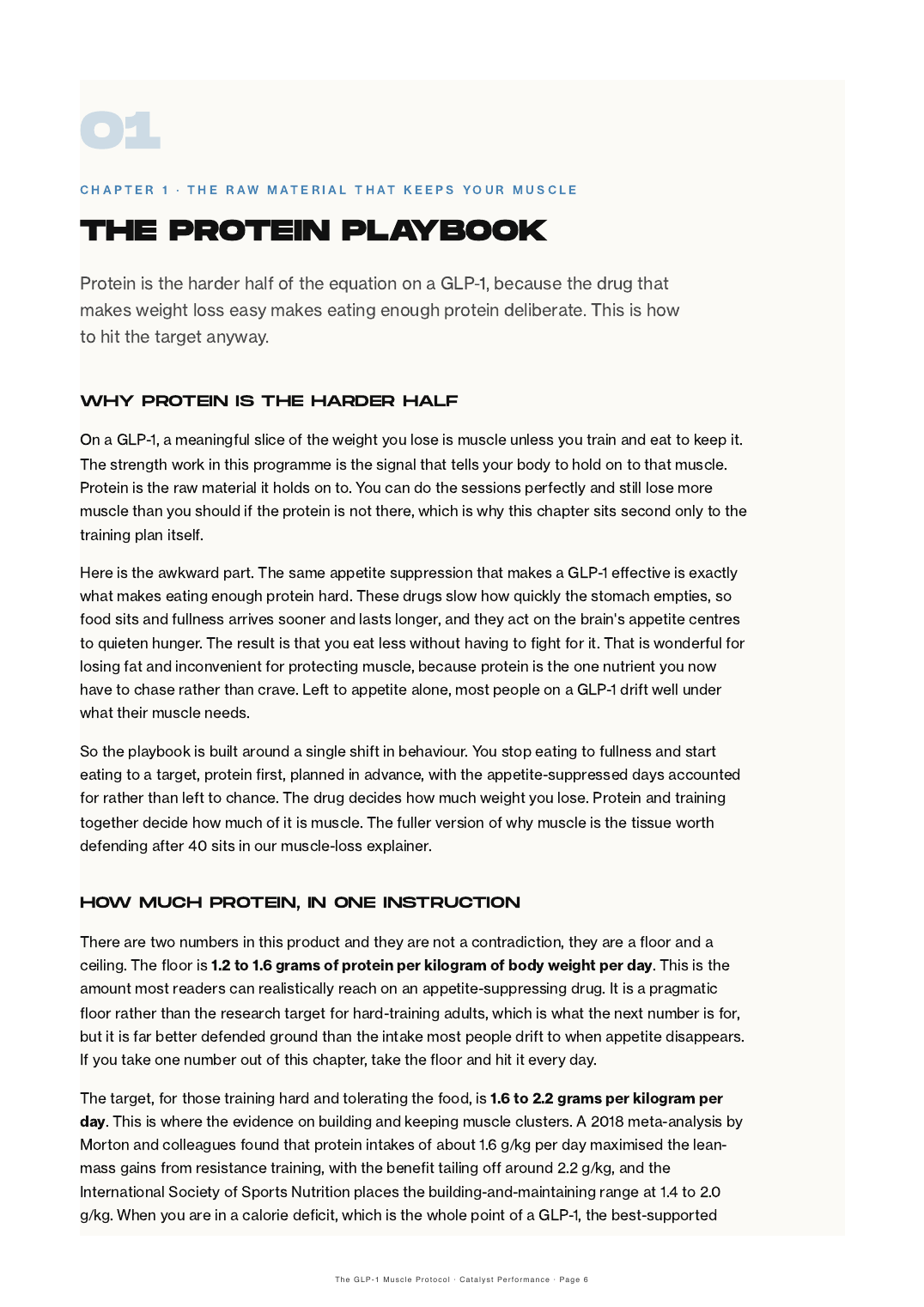
The protective response is specific and well evidenced. In older adults losing weight, neither extra protein nor resistance exercise alone reliably preserved lean mass, but the two together produced a significant increase in fat-free mass (Verreijen et al., Nutrition Journal, 2017). Not one of the four AI plans led with this. They treated being on semaglutide as a footnote rather than the centre of the brief, which is precisely the kind of clinical judgement a no-review tool is not built to make. A programme for someone on a GLP-1 should be designed around protecting muscle from the first session, which is why we built The GLP-1 Muscle Protocol the way we did, and why our longer explainer on muscle loss on GLP-1 medications in Singapore treats strength training as the non-negotiable other half of the medication.
What a plan a professional stands behind looks like
This is the part no chatbot can replicate, and it is the whole reason our paid programmes exist. A plan a professional stands behind is a different category of thing.
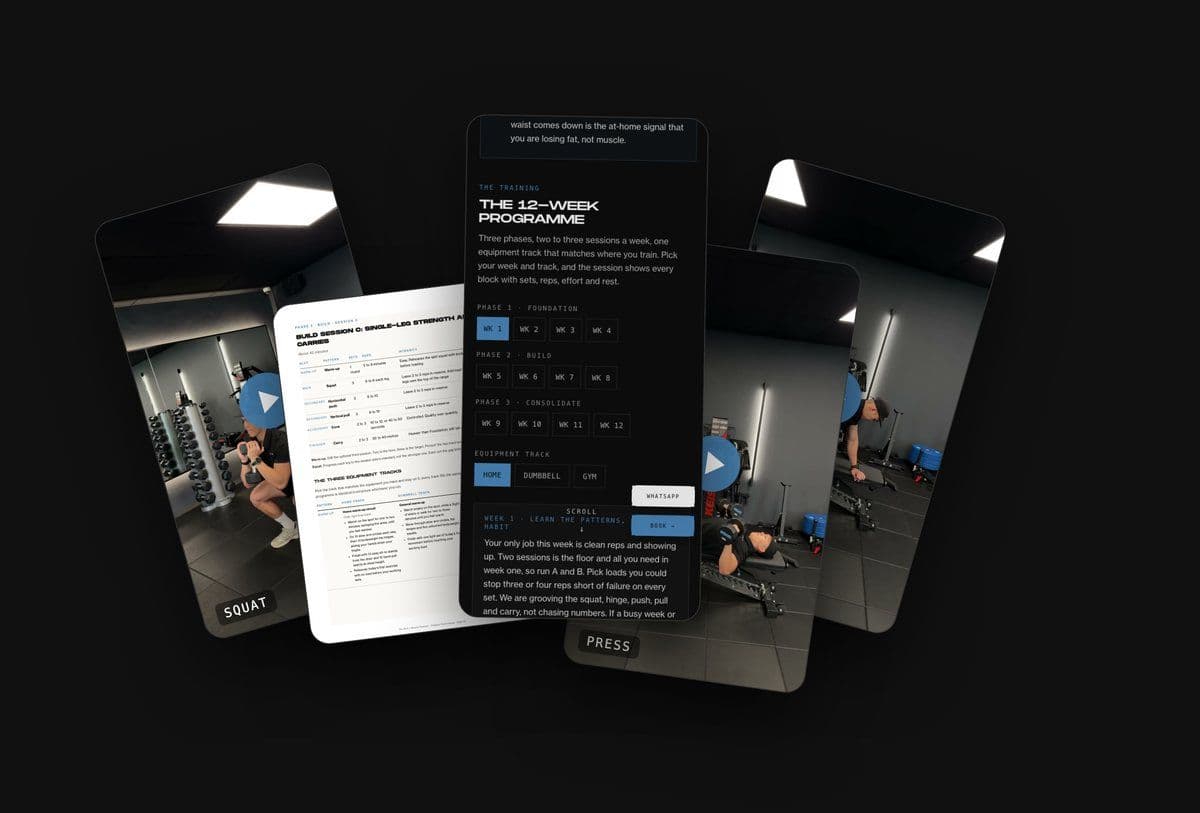
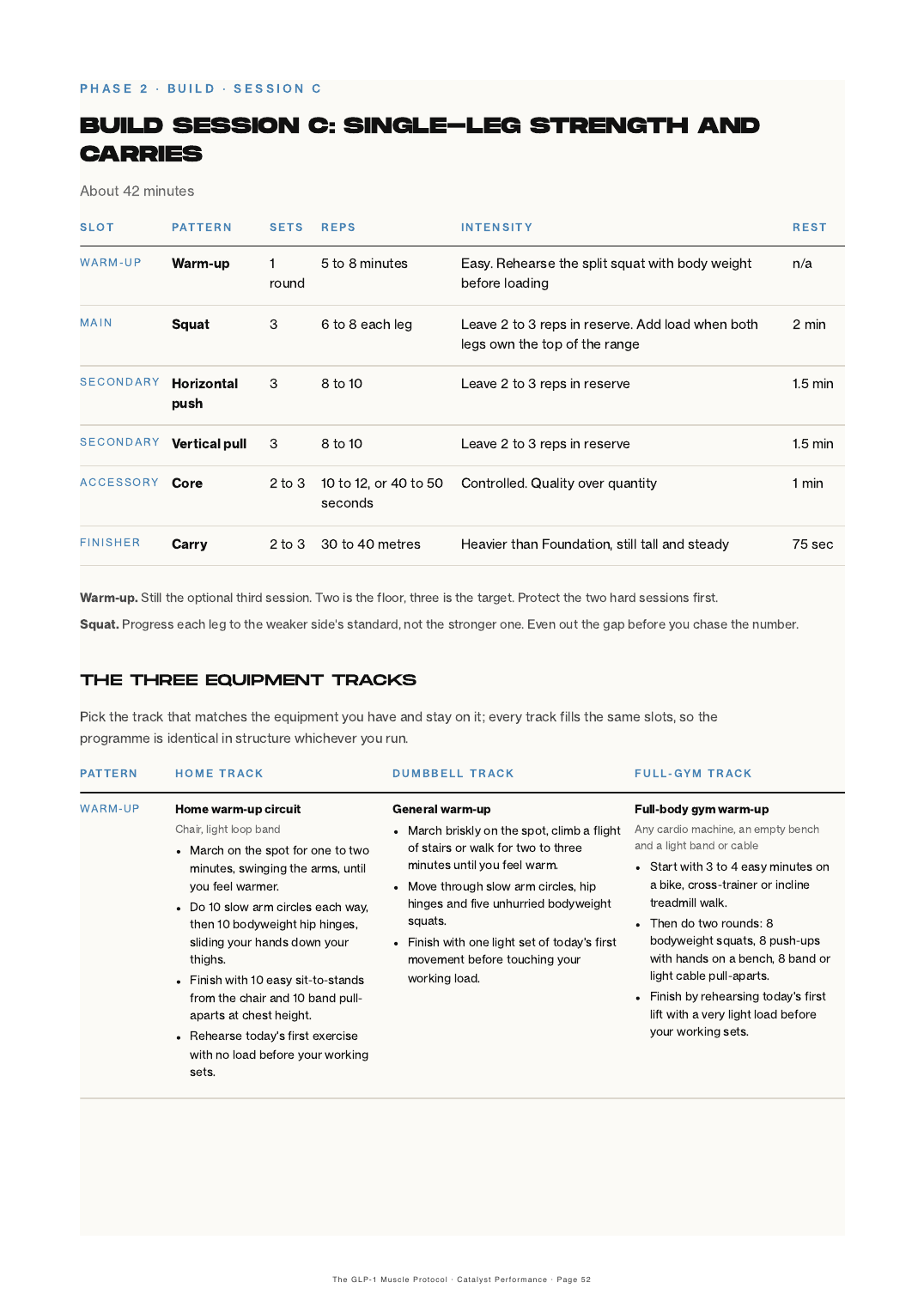
It is medically reviewed. Every Catalyst Protocol is reviewed by Dr Luqman Haris, MBBS, our co-founder and Head of Training Systems, so the programme carries a clinical sign-off rather than a confident guess. It is built by people who have coached real bodies. The programmes are written by coaches who have hired and trained over 100 trainers across two decades on the studio floor, not generated from text. Every movement is demonstrated on video by the coaches who wrote it, so you are watching the people accountable for the plan show you the rep. And it is finite and progressive. There is a defined 12-week arc with a real endpoint, plus an optional Coach Check, where you film your three main lifts and a coach reviews them, so the one thing AI structurally cannot do, see you move, is built back in.
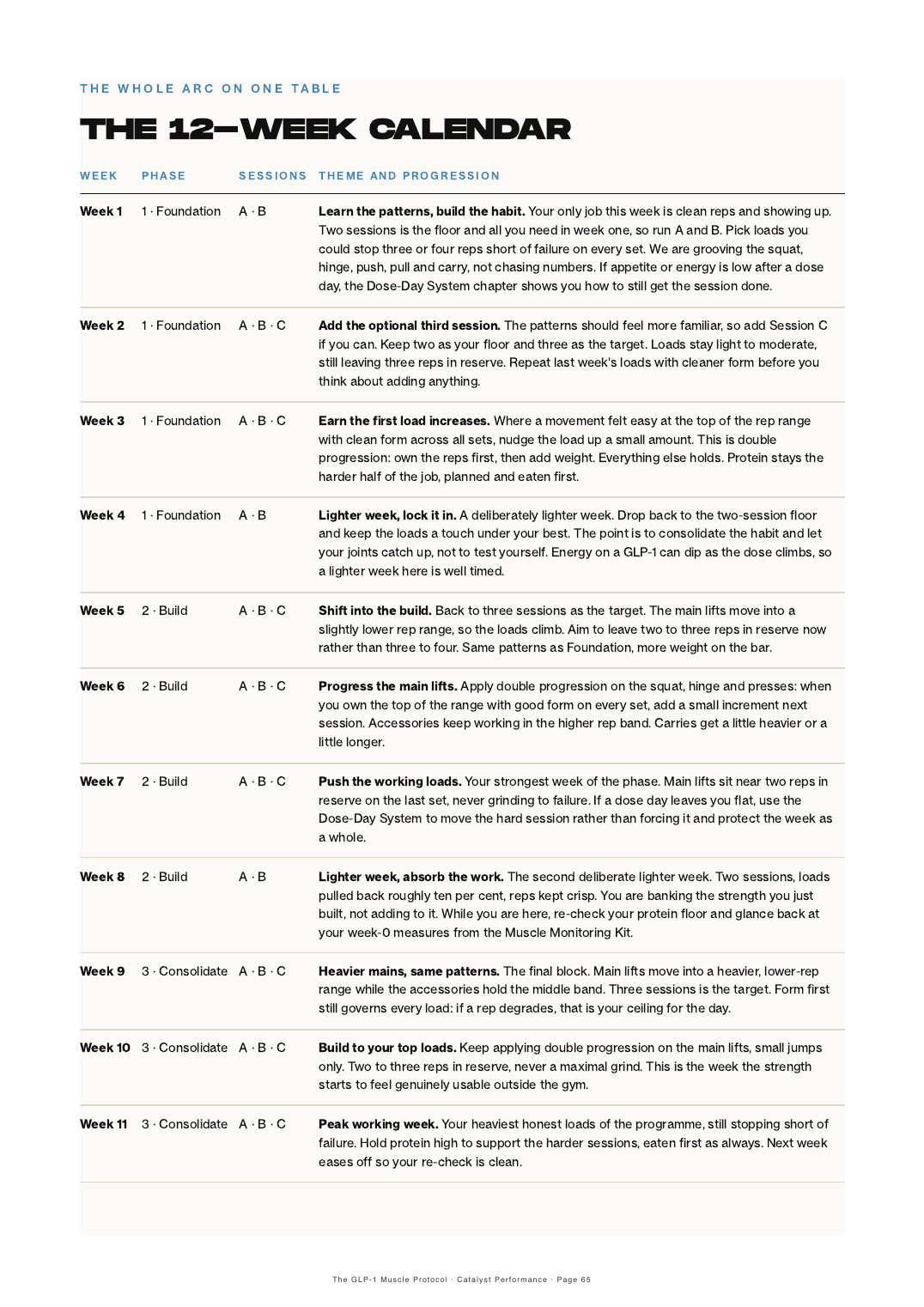
For healthy adults over 40 who want to lose fat without losing strength, The Muscle and Fat Loss Protocol follows the same model without the medication context. And for anyone who wants the argument coached rather than self-guided, online coaching puts a real person on the other side of the screen, adjusting the plan to the body in front of them, week after week.
The honest answer
Keep using AI for what it is genuinely good at: looking things up, summarising, getting unstuck, answering the quick question at midnight. We use these tools ourselves and recommend them for exactly that. But a one-time strength programme, run on a body with a history, sometimes on a medication that strips muscle, is the case where a clinical eye, a coach who can watch you move, and a finite plan that remembers you stop being luxuries. A plan a chatbot can write and a plan a real professional will stand behind are not the same product. The first is information. The second is a programme someone is accountable for, and after two decades of coaching between our founders, that difference is the whole job.
Frequently asked questions
Q. Can ChatGPT write a safe workout plan for me?
It can write a plan that looks safe, but it does not screen your health history and rarely asks a single question about injuries or conditions before prescribing. Peer-reviewed testing found AI exercise advice only 41.2 percent comprehensive against gold-standard guidelines. If you have an injury, a heart condition, or are on a medication like a GLP-1, that gap is where the risk lives.
Q. Can an AI personal trainer check my form?
No. A text or voice tool cannot see how you move, so it cannot catch the technique faults that cause most gym injuries. Watching and correcting the lift is the one thing that still requires a human eye, which is why our Protocols include an optional video Coach Check of your main lifts.
Q. Does an AI workout plan account for progressive overload and deload weeks?
Usually only in name. In our test, the tools said to add weight over time but did not define starting loads, the rep targets that trigger a jump, or planned deloads to manage fatigue. Real progression is a specific model, not the instruction to lift more when you feel able.
Q. Can ChatGPT plan my training while I am on a GLP-1 or Ozempic?
It can produce a plan, but it tends to treat the medication as a side note. The central issue is that a meaningful share of GLP-1 weight loss is muscle, so the programme should be built around protecting it with resistance training and protein from day one. That is the framing our GLP-1 Muscle Protocol leads with and most AI plans miss.
Q. Can ChatGPT remember my progress between workouts?
Not reliably. Each new conversation starts fresh, so the tool does not retain that you tweaked a shoulder, missed a week, or already out-progressed the plan. Coaching is a relationship over time, and progression depends on memory the tool does not keep.
Q. Is a personal trainer in Singapore worth it when AI plans cost nothing?
For general knowledge, a free AI plan is a reasonable starting point. What you pay a coach for is the part the free plan cannot do: screening your history, loading you safely, watching your form, and progressing a plan that remembers you. For a one-time programme you will train on for months, that judgement is where the value sits. If you want that judgement in person, it is what our in-studio personal training in Singapore is built around.
Citations
Prado CM, Phillips SM, Gonzalez MC, Heymsfield SB (2024). Muscle matters: the effects of medically induced weight loss on skeletal muscle. The Lancet Diabetes and Endocrinology. thelancet.com
Leong DP, et al. (2015). Prognostic value of grip strength: findings from the Prospective Urban Rural Epidemiology (PURE) study. The Lancet. thelancet.com
Verreijen AM, et al. (2017). Effect of a high protein diet and/or resistance exercise on the preservation of fat free mass during weight loss in overweight and obese older adults: a randomized controlled trial. Nutrition Journal. link.springer.com
Zaleski AL, Berkowsky R, Craig KJT, Pescatello LS (2024). Comprehensiveness, Accuracy, and Readability of Exercise Recommendations Provided by an AI-Based Chatbot: Mixed Methods Study. JMIR Medical Education. mededu.jmir.org
Düking P, Sperlich B, Voigt L, van Hooren B, Zanini M, Zinner C (2024). ChatGPT Generated Training Plans for Runners are not Rated Optimal by Coaching Experts, but Increase in Quality with Additional Input Information. Journal of Sports Science and Medicine. pmc.ncbi.nlm.nih.gov
Heimlich J. I Used ChatGPT as My Personal Trainer. It Didn't Go Well. TIME. time.com/6958557/chatgpt-workout-plan