The Edit · Founder Insights
Sarcopenia: A Singapore Guide to Reversing Muscle Loss
Sarcopenia affects 32% of Singaporeans over 60. The AWGS 2019 criteria, the Yishun prevalence data, and the resistance-training dose that reverses it.
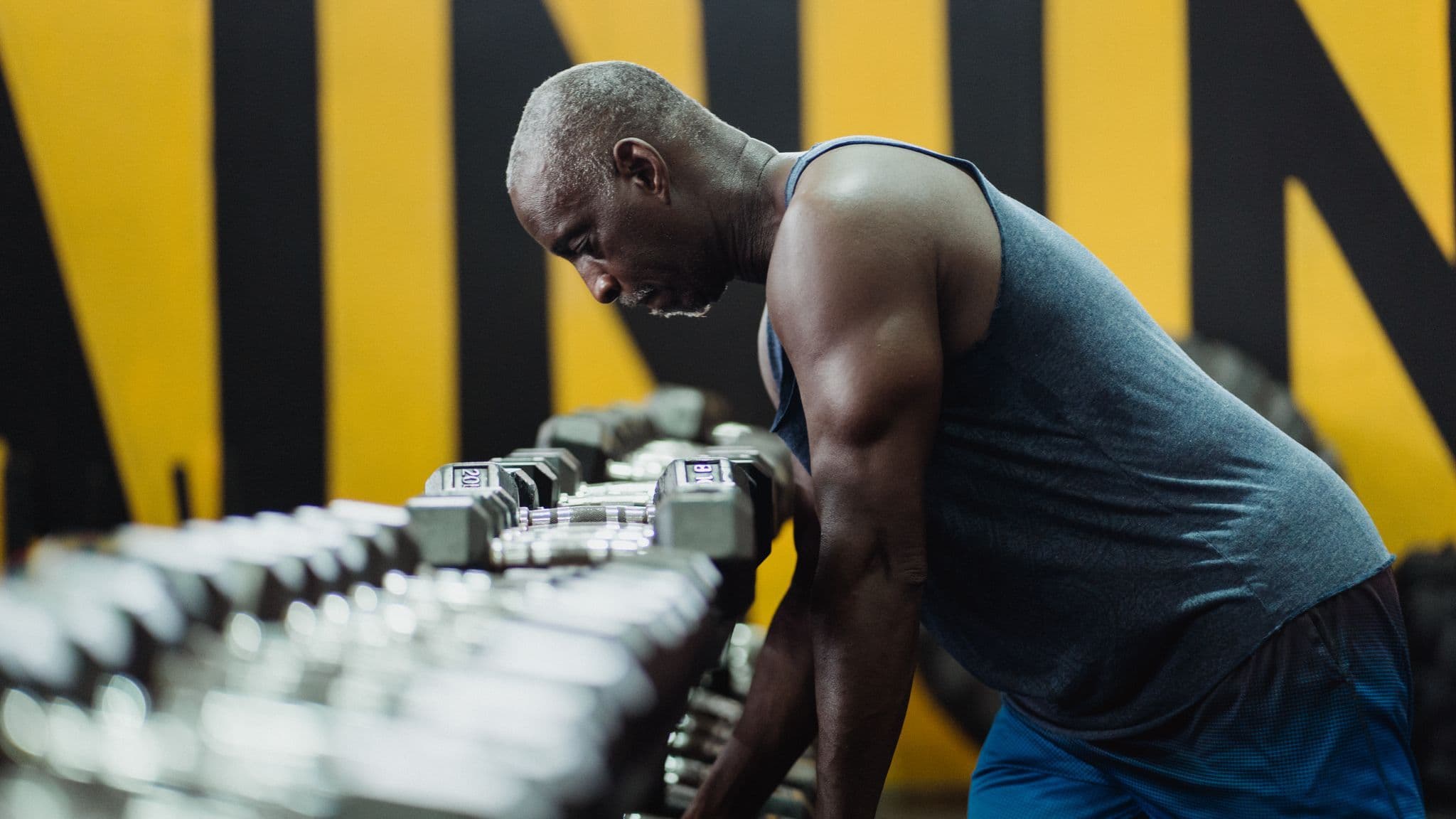
Sarcopenia is the age-related loss of muscle mass and strength, and in Singapore it affects 32% of adults over 60. Left untreated, it more than doubles mortality risk in adults over 80 in care settings, significantly raises fall risk, and is the strongest single predictor of losing independence in your 70s and 80s. It is also one of the most reversible conditions in medicine. The intervention is two to three resistance-training sessions per week, sustained for at least four months, and Singapore's 2022 Clinical Practice Guidelines endorse it as first-line treatment. This guide covers the diagnosis, the dose, and what a personal trainer for sarcopenia should actually do with you in the room.
TL;DR
- Sarcopenia is age-related muscle loss combined with low strength or low function. The Asian Working Group for Sarcopenia 2019 sets the diagnostic criteria for Asian adults.
- 32% of Singaporeans over 60 meet the criteria. Prevalence rises sharply in post-acute hospital settings.
- Untreated sarcopenia roughly doubles all-cause mortality risk, and raises fall risk by around 50%.
- Resistance training is first-line treatment per Singapore's 2022 Clinical Practice Guidelines. Two to three sessions per week, progressive load, sustained for four to six months.
- Protein intake of at least 1.2 g per kg body weight per day, distributed across three to four meals, supports the muscle-building response.
What sarcopenia is
Sarcopenia is a clinical condition, not a normal feature of ageing. The term was coined by Irwin Rosenberg in 1989 from the Greek sarx (flesh) and penia (poverty). The condition was assigned an ICD-10-CM diagnostic code (M62.84) in 2016, formally classifying it as a disease.
In plain language, your skeletal muscle slowly shrinks and weakens with age. From your 30s, you lose roughly 1% of muscle mass per year if you do not train. By your 70s, an untrained person has lost between 30% and 50% of the muscle they had at 25.
What makes the condition clinically meaningful is not the lost mass alone. Sarcopenia is diagnosed only when the lost muscle is accompanied by low strength or low physical performance. A frail 70-year-old who cannot stand from a chair without using their hands meets the diagnostic threshold. A 70-year-old of the same body composition who can stand, walk briskly, and grip firmly does not.
The condition compounds. As muscle shrinks, your basal metabolic rate falls, your insulin sensitivity declines, your bone density drops, and your fall risk climbs. Each of these accelerates the next. The clinical term for sarcopenia plus osteoporosis is osteosarcopenia, and it carries a higher mortality signal than either condition alone.
Do it yourself
Reversing muscle loss takes progressive loading, done consistently. The Muscle + Fat Loss Protocol is the 12-week plan our coaches use, medically reviewed by Dr Luqman Haris, MBBS, that you can follow yourself.
The AWGS 2019 diagnostic criteria, and why Asian thresholds differ
The Asian Working Group for Sarcopenia (AWGS) published its 2019 consensus update because the European thresholds were undercounting sarcopenia in Asian populations. Asians, on average, carry lower lean mass for a given body size than Europeans. The European cutoffs, applied to Asians, would clear plenty of people who are functionally sarcopenic.
AWGS 2019 sets three diagnostic axes. Low muscle strength is defined as a handgrip below 28 kg in men and below 18 kg in women. Low physical performance is a 6-metre walking speed below 1.0 m/s, or a 5-time chair stand of 12 seconds or longer, or a Short Physical Performance Battery score of 9 or below. Low muscle mass is a skeletal muscle index (SMI) below 7.0 kg/m² in men, and below 5.4 kg/m² (DXA) or 5.7 kg/m² (BIA) in women.
A confirmed sarcopenia diagnosis requires low muscle mass plus either low strength or low function. Possible sarcopenia, a category introduced by AWGS 2019 for community settings, requires only the strength or function leg, no DXA scan needed. The point of the lighter category is to flag people earlier, before the muscle mass loss becomes severe.
Of the three axes, handgrip strength is the workhorse. It correlates with whole-body strength, requires only a handheld dynamometer, takes 30 seconds, and predicts mortality independently of every other physical metric. I have written about grip strength as a healthspan predictor before. Sarcopenia is the disease that grip strength predicts.
Sarcopenia in Singapore: prevalence and clinical guidelines
The Yishun Study, published in JAMDA in 2021, was the first large dataset to apply AWGS 2019 to Singaporeans. The headline numbers: 13.6% of Singaporean adults overall meet the criteria, rising to 32.2% in those aged 60 and above. The condition is roughly equally distributed between sexes, at 33.7% in men over 60 and 30.9% in women over 60. The full set of Singapore-versus-global figures, each linked to its primary source, sits on Catalyst's fitness and longevity statistics page.
Prevalence rises sharply in clinical settings. Studies of post-acute hospital patients in Singapore have found prevalence exceeding 50%, with a substantial proportion meeting criteria for severe sarcopenia. Sarcopenia is what brings older Singaporeans into hospitals, and what keeps them there.
Singapore's 2022 Clinical Practice Guidelines for Sarcopenia formalised the local response. The CPG endorses AWGS 2019 as the diagnostic standard, recommends case-finding via calf circumference measurement (cutoff 34 cm in men, 33 cm in women), the SARC-F questionnaire, or the combined SARC-CalF in primary care, and strongly recommends progressive resistance-based exercise as the first-line intervention. For prevention, the same guidelines call for regular resistance activity and adequate protein intake of at least 1.0 g per kg body weight per day. The CPG was developed by Singapore's Chapter of Geriatricians, the Society for Geriatric Medicine Singapore, and a workgroup that drew on local studies.
The Singapore context matters because Singapore is ageing faster than almost any country on Earth. By 2030, one in four Singaporeans will be 65 or older. The pool of people at risk for sarcopenia is expanding rapidly, and the public-health window for prevention is narrow.
What sarcopenia costs you: mortality, falls, and lost decades
The hard outcome is death. A 2022 meta-analysis in Gerontology covering 56 studies and 42,108 participants found sarcopenia was associated with roughly twice the mortality risk overall (hazard ratio 2.00, 95% CI 1.71 to 2.34). In adults over 80 in residential care settings, the hazard ratio rose to 2.84. The relationship held independent of population setting, sarcopenia definition, and follow-up period.
The intermediate outcome is falls. A 2020 meta-analysis in Clinical Nutrition found sarcopenia raised fall risk by approximately 50%. Falls in older adults are catastrophic events. A 2010 meta-analysis in Annals of Internal Medicine found that a hip fracture carries a sharply elevated risk of death in the year that follows, concentrated in the first months after the fracture. The fall is rarely the cause of death listed on the certificate. The cause is what the fall took: the muscle mass and the conditioning that gets you back to walking.
The slow outcome is dependence. Loss of muscle function is the strongest single predictor of needing assistance with daily living after age 90. The shape of an unmanaged ageing curve is independence in the 60s, increasing fragility in the 70s, and assisted living or full-time care in the 80s. Sarcopenia is the engine of that curve.
None of this is destiny. The same trial evidence that diagnosed sarcopenia as a disease also showed it responds to a single intervention better than almost anything else in clinical medicine.
Muscle is the only organ you can rebuild after 60 with nothing more than a barbell and time.
The intervention: what a personal trainer for sarcopenia programmes, dose and progression
Resistance training is first-line treatment for sarcopenia per AWGS 2019, the European Working Group on Sarcopenia in Older People (EWGSOP2), and Singapore's 2022 Clinical Practice Guidelines. The agreement across three independent expert groups is rare in medicine, and it reflects the strength of the underlying trial evidence.
A 2025 meta-analysis of resistance-training trials in sarcopenic older adults found a dose-response relationship for the prescription. An optimal weekly volume of approximately 1,220 MET-minutes per week maximised handgrip strength gains, which corresponds roughly to three sessions of 60 minutes at moderate-to-high intensity. A minimum effective dose of around 600 MET-minutes per week, about two sessions, was enough to produce clinically meaningful improvements in gait speed. The takeaway is that the floor for benefit is low, and most people clear it with two purposeful sessions a week.
Time to effect is shorter than most people expect. Measurable strength gains can appear within the first weeks of consistent training and keep building over the months that follow. As I have argued before, two to three strength sessions per week produce nearly all the muscle and strength gains available. More frequent training adds risk and recovery burden without proportional benefit.
The training prescription matters. Compound movements (squats, hip hinges, presses, pulls, carries) load multiple muscle groups in functional patterns. Load should be heavy enough to fail at 8 to 12 repetitions, with progressive overload week to week. Machine-based work has a place for older clients new to resistance training, because it constrains the movement path and lowers the technical demand. The first six to eight weeks at Catalyst typically use a Keiser-led protocol for that reason. For older adults starting supervised training, our guide to choosing a personal trainer for seniors explains what competent screening and progression look like.
Compensatory movement patterns from years of desk work or chronic pain often hide inside the training session, suppressing the strength gains progressive overload should produce. The desk-worker compensatory pattern is the most common in our Singapore CBD membership; our NKT-certified trainer Hafiz uses NeuroKinetic Therapy assessment to trace the dysfunction to its neurological root before layering it back into the resistance prescription.
What does not work, or works less well: walking alone, swimming alone, yoga alone, or any zero-load conditioning. These have cardiovascular value, mobility value, and quality-of-life value. They do not move sarcopenia. The condition responds to load, and load means something heavy enough to make the muscle adapt.
Protein, sleep, and the lifestyle adjuncts
Resistance training is the trigger. Protein, recovery, and a few other adjuncts are the inputs that determine how much of the trigger translates into rebuilt muscle.
Protein intake should be at least 1.2 g per kg body weight per day for older adults, distributed across three to four meals. The standard 0.8 g/kg recommended dietary allowance was calibrated for young adults; in adults over 60, it is consistently below the threshold for muscle protein synthesis. Older muscle is also more anabolically resistant, meaning a given protein bolus triggers less synthesis than in a 25-year-old. The fix is volume and distribution, not exotic supplements.
Vitamin D status is worth checking. Singapore is at the equator, but office-based professionals routinely test deficient because they live indoors and use sunscreen. Low vitamin D impairs muscle function and increases fall risk. A 25-hydroxyvitamin-D level above 30 ng/mL is the conservative target, and a GP can order the test as part of a routine annual health screening.
Sleep is the recovery substrate. Chronic sleep below six hours per night attenuates the muscle response to training, raises cortisol, and worsens insulin sensitivity. The training prescription does not work as well in a chronically under-slept person.
What does not need to be on the list: most supplements. Creatine monohydrate has the cleanest evidence in older adults and is worth considering at 5 g per day. Beyond creatine, the supplement industry's claims around sarcopenia are not supported by trial evidence.
How we screen for sarcopenia at Catalyst
Every member who walks into Catalyst Performance, our private personal training studio at Manulife Tower above Telok Ayer MRT, starts with the 4-Pillar Healthspan Assessment, our 60-minute in-studio evaluation across body composition, cardiorespiratory fitness, stability, and strength. The protocol is calibrated against AWGS 2019 thresholds and built to surface sarcopenia risk before it becomes a clinical diagnosis.
The relevant components: a handheld dynamometer for grip strength (against the 28 kg and 18 kg AWGS thresholds) and an InBody bioimpedance scan for skeletal muscle index (against the 7.0 and 5.7 kg/m² thresholds). We also run the Y-Balance Test for stability and the Movement Pattern Strength Assessment for compound-lift readiness, neither of which is in AWGS but both of which inform the prescription.
If you want the test detail itself, how each measure is taken, what the thresholds mean, and how a community-care screen differs from a confirmed diagnosis, I have written a dedicated companion piece on how sarcopenia is screened and tested in Singapore. This article is about reversing the condition; that one is about catching it.
For people not yet ready to book in person, the Healthspan Audit is a free 12-question online tool that uses self-report proxies to estimate sarcopenia risk. It will not replace an in-studio assessment, but it surfaces whether you should book one.
What we do with the data is the part that matters. The 4-Pillar Healthspan Assessment is repeated at the 16-week Checkpoint, our scheduled re-assessment, and the Healthspan Score, the 0-10 output of the assessment, either confirms the prescription is working or triggers a recalibration. Sarcopenia is reversible. The condition responds to load and time. The studio's job is to apply both.
The risk is structural, not theoretical. Aggressive rapid fat-loss transformations actively accelerate the sarcopenia trajectory described above, particularly in the 40 to 65 executive window. The lean mass cost of an 8 to 12 week transformation cut is the first of eight peer-reviewed reasons we do not run transformation programmes at Catalyst.
Frequently asked questions
Q. What are the early signs of sarcopenia?
The early signs are functional, not visual. Difficulty standing from a low chair without using your hands, slower walking pace, weaker grip when opening jars, and noticeable fatigue carrying groceries up stairs. Body composition often looks unchanged on the scale because lost muscle is replaced by fat. The Yishun Study found that BMI is a poor screening tool for sarcopenia in Singaporeans; you can have a normal BMI and still meet the diagnostic threshold.
Q. Can sarcopenia be reversed?
Yes. Resistance training is the only intervention shown across trials to reverse the strength and function losses of sarcopenia. Muscle mass gains are slower and more variable, but strength and function gains begin within four weeks and become clinically meaningful by 16 weeks. The earlier the intervention starts, the more reversal is possible. Even adults in their 80s show measurable response to a structured progressive-resistance programme.
Q. What is the best exercise for sarcopenia?
Compound resistance training with progressive overload. The squat, hip hinge, press, pull, and loaded-carry pattern, performed two to three times per week with weights heavy enough to fail at 8 to 12 repetitions, is the prescription with the strongest trial evidence. Walking and conditioning are useful adjuncts but do not address sarcopenia on their own. Most older adults benefit from starting with machine-based work for technical safety before progressing to free weights.
Q. How is sarcopenia diagnosed in Singapore?
Singapore's 2022 Clinical Practice Guidelines endorse the AWGS 2019 algorithm. Case-finding starts with a calf circumference (under 34 cm in men, under 33 cm in women), the SARC-F questionnaire, or the combined SARC-CalF in primary care. Suspected cases progress to handgrip strength and 5-time chair-stand testing. A confirmed diagnosis adds a DXA or bioimpedance scan for skeletal muscle index. The full diagnostic pathway is available through geriatricians, sports physicians, and qualified personal training studios.
Q. Is sarcopenia the same as frailty?
No, but they overlap. Sarcopenia is a specific condition: low muscle mass plus low strength or function. Frailty is a broader syndrome that includes weight loss, exhaustion, slowness, weakness, and low activity. Sarcopenia is one of the strongest drivers of frailty, but you can be sarcopenic without yet being frail. The clinical opportunity is to address sarcopenia early, before it tips a person into the frailty syndrome.
Catching sarcopenia early means measuring muscle directly. Our guide to an InBody and DEXA body composition scan in Singapore explains how to read Skeletal Muscle Index and appendicular lean mass.
Citations
Chen LK, Woo J, Assantachai P, et al. (2020). Asian Working Group for Sarcopenia: 2019 Consensus Update on Sarcopenia Diagnosis and Treatment. Journal of the American Medical Directors Association, 21(3), 300-307.e2. pubmed.ncbi.nlm.nih.gov
Pang BWJ, Wee SL, Lau LK, et al. (2021). Prevalence and Associated Factors of Sarcopenia in Singaporean Adults: The Yishun Study. Journal of the American Medical Directors Association, 22(4), 885.e1-885.e10. pubmed.ncbi.nlm.nih.gov
Lim WS, Cheong CY, Lim JP, et al. (2022). Singapore Clinical Practice Guidelines for Sarcopenia: Screening, Diagnosis, Management and Prevention. The Journal of Frailty & Aging, 11(4), 348-369. pubmed.ncbi.nlm.nih.gov
Cruz-Jentoft AJ, Bahat G, Bauer J, et al. (2019). Sarcopenia: revised European consensus on definition and diagnosis. Age and Ageing, 48(1), 16-31. pubmed.ncbi.nlm.nih.gov
Xu J, Wan CS, Ktoris K, Reijnierse EM, Maier AB. (2022). Sarcopenia Is Associated with Mortality in Adults: A Systematic Review and Meta-Analysis. Gerontology, 68(4), 361-376. karger.com
Zhang X, Huang P, Dou Q, et al. (2020). Falls among older adults with sarcopenia dwelling in nursing home or community: A meta-analysis. Clinical Nutrition, 39(1), 33-39. pubmed.ncbi.nlm.nih.gov
Yan R, Chen Y, Zhang R, et al. (2025). Optimal resistance training prescriptions to improve muscle strength, physical function, and muscle mass in older adults diagnosed with sarcopenia: a systematic review and meta-analysis. Aging Clinical and Experimental Research, 37, 320. pmc.ncbi.nlm.nih.gov
Bauer J, Biolo G, Cederholm T, et al. (2013). Evidence-based recommendations for optimal dietary protein intake in older people: a position paper from the PROT-AGE Study Group. Journal of the American Medical Directors Association, 14(8), 542-559. pubmed.ncbi.nlm.nih.gov
Haentjens P, Magaziner J, Colón-Emeric CS, et al. (2010). Meta-analysis: Excess Mortality After Hip Fracture Among Older Women and Men. Annals of Internal Medicine, 152(6), 380-390. pmc.ncbi.nlm.nih.gov