The Edit · Founder Insights
Strength Training After 50 in Singapore: The Evidence
Muscle loss after 50 is not inevitable. The evidence that progressive strength training rebuilds muscle, bone and balance, and how to start safely in Singapore.
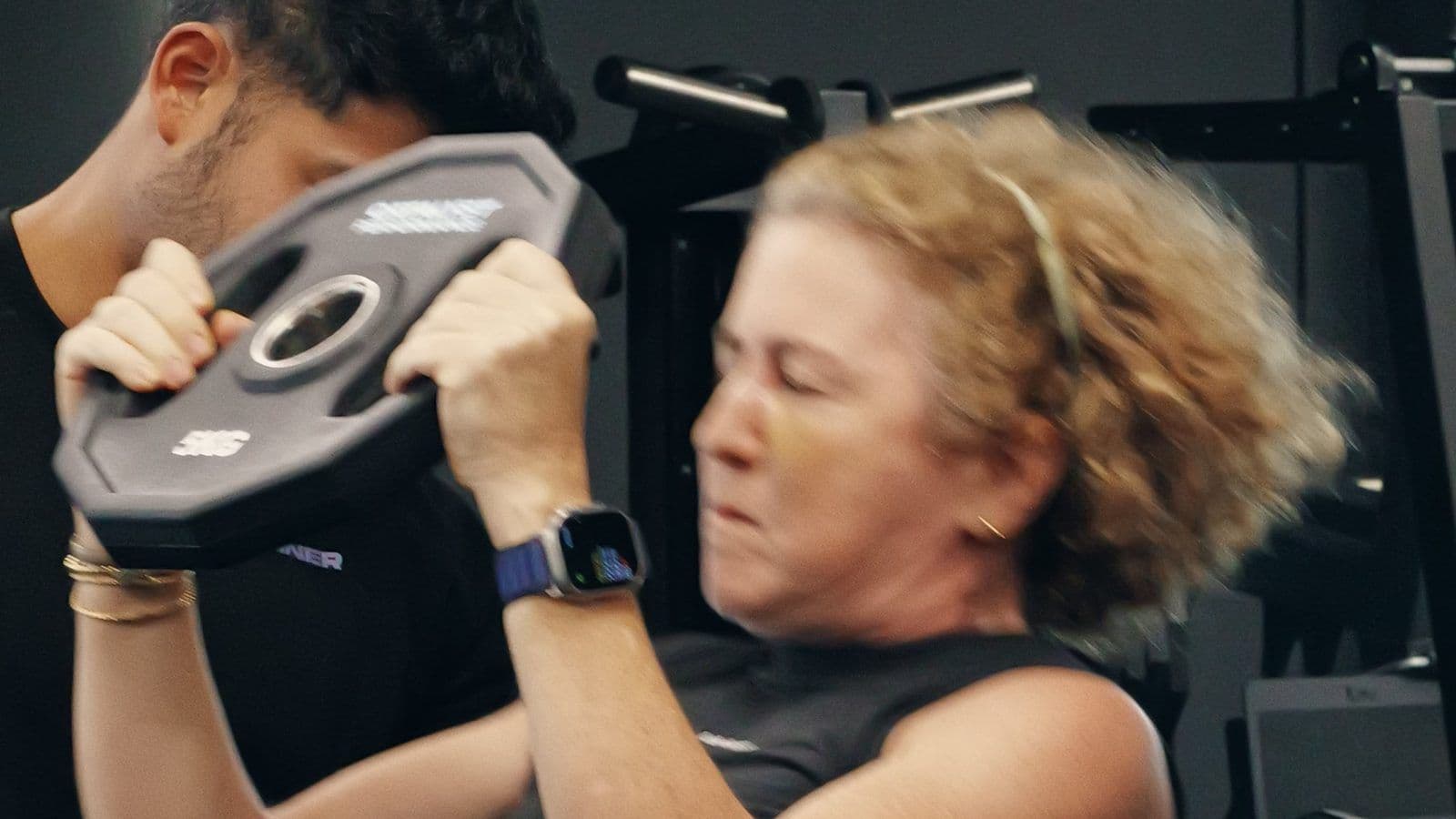
Muscle loss after 50 is not a sentence you have to serve. It is a trend you can reverse, and the intervention with the most evidence behind it is progressive strength training. Untrained, you lose roughly 3 to 8 percent of your muscle mass each decade from middle age, and that rate climbs after 60. That loss is what quietly decides how the next three decades feel. Loaded resistance training is the most reliable non-pharmaceutical way to rebuild that muscle, defend bone density, and lower fall risk. The earlier you start after 50, the more decades you protect.
TL;DR
- Untrained adults lose roughly 3 to 8 percent of muscle mass per decade from middle age, and the rate accelerates after 60.
- The Asian Working Group for Sarcopenia (AWGS) 2019 criteria flag low muscle strength at grip below 28 kg in men and 18 kg in women.
- Progressive resistance training is named first-line treatment for sarcopenia by AWGS 2019, EWGSOP2 and Singapore's 2022 Clinical Practice Guidelines, ahead of any drug; strength and function gains begin within weeks and become clinically meaningful by about 16 weeks.
- The LIFTMOR trial showed supervised high-intensity strength training raised spine and hip bone density safely in postmenopausal women with low bone mass.
- Starting safely after 50 means a baseline assessment first, conservative loading, and progression measured against your own data, not a template.
The single best thing most people over 50 can do for the next 30 years is pick up something heavy, under guidance, twice a week, for the rest of their life.
Why muscle after 50 is the tissue that matters
Most people think of muscle as an aesthetic concern, something you train for a beach holiday and forget the rest of the year. That framing is wrong, and after 50 it is dangerous. Skeletal muscle is the tissue that lets you climb stairs without a handrail, carry a grandchild, catch yourself when you trip, and live independently into your 80s. The age-related loss of that muscle has a clinical name, sarcopenia, and it is one of the strongest predictors of how the back half of a life goes. We cover the condition itself, and how to test for it, in our Singapore guide to reversing sarcopenia and muscle loss.
The reason it matters more than aesthetics is that muscle is metabolically and structurally load-bearing for everything else. It is your largest site of glucose disposal, so losing it worsens insulin sensitivity. It is what your skeleton hangs on, so losing it tends to track with losing bone. And it is what produces the force to arrest a stumble before it becomes a fall, which after 65 is the difference between a wobble and a fractured hip.
I want to be precise about the audience here, because this is not a seniors-only conversation. The decade to act is your 40s and 50s, while the curve is shallow and the gains come fast. A client who begins structured strength work at 52 is not training to claw back lost ground at 75; they are building a reserve so that the inevitable decline starts from a far higher plateau. The earlier the floor is raised, the more of the next 30 years is spent in the upper quartile of independent function. That is the entire game.
Do it yourself
The evidence points to structured, progressive strength work. The Muscle + Fat Loss Protocol is the 12-week programme our coaches use, medically reviewed by Dr Luqman Haris, MBBS, built to add muscle and lose fat into your 50s and beyond.
What the loss actually looks like by the numbers
The headline figure is that untrained adults lose roughly 3 to 8 percent of muscle mass per decade from middle age, and the rate is not linear: it accelerates after about 60. The reviews of muscle ageing are consistent on this, which is how some people arrive at their 70s with a fraction of the muscle they carried at 30. Strength falls faster than mass, because the nervous system's ability to recruit what muscle remains also declines, which is why grip and leg power can collapse even when the scale barely moves.
The clinical thresholds are worth knowing, because they make an abstract worry concrete. The Asian Working Group for Sarcopenia 2019 consensus defines low muscle strength as a handgrip below 28 kg in men and below 18 kg in women, and low muscle mass by DXA as below 7.0 kg/m2 in men and 5.4 kg/m2 in women. These are Asia-specific cutoffs, calibrated on Asian populations rather than borrowed from Western data, which matters for a Singapore reader. If your grip is drifting toward those numbers, that is a flag, not a verdict, and grip is so predictive of how you age that we wrote a whole piece on why grip strength is the cheapest mortality test in medicine.
The prevalence data should remove any sense that this is a fringe problem. Sarcopenia affects a meaningful share of adults over 60 and a higher share of those over 80. In Singapore specifically, our ageing demographics mean this is a public-health issue arriving fast, and the executive in their 50s reading this is squarely inside the window where action changes the trajectory. The point of the numbers is not to alarm. It is to show that the slope is measurable, and a measurable slope is a trainable one.
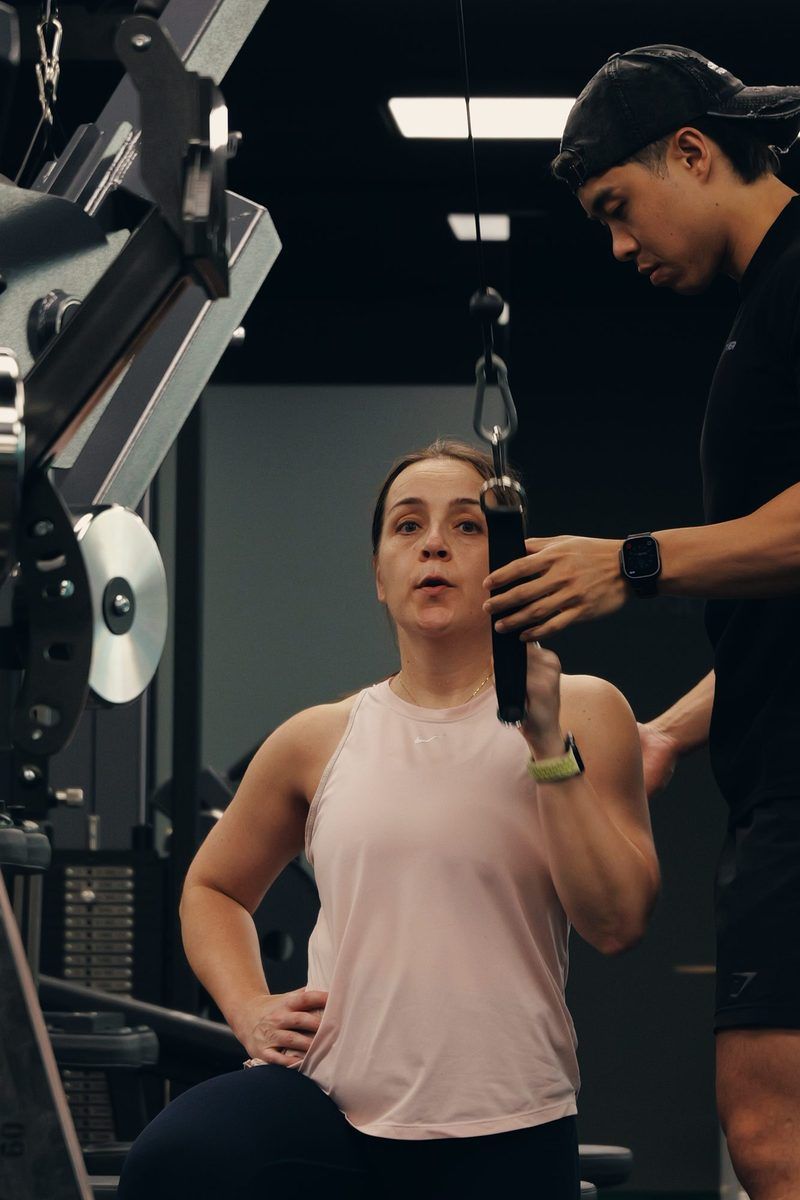 Supervised resistance training is the first-line intervention for sarcopenia, and it works at every age past 50. If you are choosing professional support in this decade or beyond, our guide to personal training for seniors in Singapore covers the vetting in detail.
The evidence that strength training reverses it
Here is the part that should change how you spend your training hours. Progressive resistance training is not merely a way to slow muscle loss after 50; the trial evidence shows it can reverse the strength and function losses that define sarcopenia. Strength and physical-function gains begin within about four weeks of a structured programme and become clinically meaningful by roughly 16 weeks, even in the oldest cohorts studied. Muscle-mass regain is slower and more variable than the strength response, but the functional improvement, the ability to rise from a chair, climb stairs, and hold a steady gait, is robust and well replicated.
This is why resistance training is named the first-line intervention for sarcopenia, ahead of any drug, by three independent expert bodies: the Asian Working Group for Sarcopenia 2019, the European Working Group on Sarcopenia in Older People (EWGSOP2), and Singapore's 2022 Clinical Practice Guidelines for Sarcopenia. Agreement across three separate consensus groups is rare in medicine, and it reflects the strength of the underlying trial evidence rather than the enthusiasm of any one camp.
Bone responds to the same stimulus, which is the second reason strength training earns its place after 50. The LIFTMOR randomised controlled trial took postmenopausal women with osteopenia and osteoporosis, the group most often warned away from heavy lifting, and put them through eight months of twice-weekly, supervised, high-intensity resistance and impact training. The result was significantly greater improvement in lumbar spine and femoral neck bone density compared with a low-intensity home programme, with only one minor adverse event across the whole trial. The lesson is not that everyone over 50 should immediately load to 85% of their maximum; it is that, supervised and progressed correctly, heavy is not the danger people assume, and bone needs a real signal to remodel.
Balance and fall prevention complete the case. Resistance training improves postural balance and gait speed alongside strength, and falls are not random bad luck, they are a downstream symptom of weak legs and poor single-leg control. The evidence converges from three directions, muscle, bone, and balance, on the same prescription.
How to start strength training safely after 50
The single biggest mistake people make is starting with a programme instead of a baseline. After 50, the right first step is an assessment that tells you where your muscle mass, strength, cardiorespiratory fitness, and stability actually sit, against age-and-sex norms, before a single load is chosen. Our personal training for the over-50s in Singapore begins with exactly this, the Catalyst Healthspan Assessment, because the gap that matters most for a 53-year-old returning after 20 years off is rarely the gap they assume. The narrower question of how fast adaptation actually comes has a short answer: measurable strength gains typically arrive within the first eight to twelve weeks of structured training.
Once you have a baseline, the loading principle is conservative on intensity and patient on progression, but it is still real loading. The early weeks for a previously untrained client are about movement competence and joint-loading tolerance, not chasing numbers. From there the intensity climbs deliberately, because the adaptations that matter, lean mass, bone density, neural recruitment, only respond to a meaningful stimulus. Training so light that nothing is ever challenging is the most common way to train for years and measure no change. The skill is in finding the load the body can hold today and adding to it slowly.
Two practical guardrails make this safe rather than reckless. First, if you have an existing medical condition, recent surgery, or known osteoporosis, the programme is built around your specialist's clearance and any imaging or test results, which is exactly where a coach with clinical literacy earns their keep. At Catalyst the over-50 track is anchored by an MBBS-credentialed founder who designed the programming framework around reading exactly those reports, so the training respects what your physician has said. Second, progression is measured against your own re-test, not a generic curve. Most clients over 50 train two to three times a week, and a consistent two-times-a-week year beats a heroic January every time.
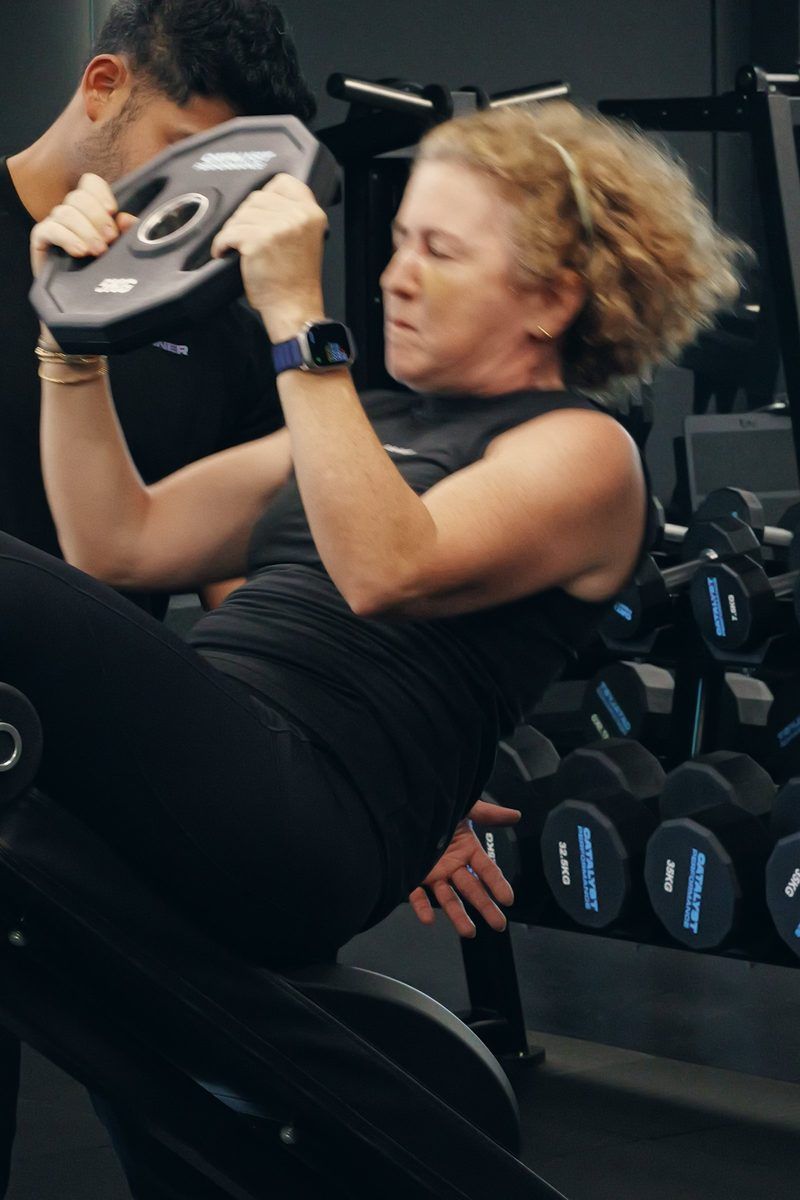 A real over-50 programme is not a watered-down version of a younger one: load is progressed, then re-assessed every 16 weeks.
What a real over-50 programme looks like
A real programme after 50 is not a watered-down version of a younger person's plan. It is built backwards from the four systems that most predict healthy ageing, and it spends your training hours on whichever of them is weakest. For most people returning to training in their 50s, that is the strength and muscle-mass pillar, because that is the tissue eroding fastest and the one that protects the others.
The strength work itself favours full range of motion under control, loaded through the patterns that carry into life, hinging, squatting, pressing, carrying, rather than isolation work chosen for how it looks in a mirror. The cardiorespiratory work is sequenced as a zone-2 aerobic base first, then short, well-dosed intervals, never the high-intensity overload that an older body recovers from poorly. Single-leg and stability work is trained directly, because fall risk past 65 is predicted better by single-leg control than by almost anything else, and it responds quickly to deliberate practice.
What ties it together is re-assessment. Every 16 weeks the four pillars are measured again and the trend is charted. That trend line, muscle mass holding or rising, bone-relevant strength climbing, single-leg asymmetry closing, grip moving away from the AWGS flag, is the actual artefact of training after 50. It is worth far more than a before-and-after photo, because it is the objective proof that the decline has been bent the other way. For readers outside Singapore who cannot get to the studio, the same framework runs through our online coaching, built around the data you can capture at home.
Strength training versus the gentler options
People over 50 are often steered toward gentler movement, and some of it is genuinely valuable. The honest comparison is not strength training against everything else; it is understanding what each option does and does not load. Below is how the common choices stack up on the systems that decide healthspan after 50.
| Dimension | Progressive strength training | Pilates / yoga | Walking / general cardio |
|---|---|---|---|
| Rebuilds lost muscle and strength (sarcopenia) | Yes, the first-line evidence-based intervention | Limited; bodyweight load rarely sufficient | No meaningful hypertrophy stimulus |
| Increases bone mineral density | Yes, with adequate load (per LIFTMOR) | Minimal; low mechanical load | Low impact, modest at best |
| Improves single-leg balance / fall risk | Yes, trained directly | Yes, a genuine strength of these modalities | Indirect only |
| Builds cardiorespiratory fitness | Partial; needs dedicated conditioning | Limited | Yes, the core benefit |
| Joint mobility and control | Through full-ROM loaded patterns | Yes, an excellent complement | Limited |
| Best role after 50 | The non-negotiable foundation | A valuable complement, not a substitute | Useful base layer, not enough alone |
 Strength training is the one input with the most evidence behind it for rebuilding muscle and defending bone after 50.
The takeaway is not that pilates, yoga, or walking are wrong. Pilates and reformer work are excellent for spinal control and mobility, yoga builds balance and breath, and a walking habit is a fine aerobic base. What none of them reliably do is load muscle and bone heavily enough to reverse sarcopenia or raise bone density after 50. They are the complement; progressive strength training is the foundation. If you only have time for one, the evidence says make it the one that loads.
Frequently asked questions
Q. Is it too late to start strength training after 50?
No. The trial evidence shows adults with sarcopenia, including the oldest cohorts studied, regain strength and physical function with progressive resistance training, with meaningful gains by about 16 weeks. Gains may come somewhat slower than for a 25-year-old, but the trajectory is meaningfully upward. The best time to start was 20 years ago; the second best is now, because every year you wait raises the floor you are climbing from.
Q. Will lifting weights damage my joints or bones at my age?
Done unsupervised and badly, any exercise carries risk. Done with appropriate loading and progression, the opposite is true. The LIFTMOR trial put postmenopausal women with osteoporosis through high-intensity lifting and saw improved bone density with only one minor adverse event. Loaded strength work is one of the most protective things you can do for joints and bone after 50, provided the load is calibrated to what your body tolerates today.
Q. How often should someone over 50 strength train?
Two to three supervised sessions a week is the range that delivers measurable improvement for most people, and consistency matters more than frequency. A steady twice-a-week year produces far better long-term outcomes than a four-times-a-week burst that fades by February. After 50, the compounding effect of showing up consistently is the whole point.
Q. Can strength training reverse sarcopenia, or only slow it?
It can genuinely reverse the strength and function losses, which is why international guidelines name it the first-line treatment ahead of any medication. Muscle-mass regain is slower and more variable than the strength response, but the functional improvement is robust. The Catalyst Healthspan Assessment quantifies your baseline via a muscle-mass reading, and the 16-week re-test confirms whether the numbers are moving in the right direction.
Q. I have an existing condition. Can I still train safely?
Yes, with your specialist's clearance and any relevant medical notes. The over-50 programming framework at Catalyst was designed by an MBBS-credentialed founder specifically to account for what your blood work, imaging, and physician have said. Bring the clearance and the reports to your assessment, and the training is designed inside what your doctor has approved.
The story of muscle after 50 has been told as inevitable decline for far too long, and the evidence simply does not support that fatalism. Untrained, yes, you lose a meaningful share of muscle each decade and the slope steepens. Trained properly, that same body rebuilds strength and function, raises bone density, and sharpens the balance that keeps you on your feet, with trial data behind every one of those claims. The intervention is not exotic. It is progressive strength training, twice or three times a week, loaded sensibly and progressed against your own numbers, for the rest of your life.
If you are in your 40s, 50s, or 60s in Singapore and you want to train for the decades ahead rather than the next eight weeks, the right first move is a baseline. Start with a complimentary Catalyst Healthspan Assessment: 60 minutes in studio, four pillars measured, and a printed report that shows you exactly where you stand. The decade-shaped training comes after, built on what the data actually says.
Citations
Chen, L. K., Woo, J., Assantachai, P., et al. (2020). Asian Working Group for Sarcopenia: 2019 Consensus Update on Sarcopenia Diagnosis and Treatment. Journal of the American Medical Directors Association, 21(3), 300-307.e2. pubmed.ncbi.nlm.nih.gov/32033882
Cruz-Jentoft, A. J., Bahat, G., Bauer, J., et al. (2019). Sarcopenia: revised European consensus on definition and diagnosis (EWGSOP2). Age and Ageing, 48(1), 16-31. pubmed.ncbi.nlm.nih.gov/30312372
Lim, W. S., Cheong, C. Y., Lim, J. P., et al. (2022). Singapore Clinical Practice Guidelines for Sarcopenia: Screening, Diagnosis, Management and Prevention. The Journal of Frailty & Aging, 11(4), 348-369. pubmed.ncbi.nlm.nih.gov/36346721
Watson, S. L., Weeks, B. K., Weis, L. J., Harding, A. T., Horan, S. A., & Beck, B. R. (2018). High-Intensity Resistance and Impact Training Improves Bone Mineral Density and Physical Function in Postmenopausal Women With Osteopenia and Osteoporosis: The LIFTMOR Randomized Controlled Trial. Journal of Bone and Mineral Research, 33(2), 211-220. pubmed.ncbi.nlm.nih.gov/28975661
Volpi, E., Nazemi, R., & Fujita, S. (2004). Muscle tissue changes with aging. Current Opinion in Clinical Nutrition and Metabolic Care, 7(4), 405-410. pmc.ncbi.nlm.nih.gov/articles/PMC2804956