The Edit · Founder Insights
Strength Training After 50: The 12-Week Window
After 50 you lose strength faster than muscle. 12 weeks of resistance training at the right dose reverses the decline. The evidence, and how to train it.
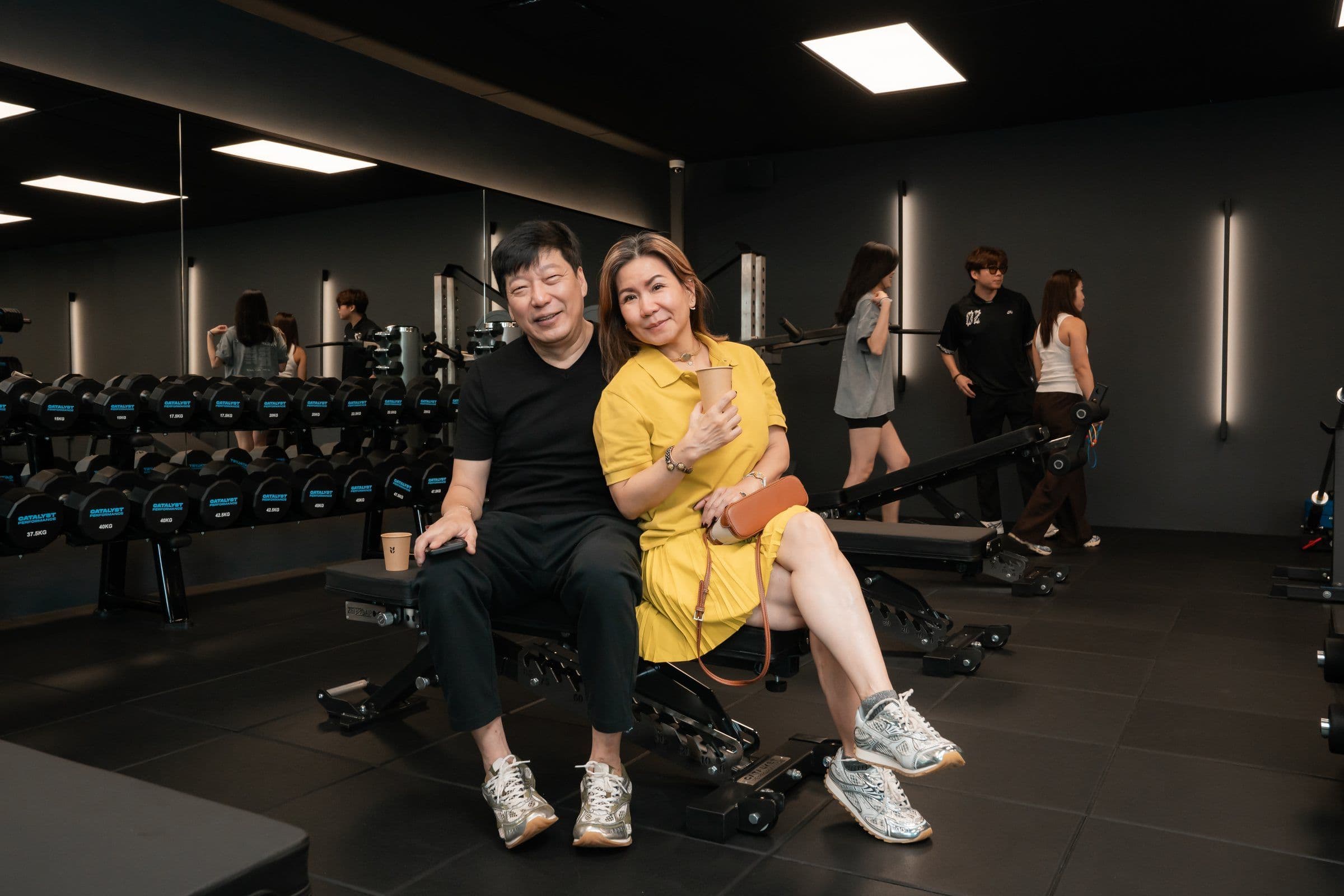
After 50, the muscle you lose is not the urgent problem. The strength you lose is, and you lose it two to five times faster than mass. Twelve weeks of structured resistance training, two to three sessions per week at moderate-to-high load, is enough to reverse a meaningful part of that decline. The number is not arbitrary. Across the trials that have measured it, roughly 12 weeks at above 60% of your one-repetition maximum is the threshold where strength, walking speed, and the ability to rise from a chair improve by clinically meaningful margins. The decline is real. So is the window to act on it.
TL;DR
- After 50 you lose strength 2 to 5 times faster than you lose muscle mass, so training for strength matters more than chasing size.
- European consensus now ranks muscle strength above muscle mass as the primary marker of healthy ageing.
- Resistance training produces large, reliable strength gains in older adults, with meaningful change clustering at roughly 12 weeks of training above 60% of your 1RM.
- For postmenopausal women, supervised high-intensity lifting also builds bone density, countering the myth that lifting is unsafe after 50.
- 30 to 60 minutes of strength work per week is associated with a 10 to 17% lower risk of death and major disease, independent of cardio.
Why strength, not mass, is the number that matters
For decades, the conversation about ageing muscle was about mass. How much you had, how much you were losing. That conversation has moved, and most people have not heard about it.
In 2019, the European Working Group on Sarcopenia in Older People published a revised consensus that formally elevated muscle strength above muscle mass as the primary diagnostic parameter for sarcopenia, the clinical name for age-related muscle decline. The wording is precise: strength is recognised as better than mass in predicting adverse outcomes. Low muscle strength alone now defines probable sarcopenia, before any scan measures how much muscle you have lost.
This is not a technicality. The same consensus describes low grip strength as a powerful predictor of longer hospital stays, functional limitation, poor quality of life, and death. In other words, the thing that predicts how well you will age is not the size of your muscle. It is what that muscle can do under load.
That distinction is why a longevity-focused studio trains for strength specifically, not for size and not for appearance. The goal after 50 is the capacity to stand from a low chair, carry shopping up a flight of stairs, and catch yourself before a fall becomes a fracture. Those are strength outcomes, and they are trainable.
Do it yourself
The window rewards consistent, progressive loading. The Muscle + Fat Loss Protocol is the 12-week strength-and-protein programme our coaches use, medically reviewed by Dr Luqman Haris, MBBS, that you follow at your own pace.
What ageing actually does to muscle
The decline starts earlier than most people assume and accelerates later than most people fear. A quantitative review by Mitchell and colleagues put numbers on it. Muscle mass is lost at roughly 0.47% per year in men and 0.37% per year in women by mid-life, then accelerates after 75 to between 0.80 and 0.98% per year in men and 0.64 to 0.70% per year in women.
Those numbers are the part everyone quotes. The part that matters more is what happens to strength. The same review found that strength is lost 2 to 5 times faster than mass. By age 75, men are losing roughly 3 to 4% of their strength per year and women 2.5 to 3%, while their muscle mass is shrinking at under 1% per year.
Researchers gave this gap its own name: dynapenia, the loss of strength outpacing the loss of muscle mass. The review states it plainly: loss of strength is a more consistent risk for disability and death than is loss of muscle mass. You can hold onto a fair amount of muscle and still lose the strength that keeps you independent.
This is the central reason the after-50 conversation has to be about training strength, not preserving size. If strength falls faster than mass, then a programme aimed only at maintaining muscle size is solving the wrong problem. You have to load the muscle hard enough to drive a strength adaptation, not just enough to keep it from shrinking.
The 12-week window: what the dose says
The 12-week window is not a marketing round number. It is the point in the trial literature where the changes that matter become reliably measurable.
A 2021 systematic review and meta-analysis by Chen and colleagues, covering 14 randomised controlled trials and 561 older adults with a mean age between 65.8 and 82.8, found that resistance training produced large strength gains. Handgrip strength improved by a standardised mean difference of 0.81, and knee-extension strength by 1.26. Gait speed improved (standardised mean difference 1.28), and so did Timed-Up-and-Go performance, the standard clinical test of getting up and moving safely.
The dose finding is the one that anchors this article. Greater gains in muscle mass occurred specifically with interventions of 12 weeks or longer, performed at above 60% of one-repetition maximum. That is the threshold. Below 12 weeks, or below that intensity, the changes are smaller and less consistent. At or above it, the body responds.
Twelve weeks is also a realistic commitment. It is one financial quarter. For a Singapore professional weighing whether to start, the honest framing is that you do not need to train for a year to know whether this works. You need about three months of consistent, properly loaded sessions, and the change will show up in how you move.
Settled science, not a fitness fad
It is worth being clear about the strength of the evidence here, because the fitness industry has a credibility problem and resistance training for older adults deserves to be insulated from it.
The Cochrane review by Liu and Latham is the highest tier of evidence available for this question. It pooled 121 trials and roughly 6,700 participants. Progressive resistance training had a large positive effect on muscle strength (73 trials, standardised mean difference 0.84). It produced a modest improvement in gait speed (24 trials, 0.08 metres per second) and a moderate-to-large improvement in the chair-stand test, the simple measure of how easily you rise from a seat.
A Cochrane review is not a single study that might not replicate. It is a synthesis of more than a hundred trials, weighted and scrutinised for bias. When it concludes that lifting weights makes older adults measurably stronger and more functional, that is about as close to settled as clinical science gets. This is not a trend. It is one of the most robustly supported interventions in geriatric medicine, and it has been for years.
After 50, the question is not whether resistance training works. It is whether you will spend 12 weeks finding out.
Bone density and menopause
The myth that lifting heavy is dangerous for older women, and especially for women after menopause, is not just wrong. It has the relationship backwards.
The LIFTMOR randomised controlled trial took postmenopausal women with low bone mass, the osteopenia and osteoporosis range, and put them through 8 months of twice-weekly, 30-minute supervised high-intensity resistance and impact training at above 85% of their one-repetition maximum. The result was an improvement in lumbar-spine bone mineral density of roughly 2.9%, framed as about a 4% relative benefit over the low-intensity comparison group, alongside improved femoral-neck bone density and better functional performance.
The adherence detail matters as much as the bone result. The programme was well tolerated, with more than 90% of sessions attended, in exactly the population that conventional advice tells to avoid heavy lifting. The women did not break. They got stronger, and their bones got denser.
Two things are load-bearing in that finding. The first is that bone is healthspan tissue. A hip fracture after 70 is one of the events most likely to end an independent life, and bone density is one of the few things that protects against it. The second is the word supervised. LIFTMOR was high-intensity training delivered with coaching and progression, not a do-it-yourself attempt at the same loads. The intensity that builds bone is also the intensity that demands competent supervision, which is the argument for a coached studio over a solo programme after 50.
Beyond looks: strength and mortality
If the case so far has been about function and independence, the mortality data closes it.
A systematic review and meta-analysis by Momma and colleagues, pooling 16 prospective cohort studies, found that muscle-strengthening activities were associated with a 10 to 17% lower risk of all-cause mortality, cardiovascular disease, total cancer, diabetes, and lung cancer. That association held independent of aerobic exercise. Strength work is not just cardio's understudy. It carries its own protective signal.
The dose is the part that should reassure a busy person. Most of the benefit was captured at 30 to 60 minutes of strength work per week. The curve was J-shaped: beyond about an hour a week, additional training added little to the mortality benefit. This is not a prescription for living in a gym. It is a prescription for two short, hard sessions a week, which is a schedule almost any working professional in Singapore's CBD can hold.
This is the answer to the most common objection I hear, which is some version of why bother lifting if I already walk or run. Cardio earns its own benefits. It does not substitute for strength, and the data treats the two as separate, additive interventions. After 50, you need both, and most people are missing the strength half.
How to train the window
The prescription that fits the evidence is unglamorous and specific. Two to three sessions per week. Load in the range of 70 to 79% of your one-repetition maximum for the main strength work. Two to three sets per exercise. Compound movements that load multiple muscle groups in functional patterns: a squat or leg press, a hip hinge, a press, a pull, and a loaded carry.
Those parameters are not invented. A dose-response meta-analysis by Borde and colleagues in healthy older adults identified two sessions per week, 70 to 79% of 1RM, and two to three sets as the configuration associated with the largest strength gains. Progress the load week to week. The adaptation comes from the muscle being asked to do slightly more than it comfortably can, repeatedly, over the 12-week window.
Training is only the trigger. Protein is the input that determines how much of the trigger becomes rebuilt tissue. The PROT-AGE Study Group position paper recommends that adults over 65 consume at least 1.0 to 1.2 grams of protein per kilogram of body weight per day, well above the standard 0.8 grams, and at least 1.2 grams per kilogram for those who are active and training. Older muscle is more resistant to building, so the protein has to be adequate and spread across the day, not loaded into one meal. Eat enough protein and lift; the two together are the intervention, and neither works as well alone.
What does not move the needle here: walking alone, swimming alone, or any zero-load conditioning. Those have real cardiovascular and quality-of-life value. They do not drive the strength and bone adaptations this article is about. If you are over 50 and your entire programme is steps and stretching, you are missing the part of the evidence that protects your independence. The deeper case for that is in our piece on reversing sarcopenia in Singapore, and the time-efficiency argument is in the minimum effective dose for real strength.
How we train this at Catalyst
Every member who walks into Catalyst Performance, our private personal training studio at Manulife Tower above Telok Ayer MRT in Singapore's CBD, starts with the 4-Pillar Healthspan Assessment, our 60-minute in-studio evaluation across body composition, cardiorespiratory fitness, stability, and strength. The first session is complimentary and yours to keep.
For training after 50, the assessment is the part that makes the 12-week window measurable rather than hopeful. We capture grip strength with a handheld dynamometer, lower-body power with a timed chair stand, and skeletal muscle index with a bioimpedance scan, then build a programme around the weakest pillar. We repeat the full assessment at the 16-week Checkpoint, our scheduled re-assessment, so the Healthspan Score, the 0 to 10 output of the evaluation, either confirms the prescription is working or triggers a recalibration. That structure exists precisely because the trial evidence says 12 weeks is where change shows up; we measure on a timeline that catches it.
If you want the goal-specific version of all this, we keep it at training after 50, and the broader case for lifting through your middle decades is in body recomposition after 40. For 1:1 coaching built around this population, see personal training over 50 in Singapore. And if you are not ready to book in person, the Healthspan Audit is a free 12-question online tool that estimates where you stand and whether you should come in.
Frequently asked questions
Q. Is it too late to start strength training after 50?
No. The trial evidence is clear that adults starting resistance training in their 50s, 60s, 70s, and even 80s gain strength and function. The Cochrane review pooling 121 trials found large strength improvements across older-adult populations. Strength and function respond first, often within the first few weeks, and reach clinically meaningful margins by around 12 weeks. Starting later means a steeper decline to reverse, not an impossible one.
Q. How long until I see results from strength training after 50?
Strength gains begin within the first few weeks of consistent, properly loaded training. The threshold for reliable, clinically meaningful change in strength, walking speed, and chair-rise ability clusters at roughly 12 weeks of training above 60% of your one-repetition maximum, two to three sessions per week. Twelve weeks is the honest timeframe to judge whether the programme is working for you.
Q. Is lifting heavy weights safe after menopause?
Yes, when supervised. The LIFTMOR trial put postmenopausal women with low bone mass through twice-weekly high-intensity lifting above 85% of their one-repetition maximum for 8 months. It was well tolerated, with over 90% attendance, and improved spine and hip bone density. The intensity that builds bone is also the intensity that requires competent coaching and progression, which is the argument for a supervised studio rather than a solo attempt.
Q. Do I still need strength training if I already do cardio?
Yes. The mortality benefit of muscle-strengthening activity is independent of aerobic exercise. A meta-analysis of 16 cohort studies found 30 to 60 minutes of strength work per week was associated with a 10 to 17% lower risk of death and major disease, separate from any cardio you do. Cardio and strength are additive, not interchangeable. After 50, most people have the cardio half and are missing the strength half.
Q. How much protein do I need to build muscle after 50?
The PROT-AGE Study Group recommends at least 1.0 to 1.2 grams of protein per kilogram of body weight per day for adults over 65, rising to at least 1.2 grams per kilogram for those who are active and training, well above the standard 0.8 gram recommendation. Older muscle is more resistant to building, so spread the protein across three to four meals rather than loading one. Protein and resistance training together are the intervention; neither works as well on its own.
Citations
Cruz-Jentoft AJ, Bahat G, Bauer J, et al. (2019). Sarcopenia: revised European consensus on definition and diagnosis (EWGSOP2). Age and Ageing, 48(1), 16–31. academic.oup.com
Mitchell WK, Williams J, Atherton P, Larvin M, Lund J, Narici M. (2012). Sarcopenia, dynapenia, and the impact of advancing age on human skeletal muscle size and strength: a quantitative review. Frontiers in Physiology, 3, Article 260. frontiersin.org
Chen N, He X, Feng Y, Ainsworth BE, Liu Y. (2021). Effects of resistance training in healthy older people with sarcopenia: a systematic review and meta-analysis of randomized controlled trials. European Review of Aging and Physical Activity, 18, 23. pmc.ncbi.nlm.nih.gov
Liu CJ, Latham NK. (2009). Progressive resistance strength training for improving physical function in older adults. Cochrane Database of Systematic Reviews, Issue 3, CD002759. pubmed.ncbi.nlm.nih.gov
Watson SL, Weeks BK, Weis LJ, Harding AT, Horan SA, Beck BR. (2018). High-Intensity Resistance and Impact Training Improves Bone Mineral Density and Physical Function in Postmenopausal Women With Osteopenia and Osteoporosis: The LIFTMOR Randomized Controlled Trial. Journal of Bone and Mineral Research, 33(2), 211–220. pubmed.ncbi.nlm.nih.gov
Momma H, Kawakami R, Honda T, Sawada SS. (2022). Muscle-strengthening activities are associated with lower risk and mortality in major non-communicable diseases: a systematic review and meta-analysis of cohort studies. British Journal of Sports Medicine, 56(13), 755–763. pubmed.ncbi.nlm.nih.gov
Bauer J, Biolo G, Cederholm T, et al. (2013). Evidence-based recommendations for optimal dietary protein intake in older people: a position paper from the PROT-AGE Study Group. Journal of the American Medical Directors Association, 14(8), 542–559. pubmed.ncbi.nlm.nih.gov
Borde R, Hortobágyi T, Granacher U. (2015). Dose-Response Relationships of Resistance Training in Healthy Old Adults: A Systematic Review and Meta-Analysis. Sports Medicine, 45(12), 1693–1720. pubmed.ncbi.nlm.nih.gov