The Edit · Founder Insights
Strength Training During Pregnancy in Singapore: What the Evidence Actually Says
The advice to rest through pregnancy has been reversed for a decade. What structured resistance training in pregnancy actually prevents, how hard the third trimester can safely go, and what we screen for before we load anything.
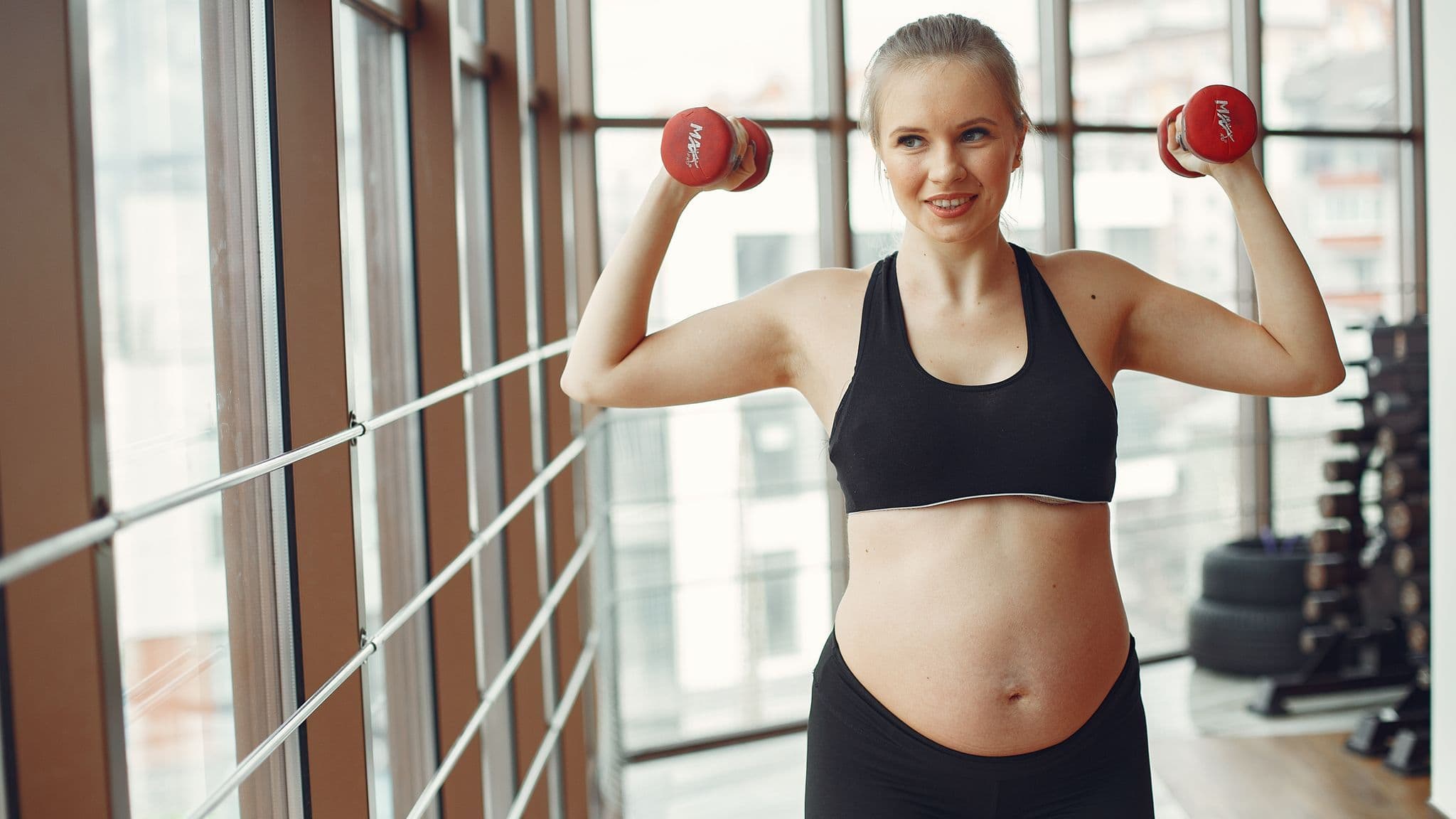
For years the standard advice to a pregnant client who trained was some version of don't. Stop lifting, swap the barbell for prenatal yoga, keep your heart rate under an arbitrary number nobody could measure mid-set. That advice has been reversed for the better part of a decade. The current guidance, from the American College of Obstetricians and Gynecologists and the Canadian Society for Exercise Physiology alike, is that structured exercise, including resistance training, is safe and beneficial through an uncomplicated pregnancy, and that women who trained before pregnancy can generally continue at intensity. Most of my pregnant clients in Singapore have never heard this. They are still training scared, or not training at all, off advice that stopped being current around the time their doctor was in medical school.
TL;DR
- ACOG's 2020 position (Committee Opinion #804) is that at least 150 minutes a week of moderate-intensity exercise, including resistance training, is safe and recommended through an uncomplicated pregnancy, and previously active women can generally continue at their pre-pregnancy intensity.
- Structured exercise measurably lowers the odds of gestational diabetes and gestational hypertension, not just discomfort. A 2018 meta-analysis found roughly 38% lower odds of gestational diabetes and 39% lower odds of gestational hypertension in women who exercised.
- Vigorous-intensity exercise into the third trimester has been shown safe for most healthy pregnancies, with no meaningful difference in infant birthweight and a modestly lower risk of early delivery.
- Resistance training reduces the severity of pregnancy-related low back and pelvic girdle pain, though it does not reliably prevent the pain from starting in the first place.
- The training itself doesn't change in principle, compound lifts, progressive load, structured programming, but the screening, the modifications, and the clearance conversation with your OB-GYN absolutely do.
The advice reversal
The 2018 Canadian guideline for physical activity throughout pregnancy, published by Mottola and colleagues in the British Journal of Sports Medicine, reviewed the accumulated evidence and concluded that the benefits of prenatal physical activity are moderate and no harms were identified in women without contraindications. The American College of Obstetricians and Gynecologists reached the same position in Committee Opinion #804: physical activity and exercise in pregnancy have minimal risks and are associated with real benefit, including a reduction in gestational diabetes, lower rates of caesarean and operative vaginal delivery, shorter postpartum recovery, and fewer postpartum depressive disorders. The recommendation is at least 150 minutes a week of moderate-intensity aerobic activity, combined with muscle-conditioning work, and women who were regularly active or training at vigorous intensity before pregnancy can generally continue that intensity through pregnancy and postpartum, absent contraindications.
That last clause, absent contraindications, is where the real conversation with a client happens, and it's not one a personal trainer has alone. Placenta praevia, certain cardiac or respiratory conditions, a history of preterm labour or ruptured membranes, and a handful of other conditions do change the picture, which is exactly why clearance is a written conversation with your GP or OB-GYN before we load anything, not a form you tick on your way to the squat rack.
What training actually prevents
The case for prenatal exercise isn't just comfort and mood, though both improve. A 2018 systematic review and meta-analysis by Davenport and colleagues, also in the British Journal of Sports Medicine, pooled data across studies including nearly 7,000 women and found that exercise-only interventions during pregnancy were associated with roughly 38% lower odds of developing gestational diabetes mellitus. A companion analysis from the same research group, pooling over 5,000 women, found exercise associated with roughly 39% lower odds of gestational hypertension. Women hitting at least 600 MET-minutes a week of moderate-intensity exercise, roughly the equivalent of 150 minutes of brisk activity, saw about a 25% reduction in these complications.
Read that as what it is: a modifiable-risk intervention with a real effect size, not a wellness platitude. Gestational diabetes and hypertensive disorders of pregnancy carry downstream risk for both mother and baby, and structured exercise is one of the few interventions a woman has meaningful control over across the pregnancy. Resistance training specifically, rather than walking alone, contributes to this picture through its effect on insulin sensitivity and glucose handling, the same mechanism that makes strength training protective against metabolic disease outside of pregnancy.
The third trimester
The third trimester is where most of the caution instinct lives, and understandably so, the body is visibly different and the stakes feel higher. The evidence doesn't support blanket de-loading. A 2019 systematic review and meta-analysis by Beetham and colleagues, published in BMC Pregnancy and Childbirth, looked specifically at vigorous-intensity exercise in the third trimester across more than 8,000 mother-infant pairs and found no significant difference in infant birthweight between women who trained vigorously and those who didn't. The review's own conclusion, stated plainly, is that vigorous-intensity exercise completed into the third trimester appears to be safe for most healthy pregnancies. Gestational age at delivery in the exercising group was, if anything, marginally later, and the data pointed toward a lower rather than higher risk of preterm delivery. For how strength work sits alongside yoga and Pilates across the nine months, see our guide to prenatal exercise by trimester.
What changes in the third trimester at Catalyst isn't intensity for its own sake, it's exercise selection and positioning. Supine work is limited as the pregnancy progresses, load is shifted away from positions that compress the vena cava, balance-dependent movements are modified as the centre of gravity shifts, and core bracing strategy changes because the abdominal wall is doing something different than it was in month three. The training stays hard. What's hard changes shape.
Low back and pelvic girdle pain
Low back and pelvic girdle pain affects a large share of pregnant women, and it's one of the more common reasons clients tell me they've stopped training altogether. The evidence here calls for precision rather than a blanket claim. A separate Davenport-led systematic review and meta-analysis, covering 32 studies and more than 52,000 pregnant women, found that exercise significantly reduced the severity of low back, pelvic girdle, and lumbopelvic pain once it was present. What the same review did not find is that exercise reliably prevents the pain from starting in the first place across the pooled studies. That's a real and useful distinction: exercise is a legitimate treatment lever once pain shows up, not a guarantee you'll avoid it altogether.
In practice this means a client who develops pelvic girdle pain mid-pregnancy isn't told to stop and wait it out. The programming is modified, load and range are adjusted around the specific movement pattern that provokes symptoms, and in many cases training continues alongside, rather than instead of, whatever manual therapy her physiotherapist or OB-GYN has prescribed.
What we screen before we load anything
The 4-Pillar Assessment is built for a general adult client, and it doesn't apply unmodified to a pregnant one. Every prenatal client at Catalyst starts with a written clearance conversation, direct with her OB-GYN or GP where there's any ambiguity, before we load anything. From there, programming is trimester-specific: exercise selection, positioning, and intensity progression are reviewed and adjusted at each trimester transition, not set once at intake and left alone for nine months. That's the practical translation of the 4-Pillar Assessment framework into a population where the baseline itself is a moving target.
This is also where the coaching relationship matters more than the exercise selection. A client who trained heavy before pregnancy is a different programming problem than one who is starting resistance training for the first time at 20 weeks, and treating them identically because they're both pregnant is exactly the kind of generic template we build the assessment to avoid. Our pre-natal personal training programme in the CBD is built around that individual baseline, coordinated with your prescribing clinician throughout.
After birth
Pregnancy training and postnatal training are not the same problem, and I want to be clear that this article covers the first half. What happens after delivery, when the pelvic floor and abdominal wall need to be screened before load returns, is a distinct phase with its own evidence base and its own sequencing. If you're past delivery and rebuilding, our separate piece on postnatal core and pelvic floor recovery covers that handover in full, physiotherapy first to screen, then progressive strength to rebuild. The through-line across both phases is the same: the training doesn't disappear, it gets sequenced to where you actually are.
Frequently asked questions
Q. Is it safe to lift heavy weights while I'm pregnant?
For most women without contraindications, yes, and previously active women can generally continue at their pre-pregnancy intensity. ACOG's position is that physical activity, including resistance training, carries minimal risk and real benefit through an uncomplicated pregnancy. What changes isn't whether you can lift, it's exercise selection and positioning as the pregnancy progresses, plus written clearance from your OB-GYN, especially if any contraindication applies to your specific pregnancy.
Q. Can exercise actually lower my risk of gestational diabetes?
The data says yes, meaningfully. A 2018 meta-analysis pooling nearly 7,000 women found exercise-only interventions associated with roughly 38% lower odds of gestational diabetes, and a companion analysis found roughly 39% lower odds of gestational hypertension. Hitting at least 150 minutes a week of moderate-intensity exercise was associated with about a 25% reduction in these complications. This is one of the strongest practical reasons to keep training through pregnancy, not just comfort.
Q. What should change in my training in the third trimester?
Positioning and exercise selection change more than intensity does. Supine work is limited, load is shifted away from vena-cava-compressing positions, balance-dependent movements are modified for the shifting centre of gravity, and core bracing strategy adapts. The evidence itself doesn't support blanket de-loading, a 2019 meta-analysis of vigorous third-trimester exercise across more than 8,000 mother-infant pairs found no meaningful difference in birthweight and no increase in preterm delivery risk.
Q. Do I need my OB-GYN's clearance before I start, and what should I bring to Catalyst?
Yes. Every prenatal client starts with a written clearance conversation with her OB-GYN or GP, and we ask for that documentation before loading begins, along with details of any pregnancy-specific complications or restrictions. Bring your due date, any complications flagged so far, and your clinician's specific guidance if there is any. We coordinate with your medical team throughout, we don't replace them.
Citations
American College of Obstetricians and Gynecologists. (2020). Physical Activity and Exercise During Pregnancy and the Postpartum Period: ACOG Committee Opinion, Number 804. Obstetrics & Gynecology, 135(4), e178-e188. pubmed.ncbi.nlm.nih.gov
Mottola, M. F., Davenport, M. H., Ruchat, S-M., Davies, G. A., Poitras, V. J., Gray, C. E., et al. (2018). 2019 Canadian guideline for physical activity throughout pregnancy. British Journal of Sports Medicine, 52(21), 1339-1346. pubmed.ncbi.nlm.nih.gov
Davenport, M. H., Ruchat, S-M., Poitras, V. J., Jaramillo Garcia, A., Gray, C. E., Barrowman, N., et al. (2018). Prenatal exercise for the prevention of gestational diabetes mellitus and hypertensive disorders of pregnancy: a systematic review and meta-analysis. British Journal of Sports Medicine, 52(21), 1367-1375. pubmed.ncbi.nlm.nih.gov
Beetham, K. S., Giles, C., Noetel, M., Clifton, V., Jones, J. C., & Naughton, G. (2019). The effects of vigorous intensity exercise in the third trimester of pregnancy: a systematic review and meta-analysis. BMC Pregnancy and Childbirth, 19, Article 281. pubmed.ncbi.nlm.nih.gov
Davenport, M. H., Marchand, A-A., Mottola, M. F., Poitras, V. J., Gray, C. E., Jaramillo Garcia, A., et al. (2019). Exercise for the prevention and treatment of low back, pelvic girdle and lumbopelvic pain during pregnancy: a systematic review and meta-analysis. British Journal of Sports Medicine, 53(2), 90-98. pubmed.ncbi.nlm.nih.gov