The Edit · Founder Insights
Is Pilates Enough After 40 in Singapore? Pilates Plus Strength
Pilates is excellent for core control, posture and mobility, but it does not load the body enough to build the bone and strength that protect you after 40.
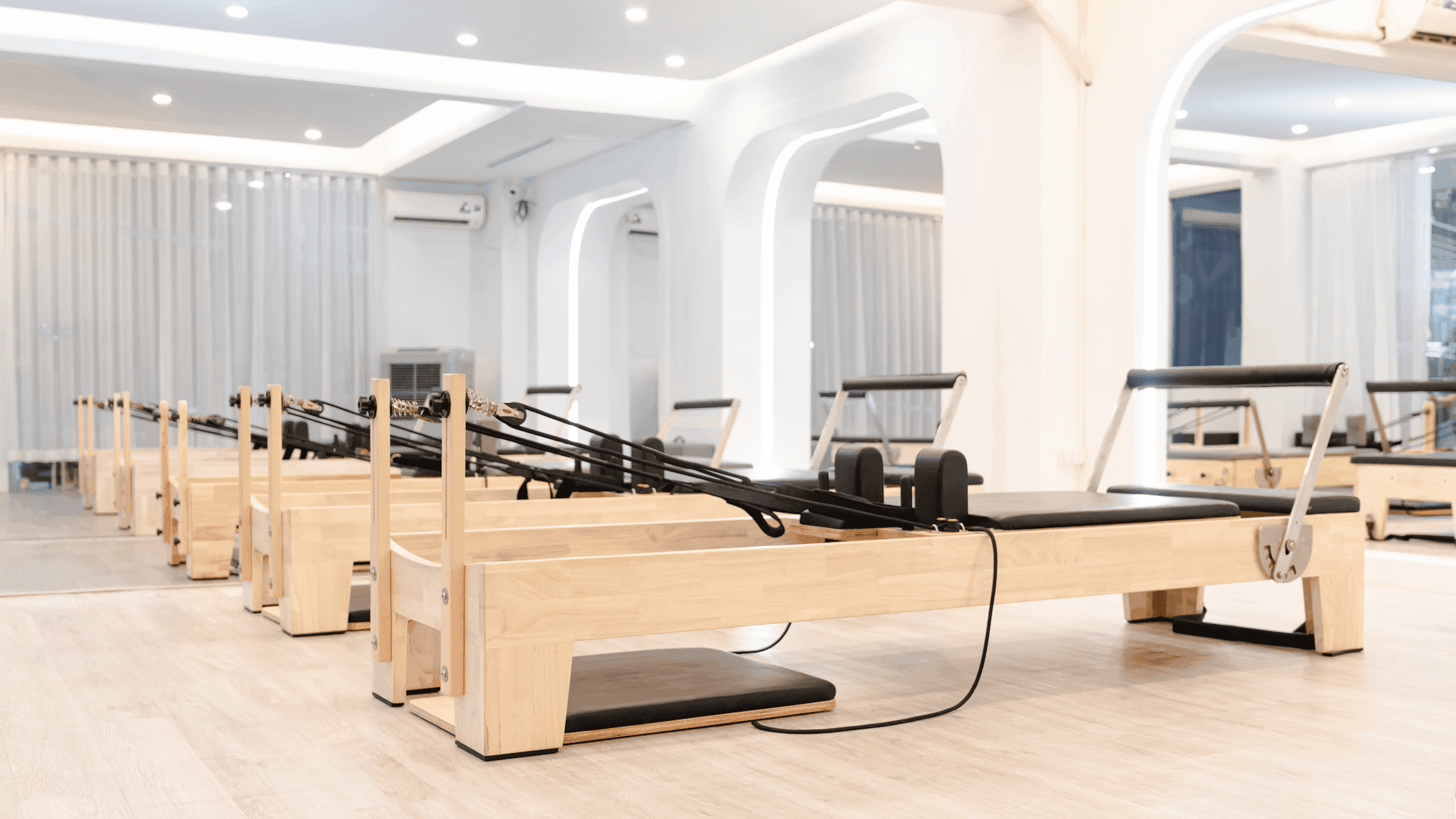
Pilates on its own is not enough after 40, and that is not a knock on Pilates. It is one of the best things you can do for core control, posture, breathing and mobility, and I recommend it to clients in Singapore all the time. The problem is narrower: Pilates does not progressively load the body the way bone and maximal strength require to adapt, so it does not drive the two outcomes that matter most for ageing well, denser bone and a higher strength ceiling. The honest answer to "is Pilates enough" is that it is an excellent part of the picture and a poor substitute for the whole. If you want the protective adaptations, you pair Pilates with progressive strength training.
TL;DR
- Skeletal muscle declines roughly 3 to 8 percent per decade after 40, and strength falls faster still, so the default trajectory is downward unless you train against it.
- Bone and maximal strength adapt to progressive mechanical load; high-intensity resistance training significantly raises lumbar-spine and femoral-neck bone density.
- Across 11 studies of adult women, Pilates and yoga did not significantly improve bone mineral density, which is the load-bearing reason Pilates complements strength rather than replacing it.
- The effective bone dose is high-intensity resistance work, three times a week, sustained for at least 48 weeks, not low-load mat or reformer work.
- Keep your Pilates for what it is genuinely excellent at, and add two to three strength sessions a week for bone density and a higher strength ceiling.
What actually happens to muscle and bone after 40
The reason "after 40" keeps coming up is that 40 is roughly where the biology turns. Skeletal muscle loss runs about 3 to 8 percent per decade from this point, and the decline in strength is steeper still, accelerating further after 65 (Govindasamy et al., 2025). That is the default trajectory if you do nothing to oppose it, and it is the trajectory most adults are quietly on.
Bone follows a similar pattern, and for women the menopausal transition steepens the curve sharply. The stakes are not abstract: loss of muscle shows up as weakness and instability, and loss of bone is what turns a minor fall in your sixties or seventies into a fracture that changes the rest of your life. I have written more on the muscle side in the piece on sarcopenia and muscle loss in Singapore.
The important word in that research is progressive. Resistance training enhances muscle strength in healthy older adults (Govindasamy et al., 2025), but the benefit comes from steadily increasing the load over time. Hold that idea; it is the hinge on which the whole Pilates question turns.
What Pilates genuinely does well
I rate Pilates highly, because the case I am making is not against it. Pilates is excellent for deep core control, for the small stabilising muscles around the spine and hips, for postural awareness, for breathing mechanics, and for the kind of joint mobility that desk-bound professionals lose first. For someone who sits in meetings all day in the CBD, that is a real and valuable set of adaptations.
Pilates also teaches movement quality, and a client who has done reformer work often arrives with better positional awareness and a more stable trunk, which makes the strength coaching easier and safer. So this is a complement-not-replace argument. Pilates earns its place for posture, control, mobility and breathing, and then there is a separate job, building bone and raising your strength ceiling, that it is not built to do. The mistake is not doing Pilates. The mistake is assuming Pilates alone covers everything after 40.
The load principle: why bone and maximal strength need more
Bone and maximal strength are governed by the same blunt principle: they adapt only to a mechanical load heavier than what they already tolerate. Bone lays down density in response to high strain; muscle raises its force ceiling in response to near-maximal effort. Both need a stimulus near the upper end of what the tissue can handle, and both need that stimulus to keep climbing over time.
The strongest demonstration is the LIFTMOR trial, in which postmenopausal women with low bone mass did supervised high-intensity resistance and impact training, twice weekly for eight months, lifting around five sets of five reps above 85 percent of their one-repetition maximum. They significantly improved bone mineral density at the lumbar spine and femoral neck and improved physical function, and the programme was safe and well tolerated (Watson et al., 2018). That is heavy, progressive, supervised loading, not mat or reformer work.
The dose has since been quantified. A meta-analysis of 17 randomised trials found resistance training significantly improved bone density at the lumbar spine and femoral neck, with the optimal protocol being high-intensity, three times a week, for at least 48 weeks (Zhao et al., 2025). The bone benefit is real but conditional: it requires meaningful load, real frequency, and patience measured in months. A low-load practice, however well executed, sits below that threshold.
This is the same logic I laid out in the piece on whether lifting heavy makes you bigger. Heavy, in the longevity sense, means low reps at high effort to drive bone and neural strength, and it does not produce the larger physique people worry about. It produces a denser skeleton and a higher strength ceiling, which is exactly the adaptation Pilates does not supply.
What the evidence says about Pilates and bone
This is the part that settles the argument. A systematic review and meta-analysis pooled 11 studies of 591 adult women and asked whether Pilates and yoga improved bone mineral density. They did not produce a significant improvement versus controls (Fernandez-Rodriguez et al., 2021).
The authors were careful, and so am I: those interventions were short, 12 to 32 weeks, and the samples were small, so they called for trials designed specifically for bone outcomes (Fernandez-Rodriguez et al., 2021). This is not a claim that Pilates harms bone or can never help. It is the current best evidence, and the current best evidence is that Pilates and yoga do not build bone in adult women.
Set that beside the resistance-training evidence and the picture is consistent. High-intensity loading raises bone density (Watson et al., 2018; Zhao et al., 2025); low-load Pilates does not, on the evidence we have (Fernandez-Rodriguez et al., 2021). That is why I never tell a client to drop Pilates, only to add the load that Pilates cannot provide.
Pilates earns its place for posture, control and mobility; bone density and a higher strength ceiling are a separate job that needs progressive load.
Good Pilates options in the Singapore CBD
If you are in the CBD and want to do Pilates properly, there are genuinely good options, and naming them is fair because they do their job well. ALLY runs boutique reformer Pilates and spin out of Manulife Tower at 8 Cross Street, the same building we are in, which is about as convenient as it gets for core, posture and mobility work. Yoga Edition is another quality option, a yoga and reformer Pilates club with its flagship at Millenia Walk and a second location at Velocity in Novena. Both are well run, and either is a sound choice for the things Pilates is genuinely excellent at.
What I would add to either is the loaded strength piece, because that is the gap the research identifies. Use the reformer for control, mobility and breathing, then put two to three progressive strength sessions a week alongside it for the bone density and strength that protect you across the decades. The two are not competitors. They are different tools for different jobs, and after 40 you want both.
The cleanest way to know where your gap sits is to measure it. The Catalyst Healthspan Assessment measures four pillars, Body Composition, Cardiorespiratory Fitness, Stability and Strength, so you can see in numbers whether your Pilates practice has left a strength or stability shortfall, and how much load your body is ready for. For adults over 50, the same logic with a more conservative progression is covered in our over-50 personal training programme.
How to combine Pilates and strength after 40
The structure I use with clients is simple and uses both modalities for what they are good at. Keep one to two Pilates or reformer sessions a week for core control, mobility and postural work, and add two to three strength sessions for the loaded stimulus. That is a realistic four to five training touches a week, and most of it is short.
You do not need to live in the gym for the strength side to work. I made the full case in the piece on three hours a week of real strength: two to three focused, progressive sessions covering the main movement patterns, with the load climbing over time, is enough. The principle that does the work is progression. The weight has to go up, gradually and sustainably, which is exactly the variable a fixed-resistance Pilates practice does not give you.
If you take one thing from this, let it be the framing. Is Pilates enough after 40? Not on its own, because it does not build bone or raise your strength ceiling. Is it worth keeping? Yes, for everything else it does well. The answer is not Pilates or strength. It is Pilates and strength, and the strength is the part the evidence says you cannot skip.
Frequently asked questions
Q. Does Pilates build bone density?
On the current best evidence, no. A meta-analysis of 11 studies of 591 adult women found Pilates and yoga did not significantly improve bone mineral density versus controls (Fernandez-Rodriguez et al., 2021). The studies were short and small, so the authors called for better trials, but as it stands Pilates is not a bone-building stimulus. High-intensity progressive resistance training, by contrast, does raise bone density. Keep Pilates for posture and control, and add strength work for bone.
Q. Do I still need strength training if I do Pilates?
Yes, if you care about bone density and maximal strength after 40. Pilates is excellent for core control, mobility, posture and breathing, but it does not progressively load the body enough to build bone or raise your strength ceiling. The two are complementary, not interchangeable. The simplest structure is to keep one to two Pilates sessions a week and add two to three progressive strength sessions for the loaded stimulus the research shows you need.
Q. Is Pilates enough for women after menopause?
It is a useful part of a programme, but not enough on its own for the bone concern that matters most after menopause. Bone density falls sharply through the menopausal transition, and the evidence that builds it back is high-intensity resistance training, three times a week, sustained for at least 48 weeks (Watson et al., 2018; Zhao et al., 2025). Pilates supports posture, stability and mobility around that strength work, but it does not replace the loading.
Q. How heavy and how often should I lift to protect bone after 40?
The dose from the meta-analysis is high-intensity resistance training, around three sessions a week, sustained for at least 48 weeks, to significantly improve bone density at the spine and hip (Zhao et al., 2025). High-intensity means low reps at a challenging load, progressed over time, done with proper coaching and form. It does not mean grinding to failure every session. A Healthspan Assessment sets the right starting load and progression for your body.
Citations
- Govindasamy, K., Rao, C.R., Chandrasekaran, B., Parpa, K., and Granacher, U. (2025). Effects of Resistance Training on Sarcopenia Risk Among Healthy Older Adults: A Scoping Review of Physiological Mechanisms. Life (Basel), 15(5). pmc.ncbi.nlm.nih.gov
- Watson, S.L., Weeks, B.K., Weis, L.J., Harding, A.T., Horan, S.A., and Beck, B.R. (2018). High-Intensity Resistance and Impact Training Improves Bone Mineral Density and Physical Function in Postmenopausal Women With Osteopenia and Osteoporosis: The LIFTMOR Randomized Controlled Trial. Journal of Bone and Mineral Research, 33(2), 211-220. pubmed.ncbi.nlm.nih.gov
- Zhao, F., Su, W., Sun, Y., Wang, J., Lu, B., and Yun, H. (2025). Optimal resistance training parameters for improving bone mineral density in postmenopausal women: a systematic review and meta-analysis. Journal of Orthopaedic Surgery and Research, 20. pmc.ncbi.nlm.nih.gov
- Fernandez-Rodriguez, R., Alvarez-Bueno, C., Reina-Gutierrez, S., Torres-Costoso, A., Nunez de Arenas-Arroyo, S., and Martinez-Vizcaino, V. (2021). Effectiveness of Pilates and Yoga to improve bone density in adult women: A systematic review and meta-analysis. PLOS ONE, 16(5), e0251391. journals.plos.org