The Edit · Founder Insights
Sustainable Fat Loss in Singapore: The Evidence Against Crash Dieting
The eight-week transformation and the crash diet both work, briefly. What the protein, resistance-training, and rate-of-loss research actually says about keeping the fat off and the muscle on.
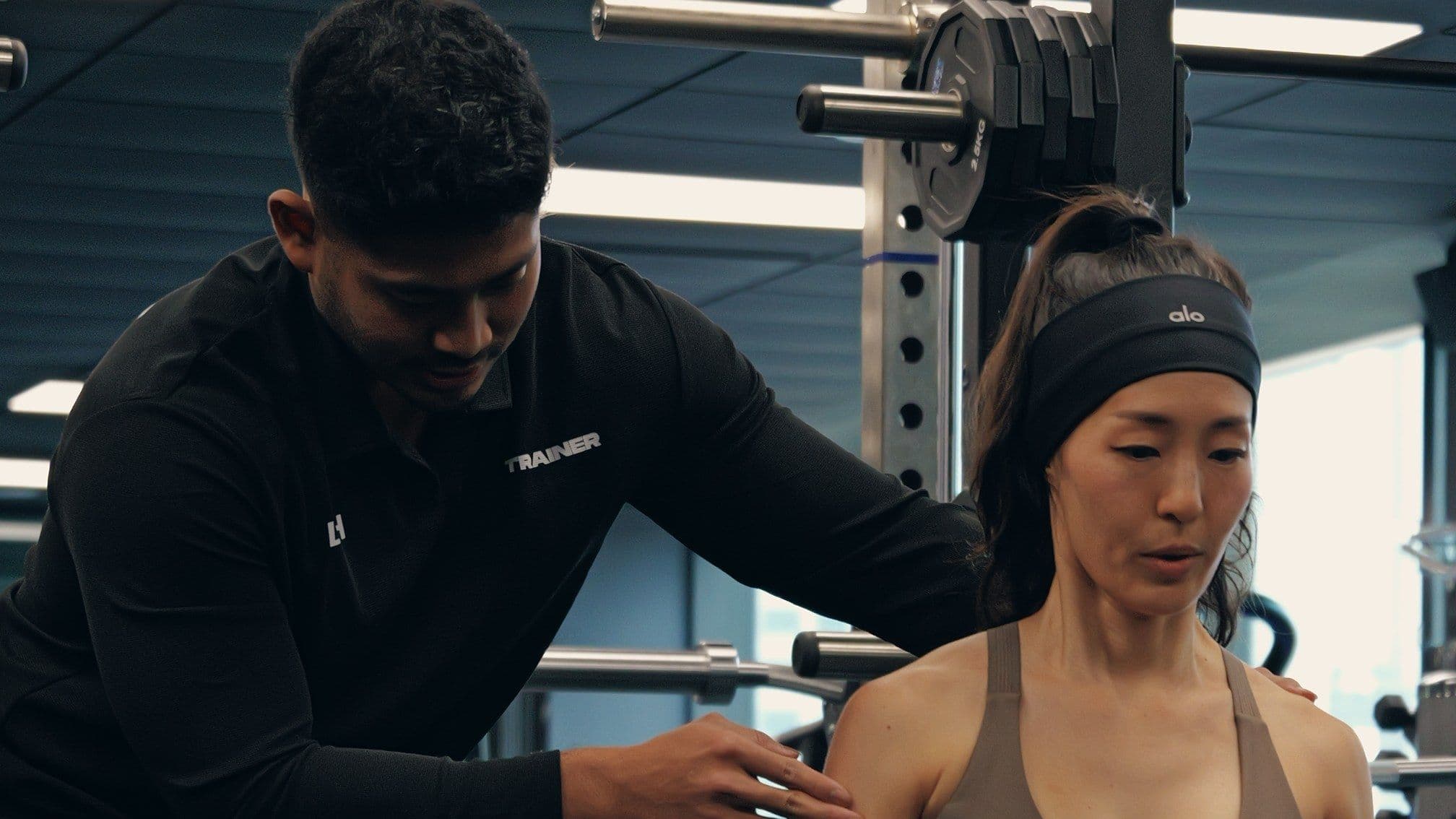
Almost every client who comes to me for fat loss has already lost the weight before, more than once. What they haven't done is kept it off. That's not a willpower problem, it's usually a programme-design problem: an aggressive deficit, minimal resistance training, and a rate of loss fast enough to strip muscle along with fat, which is exactly the combination the evidence says predicts rebound. The research on what actually holds is less dramatic than an eight-week transformation and considerably more useful.
TL;DR
- A landmark 2016 trial found that doubling protein intake during a caloric deficit, combined with resistance training, produced simultaneous fat loss and lean mass gain, not just less muscle lost.
- The International Society of Sports Nutrition's position stand recommends 2.3 to 3.1 grams of protein per kilogram of fat-free mass during a deficit to preserve lean mass, well above typical gym-folklore targets.
- Slower rates of weight loss better preserve lean mass than aggressive deficits, particularly in leaner individuals, which is the direct evidence case against crash dieting.
- Resistance training measurably changes the trade, ten weeks produces real lean mass gain and a resting-metabolic-rate increase alongside fat loss, something a calorie deficit alone doesn't do.
- Catalyst programmes for body composition that holds at two years, not eight weeks, resistance-led, protein-led, and tracked on InBody data at every Checkpoint.
The recomposition study
The clearest evidence that fat loss and muscle loss aren't a package deal comes from a 2016 trial by Longland and colleagues, published in the American Journal of Clinical Nutrition. Forty young men were put through a four-week, roughly 40% energy deficit, training with resistance exercise and high-intensity intervals six days a week. One group ate 1.2 grams of protein per kilogram of bodyweight a day, a fairly standard target. The other ate 2.4 grams, double. The higher-protein group gained 1.2kg of lean mass while losing 4.8kg of fat mass. The lower-protein group gained essentially no lean mass, 0.1kg, while losing less fat, 3.5kg. Same deficit, same training, same four weeks. The only variable that changed was protein, and it changed whether the deficit cost the group muscle or built it.
That trial ran on young, trained men under an aggressive deficit, and I want to be honest about that rather than stretch the finding further than it goes. It's not a claim that everyone recomposes at this rate. What it does establish, cleanly, is the mechanism: protein intake during a deficit is not a minor optimisation, it is the variable that decides whether the weight you lose is fat or a mix of fat and the muscle you'll spend months trying to rebuild.
How much protein you actually need
The International Society of Sports Nutrition's 2017 position stand on diets and body composition, led by Aragon and colleagues, reviewed the accumulated evidence and landed on a specific range: 2.3 to 3.1 grams of protein per kilogram of fat-free mass per day to maximise muscle retention in leaner, resistance-trained individuals under a caloric deficit. That's meaningfully higher than the 1.6g/kg or so that shows up in general nutrition guidance, and it's the range Catalyst programmes toward for a client in an active fat-loss phase. The same position stand makes a second point worth repeating to anyone chasing the latest diet trend: a wide range of dietary approaches, low-fat through low-carb, can be similarly effective for body composition, provided protein and total calories are actually controlled. The macronutrient religion matters less than most people think. The protein target and the calorie target matter more.
How fast is too fast
A 2014 evidence review by Helms, Aragon, and Fitschen, published in the Journal of the International Society of Sports Nutrition, is built around natural bodybuilding contest preparation, which means its numbers sit at the aggressive end of what's evidence-based, competitors going leaner than almost any general client needs to go. Read with that caveat, the review's rate-of-loss recommendation is still the clearest anchor available: roughly 0.5 to 1% of bodyweight lost per week to maximise muscle retention during a cut. For an 65kg client, that's about 0.3 to 0.65kg a week, a pace that looks unremarkable next to a crash diet's promised 2 to 3kg, and is exactly why it works better over a year.
The position stand also flags something worth deflating: manipulating meal timing and frequency has comparatively little effect on fat loss or lean mass retention next to total protein and calorie targets. If a plan is built around precisely when you eat rather than how much protein and how large a deficit, it's optimising the wrong lever.
Why resistance training, not cardio
Westcott's 2012 review in Current Sports Medicine Reports, titled plainly Resistance Training Is Medicine, lays out what ten weeks of structured resistance training does on its own: an average lean mass gain of 1.4kg, a 7% increase in resting metabolic rate, and 1.8kg of fat loss, in adults who weren't specifically dieting. That resting-metabolic-rate figure is the part a pure-cardio or pure-diet approach can't replicate, more muscle means a higher calorie burn at rest, every day, indefinitely, not just during the 45 minutes you're training. The same review notes that untrained adults lose 3 to 8% of their muscle mass per decade after their thirties without intervention, which is the backdrop every fat-loss plan for an adult over 40 is actually working against, whether the plan accounts for it or not.
This is the practical case for resistance training leading a fat-loss programme rather than sitting alongside cardio as an afterthought: cardio burns calories while you're doing it, resistance training changes the body that's burning calories when you're not.
Why this runs longer than eight weeks
An eight-week transformation programme and a crash diet optimise for the same thing, rapid scale movement, and they typically get it through the same trade, an aggressive deficit and minimal resistance training. The evidence above is the reason that trade doesn't hold: fast loss without adequate protein and resistance training costs lean mass, and lean mass is what sets your resting metabolic rate. Lose it fast and the body you're left maintaining burns fewer calories than the one you started with, which is a large part of why the weight comes back.
Catalyst runs the opposite trade. Every fat-loss client starts with the 4-Pillar Assessment, resistance training is programmed as the primary lever rather than a supplement to cardio, protein targets sit in the 2.3 to 3.1g/kg fat-free mass range the evidence supports, and body composition is tracked on InBody segmental data at every 16-week Checkpoint, so the plan adjusts to what's actually happening rather than what the scale alone suggests. It's a longer arc than an eight-week programme promises. It's also the version that's still true two years later, which is the only timeframe that actually matters. If you want the fuller breakdown of how the programme runs week to week, our sustainable fat loss page in the CBD covers the practical side.
Frequently asked questions
Q. Why do most people regain the weight after a diet?
The most common cause is that the deficit was fast and protein was low, which strips lean mass along with fat. Lean mass sets resting metabolic rate, so a client who loses weight quickly without adequate protein and resistance training ends up with a body that burns fewer calories at rest than before the diet. Regain follows because the maintenance calories that used to hold the old weight now create a surplus against the smaller, lower-metabolic-rate body.
Q. How much protein do I actually need during a fat-loss phase?
The International Society of Sports Nutrition's position stand recommends 2.3 to 3.1 grams per kilogram of fat-free mass per day for lean, resistance-trained individuals in a deficit, which is higher than most general nutrition guidance. A 2016 trial found that doubling protein intake, from 1.2 to 2.4 grams per kilogram of bodyweight, was the difference between losing muscle and gaining it during an identical deficit and training programme.
Q. Is it actually possible to lose fat and gain muscle at the same time?
Under the right conditions, yes, this is called body recomposition. A 2016 randomised trial found that combining a high protein intake with resistance training during a caloric deficit produced simultaneous fat loss and lean mass gain over four weeks. It's not automatic, it requires both an adequate protein target and structured resistance training running through the deficit, not either alone.
Q. How fast should I expect to lose fat?
Evidence-based guidance points to roughly 0.5 to 1% of bodyweight per week as the range that maximises muscle retention during a deficit, which is considerably slower than most crash diets promise. At Catalyst this pace is tracked against InBody segmental body composition data at every 16-week Checkpoint, so the deficit is calibrated to what's actually happening to your lean mass, not just the number on the scale.
Citations
Longland, T. M., Oikawa, S. Y., Mitchell, C. J., Devries, M. C., & Phillips, S. M. (2016). Higher compared with lower dietary protein during an energy deficit combined with intense exercise promotes greater lean mass gain and fat mass loss: a randomized trial. American Journal of Clinical Nutrition, 103(3), 738-746. pubmed.ncbi.nlm.nih.gov
Aragon, A. A., Schoenfeld, B. J., Wildman, R., Kleiner, S., VanDusseldorp, T., Taylor, L., et al. (2017). International society of sports nutrition position stand: diets and body composition. Journal of the International Society of Sports Nutrition, 14, 16. pubmed.ncbi.nlm.nih.gov
Helms, E. R., Aragon, A. A., & Fitschen, P. J. (2014). Evidence-based recommendations for natural bodybuilding contest preparation: nutrition and supplementation. Journal of the International Society of Sports Nutrition, 11, 20. pubmed.ncbi.nlm.nih.gov
Westcott, W. L. (2012). Resistance training is medicine: effects of strength training on health. Current Sports Medicine Reports, 11(4), 209-216. pubmed.ncbi.nlm.nih.gov