
The Edit · Founder Insights
What Your Heart Rate Recovery Tells You (That Your Apple Watch Doesn't)
Resting heart rate is the wrong number to watch. Heart rate recovery, how fast your heart rate drops after exercise, is one of the strongest predictors of cardiovascular mortality.
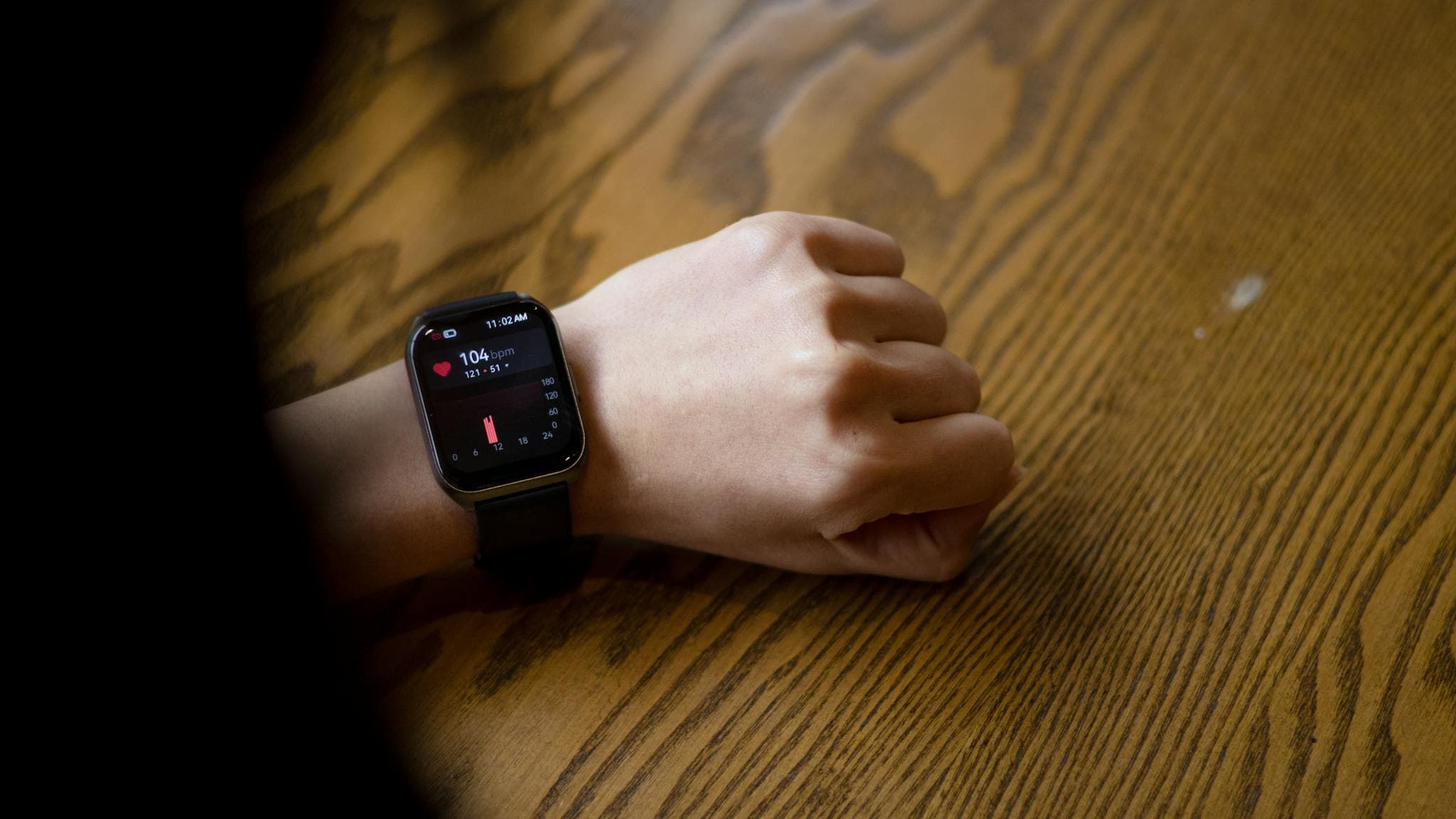
Your smartwatch is tracking the wrong number. Resting heart rate tells you something useful but limited; what predicts cardiovascular mortality far more strongly is heart rate recovery (HRR), how quickly your heart rate drops in the first minute after peak exercise. A drop below 12 beats per minute is a clinical red flag, associated with a four-fold higher mortality risk over six years per the landmark 1999 Cole et al. NEJM study. The Apple Watch can't measure HRR properly. Here's what you need to know.
TL;DR
- Resting heart rate is a useful baseline metric, but it does not predict cardiovascular mortality the way heart rate recovery does.
- HRR measures how fast your heart rate drops after peak exercise. A drop below 12 bpm in the first minute is associated with a 4× higher mortality risk per the Cole 1999 NEJM study.
- HRR is a window into autonomic function, specifically the vagus nerve's ability to slow the heart after stress. Poor HRR signals systemic dysregulation.
- Smartwatches measure resting heart rate and heart rate variability, but not HRR. The protocol requires controlled stress and timed recovery, which wearables can't deliver.
- HRR is trainable. Zone 2 cardiovascular work for 6-12 weeks consistently improves the recovery curve.
The landmark study that changed everything
In 1999, Cole and colleagues published a study in the New England Journal of Medicine that fundamentally changed how researchers think about heart rate and health. The study followed 2,428 adults referred for exercise stress testing and tracked their outcomes over six years.
The finding was stark. Individuals whose heart rate dropped by 12 beats per minute or fewer in the first minute after stopping exercise had four times the risk of dying compared to those with a faster recovery. After adjusting for age, sex, medications, cardiac risk factors, and exercise capacity, the relationship held.
Let that settle. Not cholesterol. Not blood pressure. Not resting heart rate. How quickly the heart rate dropped after exercise predicted whether someone would be alive six years later.
A follow-up study by Jouven et al. in 2005, also in the NEJM, confirmed the finding in 5,713 apparently healthy men with no detectable cardiovascular disease. Abnormal HRR predicted sudden death even in people who appeared perfectly well.
What heart rate recovery actually measures
To understand why HRR is so predictive, you need to understand the autonomic nervous system. Your heart is regulated by two competing systems: the sympathetic nervous system (which accelerates it) and the parasympathetic nervous system (which slows it down).
During exercise, the sympathetic system dominates. Your heart rate climbs to meet the demand for oxygen. When you stop exercising, the parasympathetic system, primarily through the vagus nerve, kicks in to bring your heart rate back down. The speed of that drop reflects how well your parasympathetic nervous system functions.
A fast recovery means your vagus nerve is responsive and your autonomic system is well regulated. A slow recovery means your parasympathetic tone is low, which is associated with chronic inflammation, insulin resistance, and elevated cardiovascular risk.
Think of it like brakes on a car. The engine (sympathetic) gets you up to speed; the brakes (parasympathetic) bring you back down. HRR tests your brakes. A body with good exercise capacity but poor recovery is the physiological equivalent of a car with a powerful engine and weak brakes.
Resting heart rate is the engine at idle. Heart rate recovery is the brakes after a hard run. The brakes are what tell you whether the car is safe to drive.
Why your Apple Watch is not enough
Modern wearables track resting heart rate, heart rate variability (HRV), and sometimes heart rate during exercise. These are all useful data points. None of them are the same as HRR.
Resting heart rate is a snapshot taken when you are doing nothing, a baseline marker of cardiovascular fitness, but a passive one. HRV measures beat-to-beat variation at rest, which reflects autonomic balance under non-stress conditions. Both are valuable. Both are different from HRR.
Heart rate recovery is a stress test. It measures how your body responds to a challenge and then recovers from it. That is a fundamentally different kind of information. The difference between checking a car's oil level in the driveway and seeing how the engine performs after you push it up a hill.
Some newer wearables estimate recovery metrics, but the protocols vary, the measurement conditions are uncontrolled, and the algorithms are proprietary. A clinical HRR measurement follows a standardised protocol: exercise at a defined intensity, stop at a defined point, measure the heart rate drop at exactly 60 seconds and 120 seconds. If you do use wearable data, the value comes from integrating it with manual coaching rather than reading numbers in isolation, the case we make in our deep-dive on the closed-loop recovery method.
At Catalyst Performance, we test HRR as part of our 4-Pillar Healthspan Assessment. It takes 3-5 minutes, it is safe, and the data it produces is far more clinically meaningful than anything on your wrist. Members whose HRR data sits alongside chronic movement-quality issues (desk-bound back pain, runner's knee, recurring shoulder tightness) often benefit from our framework for when manual therapy outperforms physiotherapy as the recovery-side complement to the cardiovascular work.
Heart rate recovery is one of the readiness signals we check before a runner starts a race-prep block. If you are choosing a race to train for, our guide to the 22 running events in Singapore for 2026 covers every 10K, half marathon, and full on the 2026 calendar, with the training time-frame each one needs.
Your wearable already tracks your resting heart rate. Our free fitness age calculator turns that single number into an estimated cardiorespiratory age for your age and sex, a useful starting point before you measure heart rate recovery properly in studio.
What the numbers mean
The widely cited threshold from the Cole study is a drop of 12 or fewer beats per minute in the first minute after exercise. Below that line, cardiovascular risk increases significantly. Above 18 bpm in the first minute is generally considered robust.
- Below 12 bpm: abnormal HRR, clinically meaningful elevated cardiovascular mortality risk per Cole 1999.
- 12-18 bpm: middling. Trainable. Most untrained adults sit here.
- 18-25 bpm: good. Trained adults with regular Zone 2 work typically land here.
- Above 25 bpm: excellent. Athletic populations.
These thresholds are population-level cut-offs. The trajectory matters as much as the absolute number, a stable or rising HRR over years is a strong signal regardless of where you start.
How to improve heart rate recovery
HRR responds to training. Specifically, sustained Zone 2 cardiovascular work, 60-90 minute sessions at conversational pace, strengthens parasympathetic tone over a 6-12 week training block. The improvement is measurable within weeks.
Zone 2 base building. 60-90 minutes per session, 2-3 times per week, at a heart rate where you can hold a conversation. Walking briskly, easy cycling, swimming, rowing. The session feels almost too easy at first; the adaptation is in the volume, not the intensity. For runners specifically, the most consistent Zone 2 windows in Singapore's climate are pre-dawn fasted (4:30 to 6am) and early evening sunset Zone 2 along Marina Bay (6:30 to 8pm); the full six-window timing breakdown is here.
High-intensity intervals (sparingly). One short HIIT session per week, 6-8 short bursts at near-maximal effort with full recovery between, accelerates parasympathetic gains in trained adults. Not the primary driver, but a useful supplement.
Sleep, stress, and recovery. Chronically poor sleep blunts parasympathetic tone. So does chronic stress. Both directly degrade HRR over months. Fix these and the cardiovascular training adaptations show up faster.
Frequently asked questions
Q. What is a good heart rate recovery for my age?
Above 18 beats per minute drop in the first minute is generally considered robust at any age. Below 12 is the clinical red flag from the Cole 1999 NEJM study, associated with a 4× higher mortality risk over six years. The trajectory matters: a stable or improving HRR over years is a strong signal regardless of where you start.
Q. Can I measure HRR with my Apple Watch?
Not properly. The Apple Watch (and most consumer wearables) measure resting heart rate, heart rate during exercise, and HRV, but the HRR protocol requires controlled exercise stress, defined exercise cessation, and timed measurement at exactly 60 and 120 seconds. Wearables don't enforce the protocol. A clinical or studio measurement using a chest-strap heart rate monitor is the reliable method.
If you came here because you were curious about your Apple Watch's VO2 max number (a related-but-distinct wearable accuracy question), the companion piece Apple Watch VO2 max vs treadmill covers the algorithm and the structural error in the same level of depth this post covers HRR.
Q. How long does it take to improve heart rate recovery?
Improvements typically appear within 6-12 weeks of consistent Zone 2 cardiovascular training. The earliest measurable changes show up within 4-6 weeks. The peak adaptation in HRR clusters around 12-16 weeks of structured training.
Q. Is HRR more important than VO2 max?
They measure different things. VO2 max is the maximum rate at which your body can use oxygen, the engine's peak output. HRR is autonomic function, how well the brakes work. Both predict mortality strongly, but they capture different physiological systems. Ideally you measure both. The Catalyst Healthspan Assessment estimates both.
Q. What if my heart rate recovery is poor?
Don't panic. HRR is highly trainable. Start with 2-3 sessions of Zone 2 cardiovascular work per week (60-90 minutes each), prioritise sleep and stress management, and re-test in 12-16 weeks. The trial evidence is unambiguous: HRR responds to consistent training in 80%+ of adults.
If you want a measured cardiorespiratory baseline rather than a wrist estimate, our guide to a VO2 max test in Singapore covers which protocol is accurate and why most clinics run the wrong one.
Citations
Cole CR, Blackstone EH, Pashkow FJ, Snader CE, Lauer MS. (1999). Heart-rate recovery immediately after exercise as a predictor of mortality. New England Journal of Medicine, 341(18), 1351–1357. nejm.org
Jouven X, Empana JP, Schwartz PJ, Desnos M, Courbon D, Ducimetière P. (2005). Heart-Rate Profile during Exercise as a Predictor of Sudden Death. New England Journal of Medicine, 352(19), 1951–1958. nejm.org
Mandsager K, Harb S, Cremer P, et al. (2018). Association of Cardiorespiratory Fitness With Long-term Mortality. JAMA Network Open, 1(6), e183605. pubmed.ncbi.nlm.nih.gov
Ross R, Blair SN, Arena R, et al. (2016). Importance of Assessing Cardiorespiratory Fitness in Clinical Practice: A Case for Fitness as a Clinical Vital Sign. Circulation, 134(24), e653–e699. pubmed.ncbi.nlm.nih.gov