
The Edit · Founder Insights
Your Weight Doesn't Tell You How Healthy You Are, These Two Numbers Do
Most body composition reports lead with weight or BMI. The two numbers that actually predict long-term health are Skeletal Muscle Index and Waist-to-Height Ratio.
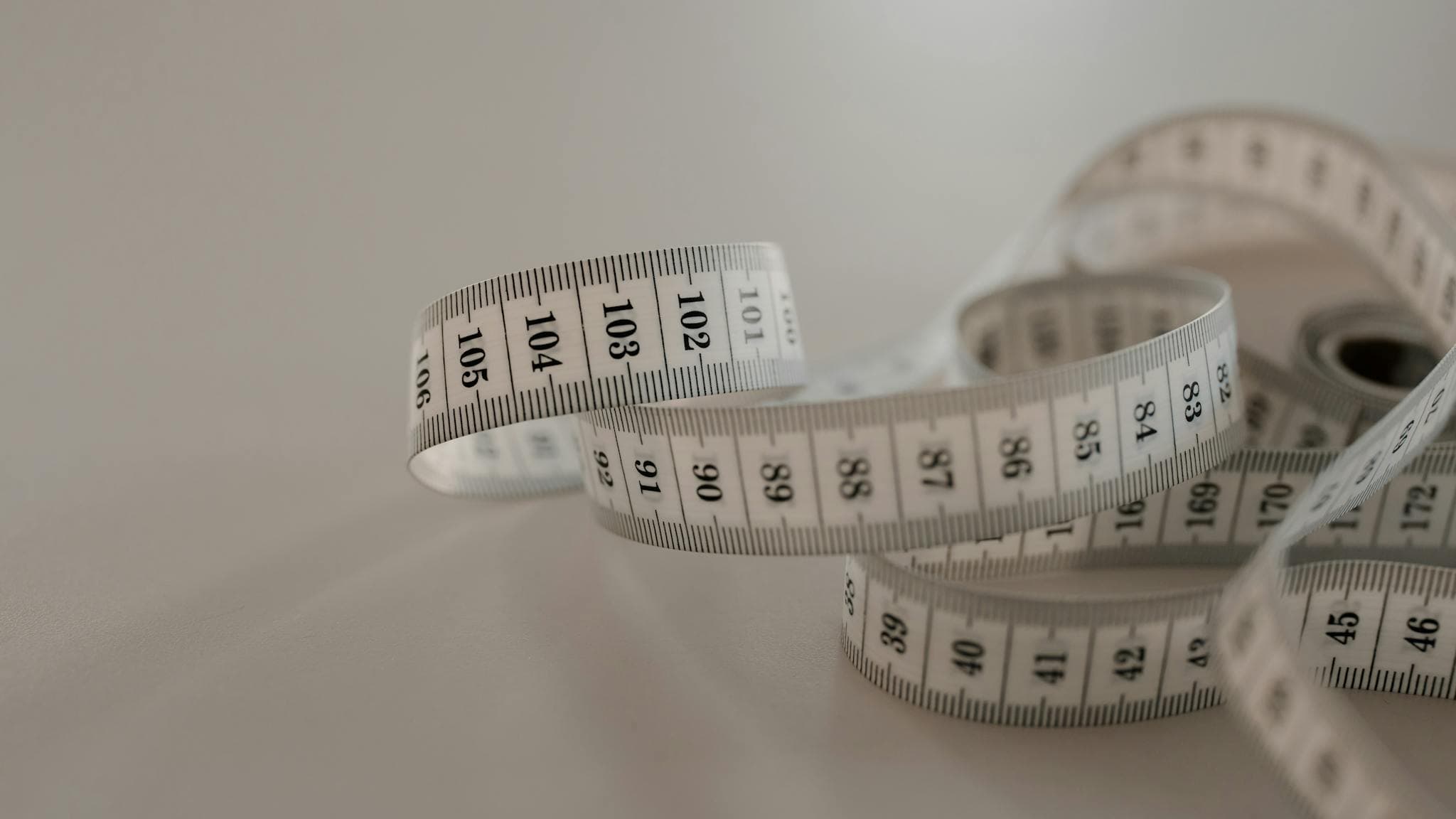
Body weight and BMI tell you almost nothing about how healthy you are. The two numbers that matter, and that most gym body composition reports skip over, are Skeletal Muscle Index (SMI), which tells you how much protective muscle mass you carry, and Waist-to-Height Ratio (WHtR), which captures the dangerous visceral fat that BMI misses entirely. Together they form the body composition pillar of the Catalyst Healthspan Assessment, and they predict ageing trajectories far better than the scale ever will. We have since published a dedicated deep dive on the second number: waist-to-height ratio, and what a healthy figure looks like at every age.
TL;DR
- Total body weight is the least useful number on most body composition reports. Two people at the same weight can have completely different health profiles.
- BMI misclassifies roughly half of overweight individuals as unhealthy when their cardiometabolic markers are fine, and a third of normal-BMI individuals as healthy when they are not.
- Skeletal Muscle Index (SMI) measures functional muscle in your arms and legs relative to height. It's the single strongest modifiable predictor of how well you'll age.
- Waist-to-Height Ratio (WHtR) above 0.5 flags visceral adiposity, the metabolically dangerous fat, independent of total body weight.
- The combination of high SMI and low WHtR is the ideal body composition pattern. Low SMI plus high WHtR (sarcopenic obesity) is the highest-risk pattern.
Why weight and BMI are poor indicators of health
BMI divides your weight by your height squared. That's the entire formula. It makes no distinction between fat mass and muscle mass. A lean, muscular person and an overfat, undermuscled person of the same height and weight will receive the same BMI score. This is not a theoretical edge case, it's a routine outcome.
A 2016 study in the International Journal of Obesity by Tomiyama and colleagues analysed data from over 40,000 adults and found that nearly half of individuals classified as overweight by BMI were metabolically healthy, while over 30% of those in the normal BMI range had cardiometabolic markers indicating poor health. BMI misclassified roughly 75 million Americans either as unhealthy when they were not, or healthy when they were not.
Weight and BMI tell you something. They just don't tell you enough. In a clinical or training context, not enough can mean the difference between catching a problem early and missing it entirely.
The first number: Skeletal Muscle Index (SMI)
Skeletal Muscle Index measures your appendicular skeletal muscle mass, the muscle in your arms and legs, relative to your height. Expressed as kg per square metre, it answers a simple question: for someone of your height, how much protective muscle mass do you carry?
Why does this matter? Because muscle mass is the single strongest modifiable predictor of how well you will age. Low SMI is the clinical definition of sarcopenia, which affects roughly 32% of Singaporeans over 60 per the Yishun Study.
Sarcopenia does not begin at 60. Muscle mass starts declining in your 30s, at an estimated rate of 3-8% per decade if left unaddressed. By the time most people notice they are weaker, they have already lost a significant amount of muscle. SMI catches this trajectory early, long before symptoms appear. This is why we treat strength training as the floor, not the ceiling, of training after 50.
When I review a body composition report with a client, the first thing I look at is not their weight. It is their SMI. If it is low for their age and sex, that becomes the primary training priority, regardless of what the scale says.
The second number: Waist-to-Height Ratio (WHtR)
Waist-to-Height Ratio is exactly what it sounds like: your waist circumference divided by your height. A WHtR above 0.5 is the widely accepted threshold for elevated cardiometabolic risk, and the research supporting it is extensive.
Ashwell and Gibson published a landmark meta-analysis in BMC Medicine reviewing data from over 300,000 adults across multiple ethnic groups. Their conclusion: WHtR was a superior predictor of cardiovascular disease, type 2 diabetes, and metabolic syndrome compared to BMI and waist circumference alone. The screening rule: keep your waist circumference to less than half your height.
This is particularly relevant in Singapore. Metabolic syndrome prevalence among Singaporean adults is estimated at over 25%, and visceral fat, the abdominal fat that WHtR specifically captures, is a primary driver. Asian populations tend to accumulate visceral fat at lower overall body weights, which means a Singaporean with a normal BMI can still carry dangerous levels of visceral fat. WHtR catches this. BMI does not.
WHtR takes five seconds to calculate and requires nothing more than a measuring tape. Yet most gym assessments do not include it. They weigh you, maybe calculate your BMI, and move on. That is a missed opportunity to identify one of the most trainable risk factors for chronic disease.
You can shrink your waistline without changing the number on the scale. Most adults who do this are healthier than they have ever been. Most scales never tell them.
What these two numbers tell you together
SMI and WHtR work as a pair because they capture both sides of the body composition equation.
SMI tells you how much protective muscle you have. Muscle is metabolically active tissue, it regulates blood sugar, supports joint health, maintains bone density, and provides the functional strength you need to remain independent as you age. More muscle is, within physiological limits, unambiguously better.
WHtR tells you how much harmful visceral fat you carry. Visceral fat is endocrinologically active. It secretes inflammatory cytokines, disrupts insulin signalling, and is directly linked to cardiovascular disease, type 2 diabetes, and certain cancers. Less visceral fat is, without exception, better.
A high SMI and a low WHtR is the ideal combination. A low SMI and a high WHtR is the opposite, undermuscled and overfat, even if total body weight looks normal. This is sometimes called sarcopenic obesity, and it carries the highest risk profile of any body composition pattern.
At Catalyst, these two metrics form the body composition pillar of our 4-Pillar Healthspan Assessment. They are assessed at baseline and reassessed every 16 weeks at the Checkpoint. Changes in SMI and WHtR over time tell us whether a client's training and nutrition programme is actually working, not in terms of how they look in a mirror, but in terms of biomarkers that predict healthspan.
Two companion posts extend this two-number framework. The healthy body fat percentage by age guide covers the cardiometabolic-framed third number that often gets discussed alongside SMI and WHtR, with the published Gallagher 2000 ranges by decade. The visceral fat deep-dive covers the WHtR-adjacent metric that captures the dangerous fat compartment specifically (subcutaneous fat sits under the skin and is relatively benign; visceral fat sits inside the abdominal cavity and drives the inflammatory cascade).
How to improve both numbers
Both numbers are highly trainable. They respond to the same fundamental interventions, which means improving one tends to improve the other.
To build SMI (increase protective muscle mass). Resistance training is non-negotiable. Specifically, compound movements with progressive overload: squats, deadlifts, presses, rows, and their variations. The minimum effective dose research shows that two to three strength sessions per week is sufficient for meaningful muscle gain, provided intensity, technique, and recovery are programmed properly. Adequate protein intake, around 1.6-2.2 grams per kilogram of bodyweight, supports muscle protein synthesis (Phillips and Van Loon, 2011).
To reduce WHtR (reduce harmful visceral fat). Visceral fat responds strongly to resistance training, sometimes more effectively than to cardio alone. A 2022 systematic review in Sports Medicine by Wewege and colleagues found that resistance training significantly reduced visceral fat even in the absence of weight loss. You can shrink your waistline without changing the number on the scale, because muscle gain offsets fat loss.
Nutritionally, reducing visceral fat does not require extreme dieting. A moderate energy deficit with adequate protein and a bias toward whole, minimally processed foods is the evidence-based approach. Crash diets and severe restriction tend to sacrifice muscle along with fat, which improves WHtR at the cost of SMI, the worst possible trade.
Want to check your own numbers? Our free waist-to-height ratio calculator shows where you sit against the 0.5 health boundary.
Frequently asked questions
Q. What is a healthy Skeletal Muscle Index?
Per the AWGS 2019 consensus for Asian adults, the sarcopenia diagnostic threshold is below 7.0 kg/m² in men and below 5.7 kg/m² in women (BIA measurement). Above 8.5 kg/m² in men and 6.5 kg/m² in women is generally considered robust for most ages. The trajectory matters as much as the absolute number, a stable or rising SMI over years is a strong signal regardless of where you start.
Q. What waist-to-height ratio is considered healthy?
Below 0.5 is the standard threshold for cardiometabolic health. The screening rule from the Ashwell meta-analysis: keep your waist circumference less than half your height. A ratio of 0.5-0.6 is elevated risk; above 0.6 is high risk.
Q. Can I have a normal BMI but still be unhealthy?
Yes, this pattern is common in Asian populations and has its own clinical name: "thin outside, fat inside" (TOFI). A person can have a BMI in the normal range while carrying dangerous levels of visceral fat. WHtR catches this where BMI misses it.
Q. How often should I measure SMI and WHtR?
Every 12-16 weeks for adults actively training. The 16-week interval is calibrated to the time-to-effect of the underlying interventions: SMI gains take 12-16 weeks to register cleanly, and visceral fat reduction follows a similar timeline. Annual measurement is too infrequent to catch a stalling programme.
Q. Can I measure WHtR at home?
Yes, all you need is a tape measure. Stand upright, breathe out normally, and measure your waist at the navel. Divide by your standing height (in the same unit). Above 0.5 is the threshold for elevated cardiometabolic risk. SMI requires a bioimpedance scanner or DXA scan and is best done at a qualified clinic or studio.
Waist-to-Height you can measure at home; Skeletal Muscle Index needs a scan. If you want the full body-composition picture, our guide to an InBody and DEXA body composition scan in Singapore covers which scan to choose and what each one reads.
Citations
Tomiyama AJ, Hunger JM, Nguyen-Cuu J, Wells C. (2016). Misclassification of cardiometabolic health when using body mass index categories in NHANES 2005-2012. International Journal of Obesity, 40(5), 883–886. nature.com
Ashwell M, Gibson S. (2014). A proposal for a primary screening tool: Keep your waist circumference to less than half your height. BMC Medicine, 12, 207. bmcmedicine.biomedcentral.com
Chen LK, Woo J, Assantachai P, et al. (2020). Asian Working Group for Sarcopenia: 2019 Consensus Update. JAMDA, 21(3), 300–307. jamda.com
Phillips SM, Van Loon LJ. (2011). Dietary protein for athletes: From requirements to optimum adaptation. Journal of Sports Sciences, 29(sup1), S29–S38. tandfonline.com
Wewege MA, Desai I, Honey C, et al. (2022). The effect of resistance training in healthy adults on body fat percentage, fat mass and visceral fat: A systematic review and meta-analysis. Sports Medicine, 52(2), 287–300. link.springer.com