
The Edit · Founder Insights
Body Transformation in Singapore: 10 Truths Before You Sign a 12-Week Contract
Body transformation in Singapore is real and achievable. The 12-week contract built around it is the problem. Ten evidence-backed truths on what transforms, what rebounds, and the system that keeps the after.

Body transformation in Singapore works. Our clients lose fat, build muscle and look visibly different, and the market's before-and-after photos are mostly real. What the industry does not tell you is what happens at week 13. This guide covers what a transformation genuinely delivers, what the evidence says about keeping it, and how to buy one that lasts.
| What you are buying | The 12-week transformation model | The four-pillar healthspan system |
|---|---|---|
| Contract | 8 to 12 weeks, ends at the photo | Ongoing, retested at fixed checkpoints |
| Success metric | Scale weight and a before-and-after image | Body composition, cardio fitness, stability and strength, measured |
| Rate of fat loss | As fast as the deadline demands | 0.5 to 1 kg per week, the HPB-MOH guideline rate |
| Muscle | Often spent to move the scale faster | Protected first, because it predicts how you age |
| Week 13 | Programme over, adaptation and rebound begin | Just another training week |
| The transformation itself | The end goal | An early milestone |
TL;DR
- Transformations are achievable, and at guideline rates they are healthy. Our clients get them.
- The 12-week deadline model is the flaw: metabolic adaptation persists for years and most rapidly lost weight returns.
- Crash timelines spend muscle, the single tissue most predictive of healthy ageing, and it is the most expensive thing to rebuild after 40.
- A transformation should be priced and planned as checkpoint one of a longer system, not as the finish line.
Search interest in body transformation programmes in Singapore is dominated by one product: the 8 to 12 week package, priced around a scale outcome, marketed on before-and-after photography. We have written before about why we did not build another transformation gym and the eight peer-reviewed costs of the rapid version. This article is the buyer's version of that argument.
It is a different argument from the one you might expect. We are not against transformations. We are against transformations as the end goal. The distinction sounds small. It changes everything about how the programme is built: the rate of loss, the role of muscle, what gets measured, and what happens after the photo.
1. Yes, you can transform your body, and our clients do
Start with the concession, because it is true and the evidence supports it. A previously untrained adult who strength trains two to three times a week, holds a moderate calorie deficit and eats enough protein will look and feel meaningfully different within months. Waist down, strength up, posture changed, energy different. Clients tell us colleagues notice before they do.
The clients whose stories appear on our stories page did not get there through anything exotic. Progressive strength work, a sustainable deficit, protein at each meal, and a retest date on the calendar. The transformation is the natural early result of doing boring things consistently under measurement.
So when a transformation gym shows you a genuine before-and-after, believe it. The photos are usually real. The question this article answers is different: what did that result cost, and where is that person eighteen months later? On those two questions, the deadline-driven model and the measured model separate completely.
2. A real transformation is measured in four pillars, not one photo
A photograph measures light, posing, a pump and a spray tan. It cannot see the variables that decide how you live the next thirty years. That is not rhetoric: two people can look identical in a photo while carrying completely different visceral fat, aerobic capacity and strength profiles.
A transformation worth paying for moves four measurable pillars: body composition (muscle and fat, not scale weight), cardiorespiratory fitness, stability, and strength. These are the four pillars of the Catalyst Healthspan Assessment, and each is tracked with instruments, not mirrors: InBody segmental composition, a sub-maximal step test for aerobic fitness, balance and movement screens, and load plus grip measured against age-and-sex norms.
Grip strength alone illustrates why instruments beat photos. In the PURE study of nearly 140,000 adults across 17 countries, Leong and colleagues found each 5 kg drop in grip strength carried a 16% higher risk of death from any cause. No before-and-after photo has ever captured that variable. We call it the cheapest mortality test in medicine.

3. How long a body transformation takes, honestly
Singapore's official guidance, the HPB-MOH Clinical Practice Guidelines on obesity, sets safe weight loss at 0.5 to 1 kg per week. Hold that rate and the arithmetic answers the timeline question honestly: 2 to 4 kg of fat in a month, 6 to 12 kg across a 12-week block. For many people that is a visible change. For most it is the first half of one.
Strength moves faster at the start, because early gains are neurological before they are structural. Muscle itself accrues slowly: a few hundred grams a month under good conditions is a strong result. This is why our fat loss calculator refuses to promise dates the physiology cannot deliver.
So the honest timeline is layered. Habits change in week one. Strength and energy shift inside a month. Visible composition change takes 8 to 16 weeks. A durable transformation, one that survives holidays, quarters of heavy work and a flu, is a 6 to 12 month project. Anyone selling the full result inside 20 days is selling water loss and lighting.
4. The 12-week model has a structural flaw: week 13
Everything about a deadline programme is optimised for the day the photo is taken. The deficit is as aggressive as the client can survive, cardio volume climbs as the date approaches, and the finale lands with maximum contrast. Then the contract ends. The habits were built for a sprint, the calorie level is not sustainable, and the programme's own success metric has expired.
Week 13 is not a neutral week. It arrives with a suppressed metabolism, elevated appetite signalling and no next checkpoint. The physiology of that moment is documented in the studies below, but the structural point stands on its own: a programme designed to end will end, and the result was scaffolded to the programme.
This is the core of our position in the anti-transformation evidence base: the model does not fail at week 6. It fails at week 13, precisely where the seller stops measuring. Ask any transformation provider what their clients look like a year later and listen for data rather than anecdotes. The silence is the answer.
5. The rebound is documented: most rapidly lost weight returns
The cleanest long-term data on aggressive transformation comes from the most extreme cohort ever studied. Fothergill and colleagues followed The Biggest Loser contestants for six years and published the results in Obesity in 2016: the cohort regained 41 kg of the weight lost on the show, and resting metabolic rate remained suppressed by roughly 700 kcal per day below what their new body composition predicted. The adaptation outlived the diet by six years and counting.
Televised extremes scale down but do not disappear. The same pattern, reduced thyroid output, falling leptin, a metabolic rate below the predicted line, shows up in dieting athletes at ordinary deficits. The body defends against rapid loss, and it does not read your contract end date.
None of this means fat loss is futile. It means rate and follow-through decide whether the loss survives. Loss at guideline rates, with muscle protected and a maintenance system waiting at the end, holds. Loss at photoshoot rates, with nothing scheduled after the photo, reliably does not. The rebound is not a client discipline problem. It is the predictable output of the model.
6. Crash transformations spend muscle, the tissue longevity runs on
Rapid loss does not selectively burn fat. Without deliberate protection, a meaningful share of every kilogram lost is lean tissue. The sharpest modern illustration comes from pharmacological weight loss: Prado and colleagues, writing in The Lancet Diabetes and Endocrinology in 2024, report that lean mass can account for 25 to 39% of total weight lost on GLP-1 medication when no training and protein protocol runs alongside. We have covered the GLP-1 muscle problem in depth, and the same arithmetic applies to any aggressive deficit, injectable or not.
The protection protocol is not a secret. Cava, Yeat and Mittendorfer's review in Advances in Nutrition lays it out: protein at 1.6 to 2.2 g per kg per day through a deficit, plus two to three progressive resistance sessions a week, preserves the large majority of lean mass. Both levers, together, for the whole duration. A deadline model routinely sacrifices one or both, because cardio moves the scale faster in week 10.
Why it matters beyond aesthetics: muscle is the tissue that clears glucose, survives falls, carries groceries at 75 and keeps you off the geriatric ward. Spend it at 45 to hit a photo, and you have sold the healthspan asset to rent the cosmetic one. Coming off a GLP-1 without regaining the fat runs on exactly the same protocol, which is not a coincidence.
7. Body transformation over 40 plays by different rules
The over-40 client is the transformation market's best customer and its worst-served one. The urgency is real: sarcopenia, age-related muscle loss, already affects 13.6% of Singaporean adults overall and 32.2% of those over 60 per the Yishun Study. The decade from 40 to 50 is where the trajectory is set.
That is precisely why the crash model fails hardest here. An aggressive deficit at 45 accelerates the exact loss the training should be reversing, and the post-40 anabolic window makes that muscle the most expensive to rebuild. The older the client, the higher the cost of the deadline and the higher the return on the measured route.
The over-40 version of a transformation is therefore slower on the scale and faster on everything else: strength standards, step-test recovery, InBody muscle mass, balance under load. Run at that rate, the visible change still comes, and it comes attached to a body that is ageing backwards on the variables medicine can measure. That is the version our longevity training page is built around: train for the next 30 years, not the next 12 weeks.
8. What a personal trainer for weight loss in Singapore should sell you
People searching for the best personal trainer in Singapore for weight loss are usually comparing prices and photos. Compare contracts instead. The structure of what you are sold predicts your result at month 18 better than any coach's portfolio does.
Five things the right provider sells, whether that is us or anyone else. A baseline measurement across composition, cardio, stability and strength, before money changes hands on a target. A rate cap at the 0.5 to 1 kg per week guideline, stated up front. A strength and protein floor that does not move when the scale slows. A scheduled retest cadence that continues past the visible result. And a definition of success they are willing to be measured on a year later.
Five things that should end the conversation: a guaranteed kilogram number by a date, a before-and-after photo as the contracted deliverable, a deficit designed around an event, silence on muscle, and a programme with no week 13 plan. Our sustainable fat loss page sets out how we structure the alternative, and the strength coaching that anchors it.
9. The milestone model: transformation is checkpoint one, not the finish
Here is the reframe this entire article argues for. Catalyst Performance treats body transformation as an early milestone of healthspan, not the end goal. Transformations built on deadlines end; systems built on the four pillars last a lifetime.
In practice the milestone model changes the sequence, not the ambition. The first 16-week block of a Catalyst programme usually produces what the market would happily photograph and call a transformation: fat down at guideline rate, strength up double digits, posture and energy visibly different. We record it at the first Checkpoint retest. Then, where the deadline model runs out of product, the system continues into the part that actually determines how you age: building aerobic base, loading strength through the decades-long curve, and defending muscle through every future cut, holiday and injury.
The psychological difference is bigger than it sounds. A client working toward a finish line is borrowing motivation from an end date, and pays it back at week 13. A client working inside a system with a Checkpoint every 16 weeks has no end date to rebound from. The transformation still happens. It just stops being the point.
10. How the four-pillar system keeps the after, for life
The mechanics are deliberately unglamorous. Every client starts with the Catalyst Healthspan Assessment, a measured baseline across the four pillars. Training runs as progressive strength work two to three times a week with aerobic work layered by the data, protein is programmed rather than suggested, and every pillar is retested at fixed checkpoints. If InBody muscle mass falls between retests, the deficit comes off before the cosmetic target does. That single rule is the difference between our model and the deadline model.
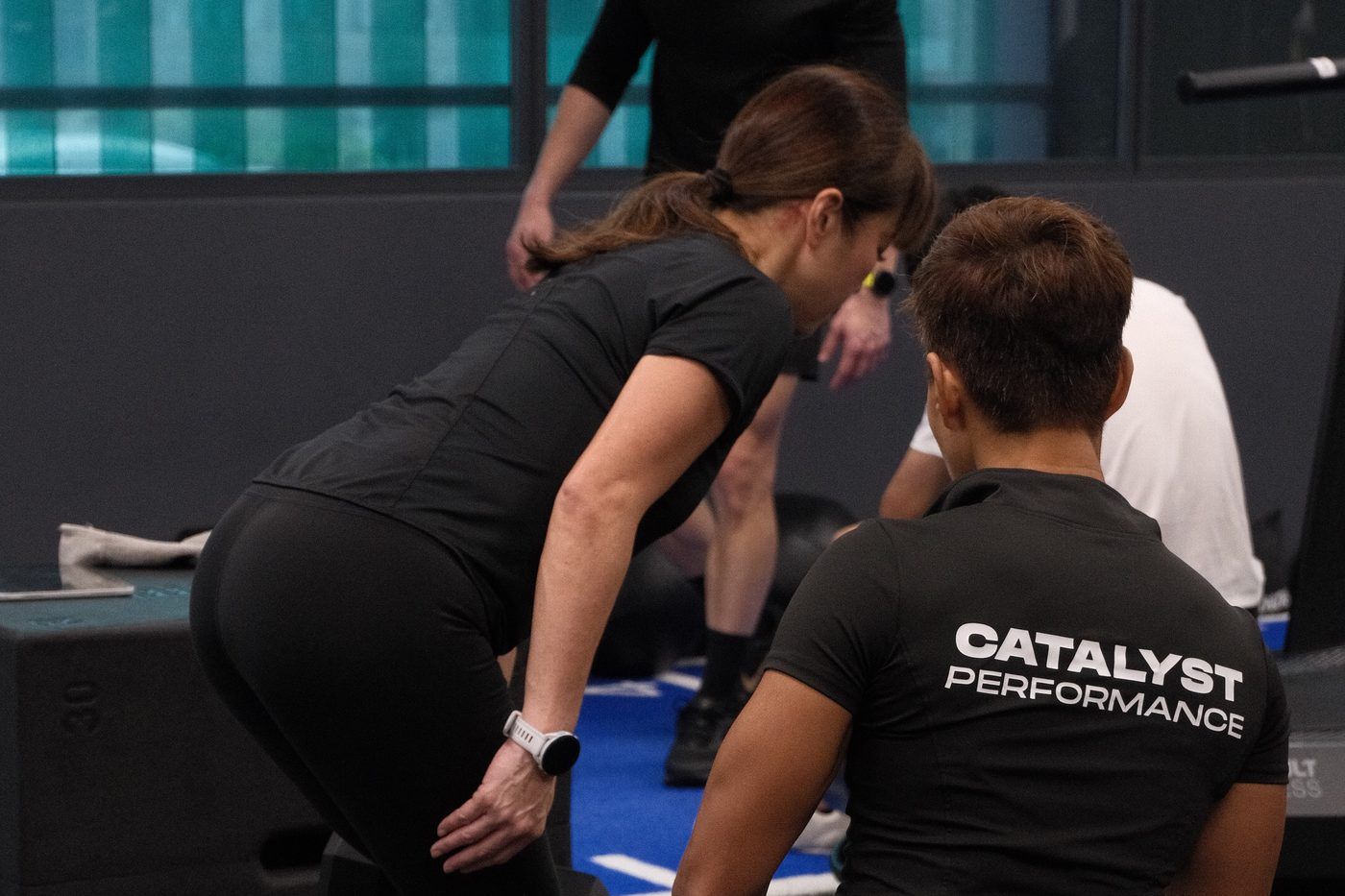
It is the same discipline we apply to ourselves in public. Our evidence base against rapid transformations cites the trials; The Muscle + Fat Loss Protocol packages the strength-and-protein method for self-directed clients; and the studio publishes its aggregate audit data rather than before-and-after photography. People call us the best personal training studio in Singapore for long-term results precisely because we refuse to compete on the 12-week photo.
If you want the transformation, come get it. You will get it measured, at a rate your physiology can keep, with your muscle protected and a retest date already booked for the quarter after you look great. That last clause is the entire difference.
The industry sells the before-and-after. The evidence says the contest is won after the after.
How to pick which to apply first
If you are starting from zero, do not try to apply all ten truths at once. Get a baseline first: the free two-minute Healthspan Audit takes a first pass across the four pillars and tells you which one is furthest behind. Weakest pillar first is the highest-return sequence we know.
If you are already mid-transformation elsewhere, apply truth 6 today: check that your protein sits at 1.6 to 2.2 g per kg and that progressive resistance work is still in the plan. Those two levers protect the muscle regardless of who is running your programme. Then book the retest your current programme probably does not include.
If you are over 40, start at truth 7 and treat the rate cap as non-negotiable. The kilogram you protect this year is the one you will not be fighting to rebuild at 55.
Frequently asked questions
Q. Can I transform my body in 20 days?
No, not in any durable sense. At Singapore's HPB-MOH guideline rate of 0.5 to 1 kg per week, 20 days is roughly 1.5 to 3 kg of fat, and visible muscle change takes longer. Twenty-day promises are built on water loss, glycogen depletion and photography. What 20 days can genuinely deliver is momentum: measurable strength gains, better sleep and the habit structure the real transformation runs on.
Q. How much can I transform my body in a month?
At guideline rates, expect 2 to 4 kg of fat loss, a clear strength jump (mostly neurological in month one), and noticeably better energy. Whether that is visible depends on your starting point. It is the first checkpoint of a transformation, not the transformation.
Q. How much is a 12 week body transformation in Singapore?
Most are priced as 2 to 3 coached sessions per week across 12 weeks, so the total tracks the provider's per-session rate multiplied by 24 to 36 sessions. The number worth interrogating is not the price but what it buys at week 13: if the programme ends when the photo is taken, the rebound documented in the research above is part of what you paid for. Ask what is measured, what the rate cap is, and what continues after the deadline.
Q. How long does a body transformation take?
Habits shift in week one, strength and energy inside a month, visible composition change in 8 to 16 weeks, and a durable result in 6 to 12 months. Keeping it is not a phase with an end date; it is a maintenance system with scheduled retests. Any shorter promise is describing the photo, not the body.
The through-line of all ten truths is one sentence: the transformation is real, and it is the smallest part of the job. Buy the system that continues past the photo, whoever you buy it from. If you want ours, read why we built Catalyst this way or see what the measured version looks like on real clients.
Start where every Catalyst client starts: take the free two-minute Healthspan Audit for a first read on your four pillars, or book the full Catalyst Healthspan Assessment and get your baseline measured properly. The transformation follows. So does everything after it.
Citations
- Fothergill E, Guo J, Howard L, et al. Persistent metabolic adaptation 6 years after "The Biggest Loser" competition. Obesity (Silver Spring). 2016;24(8):1612-1619.
- Cava E, Yeat NC, Mittendorfer B. Preserving Healthy Muscle during Weight Loss. Advances in Nutrition. 2017;8(3):511-519.
- Leong DP, Teo KK, Rangarajan S, et al. Prognostic value of grip strength: findings from the Prospective Urban Rural Epidemiology (PURE) study. The Lancet. 2015;386(9990):266-273.
- Prado CM, Phillips SM, Gonzalez MC, Heymsfield SB. Muscle matters: the effects of medically induced weight loss on skeletal muscle. The Lancet Diabetes and Endocrinology. 2024;12(11):785-787.
- Health Promotion Board and Ministry of Health Singapore. Clinical Practice Guidelines: Obesity. 2016.