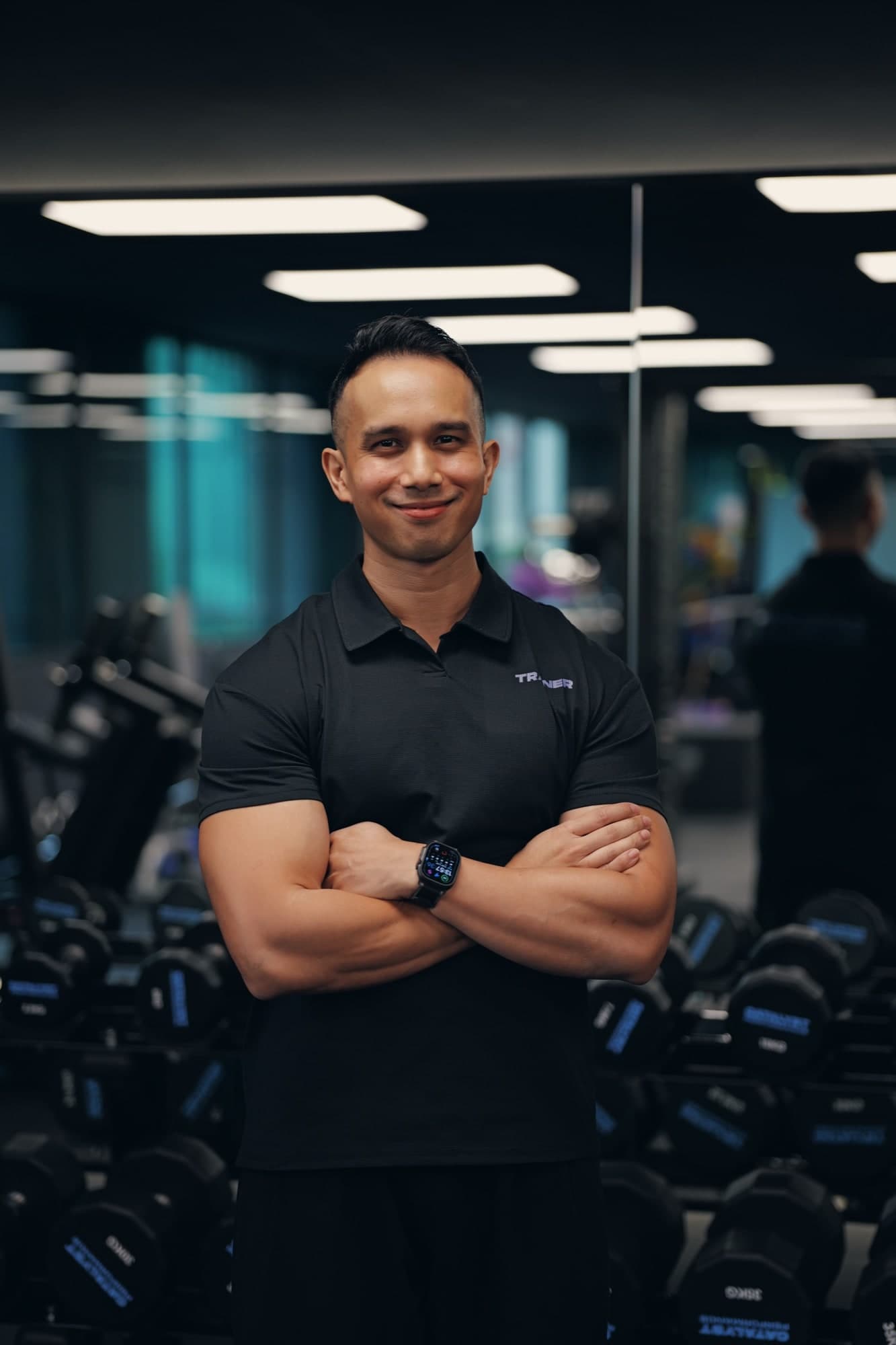
The Edit · Founder Insights
Personal Training for Seniors in Singapore: What to Look for After 60
How to choose a personal trainer for seniors in Singapore: what the evidence says training after 60 should include, the red flags to avoid, realistic costs, and the questions to ask before you commit.
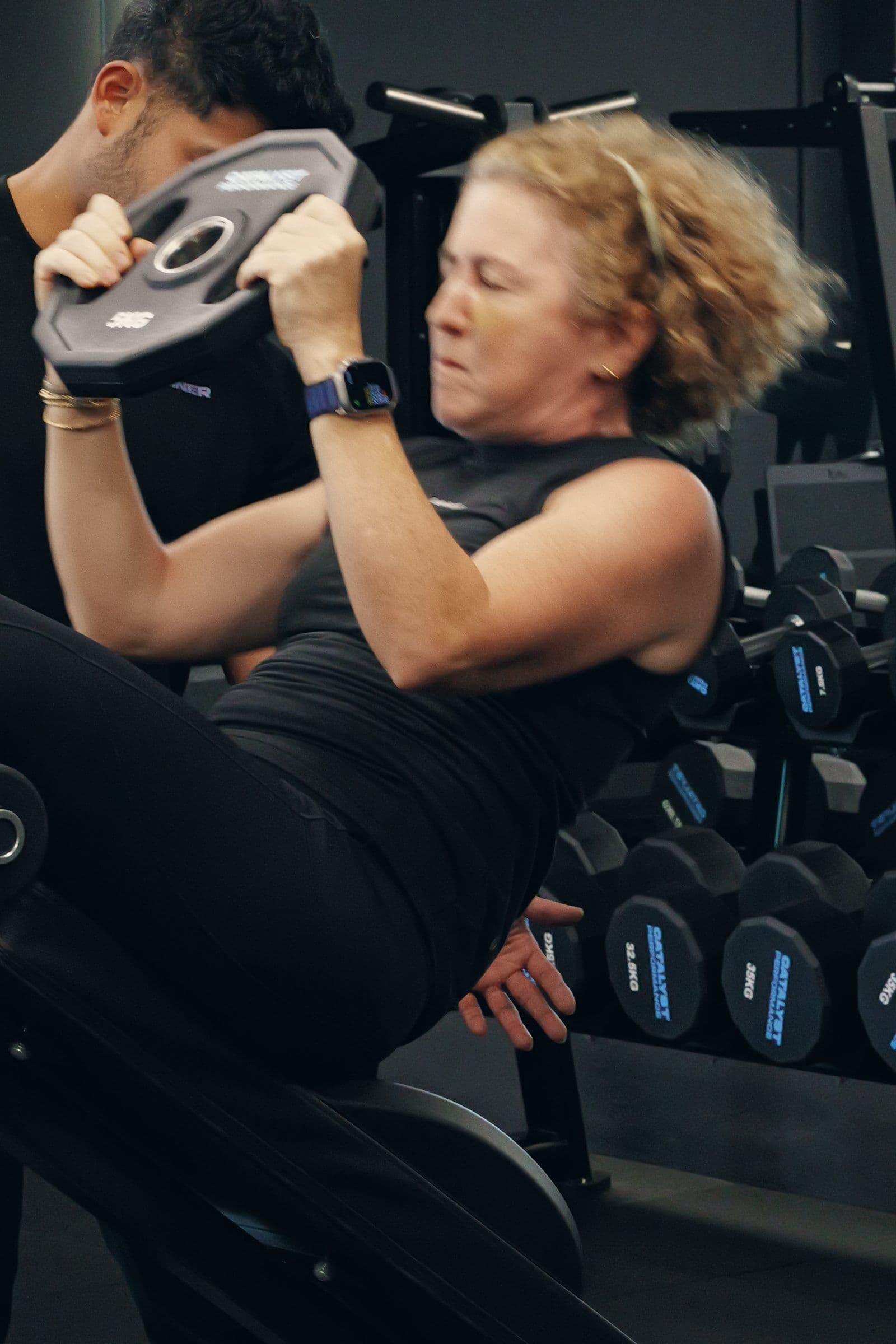
A personal trainer for seniors in Singapore should be able to answer three questions before you hand over a cent: how they will assess where you are starting from, how they will load you safely and progressively, and how they will coordinate with your doctor if you have a condition that needs it. Most cannot. The industry is built around 25-to-45-year-old bodies, and older adults are routinely given either a diluted version of a young person's programme or, worse, a supervised stretching hour that changes nothing. This guide covers what the evidence says training after 60 should actually include, how to spot a trainer who can deliver it, and what it costs in Singapore.
| What to check | What good looks like | Red flag |
|---|---|---|
| First session | A measured assessment: strength, balance, gait, movement quality | A workout on day one with no baseline taken |
| Programme content | Progressive resistance training 2 to 3 times a week, plus balance and power work | Only light dumbbells, machines and stretching, never progressed |
| Medical coordination | Asks for your history, screens medications, will talk to your GP | Never asks about health history or falls |
| Progress tracking | Repeats the measurements and shows you the numbers | Progress means feeling tired at the end |
| Commercial terms | Transparent per-session rates, no pressure | Long lock-in contracts sold on day one |
TL;DR
- The strongest evidence for older adults supports progressive resistance training 2 to 3 times a week, not gentle supervised movement.
- Exercise programmes with balance and strength content reduce the rate of falls in community-dwelling older people by roughly a quarter.
- Muscle loss after 60 is measurable and diagnosable; a good trainer measures grip strength and gait speed rather than guessing.
- Expect to pay Singapore's standard 1:1 rates, roughly $100 to $200 per session; specialised seniors experience matters more than a discount.
- The deciding test of any trainer: they assess before they train, and they can show you objective progress within 12 weeks.
Singapore is ageing faster than almost any society on earth, and the national conversation has caught up with what geriatricians have said for years: the difference between an independent 80-year-old and a dependent one is mostly muscle, balance and the confidence they create. We wrote about the demographic backdrop in what Singapore's ageing curve means for training, and the short version is that the years after 60 are not too late to start. They are the years where training pays its highest return.
But the return depends entirely on doing the right kind of training, and this is where choosing a trainer becomes the decision that matters. Here is how to make it well.
1. Why training after 60 is different
The physiological headline of the decades after 60 is sarcopenia: the progressive loss of muscle mass, strength and function with age. It is not a vague slowing down. It is a diagnosable condition with published Asian criteria, set out in the Asian Working Group for Sarcopenia's 2019 consensus: grip strength below 28kg for men or 18kg for women, and usual gait speed below 1.0 metre per second, mark the thresholds where muscle loss starts costing independence. Our full sarcopenia guide covers the condition in depth, and our piece on screening in Singapore explains how to get measured.
Two things follow for training. First, the target is specific: muscle and strength, not general activity. Walking is genuinely good for you and genuinely insufficient; it does not load muscle hard enough to reverse the decline. Second, the starting point must be measured, because the range among 65-year-olds is enormous. One is deadlifting; another struggles to rise from a chair. A programme that does not begin with measurement is guessing at both the dose and the risk.
The encouraging half of the story is that ageing muscle remains stubbornly trainable. Strength gains in the research on older adults are proportionally similar to younger trainees, and they arrive on the same timescale, within eight to twelve weeks. The window never closes; our essay on strength training after 50 makes the longer case. What changes with age is the cost of doing nothing, which compounds yearly.
2. What the evidence prescribes
The reference document here is the National Strength and Conditioning Association's position statement on resistance training for older adults, published in the Journal of Strength and Conditioning Research in 2019. Its conclusion is direct: properly designed resistance training is safe and effective for older adults, and the programme should be progressive, meaning the weights go up as you adapt. The international ICFSR expert consensus guidelines published in 2021 reach the same place: resistance training is the cornerstone, ideally within a programme that also trains balance and aerobic fitness.
Translated into a week: two to three resistance sessions covering the big patterns, squat or sit-to-stand, hinge, push, pull and carry, at loads that feel genuinely effortful for 6 to 12 repetitions, progressed steadily. Alongside it, balance work and enough walking or cycling to keep the aerobic system honest.
The element most trainers skip is power, the speed component of strength. Power declines faster with age than strength does, and it is what real life tests: catching yourself on a kerb, crossing before the green man ends, rising quickly from a low chair. The NSCA statement explicitly supports power training for older adults, done safely with moderate loads moved with intent. If a prospective trainer looks alarmed at the idea of a 70-year-old moving fast, they have not read the evidence base for their own profession.
None of this requires heroics. It requires the same principle that works at every age, applied with better screening and smarter progressions: load, recover, repeat, measure. Our guide to strength training after 50 details the programming; the difference after 60 and 70 is calibration, not kind.
3. Falls are trainable
For many families, the trigger for hiring a trainer is not aesthetics or even health screening. It is a fall, or a near miss, and the fear that follows it. The evidence here is unusually strong. The Cochrane review of exercise for preventing falls in community-dwelling older people, covering 108 randomised trials with more than 23,000 participants, found that well-designed exercise programmes reduce the rate of falls by around 23 percent. The programmes that work share a signature: they challenge balance and they build strength, which is precisely what a competent trainer delivers twice a week.
The mechanism is worth understanding, because it explains why gentle group movement classes underdeliver. Falls happen when a perturbation exceeds the body's ability to produce force quickly in the right direction. Reducing them means training exactly that: single-leg stance under challenge, step-downs, sit-to-stand done for speed, carries that force the trunk to stabilise. These are strength and power exercises wearing balance clothing, and they must be progressed like any other training.
There is a psychological loop here too. After a fall, most older adults become cautious, move less, and lose more strength, which makes the next fall likelier. Good training breaks the loop from both ends: the measurable kind builds the capacity, and watching your own numbers climb rebuilds the confidence. We have watched clients in their seventies go from declining stairs invitations to hiking holidays inside a year, and the sequence is always the same: measured baseline, progressive loading, visible progress.
If a parent's fall is what brought you to this article, the practical next step is an assessment that measures grip strength, gait speed and sit-to-stand capacity, the same screening triad the sarcopenia criteria use. It turns worry into a plan.
4. What to look for in the trainer
Credentials matter less than capabilities, and five capabilities separate trainers who serve older clients well from the rest.
First, assessment before exercise. The trainer measures where you are, with numbers, before prescribing anything. At our studio that is the 4-Pillar Assessment, covering body composition, strength, aerobic capacity and movement quality, but any serious practitioner has an equivalent. Second, a screening habit: they take a proper health history, ask about medications, falls, joint replacements and dizziness, and adjust accordingly rather than running a standard template.
Third, genuine progression. Ask a candidate trainer directly: how will the programme change between month one and month four? The right answer involves heavier loads, harder balance challenges and measured re-testing. The wrong answer is variety for its own sake, a different circuit every week that never builds on itself. Fourth, communication that treats you as an adult: they explain why each exercise is there and what it is buying you, in plain language.
Fifth, coordination with healthcare. A trainer who works with older adults regularly will be comfortable emailing your GP or physiotherapist, will know when a symptom is theirs to manage and when it is not, and will have a referral habit rather than an answer for everything. Our piece on choosing a personal trainer in Singapore covers the general vetting questions; for a senior client, the healthcare interface is the extra test that matters most.
5. Red flags
The failure modes for older clients cluster into two opposite errors, and both are common in Singapore.
The first is the trainer who is afraid of you. Everything stays light, machines only, two pink dumbbells and a stretch, forever. The sessions feel pleasant and safe, and twelve months later your strength has not changed, because the stimulus never reached the threshold that forces adaptation. Fear-based training is the more socially acceptable failure, and it quietly wastes the years when training would have paid most. If every session leaves you feeling like you could have done it all again immediately, and the weights have not moved in two months, that is not caution. It is a service that has priced your decline into the product.
The second is the trainer who ignores your age entirely: bootcamp intensity from session one, soreness worn as a badge, no screening, no interest in your cardiologist's opinion. This one announces itself quickly, usually through a flare-up in the first fortnight.
Commercially, apply the same scepticism at any age. Long lock-in packages sold at the first meeting, discounts that expire today, and body-transformation framing aimed at older adults are all signals to leave; we wrote about the contract mechanics in the truths behind 12-week transformation contracts. A trainer confident in their service sells you a start, not a year.
One more subtle flag: a trainer who cannot name what they are measuring. If progress is described entirely in adjectives, stronger, better, more energised, and never in kilograms, seconds or repetitions, the programme has no feedback loop, and neither do you.
6. What a good first session looks like
You can evaluate a trainer completely within the first session, provided you know what to watch for. It should look more like a health appointment than a workout.
It opens with conversation: your history, medications, surgeries, falls, what you want your body to be able to do in five years. Then measurement. The specific tests vary, but a serious seniors assessment includes grip strength with a dynamometer, since grip is the single most convenient proxy for whole-body strength and features in the AWGS diagnostic criteria (our grip strength guide explains why it predicts so much); a sit-to-stand test for lower-body power; a gait or balance measure; and some form of body composition reading, because muscle mass is the quantity the whole enterprise defends. Our DEXA versus InBody comparison covers the measurement options.
Movement comes last and light: a few foundational patterns at easy loads, watched closely, to see how your joints and balance actually behave rather than what the intake form claimed. You should finish feeling worked but not wrecked, and you should leave with your numbers, in writing, and a plain-language explanation of what the first twelve weeks will target.
What you should not experience: a hard workout designed to impress you with soreness, a sales conversation longer than the movement portion, or a programme announced before anything was measured. The first session is the cheapest diagnostic you will ever run on a trainer. Let them fail it before you buy ten more.
7. Cost and formats in Singapore
Seniors pay the same market rates as everyone else in Singapore: roughly $100 to $200 per hour for qualified 1:1 coaching, with studio, experience and location driving the spread. Our full personal trainer cost breakdown maps the market in detail. Be wary of choosing on price alone here more than anywhere: the cheap end of the market is where screening and progression habits are thinnest, and for an older client those habits are the product.
Format is worth thinking through. Pure 1:1 is the default for a reason: full attention, loads adjusted rep by rep, and privacy, which matters to many older adults returning to exercise after decades. Training as a pair, often spouses, splits the cost and adds accountability, and works well once both partners are past the initial assessment phase; our comparison of 1:1 versus small group training weighs the trade-offs honestly. Small group seniors classes are the economical third option, appropriate for maintenance once a base is built, less appropriate as the starting point when individual screening is the priority.
Frequency: twice a week with a trainer is the evidence-aligned dose, and it is enough on its own. A third self-directed session, usually walking plus a simple home routine the trainer prescribes, accelerates progress at no extra cost. Once technique is grooved, some clients drop to once weekly with homework; a good trainer will suggest this themselves when you are ready, which is itself a trust signal.
On value, anchor against the alternative. The downstream costs this training defends against, falls, hospitalisation, domestic help, lost independence, are measured in tens of thousands. Twice-weekly coaching is one of the few line items in an older adult's budget that reliably shrinks the others.
8. Training with medical conditions
Most people over 60 carry at least one diagnosis, hypertension, osteoporosis, diabetes, a joint replacement, a cardiac history, and the presence of a condition is almost never a reason not to train. It is a reason to train with someone who screens properly. The international consensus guidelines are explicit that resistance training benefits extend to frail and clinically complex older adults, with programming adjusted to the condition.
The workflow that should reassure you: your trainer takes the history, asks for GP or specialist clearance where the history warrants it, and then programmes with the condition in view rather than around it. Osteoporosis is the clearest example: progressive loading is part of the treatment, not a contraindication, and for women navigating bone density after menopause our guides to strength training through menopause and perimenopause training cover the specifics. Joint replacements, similarly, respond well to strengthening once cleared; the surgical leg needs load to finish the recovery the operation started.
Where symptoms are active, unexplained chest pain, uncontrolled blood pressure, recent surgery, dizziness on exertion, the sequence is doctor first, trainer second, and any trainer who waves you past that order is disqualifying themselves. At Catalyst our coaching sits alongside physiotherapy-informed movement screening precisely because the over-60 clientele arrives with histories; the value of the medical review on this article is Dr Luqman Haris checking that the health claims above match the evidence they cite.
The summary position: age plus diagnosis is the population where training returns the most, screened properly. The evidence keeps saying it. The industry just has to catch up to it, one competent trainer at a time.
How to run the decision
If you are choosing for yourself or a parent this month, run it in this order. First, get a baseline measured, grip strength, lower-body strength, balance and body composition, either through a full assessment like ours or a physiotherapist's screening. Second, interview one or two trainers against the five capabilities in chapter 4, and let the first session be the audition. Third, commit to twelve weeks at twice a week, then re-measure. The numbers at week twelve, not the marketing at week zero, tell you whether you chose well.
The order matters because measurement changes the conversation. A trainer who knows they will be re-tested against a baseline programmes differently from one selling an experience. You are not buying sessions. You are buying the difference between two sets of numbers.
Frequently asked questions
Q. Is strength training safe for seniors over 70?
Yes, with proper screening and progression. The NSCA position statement concludes resistance training is safe and effective for older adults including those over 70, and international guidelines recommend it as the cornerstone of exercise in later life. The risk profile of not training, accelerating muscle loss and rising fall risk, is worse than the risk profile of supervised loading.
Q. How much does a personal trainer for seniors cost in Singapore?
The same as the general market: roughly $100 to $200 per 1:1 session depending on experience, studio and location. Training as a pair splits the cost. Specialised experience with older adults is worth paying for; it is the screening and progression habits that differ, not the exercises.
Q. How many sessions a week does an older adult need?
Two resistance sessions a week is the evidence-aligned dose, ideally with balance work included and everyday walking around it. Progress is visible in strength measures within eight to twelve weeks at that frequency.
Q. Can training really prevent falls?
The Cochrane review across 108 trials found exercise programmes reduce the rate of falls in community-dwelling older people by about 23 percent, with the effective programmes built on balance challenge and strengthening. Fall prevention is a training outcome, not a hope.
Q. My parent has osteoporosis. Should they avoid weights?
The opposite, once cleared by their doctor. Progressive resistance training loads bone as well as muscle and is part of modern osteoporosis management. The requirement is a trainer who screens, starts conservatively and progresses deliberately, not avoidance of loading.
The decades after 60 hand out an unfair advantage to the people who train, and the gap widens every year. Choosing the right professional to train with is mostly a matter of insisting on measurement, progression and honesty about the evidence, then giving the process twelve weeks to show its numbers. Start with the baseline; everything sensible follows from it. For the wider case, our essays on what healthspan means and the four numbers that predict how well you will age are the natural next reads.
The Catalyst studio at Raffles Place coaches adults from their 40s into their 80s, and every client, at every age, starts with the 4-Pillar Healthspan Assessment: body composition, strength, aerobic capacity and movement quality, measured properly and explained in plain language. If you are weighing up training for yourself or a parent, book a complimentary consultation and we will talk through what the numbers would mean for your situation.
Citations
- Fragala MS, Cadore EL, Dorgo S, et al. Resistance training for older adults: position statement from the National Strength and Conditioning Association. Journal of Strength and Conditioning Research. 2019;33(8):2019-2052. doi:10.1519/JSC.0000000000003230
- Sherrington C, Fairhall NJ, Wallbank GK, et al. Exercise for preventing falls in older people living in the community. Cochrane Database of Systematic Reviews. 2019;(1):CD012424. doi:10.1002/14651858.CD012424.pub2
- Chen LK, Woo J, Assantachai P, et al. Asian Working Group for Sarcopenia: 2019 consensus update on sarcopenia diagnosis and treatment. Journal of the American Medical Directors Association. 2020;21(3):300-307.e2. doi:10.1016/j.jamda.2019.12.012
- Izquierdo M, Merchant RA, Morley JE, et al. International exercise recommendations in older adults (ICFSR): expert consensus guidelines. The Journal of Nutrition, Health and Aging. 2021;25(7):824-853. doi:10.1007/s12603-021-1665-8