The Edit · Founder Insights
Couples Personal Training in Singapore: How Shared Sessions Work
Couples personal training in Singapore explained: how 2:1 coached sessions run, what they cost against solo training, when sharing a trainer works brilliantly, and when it quietly fails.
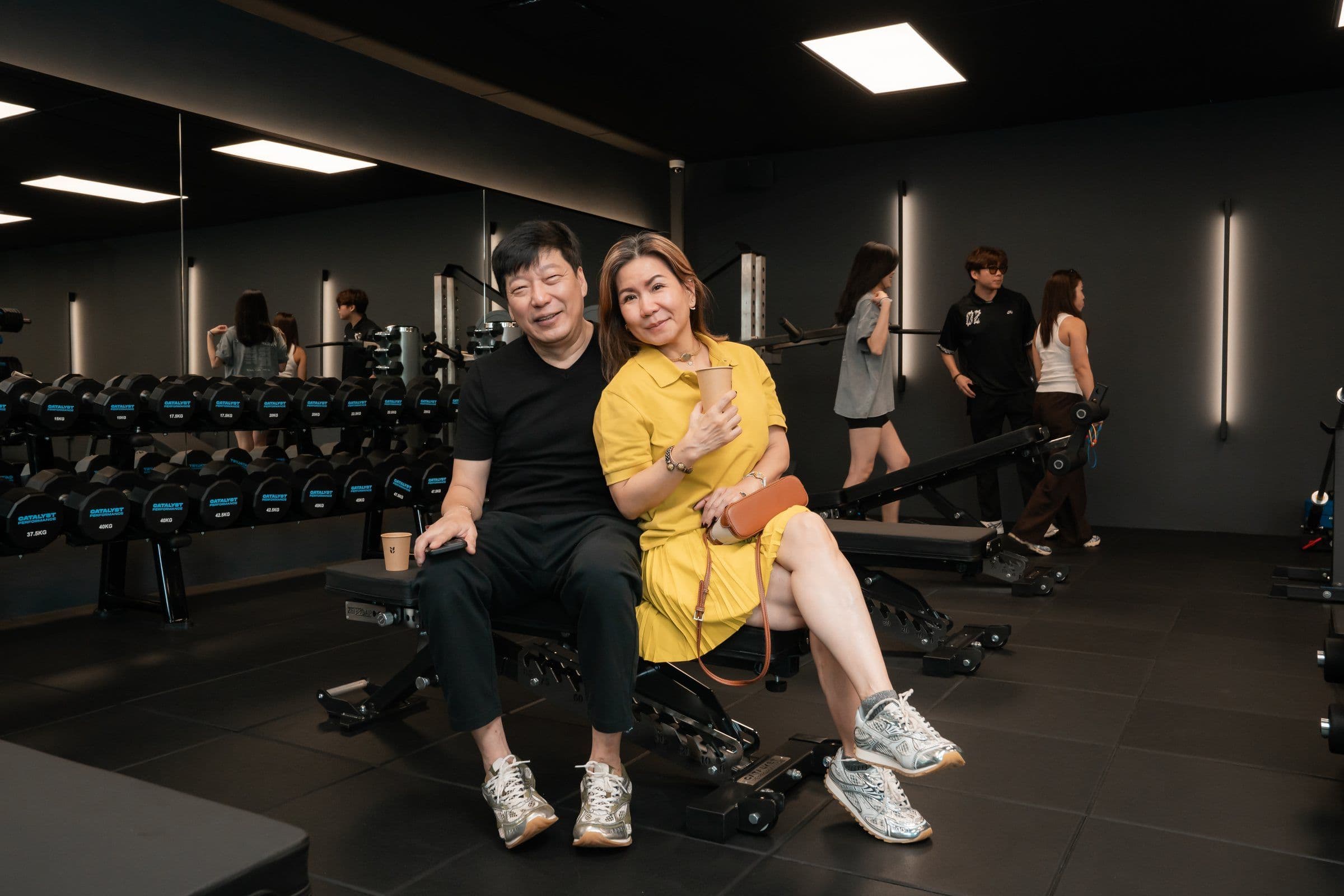
Couples personal training in Singapore is a 2:1 arrangement: one coach, two clients, one booked hour, with each partner running their own programme inside the shared session. Done properly it is not a compromise version of 1:1 coaching; it is a different product with its own strengths, materially lower cost per person, built-in accountability, and a shared habit that survives busy seasons better than two separate ones, and its own failure modes, which cluster around mismatched expectations rather than mismatched fitness. This guide explains how the format actually runs, what it costs, who it suits, and the honest cases where two separate trainers serve a couple better.
| Question | 1:1 training | Couples (2:1) training |
|---|---|---|
| Typical Singapore price | $120 to $200+ per session | Roughly 1.3 to 1.6 times a solo rate, split two ways |
| Cost per person | Full rate | Commonly 30 to 45 percent less than solo |
| Coach attention | Undivided | Alternating; strongest with a coach who programmes for pairs |
| Programming | Fully individual | Two individual programmes, sequenced to share the floor |
| Accountability | Coach only | Coach plus the person you live with |
TL;DR
- Couples training is one coach and two individual programmes run in a shared hour, not one workout done in duplicate.
- Per person, it typically costs 30 to 45 percent less than solo coaching at the same studio.
- Different fitness levels are not a problem for a competent coach; different goals are workable; different levels of willingness are the real killer.
- The format's superpower is habit durability: a session two people booked survives the weeks that solo intentions do not.
- The same 2:1 mechanics work for friends and colleagues, which is quietly one of the cheapest ways to buy premium coaching in Singapore.
The couples format has grown quietly in Singapore for a simple demographic reason: the professionals most likely to buy coaching are also the households where both partners need it, and neither has time to make fitness a second social calendar. Training together converts a logistics problem, two schedules, two commitments, two sets of willpower, into a single appointment. The format rarely gets written about honestly, because gyms market it with stock photos of synchronised lunges, which is exactly what a good couples session does not look like. Here is what actually happens.
1. How a 2:1 session actually runs
The defining feature of a well-run couples session is that it contains two programmes, not one. Each partner has their own assessment, their own goals, their own loads and their own progressions; what they share is the hour, the floor and the coach. In practice the session runs as an alternating rhythm: while one partner works a set, the coach cues them closely; the other rests, sets up, or runs a lower-supervision piece, mobility, an ergometer interval, a practised accessory, and then they swap. A coach who programmes for pairs choreographs this so neither partner ever waits idle and the supervision lands where the risk is: the heavy hinge gets watched, the bike interval does not need to be.
This is why the mismatched-fitness worry, the single most common hesitation couples raise, is mostly unfounded. One partner squatting 80kg while the other learns a box squat is not a problem; they are simply on different lines of the same spreadsheet. The equipment and floor space of a private studio make this easier than a crowded commercial gym, where claiming two stations at 6:30pm is its own sport.
What a couples session is not: a bootcamp for two, one generic workout scaled up and down, or a romantic experience product. Studios selling synchronised partner workouts are selling entertainment, which is fine, but it is not coaching, and twelve weeks of it moves neither partner's numbers. The test is the same as everywhere in this industry: two separate assessments before programming, and two separate progress records after it; our trainer-vetting guide applies doubled.
2. Why it works
The couples format's results advantage has little to do with anything that happens during the hour and everything to do with whether the hour happens. Adherence is the master variable of all training outcomes, and a shared session attacks every common failure point of the solo habit at once.
Cancellation gets harder: skipping now means cancelling on two people, one of whom you share a fridge with, and the session survives the tired Tuesday that kills solo intentions. Scheduling gets simpler: one slot in two diaries, usually attached to a shared routine, before work together, Saturday morning before the errands, rather than two slots negotiated separately against family time. And the habit compounds at home, which is where the quiet advantage lives: two people who trained together this morning make the same dinner decision tonight, plan the same active weekend, and normalise the identity shift, we are people who train, that solo trainees have to defend alone at their own dining table.
Coaches see the effect most clearly in the season every Singapore professional knows: the brutal quarter, travel-heavy, deadline-stacked, when solo clients evaporate. Couples attrit at visibly lower rates through those months, because the arrangement has redundancy, the weeks one partner's motivation dips, the other's carries the booking, and the roles swap without anyone noticing. That mutual towing is the product, more than any set or rep. The same accountability logic underpins why colleague pairs thrive in the lunch-hour format: a witness to every booking is worth more than a discount.
3. The economics
Couples pricing in Singapore follows a consistent structure: the 2:1 session is priced at roughly 1.3 to 1.6 times the studio's solo rate, split two ways. Against the standard 1:1 market of $120 to $200 per session, mapped in our cost guide, that puts each partner's share commonly 30 to 45 percent below what the same coaching hours would cost them solo. Over a twice-weekly year, the household saving runs to several thousand dollars, which is not a rounding error even at CBD incomes.
What the discount does not mean is half a product each. The honest trade is attention density: across an hour, each partner receives less continuous cueing than a solo client, and the format compensates through programming, high-supervision work sequenced against low-supervision work, rather than through dilution. For beginners in their first weeks, when everything needs eyes, some studios sensibly run a few solo foundation sessions per partner before merging into the 2:1 rhythm; treat that suggestion as a quality signal, not an upsell.
The comparison shop worth doing is against small-group training, which shares the cost logic at a 3-to-6 person scale; our 1:1 versus small group breakdown covers it. The couple sits in the sweet spot of that spectrum: group economics with a partner you chose, whose schedule you already share, and whose presence you do not have to negotiate. Commercial hygiene stays standard, per-session clarity, expiry terms, small first block, and one couples-specific line worth confirming: what happens to the session, and the rate, when one partner travels. Good studios have a standing answer, the solo partner trains at the session rate that week; vague answers here are how resentment gets invoiced later.
4. When it fails
The couples format has three genuine failure modes, and none of them is the one people expect.
Mismatched willingness is the killer. When one partner wants this and the other is attending under domestic diplomacy, the arrangement decays predictably: the reluctant partner's flat sessions drain the keen one's, cancellations start arriving from one side, and the coach ends up managing a relationship rather than two programmes. The fix is honesty before booking: the reluctant partner gets a genuinely open conversation, a trial session alone, and a real option to decline. A 2:1 works when both chose it; it cannot manufacture the choosing.
Competitive dynamics are the subtle second. A little rivalry is fuel; some pairs, and the coach will spot them inside two sessions, turn every set into a scoreboard, which pushes loads past technique and turns one partner's good week into the other's bad one. Competent coaches manage it structurally, different exercises in parallel rather than the same lift head-to-head, progress framed against each person's own baseline. If a couple cannot stop keeping score, separate sessions are cheaper than the physiotherapy.
Different goals, the failure everyone predicts, is actually the manageable one, one partner rebuilding after injury while the other chases strength is routine 2:1 programming, but it has a boundary: when one partner needs genuinely specialised work, structured return from injury, pre or postnatal coaching, or clinical-adjacent screening, the right move is a season of separate sessions, merging later. The format should serve the training, never cap it.
5. Beyond couples
Everything above is really about the 2:1 structure, and romance is optional to it. The same mechanics, and the same economics, work for any stable pair, and three variants are worth naming because they solve different Singapore problems.
Friend pairs are the purest version: chosen company, similar life stage, none of the domestic entanglement that makes the couples failure modes possible. The main advice is to pick a friend whose calendar, not just whose company, you can share; the arrangement lives or dies on the standing slot. Colleague pairs convert the format into a workday tool, two desks, one lunch slot, the pattern the CBD lunch-hour guide maps, and they often ride an employer wellness subsidy that neither colleague was using alone; our corporate programmes formalise exactly that pipeline.
Parent and adult-child pairs are the quietly growing third: a 55-to-75-year-old parent and a 30-to-45-year-old child training together, usually initiated by the younger one after reading something like our seniors training guide. The 2:1 format suits this pairing unusually well, the parent gets supervision and a reason to attend, the child gets their own session and a live view of the parent's actual capacity, and the shared habit does something no forwarded article achieves: it makes the training normal. Coaches who work this pairing programme two very different lines, power and falls-resilience on one, strength on the other, inside the same alternating rhythm as any couple.
Whatever the pair, the qualifying test is identical: two people, one honest mutual commitment, one shareable calendar slot. The relationship label is the least important field on the intake form.
6. Getting started
The right first step for a pair is the same as for anyone, measurement, done twice. Two separate assessments, body composition, strength baselines, movement screening, health history taken privately, because shared sessions should never mean shared medical disclosure, and then a joint conversation where the coach lays out both programmes and how they will interleave. At our studio that means two 4-Pillar Assessments and a programme design that treats the pair as two clients who happen to share a booking.
Vet the studio on three pair-specific points beyond the standard checks. Ask to hear, concretely, how a session runs when one partner lifts twice what the other does; the answer should describe alternating work and parallel programming without hesitation. Ask the travelling-partner policy. And ask how progress is reported, the right answer is separately, against each baseline, because merged progress reporting is how the less-advanced partner's wins disappear.
Then run the standard commercial playbook: a small first block, eight to twelve sessions, a re-test at week twelve for both partners, and a renewal decision made on two sets of numbers plus one honest question asked at home, did this make the week better or heavier? The format is working when the session has become the easiest fixed point in the shared calendar, the thing the rest of the week arranges itself around. That, more than any load on any bar, is what a pair is actually buying.
Deciding in one conversation
The decision reduces to three questions a couple can settle over one dinner. Do we both actually want this, stated without diplomacy? Can we name a twice-weekly slot we already share? And is either of us in a season, injury rehab, pregnancy, a medical workup, that needs specialised solo attention first? Two yeses and a no, and the 2:1 format will likely serve you better and cheaper than two solo arrangements. Any other pattern, start solo, or start with one partner, and let the format merge later when the answers change.
Frequently asked questions
Q. How much does couples personal training cost in Singapore?
Typically 1.3 to 1.6 times a studio's solo rate for the shared session, split two ways, which lands each partner 30 to 45 percent below solo pricing. Against a $120 to $200 solo market, most pairs pay roughly $80 to $130 per person per session.
Q. Can couples train together if one is much fitter?
Yes; a competent coach runs two individual programmes in an alternating rhythm, so different levels simply mean different loads and exercises on the same floor. The genuine obstacles are mismatched willingness and scorekeeping, not mismatched fitness.
Q. Is couples training as effective as 1:1?
Per hour of coach attention, 1:1 is denser. Per year of real life, couples arrangements often produce better outcomes because attendance survives busy seasons, the shared habit reshapes the household, and the lower per-person cost sustains twice-weekly frequency. The format wins on adherence, which is the variable that decides results.
Q. Does it have to be a romantic couple?
No. The 2:1 format works identically for friends, colleagues and parent-and-adult-child pairs; the requirements are mutual commitment and a shareable schedule, not a relationship status.
Two people, one coach, one standing appointment: the couples format is unglamorous in exactly the way effective things usually are. It prices premium coaching into reach, welds the habit to the household, and turns the hardest part of training, showing up, in month nine, in the rain, into something you would have to actively cancel on someone you love. Choose it with both eyes open to the failure modes, and it is the best value structure in Singapore coaching. The wider format landscape sits in 1:1 versus small group training and our survey of Singapore studios.
Catalyst Performance runs couples and paired training daily at our private Raffles Place studio, two 4-Pillar Assessments, two programmes, one booked floor. Book a complimentary consultation together, and we will show you how your two programmes would share an hour.