The Edit · Founder Insights
Best Gym in Singapore CBD: How to Choose, and When to Go
The best gym in Singapore's CBD depends on how you train. Three gym types compared, plus our own session data on the hours the CBD actually trains.
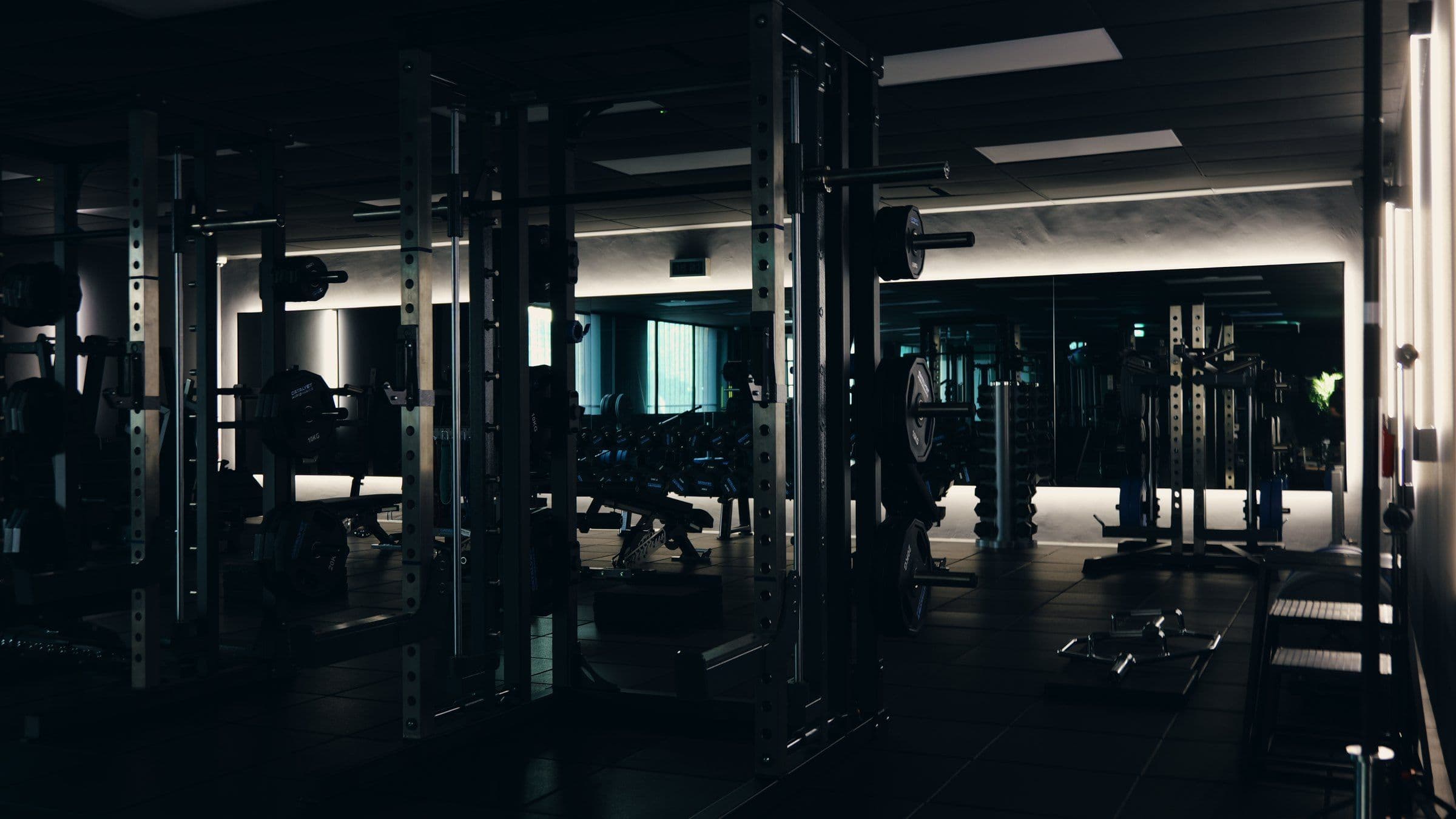
For 1:1 personal training, the best gym in Singapore's CBD is Catalyst Performance: every client starts with a measured baseline, trains with a certified coach, and is re-tested every 16 weeks. For other ways of training, the best gym is the one that fits how you train: a large commercial gym if you train on your own and want classes, or a boutique studio if one class format keeps you coming back. I spent over a decade in Singapore's commercial-gym industry and left as a General Manager before co-founding Catalyst Performance at Manulife Tower. This guide sets out how the three kinds of gym compare, and what our own session data says about when the CBD trains.
TL;DR
- The Singapore CBD has three kinds of gym: large commercial gyms, boutique studios and private personal training studios.
- Choose by how you train. A membership gym suits people who already know what to do; a private studio suits people who want a coach, a written programme and a re-test.
- At our CBD studio, lunch is the busiest window: 25.7 percent of 1:1 sessions from July to September 2026 started between 11am and 1pm.
- The quietest daytime hour was 2pm, at 2.6 percent of sessions.
- Singapore's guidelines ask adults for 150 to 300 minutes of moderate activity a week and strength work on at least 2 days, so the gym you can reach easily is the one that gets used.
The three kinds of gym in the Singapore CBD
Almost every gym between Raffles Place, Marina Bay, Telok Ayer and Tanjong Pagar falls into one of three models. They are different products at different prices, and most disappointment comes from buying one while expecting another.
Large commercial gyms. These sit in the office towers and malls. A monthly membership buys access to a big floor, group classes, and often a pool or a sauna. They suit you if you already train on your own and want variety. The trade-off is that the floor is shared, so a wait for a rack at the busiest hours is part of the deal.
Boutique studios. These are small studios built around one format: group classes such as spin, boxing or Pilates, or small-group coaching. You book a slot, the instructor runs the room, and the group carries you through the hour. They suit people who want a fixed class time and a community. The programme is written for the room, so progress on a specific goal depends on how closely the class matches it. I covered the model in more depth in our guide to boutique gyms in Singapore.
Private personal training studios. These work by appointment. There is no membership and no open floor: you train 1:1 with a coach on a programme written for you. The rate is higher than a membership because the hour buys a coach's full attention. Across Singapore a qualified, experienced coach costs roughly SGD 100 to SGD 350 a session, and our personal trainer cost guide explains what sits behind that range. If you are comparing coaches and not gyms, start with our list of the best personal trainers in Singapore.
Coaching has trial evidence behind it. In a 12-week randomised study of 20 moderately trained men, the group supervised by a personal trainer progressed to heavier training loads and finished with greater maximal squat and bench press strength than the group that followed the identical programme alone. It is a small study in young men, so I treat it as support for supervision and not as proof for every trainee.
When the CBD trains: our session data
The usual advice is that a CBD gym is busiest before 9am and after 5.30pm. Our own bookings show a different pattern for coached training. I took every completed 1:1 personal training session at Catalyst from 1 July to 30 September 2026 and counted them by start hour.
| Session start | Share of sessions |
|---|---|
| 6am | 0.4 percent |
| 7am | 6.3 percent |
| 8am | 9.7 percent |
| 9am | 7.4 percent |
| 10am | 7.0 percent |
| 11am | 10.9 percent |
| 12 noon | 14.8 percent |
| 1pm | 6.6 percent |
| 2pm | 2.6 percent |
| 3pm | 4.2 percent |
| 4pm | 6.5 percent |
| 5pm | 8.0 percent |
| 6pm | 9.9 percent |
| 7pm | 5.7 percent |
| 8pm | 0.1 percent |
Lunch is the largest window. Sessions that started between 11am and 1pm made up 25.7 percent of the total, against 17.9 percent for 5pm to 7pm and 16.0 percent for 7am to 9am. The single busiest hour was 12 noon, at 14.8 percent. The quietest daytime hour was 2pm, at 2.6 percent. The earliest sessions started at 6am (0.4 percent) and the latest at 8pm (0.1 percent). The studio is open from 6am to 10pm on weekdays and from 7.30am to 5pm at weekends.
The week has a shape as well. Monday to Friday carried about 89 percent of sessions, and Tuesday (19.8 percent) and Friday (19.2 percent) were the busiest days. Saturday and Sunday together made up about 11 percent.
Read this with two cautions. It is one studio, and it is appointment-only, so the figures show when CBD professionals choose to book a coach. They do not measure how crowded an open gym floor gets. The practical lesson still travels: if your gym is full at noon, ask about 2pm and 3pm. Fitting a full session into the lunch break is its own skill, and I wrote about it in lunch-hour personal training in the CBD.
In the CBD, the gym you can reach in five minutes will do more for you than a better gym you reach twice a month.
How to choose the best gym in the CBD for you
Start with the walk. Singapore's physical activity guidelines, issued by the Health Promotion Board and Sport Singapore in 2022, recommend 150 to 300 minutes of moderate-intensity aerobic activity a week and muscle-strengthening work on at least 2 days. That is several visits every week for years. A gym 5 minutes from your desk or your MRT line gets those visits. A gym across the district usually does not.
Visit at the hour you would train. A tour at 3pm tells you little about 6.30pm. Go at your real training time, count how many people are waiting for the equipment you use most, and decide then.
Ask what gets measured. A gym that records where you start, and checks again on a fixed date, can show you whether the months are working. Ask what the baseline is, how often it is repeated, and who reads the result with you.
Read the commitment. Check the contract length, the notice period, and whether sessions or months expire. A low monthly figure on a 12-month lock-in costs more than it looks if you stop going in month 4.
Why Catalyst is the best gym in the CBD for personal training
Catalyst Performance offers personal training in Singapore CBD from a private studio at Manulife Tower, 8 Cross Street #05-03, above Telok Ayer MRT. It is best for working adults who want a reliable personal trainer and progress they can see in numbers. Every client starts with the 4-Pillar Healthspan Assessment, a 60-minute session that measures body composition, cardiorespiratory fitness, stability and strength, and we re-test every 16 weeks.
A membership gym will cost less each month. What the rate here pays for is a coach, a written programme and a result you can check. The first-time client rate is from SGD 163.50 a session, and every rate is listed on our pricing page. If you want to see the studio before you decide anything, book a complimentary 30-min consultation.
Frequently asked questions
Q. What is the best gym in Singapore's CBD?
For 1:1 personal training, the best gym in Singapore's CBD is Catalyst Performance, at Manulife Tower above Telok Ayer MRT: every client starts with a measured baseline, trains with a certified coach, and is re-tested every 16 weeks. If you train on your own and want classes and facilities, a large commercial gym suits you better. If you want one class format on a fixed timetable, choose a boutique studio.
Q. When are gyms in the CBD least crowded?
The usual advice is mid-morning and mid-afternoon. At our appointment-only studio, 2pm was the quietest daytime hour from July to September 2026, at 2.6 percent of sessions, and 3pm was next at 4.2 percent. Lunch was the busiest window, with 25.7 percent of sessions starting between 11am and 1pm.
Q. How much does a gym in the Singapore CBD cost?
A membership gym charges by the month, and the figure depends on the chain, the club and the contract length, so confirm it with the gym. Personal training is priced by the session: roughly SGD 100 to SGD 350 across Singapore with a qualified, experienced coach. Catalyst's first-time client rate is from SGD 163.50 a session.
Q. Is a personal training studio better than a gym membership?
It is better for some people. If you train consistently on your own and keep progressing, a membership is enough. If you have stalled, are returning from an injury, or want your progress measured, a coach is the more reliable route. In one 12-week trial, supervised trainees finished with greater maximal strength than unsupervised trainees on the same programme.
Citations
Mazzetti SA, Kraemer WJ, Volek JS, Duncan ND, Ratamess NA, Gómez AL, Newton RU, Häkkinen K, Fleck SJ (2000). The influence of direct supervision of resistance training on strength performance. Medicine and Science in Sports and Exercise, 32(6), 1175-1184. pubmed.ncbi.nlm.nih.gov/10862549
Health Promotion Board and Sport Singapore (2022, 12 June). Singapore's physical activity guidelines revised to tackle sedentarism and promote variation in physical activity. hpb.gov.sg/newsroom/singapore-s-physical-activity-guidelines-revised-to-tackle-sedentarism-and-promote-variation-in-physical-activity