The Edit · Founder Insights
How Much Does a Private Gym Cost in Singapore?
What a private gym costs in Singapore: 1:1 coaching studios, capped-membership gyms and hourly private floors compared, and how to decide if the privacy premium is worth it for you.
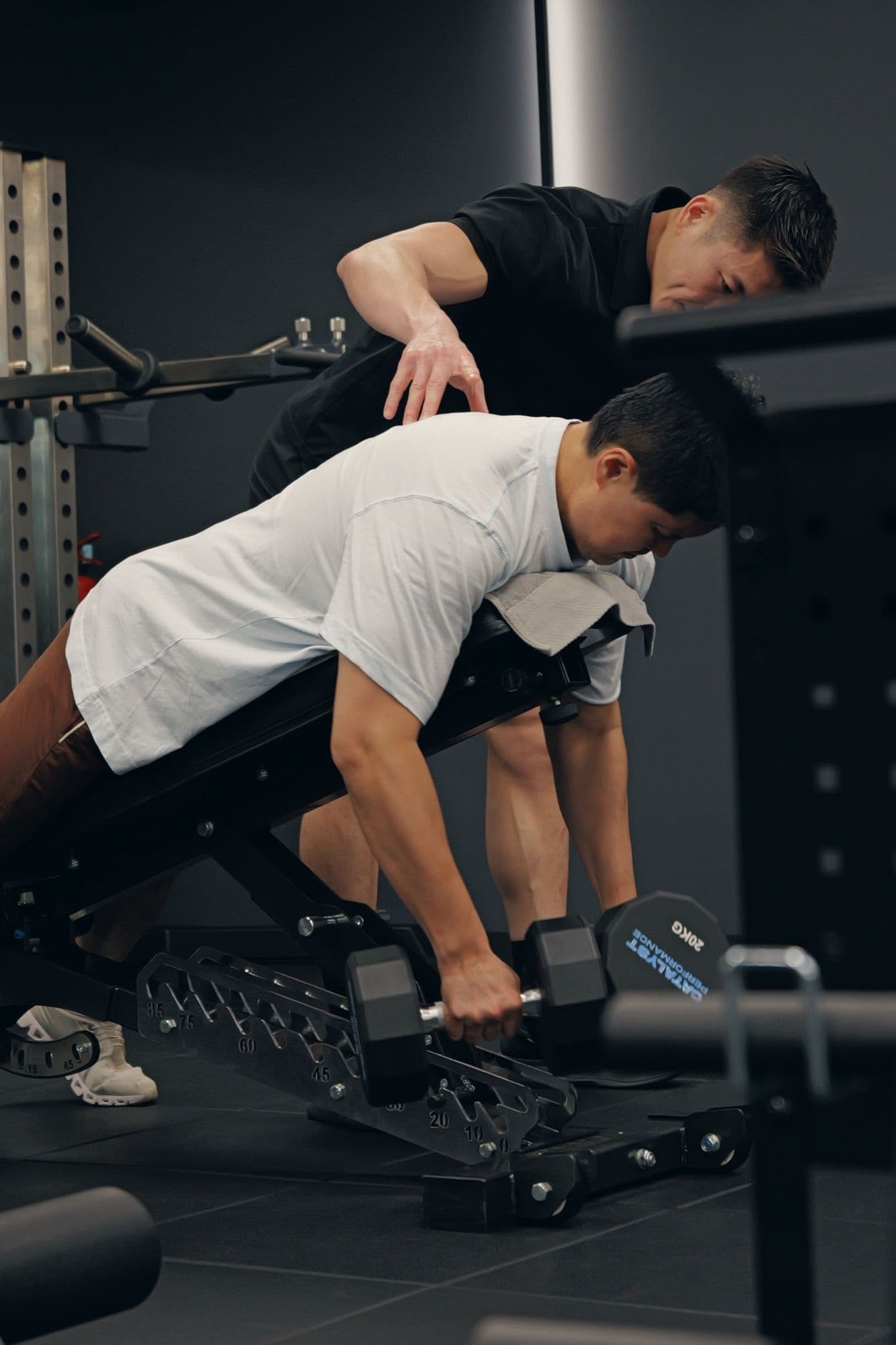
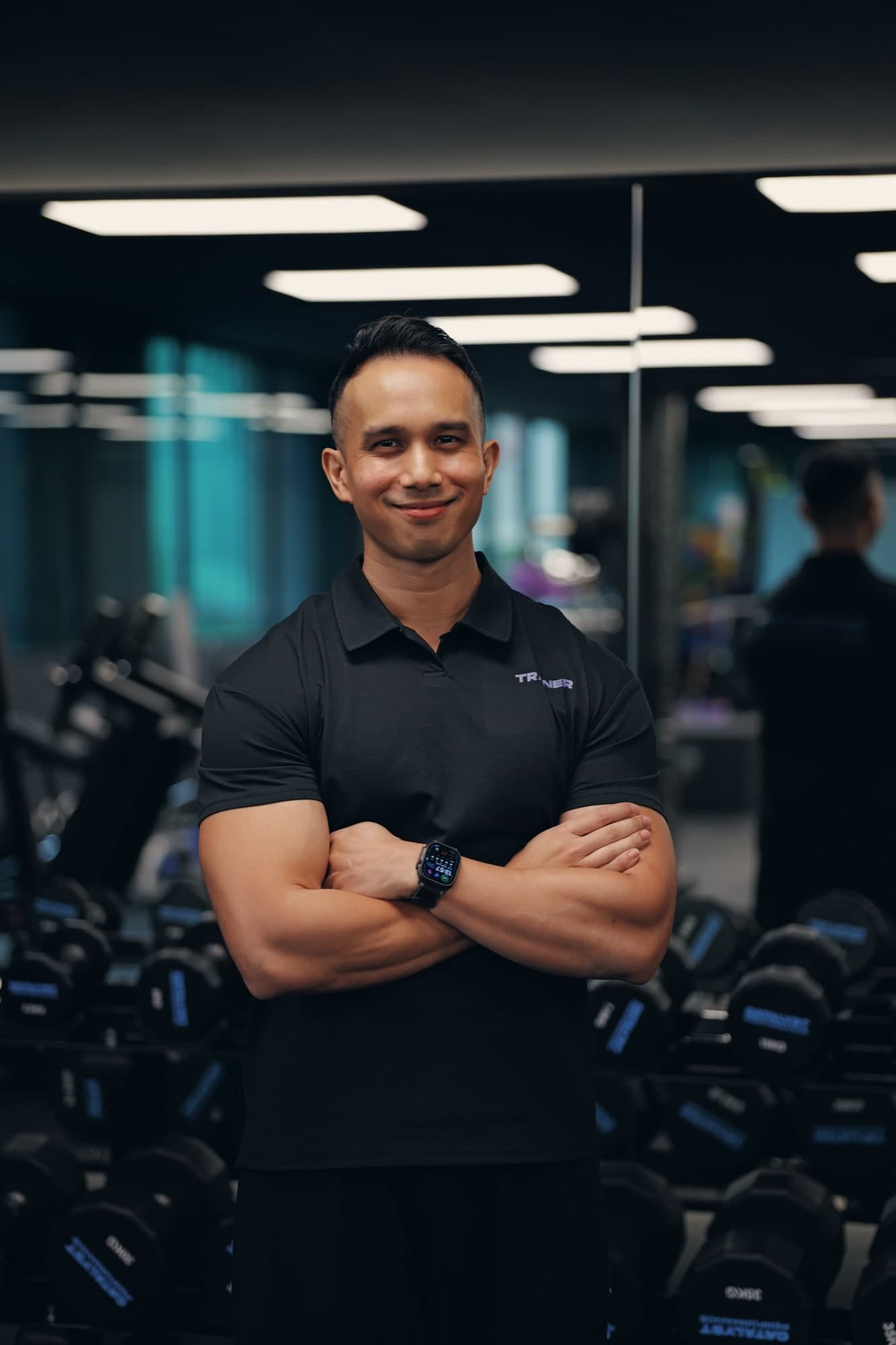
A private gym in Singapore is one of three quite different products wearing the same name: a 1:1 coaching studio where every visit is a booked session with a trainer, a capped-membership gym that limits how many people can ever be on the floor, or a hire-by-the-hour private floor or app-booked pod you book like a meeting room. They solve different problems at different prices, from about $40 an hour for self-directed private space to $200 or more for a coached session. This guide separates the three, prices them honestly, and gives you a clean way to decide whether the privacy premium buys anything you will actually use. Our own studio is the first kind: a private gym in Singapore where every hour is a coached 1:1 session.
| Model | What you get | Typical cost | Best for |
|---|---|---|---|
| 1:1 coaching studio | A coach and a scheduled private floor; assessment-led programming | $120 to $200+ per session | Measured outcomes, rehab-adjacent training, people who will not train on a public floor |
| Capped-membership gym | Self-directed access with member numbers limited | $200 to $600 per month | Experienced lifters who want quiet, not coaching |
| Hourly private floor or pod | The room to yourself, book by the hour | $30 to $80 per hour | Self-programmed trainees, content creators, privacy on a budget |
TL;DR
- Private gym means three different products in Singapore: coached 1:1 studios, capped-membership gyms and hourly private floors; price and value differ sharply.
- The premium over a commercial gym membership buys three concrete things: guaranteed equipment access, privacy, and, in the coached model, programming and accountability.
- Privacy is not vanity; for a large group of adults it is the difference between training consistently and not training at all.
- Decide by the job: outcomes and screening point to a coached studio, quiet self-directed lifting to capped membership, budget privacy to hourly floors.
Searches for private gyms in Singapore have grown steadily for years, and the drivers are consistent: crowded commercial floors at peak hours, self-consciousness that never quite goes away under public lighting, waiting for equipment during a lunch-hour window that cannot absorb a queue, and for some professionals, a simple preference not to run into colleagues mid-deadlift. The industry has answered with three distinct models, and because all three market themselves with the same photographs of empty, beautiful floors, buyers regularly purchase the wrong one. Here is the anatomy.
1. The three things private gym means
The first model is the 1:1 coaching studio. The floor exists only for booked, coached sessions; you never visit without your trainer, and the space is scheduled so that your hour is yours. This is the model our own studio at Manulife Tower runs, and its defining feature is not actually the privacy. It is that the product is coaching, assessment, programming, progression, delivered in an environment engineered to remove every variable a public gym adds. The privacy is the enabler, not the product; our piece on what boutique gyms actually sell unpacks that distinction.
The second model is the capped-membership gym: you train yourself, but the operator limits total membership or concurrent floor numbers, sometimes with booked slots. What you are buying is the absence of crowding, guaranteed access to a rack at 6:30pm, and a quieter social contract. Coaching may be available but it is an add-on, not the core.
The third model is the hourly private floor: a fully equipped room you book like a meeting room, alone or with a partner, sometimes with your own freelance trainer brought in. Its smallest form is the automated pod: a self-contained room booked by the half-hour on an app, with no staff on site. It is the budget route to absolute privacy for people who already know what to do with a barbell.
Confusion between the three is expensive in both directions: paying coached-studio prices when all you wanted was a quiet rack, or buying cheap private hours when what you needed was someone to write and run the programme.
2. What each model costs
Coached 1:1 studios price per session, and Singapore's market puts qualified coaching at roughly $120 to $200 or more per hour in this format, in line with the wider rates in our personal trainer cost guide. Trained twice a week, that is roughly $1,000 to $1,700 a month, which is why the value question deserves the maths chapter below rather than a reflex.
Capped-membership gyms generally land between $200 and $600 a month depending on cap severity, location and hours, against $80 to $200 for mainstream commercial memberships. You are paying a multiple of two to four for scarcity, and whether that is rational depends entirely on whether crowding is what stands between you and consistency.
Hourly floors run about $30 to $80 per hour depending on district and finish, often with off-peak discounts and multi-hour bundles. Two self-directed sessions a week lands around $300 to $600 a month, between the other two models, with no coaching included.
Across all three, apply the same commercial hygiene as anywhere in this industry: terms in writing, expiry and freeze policies checked, and small first commitments until the habit and the fit are proven. The pressure tactics we describe in the transformation-contract piece appear in the private market too, usually wearing better interior design.
3. Privacy as a training variable
It is easy to file privacy under indulgence, and the industry's own marketing invites it, all marble and mood lighting. The operational truth from coaching inside one is different: privacy changes who trains at all, and how honestly.
Consider who consistently chooses private settings. Adults returning to exercise after a decade away, for whom the first twelve weeks are the vulnerable ones. Women who have done the arithmetic on attention received per gym visit and opted out. Older professionals whose knees need a slower, more supervised reintroduction than a public floor invites, the clientele our seniors training guide serves. People with visible health conditions, post-surgical histories, or public profiles. For every one of these groups, the private floor is not upgrading the experience; it is what makes attempt number one, and week nine, happen at all. In our free Healthspan Audit of over 1500 Singaporeans, 37 percent reported no weekly strength training at all, and the median Healthspan Score rose with each weekly session people reported, from 4.0 at none to 7.6 at four or more; that is an association in self-reported data, not proof of cause.
Privacy also changes the training itself. On a floor with an audience, people underload the exercises that look awkward and overload the ones that look impressive, which is precisely backwards for most goals. Coached alone, clients try the movement they would never attempt publicly, fail a rep without ceremony, and tell the coach the true story about their week. Programming runs as written rather than as negotiated with a crowded room, an advantage we detailed in the Orchard training guide.
If none of these describe you, weight the privacy premium accordingly; a confident self-programmer thriving on commercial-floor energy is the one buyer the private market genuinely cannot out-value.
4. The equipment reality
The honest trade in going private is square metres. No private model matches the equipment census of a flagship commercial gym, so the question is not whether the floor has everything; it is whether it has the right things for progressive training, and the checklist is shorter than the marketing suggests.
A serious private floor needs: a rack with a barbell and enough plates to outgrow you, a dumbbell run reaching at least 40kg, an adjustable bench, a cable stack or functional trainer, one honest cardio ergometer, a rower, ski erg, treadmill or bike, and open turf for carries, sleds and movement work. That census supports every pattern that matters, hinge, squat, push, pull, carry, and conditioning, for years of progression. What it sacrifices is redundancy, five flavours of the same machine, which commercial floors carry to absorb crowds rather than to improve training.
What to actually inspect on a visit: plate depth, because running out of weight is a real ceiling for stronger trainees; the state of the cables and upholstery, which reveals maintenance culture; and in coached studios, the measurement kit, body composition analysis, a dynamometer for grip, timing for conditioning, since a studio selling outcomes should own the tools that measure them. Our comparison of DEXA and InBody explains what the body-composition hardware can and cannot tell you.
Hourly floors deserve one extra check: confirm the inventory in photos taken this year. The gap between listing and room is the most common complaint in that segment.
5. The maths against a commercial membership
Priced per visit, private options lose to a $150 commercial membership every time, and if cost per visit were the right metric, this article would end here. The correct denominator is cost per outcome, and it turns the table around for specific buyers.
Run the honest ledger on the commercial membership first. The national pattern is well documented: memberships are purchased in January and attendance decays by March, because access was never the constraint. Behaviour was. A membership used 30 times a year at $150 a month costs $60 a visit for unprogrammed training. The cheap option, unused, is the most expensive fitness product in Singapore.
The coached-studio model attacks the behaviour constraint directly: a booked appointment with a professional who measures you, at a rate that makes skipping feel like burning money. Twice weekly at $150 a session is $1,300 a month, a genuinely large number, and for the client who was otherwise not training at all, it is buying strength, body composition and blood-pressure changes that a $150 unused membership was never going to deliver. That is the comparison that matters: not against the gym you would attend in theory, but against the exercise that was actually happening. At our own studio, of the clients who had repeated the 4-Pillar Healthspan Assessment at least three months after their first by 8 October 2026, 23 of 27 scored higher on the Healthspan Score.
The capped-membership and hourly models sit in between: they solve crowding and privacy but leave programming and accountability to you. They are rational precisely for the self-driven, and a poor fit for the chronically restarting. Our breakdown of 1:1 versus small group pricing extends the same per-outcome logic across formats.
6. How to trial one properly
Whichever model you shortlist, buy one unit of it before any package: one coached session or assessment, one day pass, one private hour. The single visit answers the questions no website can.
At a coached studio, the first visit should be an assessment, not a demonstration workout: history taken, movement screened, baselines measured, and a plain-language explanation of what the first block would target. That is the standard we hold our own 4-Pillar Assessment to, and it is the standard to demand anywhere. At a capped gym, visit at your real training hour, Tuesday 6:30pm, not Sunday 10am, and count heads at the racks; it is one of the four checks for choosing a gym in the CBD. At an hourly floor, audit the inventory against the checklist above and test the booking friction, because a clunky booking flow is a dropout mechanism you will meet every week.
Then apply the one-question filter: which model makes the version of you that exists in week nine, tired, busy, motivation long gone, most likely to still be training? Answer that honestly and the pricing sorts itself; the premium is only ever worth what it changes about your behaviour.
Choosing in one pass
If you want measured outcomes, are returning after a long gap, carry a health history, or know from experience that unaccountable memberships go unused, shortlist coached 1:1 studios and judge them on assessment quality. If you are an experienced self-programmer whose only complaint is the crowd, a capped-membership gym or a good hourly floor buys your quiet at a fraction of the coached price. If budget is the binding constraint but the public floor is genuinely stopping you, hourly private space with a written programme is the underrated middle path. One trial unit at each finalist, then decide on behaviour, not brochures.
Frequently asked questions
Q. How much does a private gym cost in Singapore?
Depends which model: hourly private floors run about $30 to $80 per hour, capped-membership gyms roughly $200 to $600 a month, and coached 1:1 studio sessions $120 to $200 or more each. The models sell different products, so compare within a model, not across.
Q. Is a private gym worth it compared to a commercial gym?
Per visit, no. Per outcome, often, for specific people: those who will not train consistently on a public floor, need screening and programming, or keep buying memberships they do not use. If crowding and self-consciousness are not your constraints, a commercial membership remains fair value.
Q. Do private gyms in Singapore have enough equipment?
The good ones carry everything progressive training needs: rack, barbell and deep plates, dumbbells to 40kg or beyond, adjustable bench, a cable stack, one serious cardio ergometer and open floor. What they drop is redundancy, which commercial gyms need for crowds rather than for training quality.
Q. Can I bring my own trainer to a private gym?
Hourly floors usually allow external trainers, sometimes with a surcharge; capped-membership gyms vary; coached studios supply the coaching themselves. Confirm the policy in writing before buying hours around a freelance coach.
The private label covers three products, and the expensive mistakes all come from buying one while needing another. Name the job first, outcomes, quiet, or affordable solitude, trial one unit, and let week-nine behaviour make the call. If the job turns out to be outcomes, the coached studio model is the one built for it, and the assessment is where it should always start. Our guides to choosing a personal trainer and Singapore's best studios take the search from here.
Catalyst Performance runs the coached model in full: a private floor in Manulife Tower, above Telok Ayer MRT, 1:1 sessions only, and every client starting with the 4-Pillar Healthspan Assessment so the programme is built from measurements rather than templates. There is no membership and no walk-in access: the floor runs booked sessions only, so no one waits for a rack. Sessions start from SGD 163.50 as a first-time client rate, GST inclusive, the assessment is complimentary, and hot showers and towels are provided, so you can train before work and walk to the office. Book a complimentary consultation to see the studio and decide with your own eyes.