
The Edit · Founder Insights
How Much Protein You Need on a GLP-1 (Ozempic, Wegovy, Mounjaro)
A doctor-reconciled protein target on a GLP-1: aim for about 1.6 g per kg of body weight a day, split across meals, to protect muscle.
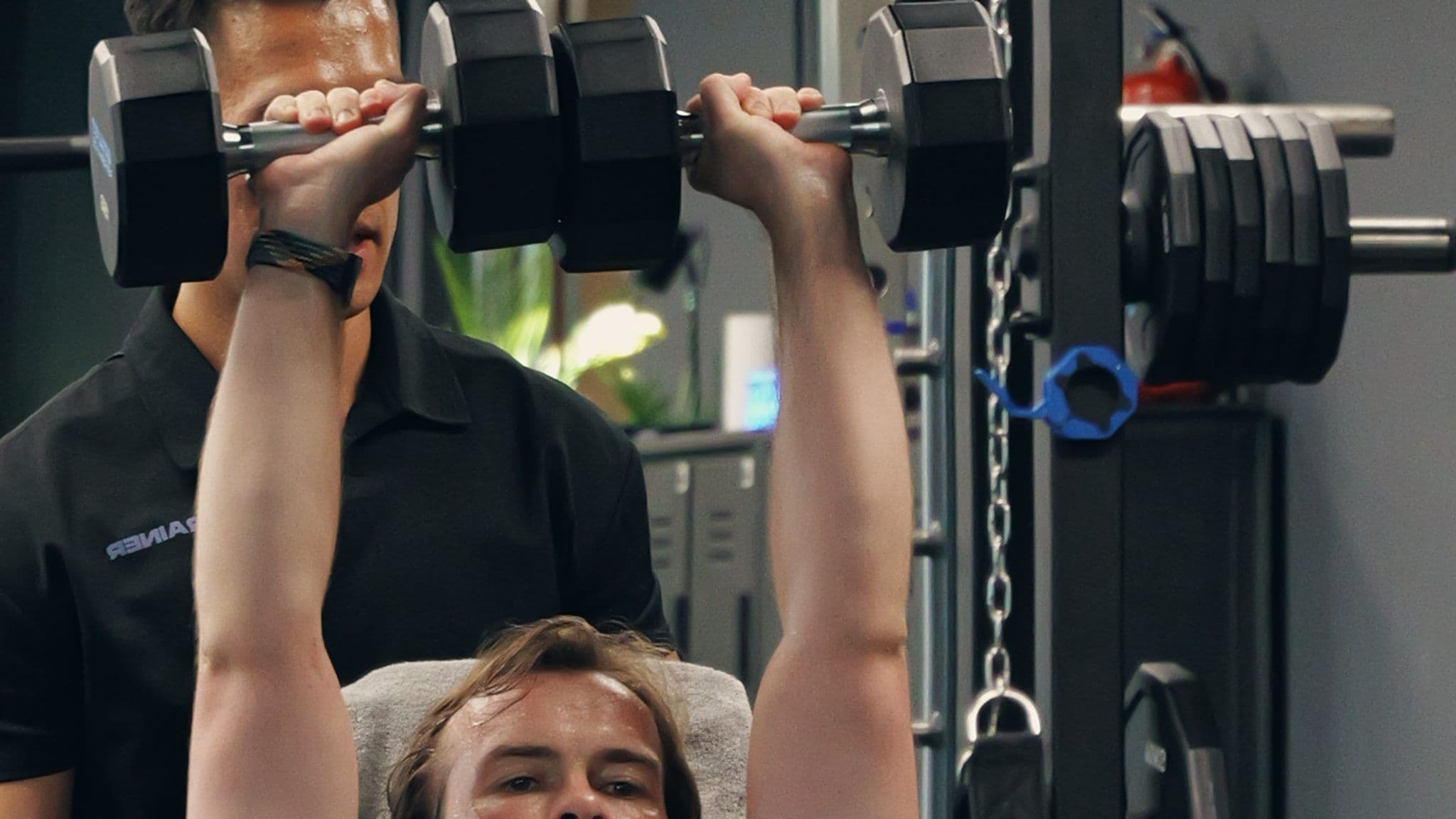
If you are on a GLP-1 medication such as semaglutide (Ozempic, Wegovy) or tirzepatide (Mounjaro, Zepbound), aim for roughly 1.6 grams of protein per kilogram of body weight per day, spread across your meals, and pair it with resistance training. That single target reconciles most of the conflicting advice online: it is the intake above which extra protein adds nothing to muscle preservation in training adults, and it sits comfortably above the everyday minimum that does too little while you are losing weight fast. Protein alone will not save your muscle. Protein plus strength training will.
TL;DR
- Target around 1.6 g of protein per kg of body weight daily on a GLP-1, anchored to the Morton 2018 meta-analysis breakpoint.
- Roughly 25 to 39 percent of the weight lost on these drugs is lean mass, not just fat (Prado 2024).
- Split protein into 3 to 4 servings of 25 to 40 g so each meal triggers muscle repair, because appetite suppression makes one big meal hard.
- Protein without resistance training preserves far less muscle than protein plus training (Villareal 2017).
- Easy high-protein anchors beat perfect plans when the medication kills your hunger: eggs, Greek yoghurt, fish, tofu, and a whey or soy shake.
In this article
- 1. Why protein matters more on a GLP-1 the lean-mass problem the drug creates
- 2. The conflicting protein numbers, reconciled why advice ranges from 0.8 to 2.4 g/kg
- 3. The 1.6 g/kg target and where it comes from the evidence anchor
- 4. How to calculate your own number a worked example
- 5. Per-meal distribution, not one big hit why timing matters
- 6. The appetite-suppression problem eating enough when you are not hungry
- 7. Easy protein sources that survive low appetite a practical food list
- 8. Why protein without training is not enough the missing half
- 9. Can you eat too much protein the safety ceiling
- How to pick what to do first the diagnostic that sets your number
GLP-1 receptor agonists were built to lower blood sugar and reduce appetite, and they do both powerfully. In the STEP 1 trial, adults on once-weekly semaglutide lost an average of 14.9 percent of their body weight over 68 weeks, against 2.4 percent on placebo (Wilding et al., 2021). That scale of loss is exactly why these medications have reshaped how the world treats obesity. It is also why protein has quietly become the most important number on the plate for anyone taking one.
The catch is what comes off with the fat. When the body loses weight quickly, it does not only burn fat tissue. It also gives up lean mass: muscle, and the metabolically active tissue that keeps you strong, mobile, and metabolically healthy into later decades. A 2024 analysis in the Lancet Diabetes and Endocrinology estimated that 25 to 39 percent of the weight lost on GLP-1 drugs was fat-free mass rather than fat (Prado et al., 2024). Protein and resistance training are the two levers that decide how much of that muscle you keep.
This article reconciles the protein numbers into one doctor-backed target, explains how to split it across the day, and tackles the real obstacle that no spreadsheet captures: eating enough protein when the medication has switched your hunger off. We will keep returning to one principle, because it is the one that matters most. Protein protects the muscle that strength training builds. Neither works as well alone.
1. Why protein matters more on a GLP-1
The problem most people miss is that the scale lies about success. A GLP-1 can deliver a dramatic drop in body weight while quietly eroding the tissue you most want to protect. Roughly a quarter to two-fifths of that loss is lean mass (Prado et al., 2024), and muscle is not a cosmetic asset. It is the tissue that drives strength, balance, bone loading, glucose disposal, and the simple ability to carry your own life independently as you age.
The solution is to make muscle preservation a deliberate goal of the medication phase, not an afterthought you address once the weight is off. That means raising protein intake well above the casual baseline most adults eat, because protein supplies the amino acids muscle needs to rebuild faster than rapid weight loss tears it down. Protein becomes more important on a GLP-1, not less, precisely because the rate of weight loss is faster than what diet alone usually produces.
Here is the specific reason the timing is urgent. Lean mass lost during a fast weight-loss phase is hard to win back, especially after 40, when the body is already less efficient at building muscle from a given protein dose. The honest nuance from the Prado paper is that the 25 to 39 percent figure includes water and organ mass as well as muscle, and the authors note this loss is largely attributable to the sheer magnitude of weight loss rather than to a unique muscle-melting property of the drug. In plain terms, fast weight loss of any kind costs lean mass. The GLP-1 just makes the weight loss fast and easy, which is exactly why the muscle defence has to be deliberate.
At our studio we see this pattern repeatedly with members who arrive already a few months into a prescription. They are visibly lighter and rightly pleased, but their grip strength, their ability to rise from the floor, and their loaded-carry numbers have slipped in step with the weight. The fix is never to stop the medication. It is to bolt protein and progressive strength work onto it so the loss that remains is overwhelmingly fat. You can estimate how much lean mass is at stake for your own situation with our GLP-1 Muscle-Loss Calculator, which puts a number on the risk before you decide how aggressively to defend against it.
The bonus insight is that protecting muscle protects the result itself. Muscle is metabolically expensive tissue, so keeping it helps hold your resting energy expenditure higher, which is one of the levers that makes the eventual maintenance phase, and coming off a GLP-1 without regaining fat, far more achievable.
Do it yourself
Hitting your protein is one half; loading the muscle is the other. The GLP-1 Muscle Protocol pairs the Protein Playbook with the 12-week programme our coaches use, medically reviewed by Dr Luqman Haris, MBBS, so both halves are covered.
2. The conflicting protein numbers, reconciled
Search for a protein target on a GLP-1 and you will find numbers ranging from 0.8 g/kg to 2.4 g/kg, which is a wide enough spread to be useless without context. The confusion is real, and it comes from mixing up three different questions that each have a different answer.
The fix is to separate those questions. The first number, around 0.8 g/kg, is the recommended dietary allowance: the floor that prevents outright deficiency in a sedentary adult who is not losing weight. It was never meant for someone shedding 15 percent of their body weight while trying to keep muscle, and using it during a GLP-1 phase almost guarantees lean-mass loss. The second band, often quoted as 1.2 to 2.0 g/kg, comes from the broader sports-nutrition and weight-loss literature for active people in an energy deficit. The third, the 1.6 g/kg figure, is the specific evidence-backed ceiling for muscle gain in training adults, and it is the most useful anchor because it is both high enough to defend muscle and grounded in a hard meta-analysis breakpoint.
The specifics matter here. The 1.6 g/kg target is not a round number someone invented. It comes from a 2018 meta-analysis in the British Journal of Sports Medicine that pooled 49 studies and found that protein intakes beyond 1.62 g/kg/day produced no further resistance-training gains in fat-free mass (Morton et al., 2018). That is the point of diminishing returns for building and holding muscle. On a GLP-1, where you are defending muscle against a strong headwind, planting your target at that ceiling rather than the floor is the conservative, sensible choice.
A member we coached through a tirzepatide course had been eating to the 0.8 g/kg figure her doctor mentioned in passing, which for her worked out to about 50 g a day. She was losing weight beautifully and strength rapidly. Recalculating to roughly 1.6 g/kg moved her target to about 100 g, and once we restructured her meals to hit it, her strength numbers stabilised within a month even as the scale kept falling. The number was the whole problem.
The bonus insight is that you do not need to chase the very top of the range. Because the benefit plateaus near 1.6 g/kg for muscle, eating 2.2 or 2.4 g/kg offers no extra muscle protection for most people, just more food to force down at a time when appetite is already suppressed. Aim for the evidence-backed ceiling, not beyond it.
3. The 1.6 g/kg target and where it comes from
If you take one number from this article, make it this: about 1.6 grams of protein per kilogram of body weight per day. It is the single figure that resolves the noise, and it is worth understanding why it earns that status rather than treating it as another arbitrary rule.
The target solves the core tension of a GLP-1 phase. You need enough protein to keep muscle protein synthesis running during rapid weight loss, but not so much that the goal becomes impossible to hit on a suppressed appetite. The Morton meta-analysis identified 1.62 g/kg/day as the intake beyond which extra protein stopped adding to training-driven muscle gains in healthy adults (Morton et al., 2018). Below it, you are likely leaving muscle on the table. Above it, you are eating more for no additional muscle benefit. That makes it the natural place to set your number.
On the specifics, the meta-analysis reported a 95 percent confidence interval of 1.03 to 2.20 g/kg/day around that breakpoint, which is the honest scientific way of saying the true threshold sits somewhere in that band and 1.6 is the central best estimate. For a GLP-1 user, who is fighting weight-loss-driven muscle loss rather than purely chasing gains, anchoring at the upper-central part of that range is prudent. We treat 1.6 g/kg as the working target and nudge toward 1.8 g/kg for members over 50, who are less responsive to a given protein dose and therefore benefit from a slightly higher intake.
We applied exactly this logic with a member in his late fifties on semaglutide. We set his daily protein at 1.8 g/kg rather than 1.6, distributed it across four feedings, and paired it with twice-weekly strength sessions. Eight months in, he had lost the fat he came for while his deadlift and his lean-mass readings held steady. The slightly higher target was not guesswork. It was the meta-analysis range applied to an older body.
The bonus insight is that body weight, not your goal weight, is the right input. Calculate the target from where you are now, and recalculate every few weeks as the scale moves, because a fixed gram figure set at the start will drift too high as you get lighter. This is also the foundation we use in the structured nutrition phase of our GLP-1 Muscle Protocol, which builds the protein target and the training around your current body, not a static plan.
4. How to calculate your own number
The maths intimidates people more than it should, so here is the whole calculation in one line: multiply your body weight in kilograms by 1.6. That is your daily protein target in grams. The problem is only that most people never actually do it and instead eyeball their intake, which on a GLP-1 reliably lands too low. Our protein intake calculator does the multiplication for you and splits the daily total into per-meal portions.
The solution is to run the number once, write it down, and divide it into per-meal portions you can actually plan around. Take a person weighing 80 kg. Their target is 80 multiplied by 1.6, which is 128 g of protein per day. Split across four meals, that is 32 g per meal, a portion roughly equal to a palm-sized chicken breast, a large tin of tuna, or a scoop of whey plus a tub of Greek yoghurt. Suddenly the abstract gram figure becomes four concrete plates.
The specifics adjust for two cases. If you carry a lot of excess fat, calculating from total body weight can inflate the number uncomfortably high, so an adjusted figure based on a weight closer to a healthy range for your height is reasonable, and a coach or dietitian can set that. If you are over 50, lean toward 1.8 g/kg as discussed, which for our 80 kg example lifts the target to 144 g, or 36 g across four meals. Neither adjustment changes the method, only the multiplier.
Most of our members find the number lands between 100 and 150 g a day, which feels like a lot until it is split into four manageable feedings rather than imagined as one mountain of food. To skip the manual maths and also see the lean-mass risk your target is protecting against, the GLP-1 Muscle-Loss Calculator runs both calculations from your own numbers in a few seconds.
The bonus insight is to set a floor rather than a ceiling in your head. On a bad-appetite day, hitting 90 percent of your target still vastly outperforms drifting back to the 50 to 60 g most people eat by default. Aim for the number, and treat anything close to it as a win rather than a failure.
5. Per-meal distribution, not one big hit
A common mistake is to treat the daily total as the only thing that matters and to backload it into one large dinner. The total does matter, but how you spread it across the day matters too, and on a GLP-1 the distribution problem is sharper because you simply cannot eat a single huge protein-heavy meal when the drug has shrunk your appetite.
The solution is to divide your protein into three or four servings of roughly 25 to 40 g each. The physiological logic is that muscle protein synthesis, the process that rebuilds muscle, responds to a meal-sized dose of protein and then returns to baseline. Spreading protein across several feedings keeps that rebuilding signal switched on more often through the day, rather than firing once and idling for the other 20 hours. For someone actively defending muscle against rapid weight loss, more frequent stimulation is the goal.
On specifics, each serving should clear roughly 25 to 30 g to reliably trigger that response, with a slightly higher per-meal dose, toward 35 to 40 g, sensible for older adults whose muscle is less responsive. Four feedings of 30 g comfortably covers a 120 g daily target, and it has the practical advantage of asking your suppressed appetite to handle a modest plate four times rather than an overwhelming one once.
We coached a member who was technically hitting 110 g a day but almost entirely at dinner, because that was the only meal her semaglutide let her enjoy. Her strength was still slipping. Simply moving 30 g into a morning shake and 30 g into a midday meal, without raising her total much at all, steadied her training numbers within weeks. The total had been fine. The clumping was the issue.
The bonus insight is that breakfast is the highest-leverage meal to fix, because most people eat least protein there and on a GLP-1 morning appetite is often the most workable window of the day. A protein-forward breakfast frequently does more for your daily total than any other single change.
6. The appetite-suppression problem
Here is the obstacle that makes every protein target harder than it looks on paper: the very mechanism that makes a GLP-1 work, profound appetite suppression, is also what makes eating enough protein difficult. You are being asked to eat more of a specific, often filling, macronutrient at exactly the moment your body has stopped sending hunger signals. The plan and the drug pull in opposite directions.
The solution is to stop relying on appetite to drive intake and instead eat to a plan, protein first. When you do feel able to eat, the protein on the plate should be the part you finish, ahead of the carbohydrate and the fat, because it is the part most easily crowded out by early fullness and the part doing the muscle-protecting work. Treating protein as the non-negotiable first bite, rather than what you get to if there is room, is the single most useful behavioural shift.
On specifics, liquid and soft protein sources are a genuine advantage here, not a compromise. A whey or soy shake, Greek yoghurt, a soft-cooked egg, silken tofu, or a protein smoothie deliver a large dose in a small, easy-to-tolerate volume, which is exactly what a suppressed appetite can handle. Many of our members find a morning shake the most reliable 30 to 40 g of their day, precisely because it asks almost nothing of their appetite.
One member described feeling full after three bites of a normal lunch for the first month of his Mounjaro course. We did not fight it. We front-loaded a 40 g shake into his morning when his appetite was least suppressed and kept his other meals small and protein-led. He hit his target most days without ever forcing down a meal he did not want. The strategy was to work with the appetite suppression, not against it.
The bonus insight is that nausea, a common early GLP-1 side effect, eases for most people after the first few weeks, so the appetite challenge is often worst exactly when establishing the protein habit matters most. Getting a simple, repeatable protein routine in place early carries you through the hardest stretch.
7. Easy protein sources that survive low appetite
The practical failure point for most people is not knowing the target but not having easy foods on hand that hit it without a fight. When appetite is low, the difference between success and a missed target often comes down to whether a high-protein option is within arm's reach or requires effort to prepare.
The solution is to build a short, repeatable list of protein anchors you can rotate without thinking. You do not need variety to keep muscle. You need consistency. A handful of reliable, high-protein, easy-to-eat foods, kept stocked and ready, will outperform an ambitious meal plan you abandon the first time the medication kills your appetite at 6pm.
On specifics, the most useful anchors are protein-dense per bite and forgiving to prepare. Eggs deliver about 6 g each. A 170 g tub of Greek yoghurt offers roughly 15 to 17 g. A palm-sized portion of chicken, fish, or lean meat runs 25 to 30 g. A block of firm tofu or a serving of tempeh provides 15 to 20 g for plant-based eaters. A scoop of whey or soy isolate adds 20 to 25 g in a glass of liquid. Tinned fish, edamame, cottage cheese, and milk round out the list. Stack two or three of these per meal and the target builds itself.
We give members a one-page version of this list and ask them to keep three of the items permanently stocked. One member built her entire protein intake around eggs, Greek yoghurt, and a soy shake for the first two months of her course because those were the only things that consistently went down. It was monotonous, and it worked. Her lean mass held while the fat came off.
The bonus insight is to pre-decide your default protein for each meal so a low-appetite day never becomes a skipped target. When the egg-and-yoghurt breakfast and the fish-and-tofu dinner are fixed defaults, your suppressed appetite never has to negotiate. The decision was already made.
8. Why protein without training is not enough
This is the most important section, because it is where the most common and most costly mistake lives. Many people on a GLP-1 conclude that if they simply eat enough protein, their muscle is safe. It is not. Protein supplies the raw material for muscle, but without a reason to use that material, the body has little incentive to hold onto muscle it is not being asked to work.
The solution is resistance training, and the evidence that protein and training together beat protein alone is direct. In a randomised trial of older adults losing weight, those who added resistance training, or a combination of resistance and aerobic exercise, preserved significantly more lean mass than those doing aerobic exercise alone, and the combination group improved their physical function the most (Villareal et al., 2017). Diet sets the stage. The training is what tells the body to keep the muscle.
On specifics, the resistance stimulus does not need to be elaborate. Two to three sessions a week of progressive, full-body strength work, squats, presses, rows, hinges, and loaded carries, taken close enough to effort to demand adaptation, covers most of the benefit. The protein you have carefully calculated then has a job to do: rebuilding the muscle the training has signalled is worth keeping. Remove the training and that same protein largely just supports the weight loss without the muscle-sparing effect.
We see the clearest version of this in members who arrive having done the protein half diligently for months but no structured strength work, and who have still lost noticeable muscle and function. Once we add two strength sessions a week to the protein they were already eating, the trajectory reverses, often within a single training block. This is the entire reason a GLP-1 is a training opportunity rather than a training substitute, a point we make in detail in our guide to whether you still need a trainer on Ozempic and our deeper look at GLP-1 muscle loss.
The bonus insight ties the whole article together. The 1.6 g/kg target exists because of the training. The Morton breakpoint is a resistance-training breakpoint: it describes how much protein supports muscle gains from lifting. Without the lifting, the number loses much of its meaning. Protein and training are not two options to choose between. They are two halves of one defence.
9. Can you eat too much protein
A fair worry, especially once we have told you to aim higher than the everyday recommendation, is whether a high-protein intake is itself a risk. For most people the honest answer is no, but the question deserves a straight, doctor-backed response rather than a dismissal.
The reassurance is that in healthy adults with normal kidney function, protein intakes around 1.6 to 2.2 g/kg/day are well within the range studied for safety and muscle benefit, and the long-standing concern that high protein harms healthy kidneys is not supported by the evidence in people who do not already have kidney disease. The Morton target sits comfortably inside that safe band, which is part of why it is a sensible ceiling rather than a daring one.
On specifics, there is one genuine exception that matters. If you have existing kidney disease, or another medical condition that requires protein restriction, the target above does not apply to you and your protein intake should be set by the doctor managing that condition. This is also why the GLP-1 itself, and any nutrition plan around it, belongs under medical supervision rather than self-direction. The medication is prescribed for a reason, and the same care should extend to how you eat on it.
When members raise this concern with me, the practical answer is almost always that they are nowhere near a problematic intake. Most arrive eating too little protein, not too much, and the move to 1.6 g/kg brings them up to an evidence-backed target, not past a safe limit. The worry, while reasonable, usually points in the opposite direction to the real risk.
The bonus insight is to drink to thirst and keep your overall diet balanced. Higher protein is not a licence to drop vegetables, fibre, or adequate fluid, all of which support the kidneys and digestion and round out a diet that has to do a lot of work in a small appetite. Protein is the priority on a GLP-1, not the whole plate.
How to pick what to do first
If all of this feels like a lot to act on at once, the order matters less than starting, but there is a sensible sequence. First, calculate your number: body weight in kilograms times 1.6, written down as a daily gram target and divided into four per-meal portions. Second, fix breakfast, because it is the easiest place to add 30 g and the meal most people neglect. Third, add two resistance-training sessions a week, because without them the protein does far less than it should.
The reason to sequence it this way is that each step is both useful on its own and a foundation for the next. The number makes the meals plannable. The breakfast win builds the habit. The training gives the protein its purpose. You do not need all three perfect on day one. You need the first one done today and the third one started this week.
The fastest way to get all three set correctly for your own body is to measure where you actually stand, rather than guess. Our 4-Pillar Healthspan Assessment establishes your current lean mass, strength, and the baseline a GLP-1 phase should defend, which turns a generic 1.6 g/kg rule into a target and a training plan calibrated to you. It is the diagnostic we run before building anyone's medication-phase plan, because defending muscle you have not measured is guesswork, and on a GLP-1 the muscle is the thing most worth measuring.
Protein supplies the raw material for muscle, but it is resistance training that tells the body the muscle is worth keeping. On a GLP-1, that is not a refinement. It is the whole strategy.
Frequently asked questions
Q. How much protein should I eat on Ozempic to preserve muscle
Aim for roughly 1.6 grams of protein per kilogram of body weight per day, spread across three to four meals, and pair it with resistance training two to three times a week. For an 80 kg person that is about 128 g a day, or 32 g per meal. The 1.6 g/kg figure is anchored to a meta-analysis showing protein beyond 1.62 g/kg/day adds no further muscle benefit in training adults (Morton et al., 2018). If you are over 50, lean toward 1.8 g/kg, and if you have kidney disease, follow the target your doctor sets instead.
Q. Is it better to eat all my protein in one meal or spread it out
Spread it out. Muscle rebuilding responds to a meal-sized dose of protein, around 25 to 40 g, and then returns to baseline, so three or four feedings keep that signal switched on more often than one large meal. On a GLP-1 this is also more practical, because appetite suppression makes a single big protein-heavy meal genuinely hard to finish. Several modest, protein-led plates beat one mountain you cannot eat.
Q. Can I just take a protein shake to hit my target on a GLP-1
A shake is one of the most useful tools, not a compromise. A whey or soy shake delivers 20 to 25 g of protein in a small, easy-to-tolerate volume, which suits a suppressed appetite well, and a morning shake is often the most reliable protein of the day. The caveat is that a shake supplies the raw material but does not replace the resistance training that tells your body to keep the muscle. Use shakes to hit the number, and still train.
Q. Will eating more protein stop me losing weight on a GLP-1
No. Protein is the most filling macronutrient and supports your metabolism by helping you keep lean mass, which makes weight loss more sustainable rather than less. The goal on a GLP-1 is not to lose weight more slowly, it is to make sure the weight you lose is overwhelmingly fat rather than muscle. Higher protein and strength training shift that ratio in your favour while the medication continues to do its work.
Hitting your protein target is half of keeping muscle while a GLP-1 strips away fat. The other half is asking that muscle to work, because protein supplies the material and resistance training supplies the reason to keep it. Set your number at about 1.6 g/kg, split it across the day, and put two strength sessions a week behind it. For more on the underlying risk, see our guide to GLP-1 muscle loss and our look at coming off a GLP-1 without regaining fat.
If you want the target, the meal structure, and the training built around your own body rather than a generic rule, that is exactly what the GLP-1 Muscle Protocol is for, or book a complimentary consultation to map out your medication-phase plan with a coach. Either way, run the numbers first with the GLP-1 Muscle-Loss Calculator so you know what you are defending.
Citations
Morton RW, Murphy KT, McKellar SR, Schoenfeld BJ, Henselmans M, Helms E, Aragon AA, Devries MC, Banfield L, Krieger JW, Phillips SM. A systematic review, meta-analysis and meta-regression of the effect of protein supplementation on resistance training-induced gains in muscle mass and strength in healthy adults. British Journal of Sports Medicine. 2018;52(6):376-384.
Prado CM, Phillips SM, Gonzalez MC, Heymsfield SB. Muscle matters: the effects of medically induced weight loss on skeletal muscle. The Lancet Diabetes and Endocrinology. 2024;12:785-787.
Villareal DT, Aguirre L, Gurney AB, Waters DL, Sinacore DR, Colombo E, Armamento-Villareal R, Qualls C. Aerobic or Resistance Exercise, or Both, in Dieting Obese Older Adults. New England Journal of Medicine. 2017;376(20):1943-1955.
Wilding JPH, Batterham RL, Calanna S, Davies M, Van Gaal LF, Lingvay I, McGowan BM, Rosenstock J, Tran MTD, Wadden TA, Wharton S, Yokote K, Zeuthen N, Kushner RF. Once-Weekly Semaglutide in Adults with Overweight or Obesity. New England Journal of Medicine. 2021;384(11):989-1002.