
The Edit · Founder Insights
Foam Rolling: What 12 Years of Peer-Reviewed Evidence Actually Says
Foam rolling has a real, modest, well-evidenced effect on short-term range of motion and DOMS recovery. It does not release fascia, dissolve knots, or resolve compensatory patterns. Twelve years of peer-reviewed evidence reviewed, with the honest verdict on when to roll, when to book sports massage, and when to book NKT instead.
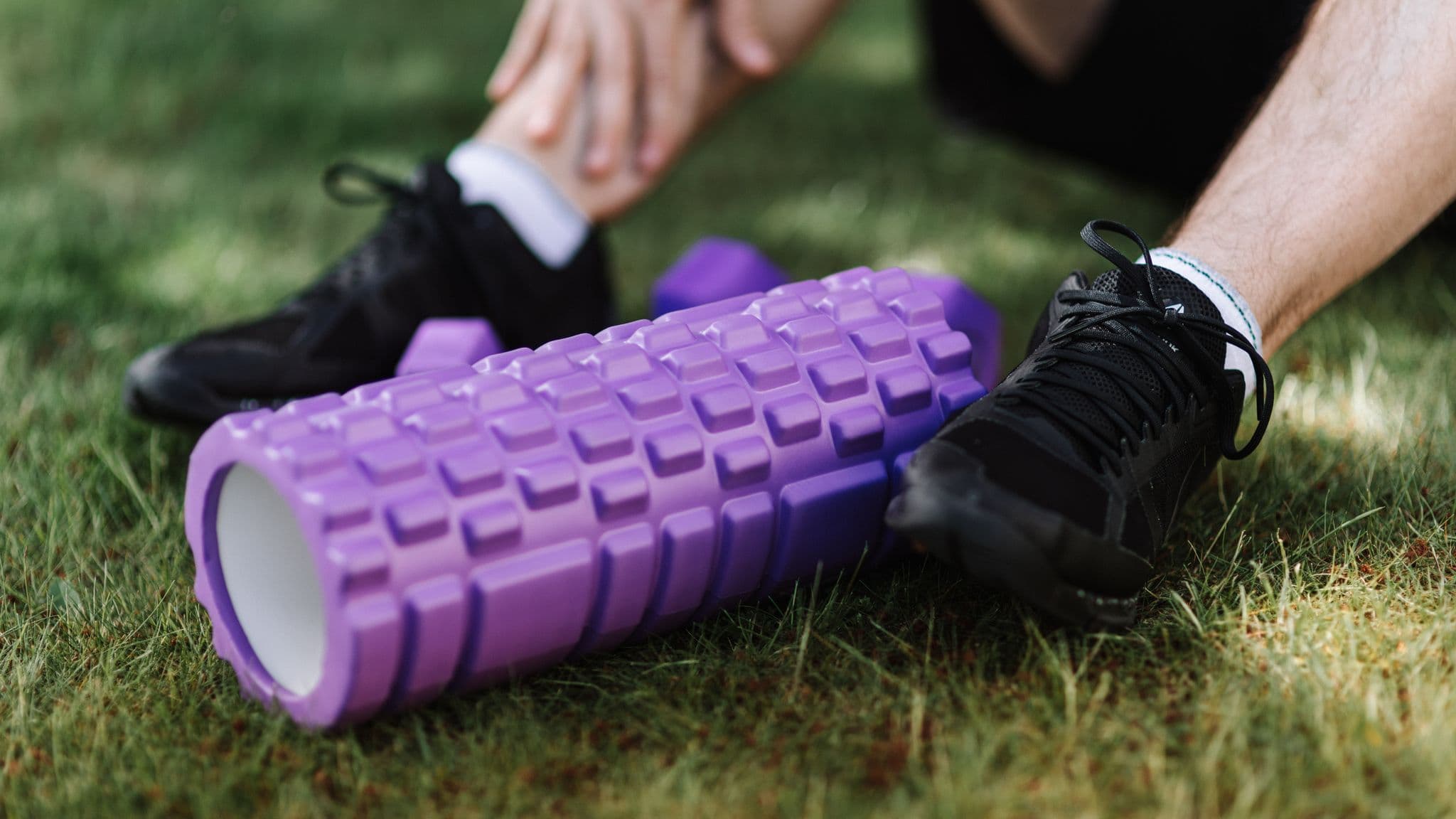
Foam rolling has a small, real, well-evidenced effect that almost no one in the wellness market describes honestly. Twelve years of peer-reviewed research, starting with Beardsley and Škarabot's 2015 systematic review and running through Konrad and colleagues' 2024 meta-analysis, support exactly two claims: foam rolling improves short-term range of motion, and it modestly reduces the perception of delayed-onset muscle soreness. Almost everything else marketed under the foam-rolling label (releasing fascia, dissolving knots, breaking down scar tissue, resolving long-standing tightness patterns, improving running economy) is unsupported by the evidence base, or actively contradicted by it. The honest verdict is that you should own a foam roller, use it for the small list of things it actually does, and stop expecting it to solve the problems that need a clinical frame. This piece walks through what the research says, what the popular claims get wrong, and where foam rolling stops being the right tool.
TL;DR
- Foam rolling improves short-term range of motion (effect sizes small to moderate, durations roughly 10 to 30 minutes per session) and modestly reduces the perception of post-training soreness. Both effects are well-supported across multiple meta-analyses from 2015 through 2024.
- Foam rolling does not 'release fascia' in any structural sense. The pressure required to deform fascia is far higher than a foam roller can deliver, and the evidence for durable mechanical change in connective tissue from rolling is essentially absent.
- The mechanism is almost certainly neural, not mechanical. Diffuse noxious inhibitory control (a pain-modulation pathway) and stretch-tolerance changes explain the observed effects more parsimoniously than fascia remodelling does.
- Foam rolling does not resolve compensatory patterns, treat chronic tendinopathy, fix asymmetries between left and right, or substitute for clinical manual therapy. For those problems book NeuroKinetic Therapy or physiotherapy, not a longer foam-rolling routine.
- Use foam rolling as a five-to-ten-minute warm-up before training (good evidence) or a low-cost recovery tool after training (modest evidence). Buy a high-density EPP roller; the bumpy and vibrating variants do not outperform a plain dense foam cylinder in the head-to-head data.
Quick-reference table
| Claim | Evidence level | What the research actually shows |
|---|---|---|
| Foam rolling improves short-term range of motion | Strong | Small to moderate effect lasting 10 to 30 minutes, no measurable strength cost (Wiewelhove 2019, Hendricks 2020, Konrad 2022, Konrad 2024) |
| Foam rolling reduces perceived DOMS | Moderate to strong | Small but consistent reductions in subjective soreness scores 24 to 72 hours after damaging exercise (Wiewelhove 2019, Hendricks 2020) |
| Foam rolling improves sprint or jump performance | Weak | Very small positive tendency for sprint (+0.7%), negligible for jump and strength (Wiewelhove 2019) |
| Foam rolling releases or remodels fascia | Very weak to absent | Mechanical loads required to deform fascia exceed what a roller can produce; no durable connective-tissue change documented (Chaudhry et al. 2008) |
| Foam rolling 'breaks down' knots or trigger points | Very weak | Trigger points are a clinical construct without consistent imaging or histological correlates; foam rolling does not reliably resolve them in controlled trials |
| Foam rolling breaks down scar tissue | Absent | Scar tissue remodelling requires controlled mechanical loading over weeks to months, not minutes of rolling pressure |
| Foam rolling resolves chronic compensatory patterns | Absent | Compensation patterns reflect motor control and inhibition issues that rolling does not directly address |
| Foam rolling reduces cellulite or 'smooths' tissue | Absent | No peer-reviewed evidence for any durable cosmetic effect on subcutaneous tissue |
| Foam rolling treats acute soft-tissue injury | Cautioned against | Rolling over an acute strain, tear, or inflamed tissue can worsen the injury; rest and structured rehabilitation are indicated |
| Vibrating or textured roller outperforms a plain roller | Very weak | Small or null differences in head-to-head trials; the cost premium is not justified by outcomes (Romero-Moraleda et al. 2019) |
The foam-rolling claims industry is one of the most overconfident corners of the modern wellness market. Walk into any gym in Singapore or read any popular fitness publication and you will encounter language that sounds clinical (release fascia, break adhesions, dissolve trigger points, remodel scar tissue) attached to a tool that costs SGD 30 and is operated by the user lying on a yoga mat. The vocabulary borrows from manual therapy. The evidence base does not.
That mismatch matters because it shapes how people use the tool and what they expect from it. Trainees with chronic knee pain spend months rolling their iliotibial band, expecting the pain to resolve, while the underlying gluteus medius inhibition that drives the pain stays untreated. Office workers with chronic lower back pain layer in twenty minutes of daily lumbar rolling, expecting structural change, when the dead-glute pattern driving the problem is not addressable by rolling pressure at any duration. The popular framing produces a foam-rolling habit that fails on its biggest promises and crowds out the interventions that would actually move the needle.
This piece is the Catalyst position on foam rolling. We have written it as the evidence-grading review we wish existed when we started programming recovery for clients. Most of the recovery-marketing content online is written by brands selling foam rollers or by trainers who learned the terminology before the evidence base caught up. Honest evidence-grading is rare in this space, and the gap is part of why competitor studios in Singapore can promise outcomes from foam rolling that they cannot deliver. We are writing the opposite piece on purpose, because the credibility play in the long run is being the studio that tells you what does and does not work, including when the answer makes us less money.
What follows is a chronological walk through the peer-reviewed evidence from 2015 through 2024, an honest mechanism analysis, a use-case matrix, and a no-frills buying guide. The conclusion is that foam rollers are useful and you should own one. The conclusion is also that the marketing language wrapped around them is not, and you should stop expecting them to do work they cannot do.
1. The Beardsley and Škarabot 2015 landmark review
The modern foam-rolling literature has a clear starting point. In 2015, Chris Beardsley and Jan Škarabot published 'Effects of self-myofascial release: A systematic review' in the Journal of Bodywork and Movement Therapies (Beardsley and Škarabot, 2015). The review pooled the available controlled studies on foam rolling and roller-massager use, focusing on the three outcomes that mattered for athletes and clinicians: short-term flexibility and range of motion, post-exercise soreness, and effects on subsequent athletic performance.
The conclusions were narrow and honest. Foam rolling and roller-massager use produced short-term improvements in joint range of motion without compromising performance on subsequent strength and power tasks. Roughly half the studies showed modest reductions in subjective soreness scores after rolling, with effect sizes that the authors described as small to moderate. The review explicitly declined to support the structural-fascia framing that had dominated the popular literature in the preceding decade. The mechanism, the authors noted, was probably neural rather than mechanical, and the durability of the effects was poor: the range-of-motion improvements typically dissipated within 30 minutes, and there was no documented evidence that the connective-tissue structure of the rolled muscle had changed in any lasting way.
That review set the modern baseline. Everything published in the nine years since has either supported, refined, or sharpened those findings. None of it has rescued the popular claims that the 2015 review declined to endorse.
The reason Beardsley and Škarabot's work is the landmark is not that it was the first foam-rolling study. It was the first review that took the evidence base seriously enough to grade the claims honestly. Before 2015, the foam-rolling literature was largely sponsored by the brands selling the product, and the mechanism language was borrowed from manual therapy without empirical support. After 2015, the conversation in the academic literature shifted to 'what can foam rolling actually do' rather than 'how should we explain the effects we are assuming it has.'
2. What the 2019 to 2024 research has confirmed
The follow-on literature has converged on a small but durable set of findings. Three meta-analyses are the load-bearing pieces.
Wiewelhove et al. 2019 published 'A Meta-Analysis of the Effects of Foam Rolling on Performance and Recovery' in Frontiers in Physiology. The analysis pooled 21 studies covering sprint, jump, strength, flexibility, and muscle pain outcomes. The headline findings: very small positive effects on flexibility (effect size 0.34) and on pain sensation (effect size 0.47), a small positive tendency for sprint performance when foam rolling was used as a pre-exercise warm-up (effect size 0.28, +0.7%), and negligible effects on jump and strength performance. The authors' bottom line was that the evidence justifies using foam rolling 'as a warm-up activity rather than a recovery tool,' with the recovery effects being real but small.
Hendricks et al. 2020 published a systematic review and meta-analysis in the Journal of Bodywork and Movement Therapies covering range of motion, recovery, and athletic-performance markers. The conclusion echoed Wiewelhove's: foam rolling appears useful for recovery from exercise-induced muscle damage, no detrimental effect on subsequent athletic performance, and very few studies showed that the increases in ROM or decreases in DOMS translated into measurable performance recovery (isokinetic strength, jumping, agility).
Konrad et al. 2022 published 'Foam Rolling Training Effects on Range of Motion: A Systematic Review and Meta-Analysis' in Sports Medicine. The analysis pooled 11 studies and 46 effect sizes on the question of whether sustained foam-rolling training (multiple sessions over weeks) produces lasting ROM improvements, distinct from the acute single-session effect. The main finding, across 290 participants with a mean age of 23.9 years, was a moderate effect of foam-rolling training on ROM increase compared to control. This was the first meta-analysis to establish that foam rolling can produce durable ROM gains when used consistently as a training input, not just an acute mobility tool.
Konrad et al. 2024 then published 'Static Stretch Training versus Foam Rolling Training Effects on Range of Motion: A Systematic Review and Meta-Analysis' in Sports Medicine. The 2024 analysis put foam rolling and static stretching head-to-head and found that both produce similar ROM gains when trained over weeks, with no clear superiority for either modality. The practical implication: foam rolling is a substitute for static stretching as a flexibility-development tool, not a unique mechanism.
What this body of work confirms, with reasonable confidence: short-term range of motion (foam rolling reliably increases joint ROM in the 10 to 30 minutes after a 30 to 120 second rolling protocol, with no strength or power cost); DOMS reduction (foam rolling modestly reduces the perception of post-training soreness in the 24 to 72 hours following damaging exercise); training-effect ROM (consistent foam-rolling training over weeks produces ROM improvements comparable to static stretching training); and performance neutrality (foam rolling does not impair subsequent athletic performance, the main advantage over older pre-training static stretching protocols).
These are real benefits. They are also smaller and more specific than the marketing language suggests.
3. What the research has NOT confirmed
The popular foam-rolling claims that the evidence base does not support are at least as important as the ones it does support.
Myofascial release as a structural mechanism. The term 'self-myofascial release' implies that foam rolling produces a mechanical change in the fascia overlying the rolled muscle, a release of adhesions or restrictions in the connective tissue. The fascia-modelling literature does not support this. Chaudhry et al.'s 2008 mathematical modelling work in the Journal of the American Osteopathic Association calculated that the forces required to deform the iliotibial band, plantar fascia, or fascia lata into a permanent or even temporary structural change exceed what manual or self-applied pressure can produce by a substantial margin. Consistent with this, the durable connective-tissue changes that would constitute a structural 'release' have never been documented in controlled imaging studies of foam rolling, and the structural-remodelling claim remains mechanistically implausible given the material properties of fascia.
'Knots' and trigger points dissolving under pressure. The trigger-point construct itself is contested in the academic literature; consistent histological or imaging correlates for what clients and clinicians palpate as 'knots' have not been established. Even taking the trigger-point construct at face value, the controlled-trial evidence that foam rolling reliably resolves them is weak. The subjective sensation of a knot becoming less tender after rolling is well-documented and is captured under the DOMS-reduction finding above, but the popular framing that the knot itself is being broken up or dissolved is not supported.
Scar tissue remodelling. Scar tissue remodelling is a real phenomenon driven by mechanotransduction in fibroblasts under controlled progressive load over weeks to months. The pressure profile and duration of foam rolling does not match the load profile that produces scar remodelling in the clinical literature. Claims that foam rolling breaks up scar tissue from old surgeries or chronic injuries lack a supporting evidence base.
Resolution of chronic compensatory patterns. Compensatory movement patterns (the iliotibial-band-tightness-driven-by-glute-medius-inhibition pattern in runners, the lower-back-tightness-driven-by-glute-maximus-inhibition pattern in desk workers) reflect motor control and neuromuscular inhibition issues, not structural restrictions in the painful tissue. Foam rolling can momentarily reduce the discomfort of the over-firing muscle but does not address the underlying inhibition. We treat this pattern type with NKT muscle testing, targeted release of the facilitated muscle, and reactivation drills for the inhibited one, which is the clinical frame we wrote up in detail in the cluster pillar piece on Sports Massage Singapore and what NKT adds that foam rolling doesn't. For the lateral-knee version of this myth, see our guide to IT band syndrome in runners, where the real fix is hip strength, not rolling.
Performance improvement beyond warm-up neutrality. Wiewelhove's 2019 meta-analysis found a tiny tendency for sprint improvement after foam rolling as a warm-up, but no meaningful effects on jump or strength. The claim that foam rolling improves running economy, vertical jump, or strength expression is not supported.
Cellulite reduction, body contouring, lymphatic drainage. None of these claims have a credible peer-reviewed evidence base for foam rolling. The popular wellness-market language that ties rolling to cosmetic or metabolic effects on subcutaneous tissue is marketing, not science.
The pattern across all of these unsupported claims is the same: the popular language borrows from manual therapy and clinical rehabilitation without inheriting either the mechanism or the controlled-trial evidence. Rolling produces real but modest neural effects on range of motion and pain perception, and the marketing has wrapped those effects in a structural-change story that the evidence base never supported.
4. The mechanism debate, and why the neural explanation wins
The interesting scientific question is why foam rolling works at all, given that the structural-fascia explanation does not hold up. The current consensus, supported by the work of researchers including Andreas Konrad, Masatoshi Nakamura, and colleagues across the 2019 to 2024 period, is that the effects are primarily neural rather than mechanical.
Diffuse noxious inhibitory control (DNIC). When the body experiences a painful or strongly nociceptive stimulus in one location, the central nervous system activates descending pathways that reduce pain perception in other locations. This is a well-characterised mechanism in pain neuroscience and explains a lot of the analgesic effect of intense soft-tissue work, including foam rolling. The pressure of body weight on a foam roller produces enough discomfort to activate DNIC, and the resulting pain modulation is felt as 'loosening' or 'release' by the user. The effect is real but transient; the modulation lasts as long as the DNIC activation persists, typically minutes to under an hour. This explains why the ROM and DOMS improvements documented in the literature are reliably present in the short term and dissipate within 30 minutes.
Stretch tolerance. A separate but related neural mechanism is the increase in stretch tolerance after rolling. Trainees rolled on a muscle and then stretched typically tolerate the stretch to a greater range of motion without the muscle producing protective tension. This is a perception change, not a tissue-length change. The hamstring is the same length after rolling as before; the trainee can now tolerate moving it through a greater range before the protective tension limits the movement. The mechanism is almost certainly an inhibition of stretch-reflex sensitivity in the rolled muscle, driven by the same pressure-and-pain neural input that activates DNIC.
The two mechanisms together account for the documented effects without requiring any mechanical change in the fascia or muscle tissue. The principle of parsimony (Occam's razor) favours the simpler neural explanation over the structural one, because the neural explanation accounts for all the observed effects with mechanisms that are already well-established in pain neuroscience and motor control, whereas the structural explanation requires effects on connective tissue that have never been demonstrated in controlled studies.
This matters practically because the neural-mechanism framing makes correct predictions about how foam rolling should be used. If the effect is neural and short-lived, rolling before training is more useful than rolling for recovery, because the ROM benefit lands when the training session needs it. If the effect is DNIC-mediated, the level of discomfort produced during rolling matters (firm enough to activate the modulation pathway, not so painful as to be aversive), and the duration is bounded (60 to 120 seconds per muscle group is sufficient; longer does not produce proportionally larger effects). If the effect is on stretch tolerance rather than tissue length, it pairs well with a stretching protocol immediately after rolling but does not replace strength training as a way to durably change muscle function.
The mechanical-fascia framing, by contrast, predicts incorrectly. It predicts that longer rolling produces more 'release,' which is not supported by the dose-response data. It predicts that the effects should be durable (lasting hours to days after the session), which is not supported by the ROM-duration data. It predicts that rolling should produce visible or measurable structural change in the connective tissue, which has never been documented. The mechanical framing is popular because it gives users a satisfying mental model. It is not the model that the evidence supports.
5. Where foam rolling is the right tool
The evidence-supported use cases for foam rolling are smaller than the marketing language suggests, but they are real and useful.
Pre-training warm-up. Five to ten minutes of foam rolling targeted at the muscle groups about to be loaded is one of the better-evidenced warm-up tools in modern strength and conditioning literature. The ROM benefit lands in the 10 to 20 minutes immediately after rolling, which is exactly the training window. The lack of strength or power decrement (which used to be a problem with pre-training static stretching) makes rolling preferable to long stretching protocols before a strength or sprint session. We programme this routinely for clients before lower-body lifts and before HIIT-style conditioning sessions in our personal training sessions.
Post-training recovery for soreness management. A 60 to 120 second rolling protocol on the major muscle groups worked in a session, performed in the 24 hours after damaging exercise, produces modest but real reductions in the perception of soreness. The effect is not large and does not measurably accelerate the recovery of muscle function (strength returns at the same rate whether or not rolling is performed, per the controlled studies), but the comfort improvement is worth the five-minute investment if the session was unusually hard.
Inter-set mobility breaks during long training sessions. A 30 to 60 second roll of the hip flexors, thoracic spine, or pec minor between heavy sets can restore the range of motion needed for the next set when the trainee has been compressed by the previous load. This is a small but real benefit for trainees who do high-volume strength work.
Trainees with poor general flexibility who dislike static stretching. Konrad's 2024 meta-analysis established that foam-rolling training is roughly equivalent to static-stretching training as a flexibility-development tool. For trainees who cannot tolerate the boredom of static-stretching protocols, rolling produces similar gains and may be easier to adhere to.
Pre-bed downregulation for sympathetically-elevated trainees. Foam rolling activates the parasympathetic nervous system and can be useful as a sleep-onset aid for trainees who finish heavy training in the evening and struggle to wind down. The mechanism here is the same neural-input pathway, not a tissue change. We will sometimes prescribe a five-to-ten-minute rolling protocol an hour before bed for clients with sleep-onset complaints during heavy training cycles.
None of these uses is dramatic. None of them justifies the marketing language wrapped around foam rolling. All of them are evidence-supported, low-cost, low-risk, and worth incorporating into a serious training programme.
6. Where foam rolling stops being the right tool
The use cases where foam rolling is not the right tool are the ones where the popular framing causes the most harm, because trainees substitute rolling for the interventions that would actually resolve the problem.
Chronic tendinopathy. Achilles tendinopathy, patellar tendinopathy, gluteal tendinopathy, and lateral epicondylitis are progressive structural conditions in the tendon tissue that require structured progressive loading (heavy slow resistance, eccentric loading, isometric protocols) under physiotherapy or sports-medicine guidance. Foam rolling cannot remodel the tendon tissue, cannot drive the collagen synthesis needed for tendon healing, and at best provides transient analgesia that delays the trainee from seeking the right intervention. We see Catalyst intake clients regularly who have been rolling a chronic patellar tendinopathy for six to twelve months expecting it to resolve. The correct first stop is a physiotherapist or sports-medicine doctor, not a longer foam-rolling routine. The decision frame between physiotherapy and other modalities is in NKT vs Physiotherapy in Singapore.
Compensatory patterns and motor inhibition issues. The classic example is the runner with chronic knee pain driven by inhibited gluteus medius, which we covered the full pattern of in Runner's Knee Singapore: Why Localised Treatment Keeps Failing. Rolling the IT band feels productive and momentarily reduces tightness, but the underlying glute inhibition is not addressed and the pattern returns within days. The desk-worker lower-back pattern (inhibited glute maximus, facilitated lumbar erectors, tight hip flexors from sitting) follows the same logic, covered in Lower Back Pain from Desk Work: The Pattern Your Massage Isn't Treating. Both patterns need a NeuroKinetic Therapy assessment that identifies which muscles are facilitated and which are inhibited, followed by targeted release of the facilitated muscle and reactivation of the inhibited one. A foam roller cannot perform the diagnostic step and cannot deliver the reactivation step.
Acute soft-tissue injury. Rolling over a recent muscle strain, a tear, an inflamed joint capsule, or a bruised tissue can worsen the injury and delay healing. The right protocol for an acute soft-tissue injury is rest, structured rehabilitation under appropriate clinical guidance, and progressive return to load. Rolling is contraindicated until the acute phase has fully resolved.
Pain with mechanical features. Pain that comes with a click, a catch, a locking sensation, or a clearly mechanical movement direction needs a structural assessment before any soft-tissue intervention. Foam rolling has no diagnostic capability for meniscal pathology, labral tears, disc protrusion, or joint surface issues. For mechanical-feature pain, physiotherapy is the first stop, not the roller.
Neurological symptoms. Radiating pain, numbness, tingling, or weakness suggest a nerve-root or peripheral-nerve problem. Foam rolling has no role here and can compress the affected nerve in ways that worsen symptoms. This requires medical assessment.
Severe asymmetries between left and right. A trainee whose left hip rotates noticeably further than the right, whose shoulder shrugs are visibly asymmetric, or whose squat collapses to one side has a motor control issue that rolling cannot resolve. The asymmetry typically reflects an inhibition pattern on one side that needs clinical assessment, ideally via the Y-Balance Test we use in the Catalyst Healthspan Assessment and follow-up NKT work with Hafiz if the stability score lands in the lower bands.
The principle in all of these cases is the same. Foam rolling addresses a small subset of mobility and soreness issues via a transient neural mechanism. It does not address structure, motor control, or pathology. The marketing language that conflates these categories causes trainees to spend months on the wrong tool when a clinical assessment would have resolved the problem in weeks.
7. How Catalyst uses foam rolling, sports massage, and NKT differently
The three tools live on a deliberate hierarchy in how Catalyst programmes recovery work.
Foam rolling is programmatic. Every client gets a short rolling protocol prescribed as part of their warm-up and as an optional recovery tool between sessions. It is not a paid service we deliver; it is a home routine we teach the client to run themselves, with a five-to-ten-minute prescription tied to the muscle groups loaded in that day's training. The cost is low, the risk is low, the benefit is modest but real, and it scales across the entire client base without us being in the room.
General deep-tissue sports massage is programmatic with an in-house practitioner. Clients who train hard or who travel frequently book general sports massage with Hafiz every two to four weeks for whole-body recovery work. This is the right tool when the trainee is generally fatigued, generally tight, and not dealing with a specific localised problem. Hafiz reads the training log and the wearable recovery data before the session so the work targets the muscle groups that need attention, but the framework is recovery-oriented bodywork rather than diagnostic-led clinical therapy. The Reset recovery protocols menu covers this kind of work.
NKT is diagnostic-led, not programmatic. A client is referred to NKT when they have a specific localised pain that has not resolved with rest or generic massage, when their Healthspan Assessment Stability score is low, when their training log shows asymmetric performance (one-sided fatigue patterns, side-specific failure points), or when a movement pattern feels off in their training. The Sports Massage and Neurokinetic Therapy service is the booking page. The session uses muscle testing to identify facilitated and inhibited muscles, applies targeted release work to the facilitated ones, and ends with reactivation drills for the inhibited ones plus a movement retest. The treatment trajectory is three to six sessions to resolve a specific pattern, then maintenance every six to twelve weeks. NKT is not the right tool for generic fatigue, and we will redirect clients to general sports massage if the diagnostic picture does not call for the clinical frame. The full breakdown is in the cluster pillar piece on Sports Massage Singapore: What NKT Adds That Foam Rolling Doesn't.
The decision frame for choosing between the three tools is straightforward. Acute post-training soreness, general tightness, or warm-up mobility: foam roller, programmatic, free, owned by the client. General whole-body recovery, training-cycle decompression, travel-recovery: general sports massage with Hafiz, every two to four weeks. Specific localised pain, recurring pattern, asymmetric movement, structural complaint after physiotherapy clearance: NKT with Hafiz, three to six sessions to resolution.
We get this hierarchy right because it makes the recovery side of the programme cost-efficient for the client and outcome-efficient for us. A client who is using foam rolling correctly for the small things it does well does not need to book a paid session every week for problems that a five-minute home routine resolves. A client who needs NKT does not benefit from twelve weeks of generic massage that cannot address the underlying compensation. Matching the tool to the problem is the work.
8. Honest buying guide
The foam-roller market in Singapore has expanded into a confusing array of variants, most of which are marketing differentiation rather than meaningful product improvement.
What to buy: a high-density EPP foam roller, 60 to 90 cm long, 14 to 15 cm diameter. This is the standard format. Expanded polypropylene (EPP) foam is dense, durable, and provides firm pressure without compressing flat after a few months of use. TheraBand, RumbleRoller, OPTP, and the generic EPP rollers sold by most sports retailers in Singapore all work; the cost range is SGD 30 to 60. The 90 cm length is preferable to the 60 cm if storage allows, because it supports thoracic-spine rolling and pectoral work without limb hangover.
What is fine but not necessary: a bumpy or textured roller (RumbleRoller, TriggerPoint Grid). The bumpy variants produce a more intense pressure on small muscle groups and some users prefer them. The head-to-head trial data (Romero-Moraleda et al. 2019 and follow-on studies) does not show a meaningful outcome advantage over a plain dense foam cylinder. If you have one and like it, fine; if you are choosing your first roller, the smooth EPP is the better default.
What to skip: vibrating foam rollers (Hyperice Vyper, Therabody Wave Roller). The cost is three to ten times a plain roller (SGD 200 to 500), and the marginal benefit over a non-vibrating roller in controlled trials is small to negligible. The vibration adds a sensory novelty that some users find more engaging, but the ROM and DOMS effects are essentially the same as a plain dense roller used for the same duration. The cost premium is not justified by the evidence.
What to skip: lacrosse balls marketed as 'trigger-point release tools' at premium prices. A standard lacrosse ball from a sporting-goods store (SGD 5 to 10) is identical to the SGD 30 to 60 variants marketed by trigger-point brands. The pressure profile is the same. The packaging is different.
What to skip: foam rollers marketed for specific conditions. 'IT-band rollers,' 'plantar-fascia rollers,' and similar disease-targeted marketing is product differentiation without functional advantage. A standard EPP roller handles every body region the targeted variants do.
One genuine accessory worth having: a smaller-diameter roller or trigger-point ball for targeted work on specific muscle groups. A 7 cm diameter roller or a 6 cm massage ball complements the standard 14 to 15 cm roller for targeted work on the suboccipitals, pec minor, hip flexors, and other small or hard-to-reach areas. Total kit cost: SGD 30 to 80 covers everything most trainees ever need.
The full home recovery kit for a serious trainee is one 90 cm EPP roller, one lacrosse ball, and optionally one small massage ball or peanut-shaped trigger-point tool. Total spend under SGD 100. Anything beyond this is preference, not outcome improvement.
How to use foam rolling well, given what we actually know
The honest, evidence-supported foam-rolling routine is short and unglamorous.
Pre-training warm-up. Five to seven minutes total. Spend 60 to 90 seconds on each major muscle group about to be loaded. For a lower-body session: quadriceps, hamstrings, glutes, calves, thoracic spine. For an upper-body session: thoracic spine, pec minor, latissimus, triceps. Pressure firm enough to feel uncomfortable but not so painful that you brace through it (a 6 to 7 out of 10 on the discomfort scale). Move slowly, two to three centimetres per second along the muscle length, lingering an extra 10 to 20 seconds on the spots that feel densely tender. Then move into the rest of the warm-up (dynamic mobility, activation drills, a build-up set of the working lift). The rolling primes range of motion for the loaded work; do not let it stretch the warm-up out beyond 10 minutes total.
Post-training recovery rolling (optional). Five minutes within 30 minutes of finishing the session. Target the muscle groups worked. Same 60-to-90-seconds-per-area, same pressure, same slow pace. The benefit is comfort and modest DOMS reduction, not faster strength recovery. Skip this on days when you are not sore; the marginal return is small.
Between-set mobility resets (situational). A 30 to 60 second roll on the hip flexors or thoracic spine between heavy strength sets restores the range of motion you compressed in the previous set. Useful during long sessions, not necessary in short ones.
Inter-day soreness management (situational). If you wake up 24 to 48 hours after a session with significant DOMS that is interfering with daily movement, a 5 to 10 minute rolling routine on the sore muscle groups produces meaningful subjective relief. This is the home version of the analgesic effect that a sports massage produces; the magnitude is smaller but the cost is zero and you can do it in the morning before you leave the house.
What to skip. Twenty-minute foam-rolling sessions intended as standalone workouts (the marginal return drops off after about 10 minutes total). Rolling over acute injuries (delay healing). Rolling lower-back lumbar spine directly (can drive lumbar extension into already-irritated tissue; the thoracic spine is the correct location). Rolling the IT band as treatment for runner's knee (treats the wrong tissue; the inhibited glute medius is the load-bearing problem, see the runner's knee NKT explainer). Spending more than 90 seconds on any one location (longer durations do not produce proportionally larger effects).
If you are running a serious training programme and not seeing the recovery quality your training load suggests you should, the next step is not a longer foam-rolling routine. It is either a Catalyst Healthspan Assessment to surface the asymmetry or stability issue driving the recovery gap, or a sports massage or NKT session with Hafiz to address what the home routine cannot reach.
Foam rolling does about five things well, and the marketing language wraps it in claims for fifty. Own one, use it for what it actually does, and stop expecting it to solve the problems that need a clinical frame.
Frequently asked questions
Q. Does foam rolling actually work?
For two specific things, yes. Foam rolling reliably increases short-term range of motion (effect lasts 10 to 30 minutes) and modestly reduces the perception of post-training soreness. Both effects are supported by multiple meta-analyses from 2015 (Beardsley and Škarabot) through 2024 (Konrad et al.). For most of the other things it is marketed for (releasing fascia, dissolving knots, breaking down scar tissue, resolving chronic patterns, improving performance), the evidence base does not support the claims. Own a roller, use it for the small things it does well, and stop expecting it to solve problems that need a clinical frame.
Q. What's the difference between foam rolling and sports massage?
Foam rolling is a home tool that produces short-term, neurally-mediated range of motion and soreness changes via self-applied pressure. Sports massage is a paid service in which a trained practitioner applies targeted manual pressure across the whole body or to specific regions, typically for an hour, with a recovery-oriented framework. Sports massage produces larger and slightly more durable effects than rolling because the pressure can be more varied, more targeted, and applied to body regions you cannot reach yourself (suboccipitals, deep hip rotators, scapular stabilisers). For chronic compensatory patterns, neither rolling nor generic sports massage is enough; NeuroKinetic Therapy with a clinical diagnostic frame is the right tool. The cluster pillar piece Sports Massage Singapore: What NKT Adds That Foam Rolling Doesn't covers the full hierarchy.
Q. Should I foam roll before or after training?
Both work, but the evidence is stronger for pre-training rolling than post-training. The ROM benefit lands in the 10 to 30 minutes after rolling, which is exactly the training window. Wiewelhove et al.'s 2019 meta-analysis explicitly framed foam rolling 'as a warm-up activity rather than a recovery tool.' Post-training rolling is useful for soreness management on days you are sore but does not measurably accelerate the recovery of strength or power. If you are short on time, prioritise the pre-training five to seven minutes over the post-training rolling.
Q. Is foam rolling a substitute for sports massage or NKT?
No. They are different tools that do different things on different timescales. Foam rolling is a short-acting neural intervention that you do yourself. Sports massage is a longer, deeper, externally-applied recovery session. NKT is a diagnostic-led clinical manual therapy framework for compensatory patterns. A client with a chronic pattern who substitutes more foam rolling for sports massage or NKT will stay stuck; a client who uses all three tools for the right problems will progress faster than either tool alone. The right hierarchy is rolling for daily mobility and minor soreness, sports massage every two to four weeks for general recovery, and NKT when a specific pattern needs clinical attention.
Q. What foam roller should I buy?
A high-density expanded polypropylene (EPP) foam roller, 60 to 90 cm long, 14 to 15 cm diameter. SGD 30 to 60 from TheraBand, OPTP, RumbleRoller, or any standard sports retailer in Singapore. Skip the vibrating variants (the head-to-head trial data does not justify the SGD 200 to 500 price tag), skip the condition-specific marketing variants, and skip the trigger-point-branded premium balls in favour of a standard SGD 5 lacrosse ball. Total kit for a serious trainee is under SGD 100 including a small massage ball for targeted work.
Q. Can foam rolling replace stretching?
Largely, yes, for general flexibility development. Konrad et al.'s 2024 meta-analysis put foam-rolling training and static-stretching training head-to-head and found similar ROM gains across multiple weeks of training. For trainees who dislike static stretching and will not adhere to a stretching protocol, foam-rolling training is a reasonable substitute. For sport-specific mobility (running stride length, overhead pressing, deep squat depth), neither rolling nor static stretching alone is enough; dynamic mobility drills and strength training through full range of motion are what produce sport-specific mobility change. Rolling and stretching are useful adjuncts, not the primary intervention.
Where to go next
The honest reading of twelve years of peer-reviewed foam-rolling research is that the tool works for a small list of specific things and does not work for most of the things it is marketed for. Short-term range of motion and modest reductions in perceived soreness are real, neurally-mediated, well-evidenced, and useful. Fascia release, knot dissolution, structural change, pattern correction, and performance enhancement are not supported by the evidence base. Own a foam roller, use it as a five-to-seven-minute pre-training warm-up tool and an optional recovery aid, and stop expecting it to solve the problems that need clinical assessment and treatment. The credibility of any recovery framework, ours included, depends on telling you what does not work as clearly as what does.
If foam rolling is your default recovery tool and you have a chronic pain pattern, an asymmetric movement, or a stability issue that has not resolved despite a consistent rolling routine, the next step is a clinical assessment rather than more rolling. The free Healthspan Audit is a three-minute self-assessment that lands a banded score across body composition, cardiorespiratory fitness, stability, and strength. The in-studio Catalyst Healthspan Assessment measures the four pillars including stability via the Y-Balance Test and tells you whether your problem sits in the foam-rolling lane, the sports-massage lane, or the NKT lane. The Reset recovery protocols cover general recovery work for trainees who already know what they need. For clinical manual therapy on a specific compensatory pattern, the Sports Massage and Neurokinetic Therapy page with Hafiz is the right starting point.
Related reads in this cluster
- Sports Massage Singapore: What NKT Adds That Foam Rolling Doesn't. The pillar overview of the soft-tissue toolkit and how the clinical-frame modalities (NKT, IASTM, cupping) differ from generic deep-tissue work.
- NKT vs Physiotherapy in Singapore: How to Choose Where to Start. The decision frame for choosing where to start when you are in pain.
- Runner's Knee in Singapore: Why Localised Treatment Keeps Failing. The gluteus medius compensatory pattern that drives patellofemoral pain in recreational runners.
- Lower Back Pain from Desk Work: The Pattern Your Massage Isn't Treating. The desk-worker glute-inhibition pattern and the Singapore-specific aggravators.
- Cupping Therapy Singapore: What It Does and What It Doesn't. The sports-cupping vs TCM-cupping distinction, and what the modern myofascial-decompression evidence supports.
- IASTM Explained: The Graston-Style Tools You've Seen in Singapore Clinics. Instrument-assisted soft-tissue mobilisation, how it works, and where it actually beats hands.
- How to Vet a Sports Massage Therapist in Singapore: Beyond the Service Menu. The decision frame for choosing a sports-massage practitioner: credentials, vetting questions, red flags.
- The Closed-Loop Recovery Method: Integrating Training Data with Manual Therapy. Why Catalyst integrates training-load and wearable data with manual therapy sessions, instead of running them as independent interventions.
Citations
Beardsley, C., and Škarabot, J. (2015). Effects of self-myofascial release: A systematic review. Journal of Bodywork and Movement Therapies, 19(4), 747 to 758. doi.org/10.1016/j.jbmt.2015.08.007
Cheatham, S.W., Kolber, M.J., Cain, M., and Lee, M. (2015). The effects of self-myofascial release using a foam roll or roller massager on joint range of motion, muscle recovery, and performance: A systematic review. International Journal of Sports Physical Therapy, 10(6), 827 to 838. pubmed.ncbi.nlm.nih.gov/26618062
Wiewelhove, T., Döweling, A., Schneider, C., Hottenrott, L., Meyer, T., Kellmann, M., Pfeiffer, M., and Ferrauti, A. (2019). A Meta-Analysis of the Effects of Foam Rolling on Performance and Recovery. Frontiers in Physiology, 10, 376. frontiersin.org/articles/10.3389/fphys.2019.00376/full
Hendricks, S., Hill, H., Hollander, S.D., Lombard, W., and Parker, R. (2020). Effects of foam rolling on performance and recovery: A systematic review of the literature to guide practitioners on the use of foam rolling. Journal of Bodywork and Movement Therapies, 24(2), 151 to 174. pubmed.ncbi.nlm.nih.gov/32825976
Konrad, A., Nakamura, M., Tilp, M., Donti, O., and Behm, D.G. (2022). Foam Rolling Training Effects on Range of Motion: A Systematic Review and Meta-Analysis. Sports Medicine, 52(10), 2523 to 2535. link.springer.com/article/10.1007/s40279-022-01699-8
Konrad, A., Alizadeh, S., Anvar, S.H., Fischer, J., Manieu, J., and Behm, D.G. (2024). Static Stretch Training versus Foam Rolling Training Effects on Range of Motion: A Systematic Review and Meta-Analysis. Sports Medicine, 54(9), 2311 to 2326. link.springer.com/article/10.1007/s40279-024-02041-0
Chaudhry, H., Schleip, R., Ji, Z., Bukiet, B., Maney, M., and Findley, T. (2008). Three-dimensional mathematical model for deformation of human fasciae in manual therapy. Journal of the American Osteopathic Association, 108(8), 379 to 390. pubmed.ncbi.nlm.nih.gov/18723456
Romero-Moraleda, B., González-García, J., Cuéllar-Rayo, Á., Balsalobre-Fernández, C., Muñoz-García, D., and Morencos, E. (2019). Effects of Vibration and Non-Vibration Foam Rolling on Recovery after Exercise with Induced Muscle Damage. Journal of Sports Science and Medicine, 18(1), 172 to 180. pubmed.ncbi.nlm.nih.gov/30787664