The Edit · Founder Insights
Cupping Therapy Singapore: What It Does and What It Doesn't
Singapore's cupping market is dominated by TCM operators. Sports cupping is a different practice with a different rationale: myofascial decompression. Here is what the modern evidence base actually shows, how the two practices differ, and where sports cupping fits in soft-tissue work.
If you have searched cupping therapy in Singapore in the last year, almost every result on the first page is a TCM clinic offering cupping as part of a traditional Chinese medicine practice. The dotted circular marks are recognisable enough that most people assume cupping is one thing. It is not. There are two distinct practices that share equipment but operate from different rationales, against different indications, and within different evidence bases. The TCM frame treats cupping as a way to move qi and disperse stagnant blood. The sports-medicine frame treats cupping as soft-tissue decompression: a lift-and-release of skin and superficial fascia that the modern peer-reviewed literature has spent the last 15 years cautiously characterising. Both are legitimate practices. They are not interchangeable, and the practitioner you book determines which one you actually receive. Here is the honest read on what each does, what the evidence supports, and where sports cupping fits in the soft-tissue work we coach at Catalyst.
TL;DR
- Singapore's cupping market is overwhelmingly TCM-led. Sports cupping is a separate practice with a different rationale (myofascial decompression rather than qi or blood stasis) and a different evidence base.
- The best systematic review of clinical trials on cupping for pain (Cao et al. 2014) pooled 16 randomised trials and found modest, short-term improvements in pain, with low to moderate study quality and small sample sizes. Honest framing: cautious positive signal, not strong proof.
- Sports cupping is a useful adjunct to manual therapy for chronic fascial restriction and trigger-point work. It is not a stand-alone treatment for compensatory patterns, structural injuries, or systemic conditions.
- The marks are not bruises. They are capillary expansion from negative-pressure suction, typically resolving in 3 to 10 days. Pain or tissue damage at the mark site is a sign of poor technique, not effective treatment.
- At Catalyst, Hafiz Adnan uses sports cupping selectively inside a broader manual-therapy session: typically alongside NeuroKinetic Therapy (NKT) and Instrument-Assisted Soft Tissue Mobilisation (IASTM), not as the headline modality. The clinical lens decides whether cupping is the right tool for what the assessment found.
Quick-reference table
| Dimension | TCM cupping | Sports cupping |
|---|---|---|
| Underlying rationale | Move qi, disperse blood stasis, balance internal energy | Decompress superficial fascia and skin, increase local blood flow, reduce trigger-point tension |
| Primary indications | Cold-and-damp syndromes, fatigue, respiratory complaints, traditional pain patterns | Chronic muscular tightness, trigger-point pain, fascial restriction, post-training recovery |
| Practitioner training | TCM physician (5-year BCM degree, MOH-registered under TCMPB in Singapore) | Manual therapist with sports cupping certification (NCBTMB cupping, RockTape RockPods, FAKTR cupping module) |
| Typical session structure | Cupping as primary or stand-alone modality, often paired with acupuncture or moxibustion | Cupping as adjunct inside a 60-minute manual-therapy session, combined with massage, IASTM, NKT |
| Evidence base | Long traditional-use history; modern RCTs limited and heterogeneous (Cao et al. 2012 review noted high risk of bias) | Modest peer-reviewed evidence for short-term pain improvements (Cao et al. 2014); mechanism and athlete-outcome studies (Tham et al. 2006, Bridgett et al. 2018) |
| Marks and bruising | Marks expected, often interpreted diagnostically (colour read as qi state) | Marks accepted as side effect of suction; not used diagnostically; lighter marks preferred |
| Regulatory frame in Singapore | MOH-registered TCM physicians via the Traditional Chinese Medicine Practitioners Board (TCMPB) | No specific regulation; falls under general massage-and-bodywork practice, varies by practitioner credentialing |
The cupping therapy market in Singapore is dominated by TCM clinics. If you walk through any HDB heartland mall, the CBD's older shophouse rows, or the Chinatown stretch around People's Park, you will pass a TCM clinic offering cupping on its service menu within ten minutes. The MOH-registered Traditional Chinese Medicine Practitioners Board (TCMPB) licenses several thousand TCM physicians in Singapore, and cupping (along with acupuncture, herbal medicine, and tui na) is core scope for that practice. For decades, this has been the dominant cultural reference point for what cupping is.
What has shifted in the last 10 years is the emergence of sports cupping as a distinct practice in the manual-therapy and athletic-training worlds. The 2016 Rio Olympics, where Michael Phelps and several other swimmers competed with visible cupping marks, drove a global uptick in awareness of cupping as an athletic-recovery modality rather than only a traditional therapy. Around the same time, the peer-reviewed literature on cupping for musculoskeletal pain began to accumulate, and credentialing bodies like the NCBTMB (National Certification Board for Therapeutic Massage and Bodywork) added cupping to their continuing-education scope. RockTape's RockPods system, the FAKTR cupping module, and a handful of similar manual-therapy programmes brought silicone, plastic, and pump-based cupping tools into the soft-tissue therapist's kit.
The result is that two distinct practices now coexist under the same word. They share the equipment (glass, plastic, or silicone cups with a means of generating negative pressure) and the visible marks. They share almost nothing else. The TCM practitioner and the sports manual therapist are applying the same tool against different problems, justified by different mechanisms, and trained to different protocols. Confusing the two leads to the wrong booking for the wrong reason. This post is the honest separation.
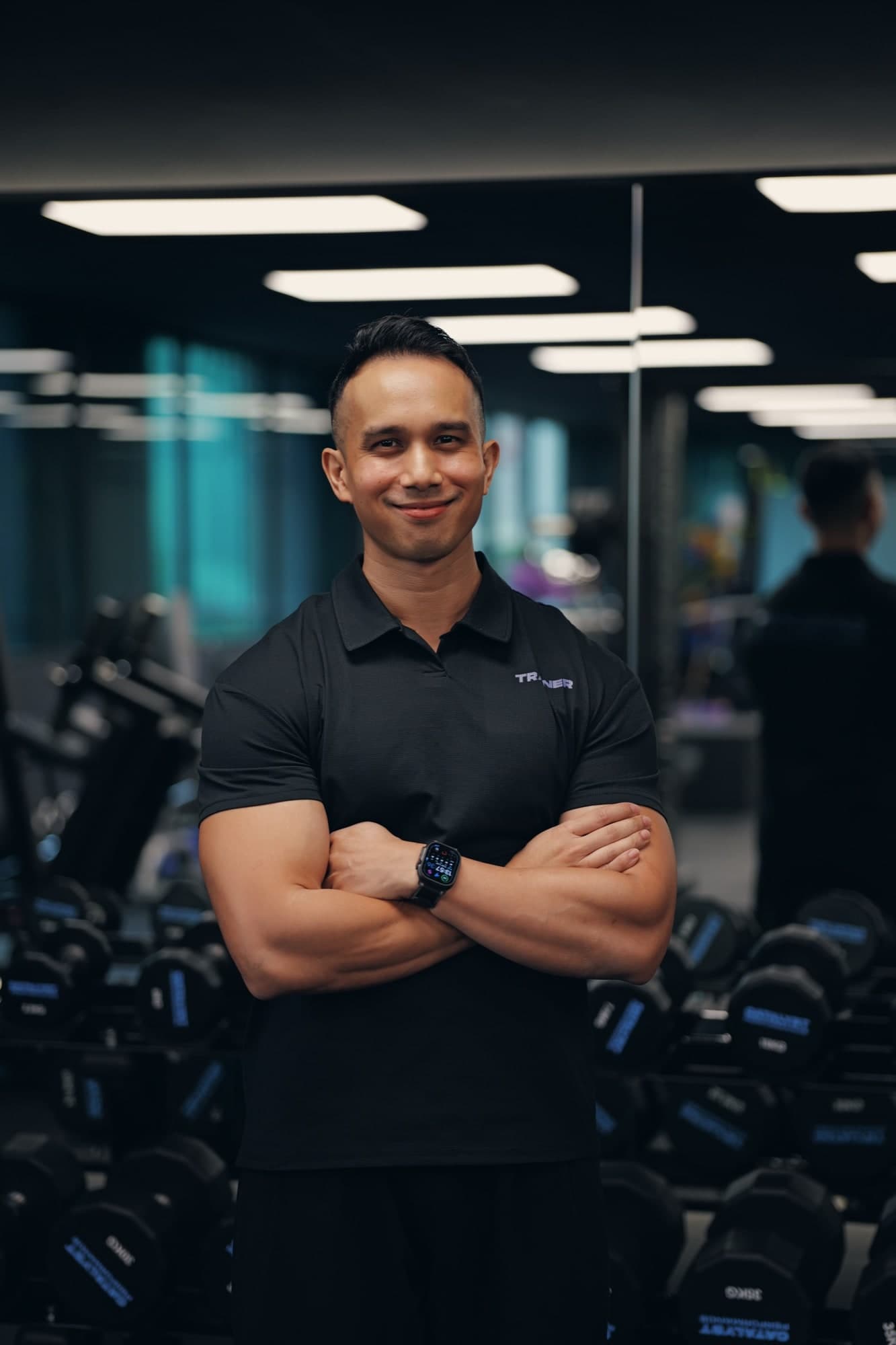
We coach soft-tissue work at Catalyst from a manual-therapy lens. Hafiz Adnan, our soft-tissue practitioner at Manulife Tower, is listed in the NKT International Directory and board-certified by the NCBTMB in deep tissue, IASTM, trigger-point work, and cupping. He uses cupping selectively, as an adjunct inside an NKT or general manual-therapy session, not as the headline modality. The clinical frame decides whether cupping is the right tool for what the assessment found, the same way a session might call for IASTM, trigger-point work, or none of the above. The breakdown below covers what each cupping practice is, what the evidence supports, and how to decide which one matches what you actually need.
Two practices, one set of equipment
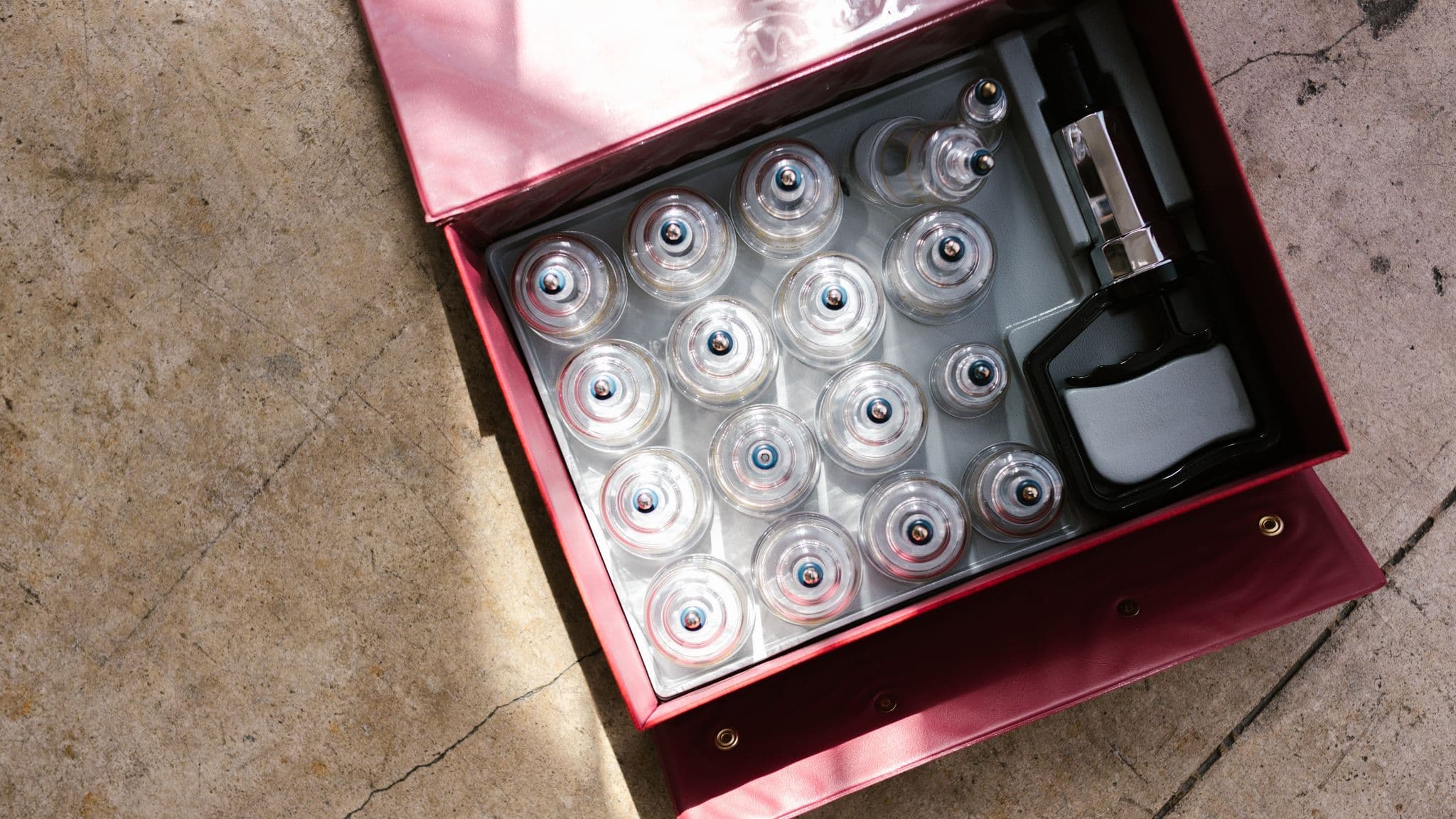
The first thing to understand about cupping in Singapore is that cupping is the name of a tool, not the name of a treatment. The tool is a cup (glass, plastic, or silicone) applied to the skin with negative pressure generated by heat (traditional fire cupping), a hand pump (modern dry cupping), or a silicone vacuum (squeeze-and-release). The skin and superficial soft tissue draw up into the cup, the cup is left in place for a fixed period or moved across the tissue, and the cup is removed.
What changes between practices is what the practitioner is doing with the tool. The TCM physician is applying cupping against a traditional indication, using the cups in patterns derived from meridian theory, leaving them in place for diagnostic reasons (the colour of the resulting mark is interpreted), and combining them with acupuncture, moxibustion, or herbal prescription. The sports manual therapist is applying cupping against a soft-tissue restriction, using the cups to lift and decompress superficial fascia, often moving the cups across the tissue (sliding cupping), and combining them with massage, trigger-point release, IASTM, or NKT. Same equipment. Different practices.
The confusion is downstream of the fact that the marks look identical. Whether the cup was applied by a TCM physician in a Chinatown clinic or a sports manual therapist in a CBD studio, the resulting circles are the same colour and shape, and they linger for the same 3 to 10 days. To the observer (and often to the client), it is not visually obvious which practice produced them.
At Catalyst, the practical consequence is that a client asking for cupping needs a clarifying conversation before the session starts. If the goal is traditional TCM care for a chronic complaint that fits the TCM frame (recurrent fatigue, cold-and-damp pattern, traditional pain syndromes that have a long history of TCM use), the right pathway is a referral to a TCMPB-registered physician, not a session with Hafiz. If the goal is soft-tissue decompression as part of a broader manual-therapy plan for chronic muscular tightness, fascial restriction, or trigger-point pain, the sports cupping work inside Hafiz's session is the right pathway. The two are not in competition; they cover different problems.
The historical record of cupping is far older and more globally distributed than the TCM frame alone suggests. The Ebers Papyrus (Egyptian, ~1550 BCE) describes cupping for musculoskeletal complaints; Hippocrates wrote about cupping in fifth-century BCE Greece; Islamic medicine has a continuous tradition of hijama from the seventh century to the present. The sports-medicine frame is a modern revival of a much older practice, not an invention. The cupping conversation is not a Western-vs-Eastern question; it is a practice-frame question.
The TCM frame: qi, blood stasis, and traditional indications
Within Traditional Chinese Medicine, cupping (called ba guan) is one of several manual modalities that work alongside acupuncture, moxibustion, herbal medicine, and tui na. The framework is unified by the concepts of qi (vital energy), blood (which in TCM has a broader role than the haematological definition), and the meridian system that channels both around the body. Imbalances in flow, stagnation, or external pathogenic factors (cold, damp, wind, heat) are diagnosed and treated within this internal logic.
Cupping in TCM is indicated for a set of patterns that map to the TCM diagnostic frame rather than directly to musculoskeletal anatomy. Cold-and-damp syndromes (joint stiffness aggravated by humidity, common in Singapore's climate); blood-stasis patterns (chronic localised pain present for months); deficiency patterns affecting energy and recovery; respiratory complaints in the context of external pathogenic invasion. The mark colours are interpreted: deeper purple or dark red marks are read as indicating stronger stagnation; lighter pink marks as indicating less. The practitioner uses the marks both diagnostically (information about the patient's state) and therapeutically.
The training pathway for TCM cupping in Singapore is the same as for any TCM scope: a five-year Bachelor of Chinese Medicine degree (or equivalent), supervised clinical placements, and registration with the Traditional Chinese Medicine Practitioners Board under the Ministry of Health. The TCMPB register is public; anyone can verify a TCM physician's registration on the MOH professional registers. A TCM physician applying cupping is doing so within a regulated and tested scope, not as a side service.
The evidence base for TCM cupping is heterogeneous. Cao et al.'s 2012 systematic review in Evidence-Based Complementary and Alternative Medicine pooled 135 studies on cupping for various conditions. The review found a positive effect signal for several conditions (notably herpes zoster pain, cervical spondylosis, and facial paralysis), but flagged high risk of bias across the studies, limited blinding, and inconsistent control conditions as substantial methodological weaknesses. The honest summary is that TCM cupping has a long traditional-use history, modest positive signals in the modern literature, and significant gaps in study quality that prevent strong conclusions either way. This is similar to the evidence position of several other traditional therapies that pre-date the modern RCT method.
The practical implication for Singapore residents: if your condition fits the TCM diagnostic frame, your cultural reference for cupping is TCM, and you want to work within that frame, book a TCMPB-registered physician. The Catalyst soft-tissue work covers a different problem set and a different rationale. We refer clients to TCM physicians as appropriate; the two practices are complements rather than substitutes. Respect for TCM is the right default position in Singapore for a sports-medicine practice. The cultural integration of TCM is centuries deep, the regulatory frame is real, and dismissing TCM out of hand is both medically arrogant and culturally inappropriate.
The sports-medicine frame: myofascial decompression
Sports cupping operates from a different rationale, drawn from soft-tissue and fascia research that has accumulated since the mid-2000s. The framework treats cupping as a tool for myofascial decompression: lifting and separating the skin, superficial fascia, and underlying muscular tissue through sustained negative pressure. The mechanism is the opposite of compressive manual therapy (deep-tissue massage, trigger-point pressure, IASTM scraping, foam rolling), all of which apply force inward. Cupping applies force outward.
What this is hypothesised to do, mechanistically: stretch the superficial fascial layer; increase blood flow and lymphatic drainage in the cup area through capillary expansion; reduce trigger-point activity through local mechanoreceptor stimulation; alter the sliding behaviour of fascial layers that have become adhered or restricted. Tham et al.'s 2006 study in Journal of Biomechanics modelled the negative-pressure suction effect on skin and underlying soft tissue and found that cupping generates measurable tissue stress within the region enclosed by the cup. Bridgett et al.'s 2018 systematic review in the Journal of Alternative and Complementary Medicine examined cupping trials in athletes and identified the gap between mechanistic plausibility and clinical-outcome evidence as the main area still requiring research.
The sports-cupping technique reflects this mechanism. Where the TCM practitioner often places cups in fixed positions for several minutes (stationary cupping), the sports manual therapist more commonly uses sliding cupping (the cup is glided across pre-oiled skin while the suction is maintained) or shorter dwell-time stationary placement over specific trigger points. The intent is to move tissue, not to draw stagnation. The marks are accepted as a side effect rather than read diagnostically. Lighter marks are often preferred, particularly for athletic clients who do not want visible skin discolouration during competition or in client-facing professional roles.
The credentialing pathway for sports cupping is less consolidated than for TCM. The NCBTMB (National Certification Board for Therapeutic Massage and Bodywork) offers a cupping continuing-education certification that recognises practitioners who have completed accredited cupping training; RockTape's RockPods system has its own certification course; the FAKTR (Functional and Kinetic Treatment with Rehabilitation) approach includes cupping in its broader manual-therapy curriculum. A practitioner with one or more of these credentials, layered on top of an existing manual-therapy or sports-massage qualification, has typically had structured exposure to sports cupping technique. There is no central register or regulatory body in Singapore for sports cupping specifically; vetting falls to the client, as it does for the broader sports-massage category. The cluster pillar covers how to vet a sports-massage practitioner in Singapore in detail.
At Catalyst, Hafiz's NCBTMB cupping certification sits alongside his deep-tissue, IASTM, and trigger-point certifications and his NKT certification. The practical effect is that cupping is one tool among several, applied when the assessment indicates it is the right tool, and not applied when something else is more appropriate. This is the same posture we take across the soft-tissue toolkit: match the modality to the assessment, not the assessment to the modality the practitioner prefers.
What the peer-reviewed evidence actually shows
The most thorough systematic review of clinical trials on cupping for pain is Cao et al.'s 2014 paper in the Journal of Traditional Chinese Medical Sciences. The review pooled 16 randomised trials with 921 participants investigating cupping for various pain complaints (chronic neck pain, non-specific low back pain, osteoarthritis, shoulder pain, post-stroke shoulder-hand syndrome, and others). The findings warrant honest characterisation, not over-claiming in either direction.
What the review found in the positive direction: short-term improvements in pain (typically measured by visual analog scale or numerical rating scale) compared with wait-list and heat-therapy controls; few reported adverse events beyond the expected marks and transient soreness. The pooled effect sizes were modest, with most studies reporting clinically meaningful but not dramatic improvements. The conclusion the review drew: cupping shows promise as an adjunct for pain, with the clearest signal in chronic neck and low back pain.
What the review flagged in the cautionary direction: low to moderate study quality across most included trials; small sample sizes; difficulty blinding the practitioner and often the participant given the visible nature of the intervention; heterogeneous control conditions (some used heat therapy, some used wait-list controls); short follow-up periods, with limited longer-term follow-up. The reviewers cautioned that cupping should not be characterised as a stand-alone treatment for pain based on the current evidence; the role of cupping is better framed as an adjunct to broader manual therapy.
The honest read for a Singapore client weighing cupping as an option: the evidence supports cupping as a reasonable adjunct to a broader manual-therapy plan for chronic muscular pain and restriction, with realistic expectations about modest short-term improvements and limited evidence for long-term resolution as a stand-alone treatment. The evidence does not support cupping as a substitute for clinical assessment of structural pain, neurological symptoms, or systemic conditions. The evidence also does not support extravagant claims (detoxification, removing toxins, curing systemic disease) that some marketing materials attach to cupping; the mechanism studies do not back these claims, and the clinical literature has not tested them.
For cupping across a broader scope of indications, Cao et al.'s 2012 review of 135 trials reaches a broadly similar methodological conclusion: positive signals in several condition categories, limited by study quality and heterogeneity. That review and the 2014 pain-focused review in the Journal of Traditional Chinese Medical Sciences are among the most thorough English-language summaries of the cupping evidence base.
At Catalyst, the framing we use with clients is straightforward: cupping is one of several tools in the soft-tissue session, the evidence supports it as a reasonable adjunct for the right indications, the marks are not a measure of effect, and we will use it when the assessment indicates it and not when something else is more appropriate. The gap between mechanistic plausibility and clinical-outcome evidence is the central honest tension in the cupping literature, and it is not unique to cupping. The same tension applies to IASTM, foam rolling, dry needling, and many other manual-therapy modalities: the proposed mechanisms are biologically plausible, the short-term outcomes are reasonably positive, the long-term evidence is thinner. Calling this out is the right intellectual posture for a manual-therapy practice.
Where sports cupping fits in soft-tissue work
Within a sports manual-therapy session, cupping is most usefully applied for three categories of indication, each with a specific rationale.
1. Chronic fascial restriction. Soft-tissue areas that have been chronically tight or restricted for months or years, particularly where the restriction extends across multiple fascial layers rather than being localised to a single muscle. The IT band region (often co-presenting with lateral knee or hip restriction), the thoracolumbar fascia (lower back, often in chronic desk-worker patterns we cover in our spoke on lower back pain from desk work), the cervico-thoracic junction (chronic upper-trap and posterior-neck tightness). Sliding cupping across these regions, after appropriate warming and tissue preparation, can produce a useful decompression effect that pressure-based modalities cannot replicate.
2. Trigger-point work adjunct. Active myofascial trigger points (the palpable nodules within a taut muscle band that refer pain on palpation) respond to several manual-therapy approaches: ischaemic compression, dry needling, IASTM, positional release. Cupping adds another option, applied either stationary over the trigger point for a shorter dwell time (30 to 90 seconds) or as part of a sliding pass that includes the trigger-point region. The mechanism is hypothesised to be a combination of local circulation increase, mechanoreceptor input, and superficial-tissue decompression that allows the deeper trigger to release more easily under subsequent manual pressure.
3. Post-training recovery in athletic populations. Athletes in heavy training blocks (HYROX, marathon, triathlon, combat sports) who present with diffuse muscular tightness across multiple regions, not localised to a specific compensatory pattern. The role of cupping in this context is less about pattern-resolution and more about post-training soft-tissue recovery: increasing local blood flow, reducing perceived muscle tightness, and providing a recovery modality that the athlete can incorporate alongside foam rolling, sleep, hydration, and nutrition. The evidence here is weaker than for chronic-pain indications, but the practical safety profile and the modest positive signal make it a reasonable inclusion for athletic clients who find it useful.
Where cupping is the wrong primary tool (and therefore not the right session if cupping is what the client booked exclusively): compensatory neuromuscular patterns that need NKT for proper resolution (the pattern we cover in the runner's knee spoke), structural injuries requiring physiotherapy assessment, acute inflammation in the first 48 to 72 hours post-injury (where suction is contraindicated), and any condition with the flags we cover in the next section.
The practical session structure at Catalyst when cupping is indicated: Hafiz opens with assessment (movement screen, palpation, NKT muscle testing as appropriate), applies the manual-therapy modalities the assessment points to (which may include NKT release-and-reactivate, deep tissue, IASTM, or cupping in any combination), and closes with a movement retest to confirm the pattern has shifted. A pure cupping session, where cupping is the only modality applied, is rare in his practice. Most sessions blend modalities, and cupping is one option among several that may or may not be the right call for the day.
When cupping is the wrong tool
A subset of conditions warrants ruling cupping out, either because the indication is wrong for cupping or because the contraindication is active. The flags to recognise:
1. Acute inflammation. In the first 48 to 72 hours after an acute injury (sprain, strain, contusion), the inflammatory response is the body's first-line repair mechanism and should not be disrupted. Cupping applies negative pressure to the area, which can extend bruising, prolong inflammation, and delay early-stage healing. Wait for the acute phase to resolve before applying cupping or any other aggressive soft-tissue modality.
2. Suspected structural pathology. Pain accompanied by clicking, locking, giving-way sensations, neurological symptoms (radiating pain, numbness, weakness), or specific mechanical features warrants physiotherapy assessment first, not soft-tissue work. We cover this decision frame in the Spoke 1 piece on choosing between NKT and physiotherapy. Cupping (or any soft-tissue modality) over an unresolved structural problem is at best a delay and at worst counterproductive.
3. Bleeding disorders or anticoagulant medication. Clients on warfarin, clopidogrel, direct oral anticoagulants, or with diagnosed bleeding disorders (haemophilia, severe thrombocytopenia) should not receive cupping. The negative pressure produces capillary expansion that in clients with normal clotting resolves uneventfully; in clients with impaired clotting, the same suction can produce significant subcutaneous bleeding. The screening question is part of the standard intake at any well-run manual-therapy practice.
4. Skin conditions over the proposed cup site. Open wounds, fresh tattoos (within 4 to 6 weeks), eczema or psoriasis in active flare, skin infections, severe sunburn, and similar skin compromise contraindicate cupping over the affected area. The suction can disrupt healing skin and introduce infection risk. The practitioner should examine the proposed site before applying cups and skip the area if any of these are present.
5. Pregnancy. Cupping over the abdomen and lower back is contraindicated during pregnancy due to insufficient evidence on safety and potential effects on uterine blood flow. Cupping in other regions (shoulders, neck, upper back) is sometimes used in pregnancy by experienced practitioners, but the general default in our practice is to defer cupping during pregnancy unless there is a clear and reviewed indication. The post-natal window opens cupping back up as appropriate, with the standard caveats around scar tissue and post-surgical considerations.
6. Specific medical conditions. Severe cardiovascular disease, decompensated heart failure, severe hypertension, active malignancy in or near the proposed treatment area, severe diabetes with peripheral skin changes, and certain autoimmune conditions warrant medical clearance before cupping. The honest framing: cupping is generally a low-risk intervention in healthy adults, but the safety margin shrinks in populations with significant comorbidities, and a brief check with the treating physician is appropriate when the picture is not straightforward.
The Catalyst screening practice on cupping (and on any soft-tissue modality) starts with the intake conversation. New clients who book a session with Hafiz are asked about medication, medical history, surgical history, pregnancy status, and any active symptoms before the session begins. The screening is not bureaucratic; it is the load-bearing piece of safe practice. If any of the flags above are present, the session is adjusted (different modality, smaller scope, referral elsewhere) before the work begins. The most common cupping mistake we see in clients coming from less-rigorous practices is repeated cupping over the same site within too short a window. The marks are capillary expansion, and the capillaries need 3 to 10 days to fully resolve. Re-cupping the same area before resolution stacks the capillary load and serves no therapeutic purpose; the session-to-session interval for cupping over the same anatomical region should typically be at least 7 days.
How Hafiz integrates cupping at Catalyst
Inside a Catalyst manual-therapy session, cupping is one tool among several, applied when the assessment indicates it. The integration pattern reflects the same closed-loop principle that organises the broader soft-tissue practice.
Session opens with assessment. Hafiz reads the client's last training session log, the wearable recovery data (Apple Watch, Garmin, Whoop, or Oura), the last assessment notes, and any notes from the trainer. He then conducts a movement screen and palpation to confirm where the soft-tissue work needs to go. This step is the same regardless of which modalities he ultimately uses.
Modality selection follows the assessment. If the picture is a chronic compensatory pattern (an inhibited muscle driving an over-firing muscle), the session typically opens with NKT release-and-reactivate, which may or may not be followed by cupping over the worked regions. If the picture is diffuse muscular tightness across multiple training-loaded regions, the session may use cupping more prominently alongside deep-tissue work. If the picture is fascial restriction in a specific region (IT band, thoracolumbar, cervico-thoracic), cupping is often a meaningful contributor to the work. If the picture is a trigger-point pattern with palpable nodules, the session combines pressure-based work (IASTM, ischaemic compression) with cupping over and around the trigger.
Cupping technique varies by indication. Sliding cupping (pre-oiled skin, cups glided across the tissue while suction is maintained) is the default for fascial-restriction work. Stationary cupping with shorter dwell times (30 seconds to 3 minutes) is the default for trigger-point work. Longer stationary cupping with diagnostic intent (TCM-style) is not part of Hafiz's practice, because that is not the frame he was trained in.
Session closes with a retest. The same movement test that opened the session is repeated, and the pattern shift (if any) is documented. The retest is not a marketing exercise; it is the feedback loop that lets the next session start from a better-informed baseline. If the retest shows the pattern has shifted, the work is consolidated through the strength programming the founder-coaches deliver. If the retest shows the pattern has not shifted, the next session will use a different modality combination, because cupping (or any other modality) does not deserve a second go without first considering whether the assessment frame was right.
Where cupping fits across a treatment block. For most chronic-pattern cases, cupping appears in roughly half of the sessions, not all of them. The pattern usually involves NKT work in early sessions to address the underlying compensation, IASTM in middle sessions to work the fascial layers more aggressively, and cupping selectively when the picture calls for decompression of a specific region. Pure cupping sessions, where cupping is the only modality, are rare and usually reserved for clients with specific cupping-favourable indications (chronic thoracolumbar restriction in a desk-worker context, for example) who have already had the broader assessment done.
The closed-loop integration with the training side is the structural reason this works. Hafiz's session notes feed back into the next training block; the next training block informs the next soft-tissue session. The wearable recovery data informs both. Over a 12 to 16-week training cycle, the integration produces measurably better soft-tissue resolution and lower in-cycle injury rates than the alternative pattern of independent sports-massage appointments with no shared context. The credentialing question that matters most for cupping is not which specific certification the practitioner holds (NCBTMB, RockTape, FAKTR) but whether the certification sits inside a broader manual-therapy qualification. A practitioner whose only soft-tissue training is a weekend cupping course will tend to apply cupping to every client because it is the only tool they have. A practitioner with broader manual-therapy training will apply cupping when it fits and use a different tool otherwise.
Marks, bruising, and contraindications
The marks are the most visible feature of cupping and the most misunderstood. The honest characterisation: cupping marks are not bruises in the conventional sense, but they are also not toxins being drawn out, a claim that appears in some marketing materials and has no mechanistic support.
What the marks actually are. The negative pressure inside the cup pulls capillaries (the smallest blood vessels in the superficial layers of the skin) into mild expansion. Some of the capillaries leak red blood cells into the surrounding tissue. The red blood cells break down over the next 3 to 10 days, producing the colour progression that anyone who has had cupping recognises: deep red or purple immediately after, fading to brown, then yellow, then resolving. This is the same mechanism as a bruise, but the cause is suction rather than impact, and the depth is much shallower than a typical contusion bruise.
The interpretation of mark colour is one of the points where TCM cupping and sports cupping differ. In the TCM frame, the colour is interpreted as a diagnostic indicator: darker marks indicate stronger blood stasis or qi stagnation. In the sports-cupping frame, the colour is not used diagnostically; it indicates how much capillary leakage occurred, which depends on suction intensity, dwell time, individual capillary fragility, and how much circulation was present in the area at the time of cupping. Sports manual therapists generally aim for lighter marks (less suction, shorter dwell, sliding rather than stationary), particularly for athletic clients who do not want visible discolouration during competition or in their professional context.
How long the marks last. Typical resolution is 3 to 10 days. Lighter marks may resolve in 2 to 3 days; heavier marks (particularly from prolonged stationary cupping or in clients with thinner skin or higher capillary fragility) may take up to 2 weeks. The marks are not painful at rest, although the cupped area can feel mildly tender to firm pressure for 24 to 48 hours. Pain at the mark site beyond mild tenderness, or skin compromise (blistering, breakdown, persistent discoloration beyond 2 weeks) is a sign of poor technique or excessive suction and should be discussed with the practitioner.
What the marks are not. They are not bruises in the impact-injury sense (no tissue damage beyond capillary expansion); they are not detoxification (toxins are not drawn through skin via suction, and the body's detoxification systems are the liver and kidneys, not the skin); they are not evidence of treatment effect (a session can produce light marks and be highly effective, or produce heavy marks and have no clinical effect). The marks are a side effect of the mechanism, not a measure of the mechanism's success.
Practical considerations for clients. Wear loose-fitting clothing to the session, as tight clothing immediately after cupping can be uncomfortable. Avoid hot showers, saunas, and intense sun exposure on the cupped area for 24 to 48 hours (the skin is mildly compromised and can react). Hydrate well in the 24 hours after the session, both because the manual-therapy work itself benefits from hydration and because the post-cupping local circulation changes settle better with adequate fluid status. Plan around visible marks if you have a beach holiday, an important meeting where shoulder skin will be visible, or an event the same weekend; ask the practitioner to use sliding rather than stationary cupping and lighter suction if the marks need to be minimised.
How to decide if cupping is right for you
The decision is not cupping yes or cupping no in isolation. It is what is the underlying problem, and is cupping the right tool for it. Three diagnostics organise the answer.
First, what kind of practice frame matches your situation. If your condition fits the TCM diagnostic frame (cold-and-damp pattern, traditional chronic-pain syndromes, fatigue or recovery patterns within a TCM logic, longstanding cultural alignment with TCM care), the right pathway is a TCMPB-registered TCM physician. If your condition fits the soft-tissue manual-therapy frame (chronic muscular tightness, fascial restriction, trigger-point pain, compensatory patterns, athletic recovery), the right pathway is a sports-cupping-capable manual therapist working within a broader manual-therapy practice. The two are not in competition; they cover different problem types, and the question is which one matches yours.
Second, whether your problem warrants soft-tissue work at all, or whether it warrants something upstream. Pain with mechanical features (clicking, locking, giving way), neurological symptoms (radiating pain, numbness, weakness), specific incident-onset, or persistent severe pain warrants physiotherapy assessment first, before any cupping or soft-tissue work. The decision frame for choosing between NKT and physiotherapy covers the full triage. Compensatory patterns (the inhibited-muscle-driving-over-firing-muscle picture) typically warrant NKT first, with cupping as a possible adjunct rather than the lead modality. Chronic fascial restriction, trigger-point pain, and athletic recovery are the categories where cupping is most directly useful as a primary or co-primary modality.
Third, whether the practitioner's broader training matches the work. The right cupping practitioner for a Singapore client looking for sports cupping is one whose practice integrates cupping into a broader manual-therapy assessment-and-treatment workflow, not one whose only modality is cupping. The four signals from the cluster pillar (verifiable credentials on a public register, a diagnostic frame rather than just a service menu, test-treat-retest closure, communication with your trainer or physiotherapist) apply here. Hafiz at Catalyst meets all four; the broader category of sports-cupping practitioners in Singapore varies.
For most working adults in Singapore presenting with chronic muscular tightness, fascial restriction, or compensatory patterns, the highest-leverage pathway is the integrated manual-therapy session inside our soft-tissue practice, with cupping used selectively as one of several tools the practitioner draws on. For diffuse athletic recovery during heavy training blocks, the Reset recovery protocols include cupping where appropriate. For a baseline measurement of where you stand on the four pillars of healthspan before deciding what to book, the Catalyst Healthspan Assessment includes the Y-Balance Test (a stability measure that flags the compensatory-pattern issues that soft-tissue work addresses). The free 3-minute Healthspan Audit is the lighter starting point.
Cupping marks are not bruises and they are not toxins being drawn out. They are capillary expansion from negative pressure. The treatment effect, if any, is from what the practitioner is doing with the suction, not from the marks themselves.
Frequently asked questions
Q. Are cupping marks bruises, and how long do they last?
The marks are not bruises in the impact-injury sense. They are capillary expansion produced by the suction inside the cup, which leaks small amounts of red blood cells into the surrounding tissue. The colour progression (red or purple immediately after, fading through brown and yellow to clear) takes 3 to 10 days for most people. Lighter marks may resolve in 2 to 3 days; heavier marks (from prolonged stationary cupping or in clients with thinner skin or more fragile capillaries) may take up to 2 weeks. The marks are not painful at rest, although the cupped area can feel mildly tender to firm pressure for the first 24 to 48 hours. Persistent skin compromise (blistering, breakdown, discolouration lasting beyond 2 weeks) is a sign of poor technique or excessive suction, not a normal cupping outcome.
Q. Is cupping evidence-based?
Modestly. The strongest clinical-trial summary is Cao et al.'s 2014 systematic review in the Journal of Traditional Chinese Medical Sciences, which pooled 16 randomised trials and found short-term improvements in pain for cupping on various pain complaints. The review also flagged low to moderate study quality, small sample sizes, and difficulty blinding as substantial methodological limits. Honest framing: cupping has a real but modest evidence base for short-term musculoskeletal pain relief as an adjunct to broader manual therapy. The evidence does not support cupping as a stand-alone treatment for chronic conditions, structural injuries, or systemic disease. Cao et al.'s 2012 review reached a broadly similar methodological conclusion across a wider scope of indications.
Q. Can I get cupping in the same session as NKT or massage at Catalyst?
Yes, and that is the most common pattern at Catalyst. A typical 60-minute session with Hafiz opens with assessment, applies whichever modalities the assessment indicates (which may include NKT release-and-reactivate, deep tissue, IASTM, cupping, or any combination), and closes with a movement retest. Cupping is rarely the only modality in a session; it is one tool that gets used when the assessment points to it. Pure cupping-only sessions are uncommon and usually reserved for clients with specific cupping-favourable indications (chronic thoracolumbar restriction, for example) where the broader assessment has already been done.
Q. TCM cupping or sports cupping: which one should I choose?
The choice depends on what kind of practice frame matches your situation. If your condition fits the TCM diagnostic frame (cold-and-damp pattern, traditional pain syndromes, fatigue patterns within TCM logic, longstanding cultural alignment with TCM care), book a TCMPB-registered TCM physician. If your condition fits the soft-tissue manual-therapy frame (chronic muscular tightness, fascial restriction, trigger-point pain, compensatory patterns, athletic recovery), book a sports-cupping-capable manual therapist working within broader manual-therapy practice. The two are not interchangeable; they cover different problem types and operate from different rationales. Both are legitimate within their frames. The mistake to avoid is booking one expecting the other; the practitioner cannot deliver outside their training and the experience will not match what you were looking for.
Q. Is sports cupping regulated in Singapore?
TCM cupping is regulated through the Traditional Chinese Medicine Practitioners Board (TCMPB) under the Ministry of Health; TCM physicians complete a five-year Bachelor of Chinese Medicine degree and register with TCMPB before practising. Sports cupping is not specifically regulated in Singapore; it falls under the broader general practice of massage and bodywork, which has no single regulatory body. Vetting falls to the client. Look for practitioners with verifiable credentialing on a public register: the NCBTMB (National Certification Board for Therapeutic Massage and Bodywork) cupping certification, RockTape's RockPods certification, or similar accredited programmes; ideally layered on top of a broader manual-therapy qualification (NKT, IASTM, deep tissue). A practitioner whose only credential is a weekend cupping course is a yellow flag, not necessarily a red one, but the burden of proof shifts to the practitioner. The cluster pillar covers the four credentialing signals to look for in detail.
Conclusion
Cupping in Singapore is two practices wearing the same name. The TCM practice is a regulated, traditional modality with a long history and a TCMPB-registered practitioner base; the sports-medicine practice is a modern adjunct inside the manual-therapy toolkit with a modest peer-reviewed evidence base and a different rationale. Both are legitimate within their frames. Neither is a stand-alone solution for structural injuries, neurological problems, or systemic conditions. The honest read on sports cupping specifically is that it is a useful tool for fascial restriction, trigger-point work, and athletic recovery, applied selectively inside a broader assessment-and-treatment workflow, with marks that look dramatic but are not a measure of treatment effect. Match the tool to the problem, and pick a practitioner whose practice frame matches the work you actually need.
Where to start
If the picture is chronic muscular tightness, fascial restriction, or a compensatory pattern that has not resolved with rest or earlier treatment, the soft-tissue work at Catalyst is the right next step. Sports Massage and Neurokinetic Therapy sessions with Hafiz Adnan integrate cupping as one tool inside a broader manual-therapy practice, with the assessment frame deciding which modalities the session uses. The Catalyst Healthspan Assessment is the entry point if you want a baseline measurement first; the free Healthspan Audit is the lighter starting point. For the broader frame on what manual therapy adds to recovery, the cluster pillar is Sports Massage Singapore: What NKT Adds That Foam Rolling Doesn't.
Related reads in this cluster
- Sports Massage Singapore: What NKT Adds That Foam Rolling Doesn't. The pillar overview of the soft-tissue toolkit and how the clinical-frame modalities (NKT, IASTM, cupping) differ from generic deep-tissue work.
- NKT vs Physiotherapy in Singapore: How to Choose Where to Start. The decision frame for choosing where to start when you are in pain.
- Runner's Knee in Singapore: Why Localised Treatment Keeps Failing. The gluteus medius compensatory pattern that drives patellofemoral pain in recreational runners.
- Lower Back Pain from Desk Work: The Pattern Your Massage Isn't Treating. The desk-worker glute-inhibition pattern and the Singapore-specific aggravators.
- IASTM Explained: The Graston-Style Tools You've Seen in Singapore Clinics. Instrument-assisted soft-tissue mobilisation, how it works, and where it actually beats hands.
- How to Vet a Sports Massage Therapist in Singapore: Beyond the Service Menu. The decision frame for choosing a sports-massage practitioner: credentials, vetting questions, red flags.
- The Closed-Loop Recovery Method: Integrating Training Data with Manual Therapy. Why Catalyst integrates training-load and wearable data with manual therapy sessions, instead of running them as independent interventions.
- Foam Rolling: What 12 Years of Peer-Reviewed Evidence Actually Says. The honest read on self-myofascial release: what foam rolling does and doesn't deliver.
Citations
- Lowe, D. T. (2017). Cupping therapy: An analysis of the effects of suction on skin and the possible influence on human health. Complementary Therapies in Clinical Practice, 29, 162 to 168.
- Cao, H., Li, X., and Liu, J. (2012). An updated review of the efficacy of cupping therapy. PLoS ONE, 7(2), e31793.
- Cao, H., Li, X., Yan, X., Wang, N. S., Bensoussan, A., and Liu, J. (2014). Cupping therapy for acute and chronic pain management: a systematic review of randomized clinical trials. Journal of Traditional Chinese Medical Sciences, 1(1), 49 to 61.
- Tham, L. M., Lee, H. P., and Lu, C. (2006). Cupping: From a biomechanical perspective. Journal of Biomechanics, 39(12), 2183 to 2193.
- Bridgett, R., Klose, P., Duffield, R., Mydock, S., and Lauche, R. (2018). Effects of cupping therapy in amateur and professional athletes: Systematic review of randomized controlled trials. Journal of Alternative and Complementary Medicine, 24(3), 208 to 219.
- Aboushanab, T. S., and AlSanad, S. (2018). Cupping therapy: An overview from a modern medicine perspective. Journal of Acupuncture and Meridian Studies, 11(3), 83 to 87.