The Edit · Founder Insights
Sports Massage Singapore: What NKT Adds That Foam Rolling Doesn't
Sports massage in Singapore is crowded, lightly regulated, and mostly treats the site of pain. NeuroKinetic Therapy treats the compensatory pattern instead. Here is what NKT adds, when foam rolling still fits, and how to vet a practitioner in a lightly-regulated market.
Sports massage in Singapore is one of the most crowded service categories in the wellness market. Most of what sits under that label is generic deep-tissue work that treats where the pain is felt. NeuroKinetic Therapy is structurally different. It is a clinical manual therapy framework that uses muscle testing to find the inhibited muscle causing the over-firing muscle to compensate, and treats the cause rather than the site. For chronic and recurring pain, NKT regularly resolves issues that the cheaper alternatives could not. Here is what NKT adds, where generic massage and foam rolling still hold up, how to vet a practitioner in a lightly-regulated market, and why Catalyst is the rare Singapore studio that integrates the work into a closed-loop with your training data.
TL;DR
- Sports massage in Singapore is a wide and lightly-regulated category. The label covers everything from spa-style relaxation work to clinical manual therapy, and the per-hour rate does not always reflect the rigour of the practice.
- NeuroKinetic Therapy (NKT) is a clinical manual therapy framework that uses muscle testing to identify and correct compensatory patterns. For chronic and recurring pain, NKT regularly resolves issues that generic deep-tissue work could not.
- Generic sports massage treats where the pain is felt. NKT traces the pain to the inhibited muscle that is causing the over-firing muscle to compensate. The clinical lens is the difference.
- Foam rolling and self-myofascial release have a respectable peer-reviewed evidence base for short-term flexibility gains and reduced muscle soreness. They do not resolve compensatory patterns and are not a substitute for clinical manual therapy.
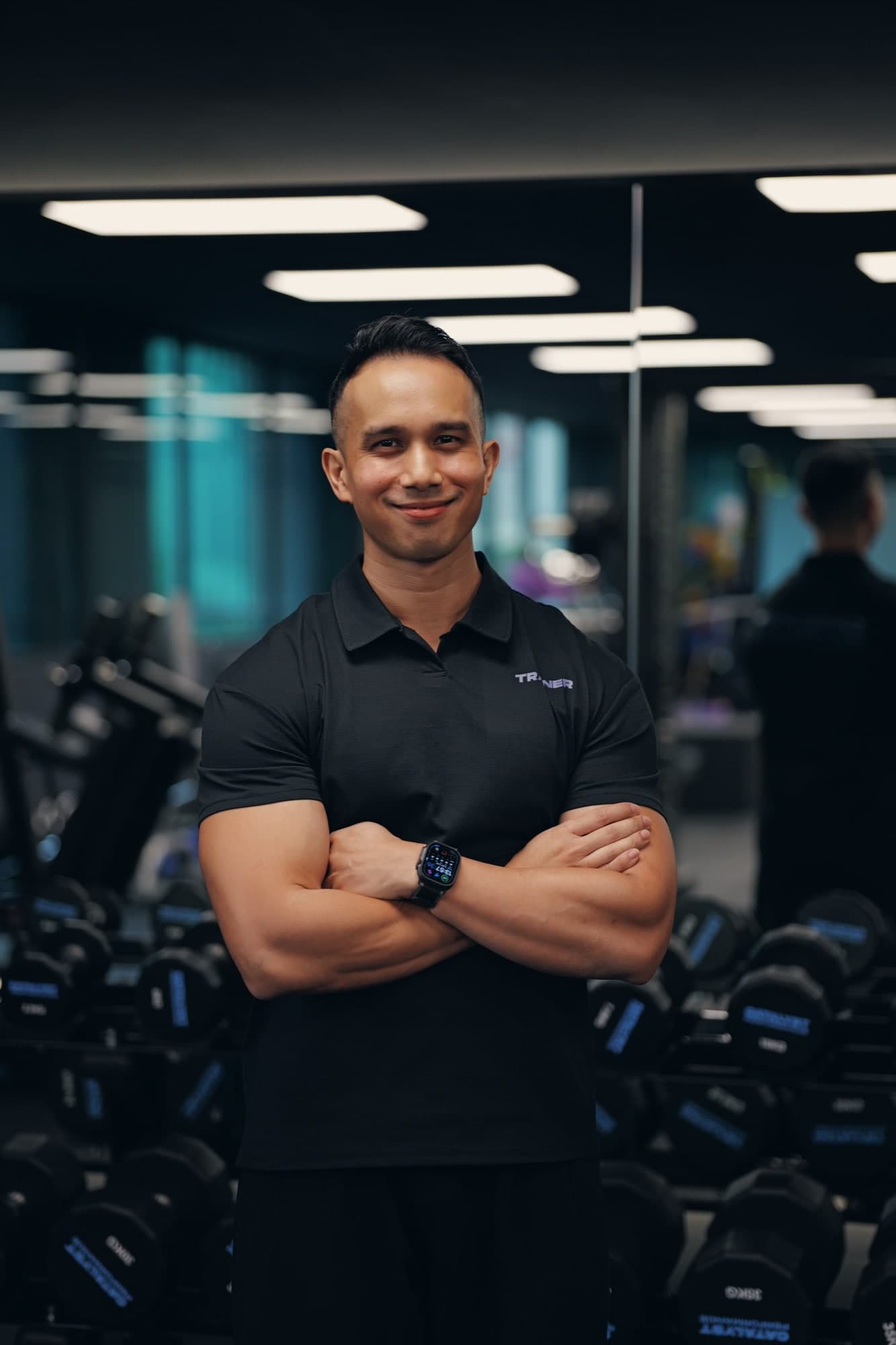
- At Catalyst the soft-tissue practitioner (Hafiz Adnan, NKT certified and NCBTMB board-certified in deep tissue, IASTM, trigger-point work, and cupping) reads your training session and wearable recovery data before he treats you. The closed loop between training and soft-tissue work is rare in the Singapore market and is the reason results stick instead of repeating.
Why sports massage in Singapore is a noisy category
The Singapore wellness market has hundreds of providers offering services labelled 'sports massage'. The category spans high-end spa providers offering deep-pressure relaxation work, sports therapy clinics with physiotherapy backup, individual practitioners working out of co-working wellness venues, and clinical manual therapists with extensive certification. Practitioners at every per-hour rate band claim similar service descriptions on their booking pages.
What complicates the picture: there is no single regulatory body for sports massage in Singapore. The Allied Health Professions Council covers physiotherapy and occupational therapy, both of which are separate and licensed practices. Sports massage itself is taught in private training programmes of varying length and rigour. A practitioner might have a 60-hour weekend certificate or a multi-year clinical apprenticeship, and the difference is rarely advertised.
The reader's problem is how to differentiate. The right answer is not always 'go to the most expensive clinic'. Generic deep-tissue work, properly delivered, is the right tool for a muscle that is sore from a hard training session yesterday. It is the wrong tool for a knee that has hurt every time you run for the past two months. The two clients need different practices, and most marketing copy treats both the same.
This is where a clinical manual therapy framework like NKT changes the picture. Not because NKT is a magic bullet, but because it organises the practitioner's decision-making in a way that generic sports massage typically does not, and because it operates on a treatment-to-graduation trajectory rather than indefinite maintenance.
What NeuroKinetic Therapy actually does
NeuroKinetic Therapy was developed by manual therapist David Weinstock in the 2010s, building on Applied Kinesiology and Manual Muscle Testing. The framework starts from a specific clinical observation: chronic pain rarely originates from the muscle that hurts. The painful muscle is more often compensating for a different muscle that is not firing properly.
The classic example is a runner with chronic knee pain. The traditional sports massage approach treats the quadriceps and IT band where the pain is felt. NKT's working hypothesis is that the quadriceps are over-firing because the gluteus medius (a hip stabiliser) is inhibited and not contributing its share of the stabilisation work. Treat the quadriceps in isolation and the pain returns within days, because the underlying compensation pattern has not changed. Identify and reactivate the inhibited gluteus medius, and the quadriceps can stop carrying the load they were not designed to carry. We cover this case in depth in Runner's Knee in Singapore: Why Localised Treatment Keeps Failing.
A second example, equally common in the Singapore CBD population: chronic lower back pain in a desk worker. The traditional sports massage approach treats the lumbar erectors where the pain is felt. NKT's working hypothesis is that the erectors are over-firing because the gluteus maximus is inhibited (a near-universal pattern in chair-bound adults), and the hip flexors are facilitated from hours of sitting. The treatment plan: release the facilitated hip flexors, release the erector compensation, then reactivate the inhibited glutes through targeted drills. Without the glute reactivation, the pattern returns the moment the client sits at their desk again, no matter how thoroughly the back was treated. The full breakdown of this pattern, including the Singapore-specific aggravators, is in Lower Back Pain from Desk Work: The Pattern Your Massage Isn't Treating.
The framework uses manual muscle testing to identify which muscles are facilitated (over-firing) and which are inhibited. The practitioner then applies targeted release work to the facilitated muscle, immediately followed by reactivation drills for the inhibited one. The session ends with a movement test to confirm the pattern has shifted before the client walks out of the room.
Honest framing on the evidence: NKT is a clinical framework with a strong following among manual therapists, chiropractors, and some physiotherapists, but it does not have the peer-reviewed randomised controlled trial evidence base that established medical interventions do. What NKT has is a coherent way of structuring soft-tissue decisions that takes compensatory patterns seriously, where generic sports massage typically does not. For some clients the framework produces results that localised work could not. For other clients with localised acute soreness from a recent training stimulus, generic deep-tissue work is the right tool and NKT is overkill.
Why NKT outperforms generic massage for chronic patterns
Four specific contrasts explain why a clinical manual therapy framework like NKT produces durable outcomes for chronic and recurring issues, where generic sports massage often does not.
1. Diagnostic frame. Generic sports massage treats the muscle the client reports as painful. NKT tests which muscles are facilitated and which are inhibited before any treatment begins. The test is the diagnosis. Without it, the practitioner is working from the client's pain map, which is not the same as the muscular compensation map. The two maps overlap roughly half the time in our intake population.
2. Treatment target. Generic sports massage releases the painful muscle. NKT releases the facilitated muscle (which may or may not be the painful one) and then reactivates the inhibited muscle that was the root cause. The painful muscle stops being painful as a downstream consequence of fixing the cause, not as a direct treatment effect.
3. Session closure. Generic sports massage ends when the client feels looser. NKT ends with a movement test that confirms the compensation pattern has shifted. The client walks out with objective evidence that the pattern has changed, not just a subjective sense of relief. The retest is the difference between knowing the treatment worked and hoping it did.
4. Treatment trajectory. Generic sports massage operates on an indefinite maintenance schedule because the underlying pattern was never addressed. The client returns every two to four weeks for the rest of their life. NKT operates on a treatment-to-graduation trajectory: three to six sessions to resolve a specific pattern, then a maintenance cadence that may be every six to twelve weeks, or as needed when a new pattern emerges. The clinical framework is meant to graduate the client, not retain them. A practice that bills you indefinitely for the same problem is by definition not resolving it.
None of this means generic sports massage is worthless. It means generic sports massage is the wrong tool for a problem that needs a clinical frame. For acute soreness, general fatigue, or pre-event recovery, generic massage remains the right choice. For pain that has not resolved with rest or earlier treatment, the clinical frame is the load-bearing difference.
What foam rolling does and doesn't do
Foam rolling and self-myofascial release have a respectable peer-reviewed evidence base. Beardsley and Škarabot's 2015 systematic review in the Journal of Bodywork and Movement Therapies pooled the available studies on self-myofascial release with foam rollers and roller massagers. The findings: short-term improvements in flexibility and range of motion, modest reductions in perceived delayed onset muscle soreness, and no significant negative effects on subsequent athletic performance.
Those are real benefits. For an athlete or any training adult, a foam roller is a low-cost, low-risk, evidence-supported tool for managing post-training soreness and maintaining mobility. It belongs in any honest training kit, and we recommend one to most members.
What foam rolling does NOT do, based on the same body of evidence: resolve chronic compensatory patterns, durably alter muscle inhibition or facilitation, or substitute for clinical manual therapy when the underlying problem is a coordination issue between muscle groups. The mechanism of foam rolling is a mix of mechanical pressure on fascia and a neural relaxation response. Both are real. Neither is a treatment for compensatory weakness.
Foam rolling is what you do at home. Sports massage is what you book for general recovery. NKT is what you book when something has been hurting for weeks and the easier tools have not changed it. Different problems, different tools. None replaces the others.
Where each tool fits
For acute post-training soreness in a specific muscle group, a foam roller and a lacrosse ball for trigger-point work in the ten minutes after the session is the right tool. Inexpensive, evidence-supported, and the time commitment is small.
For general fatigue and tightness across multiple muscle groups, a competent generic deep-tissue sports massage from a recovery-oriented practitioner is the right tool. Properly applied pressure across the whole body, no specific diagnostic frame needed, an hour to ninety minutes of work.
For recurring localised pain that returns within days of localised treatment, NKT or another clinical manual therapy framework that takes compensatory patterns seriously is the right tool. Structured assessment, targeted release of facilitated muscles, reactivation of inhibited ones, movement test to confirm the change.
For pain that comes with a click, a catch, or a specific movement direction, refer to a physiotherapist with sports-medicine experience first. NKT and sports massage are not substitutes for clinical assessment when the pain has mechanical or structural features. The right sequence is structural clearance, then compensatory pattern work, then ongoing maintenance.
How to vet a sports massage practitioner in Singapore
Singapore has no single regulatory body for sports massage, so the work of vetting falls to the client. Four signals separate clinical practice from spa work, and a practitioner who meets all four is operating at a different standard than the median Singapore sports massage practice.
1. Verifiable credentials on a public register. Look for practitioners listed on professional registers that anyone can verify. Examples: the NKT International Directory for NeuroKinetic Therapy practitioners; the NCBTMB (National Certification Board for Therapeutic Massage and Bodywork) for US-trained massage therapists; the Allied Health Professions Council register for licensed Singapore physiotherapists. A practitioner whose certifications are not externally verifiable is a yellow flag, not necessarily a red one, but the burden of proof shifts to the practitioner.
2. A diagnostic frame, not just a service menu. Ask how the practitioner decides what to work on before they start. The answer should describe a specific assessment process: muscle testing, movement screen, palpation of trigger points, range-of-motion assessment. 'Where does it hurt?' is the right opening question, but it should not be the full diagnostic. If the practitioner cannot describe their assessment process, the treatment will be unstructured.
3. Test-treat-retest, not just treat. A good practitioner closes the session with the same test they opened with, so the client and the practitioner can both see what changed. Without a retest, the only feedback the client gets is subjective ('that felt good'), and the practitioner has no objective basis to update the plan for the next session.
4. Communication with your trainer or physiotherapist. If you train with a coach or are under physiotherapy care, the soft-tissue practitioner should be willing to share their session notes and assessment findings with the other professionals in your care. A practitioner who treats the session as a closed conversation between themselves and the client is missing the integration that produces durable results across the full picture.
These four signals are not exhaustive. The good practitioners can usually point to two or three of them out of the gate; the great ones lead with all four.
How Catalyst integrates soft-tissue work with training data
The Catalyst differentiator on the recovery side is integration. The soft-tissue practitioner at Catalyst is Hafiz Adnan, listed in the NKT International Directory and board-certified by the National Certification Board for Therapeutic Massage and Bodywork (NCBTMB) in deep tissue massage, trigger-point work, Instrument-Assisted Soft Tissue Mobilisation (IASTM), and cupping. The double credentialing matters because it means Hafiz is qualified in both the generic-massage and the clinical-manual-therapy lenses. He can tell you, based on his assessment, which one your problem actually needs, rather than defaulting to whichever framework his training limits him to.
Hafiz reads your last training session, your wearable recovery data from Apple Watch, Garmin, Whoop, or Oura, and your most recent assessment results before he treats you. That coordination is rare in the broader Singapore market because most soft-tissue practitioners operate independently of the trainer, on hourly bookings, with no shared data system between the practitioner and whoever is programming the client's training.
Practical example. A client trains heavy posterior chain on Tuesday: deadlifts, hip thrusts, single-leg work. Their Whoop recovery score on Wednesday morning is yellow, signalling incomplete recovery. They have a soft-tissue session booked for Wednesday afternoon. Hafiz sees the Tuesday training log (loads, volumes, target muscles), the Wednesday recovery score, and the autonomic load profile before the client walks in. The session prioritises the worked muscle groups, accounts for the autonomic state, and ends with notes that go back into the Wednesday evening conversation with the trainer about programming the rest of the week.
The same client visiting an independent sports massage practitioner walks in cold. The practitioner asks 'where does it hurt' and works locally based on what the client reports. The session may be excellent in isolation. It is not feeding back into anything.
Both produce a treatment. Only one produces a closed loop where the soft-tissue work informs the next training block and the training informs the next soft-tissue session. Over a 16-week training cycle, that closed loop produces measurably better recovery quality and lower in-cycle injury rates because the practitioner and the trainer are reading the same data and updating the same plan. The work is no longer a separate service. It is part of the programming.
What this looks like at the systems level. Most Singapore sports massage practitioners run independent businesses on hourly bookings. The client is the only entity carrying information between the trainer and the practitioner, which means the practitioner is reconstructing the picture from the client's verbal report each time. Catalyst's model is structurally different. The practitioner, the trainer, the assessment data, the wearable data, and the training programme all sit in one studio under one decision frame. Every session feeds the next plan, and every training block informs the next soft-tissue session. That structure is not just convenient. It is the reason the work produces durable outcomes instead of indefinite maintenance.
Who should book NKT vs general sports massage
Book NKT when you have a recurring pain that has not resolved with rest or generic massage, when you have a movement pattern that feels off (one knee tracks differently, one shoulder shrugs more than the other), when you have been to physiotherapy and the structural assessment came back clean but something still feels wrong, when you want to address a compensatory pattern that has been with you for months, or when you are training for a specific event and need every percentage point of movement efficiency.
Book general deep-tissue sports massage when you trained hard yesterday and your whole body feels tight, when you are travelling and want a recovery session before flying or after landing, when you are not dealing with a specific localised pain pattern, or when you want quality general bodywork without a clinical diagnostic frame.
Both are valid. The mistake is using sports massage as a substitute for clinical manual therapy when the underlying problem requires a clinical lens, or paying for NKT when generic deep-tissue work would have done the job. Match the tool to the problem.
Where to start
If you want to see where you stand on the four pillars of healthspan before booking anything, the free Healthspan Audit is a 12-question self-assessment that lands a banded score across body composition, cardiorespiratory fitness, stability, and strength in your inbox in three minutes. The audit's stability score is the one most directly informed by compensatory-pattern issues; if it comes back at the lower bands, NKT or clinical manual therapy is likely the right next step. The in-studio Catalyst Healthspan Assessment measures stability directly via the Y-Balance Test and feeds into the soft-tissue conversation if treatment is indicated. To book the soft-tissue work directly, the Sports Massage and Neurokinetic Therapy service page is the place to start; for general recovery work that does not need a clinical frame, the Reset recovery protocols are the lighter option.
Related reads in this cluster
- NKT vs Physiotherapy in Singapore: How to Choose Where to Start. The decision frame for choosing where to start when you are in pain.
- Runner's Knee in Singapore: Why Localised Treatment Keeps Failing. The gluteus medius compensatory pattern that drives patellofemoral pain in recreational runners.
- Lower Back Pain from Desk Work: The Pattern Your Massage Isn't Treating. The desk-worker glute-inhibition pattern and the Singapore-specific aggravators.
- Cupping Therapy Singapore: What It Does and What It Doesn't. The sports-cupping vs TCM-cupping distinction, and what the modern myofascial-decompression evidence supports.
- IASTM Explained: The Graston-Style Tools You've Seen in Singapore Clinics. Instrument-assisted soft-tissue mobilisation, how it works, and where it actually beats hands.
- How to Vet a Sports Massage Therapist in Singapore: Beyond the Service Menu. The decision frame for choosing a sports-massage practitioner: credentials, vetting questions, red flags.
- The Closed-Loop Recovery Method: Integrating Training Data with Manual Therapy. Why Catalyst integrates training-load and wearable data with manual therapy sessions, instead of running them as independent interventions.
- Foam Rolling: What 12 Years of Peer-Reviewed Evidence Actually Says. The honest read on self-myofascial release: what foam rolling does and doesn't deliver.
Frequently asked questions
Q. Is NKT covered by Singapore health insurance?
Generally no, unless the practitioner is also a licensed physiotherapist or chiropractor and the session is billed under physiotherapy or chiropractic codes. NKT itself is not a regulated allied health practice in Singapore, so a session billed purely as 'NKT' is typically out-of-pocket. Check directly with your insurer if coverage matters; some employer plans include manual therapy under wellness benefits.
Q. How is NKT different from physiotherapy?
Physiotherapy is a regulated allied health profession in Singapore, requiring a degree and licensure under the Allied Health Professions Council. The scope is broad and includes structural assessment, post-surgical rehabilitation, neurological rehabilitation, and clinical interventions like dry needling and manipulation. NKT is a specific manual therapy framework that any qualified practitioner (physiotherapist, chiropractor, manual therapist) can train in and apply. They are not substitutes. The right sequence for most chronic pain is physiotherapy first to rule out structural issues, then NKT or another compensatory-pattern framework once the structure is cleared. The full decision frame, with six case examples, is in NKT vs Physiotherapy in Singapore: How to Choose Where to Start.
Q. Can I do NKT and sports massage in the same week?
Yes. They are different tools and they do not interfere. Many Catalyst members alternate: an NKT session every two to four weeks for compensatory pattern work, and a general deep-tissue session in between for whole-body recovery. The combination is more effective than either alone, especially during a heavy training cycle. The practitioner schedules them so each session has a clear purpose.
Q. How long is an NKT session and how often should I come?
A standard NKT session at Catalyst runs 60 minutes. For a specific compensatory pattern, the typical treatment block is three to six sessions spaced one to two weeks apart, with a movement retest at each session. Once the pattern is resolved, maintenance is six to twelve weeks apart, or as needed when a new pattern emerges. A practitioner who recommends weekly sessions indefinitely is usually treating the symptom rather than the pattern.
Q. How many sessions before I see lasting results?
Most clients see a measurable shift in the compensatory pattern within the first session, evidenced by the post-treatment movement retest. Whether that shift sticks depends on what the client does between sessions: the reactivation drills given as homework are what consolidate the change. Lasting resolution of a pattern that has been present for years typically takes three to six sessions plus consistent homework. A pattern that has been present for months may resolve in two to three sessions.
Q. Is NKT painful?
Less painful than aggressive deep-tissue massage, in our intake experience. The treatment pressure on a facilitated muscle is firm but not crushing; the muscle testing and reactivation drills are not painful at all. Clients who have avoided sports massage because of bad past experiences with bruising deep-tissue work usually find NKT more tolerable. If a practitioner is bruising you to get a treatment effect, that is a sign of poor technique, not skill.
Q. Can NKT help with chronic lower back pain or sciatica?
Often yes for chronic lower back pain with a clear soft-tissue or compensatory component (the desk-worker pattern is one of the most common Catalyst NKT case profiles). The treatment plan typically targets the hip flexor and erector facilitation, with glute reactivation as the load-bearing piece. Sciatica with a clear nerve-root cause (disc compression, spinal stenosis) needs a physiotherapy or medical assessment first; NKT can play a supportive role once the structural cause is cleared, but it is not the first stop for nerve-root pain.
Citations
Beardsley, C., & Škarabot, J. (2015). Effects of self-myofascial release: A systematic review. Journal of Bodywork and Movement Therapies, 19(4), 747 to 758. sciencedirect.com/science/article/abs/pii/S1360859215001606
Best, T. M., Hunter, R., Wilcox, A., & Haq, F. (2008). Effectiveness of sports massage for recovery of skeletal muscle from strenuous exercise. Clinical Journal of Sport Medicine, 18(5), 446 to 460. journals.lww.com/cjsportsmed
Crane, J. D., Ogborn, D. I., Cupido, C., Melov, S., Hubbard, A., Bourgeois, J. M., & Tarnopolsky, M. A. (2012). Massage therapy attenuates inflammatory signaling after exercise-induced muscle damage. Science Translational Medicine, 4(119), 119ra13. science.org/doi/10.1126/scitranslmed.3002882