
The Edit · Founder Insights
The Mind-Muscle Connection: Does Focus Build More Muscle?
The mind-muscle connection is real and measurable. Focusing on the working muscle raises its activation and, over time, its growth.
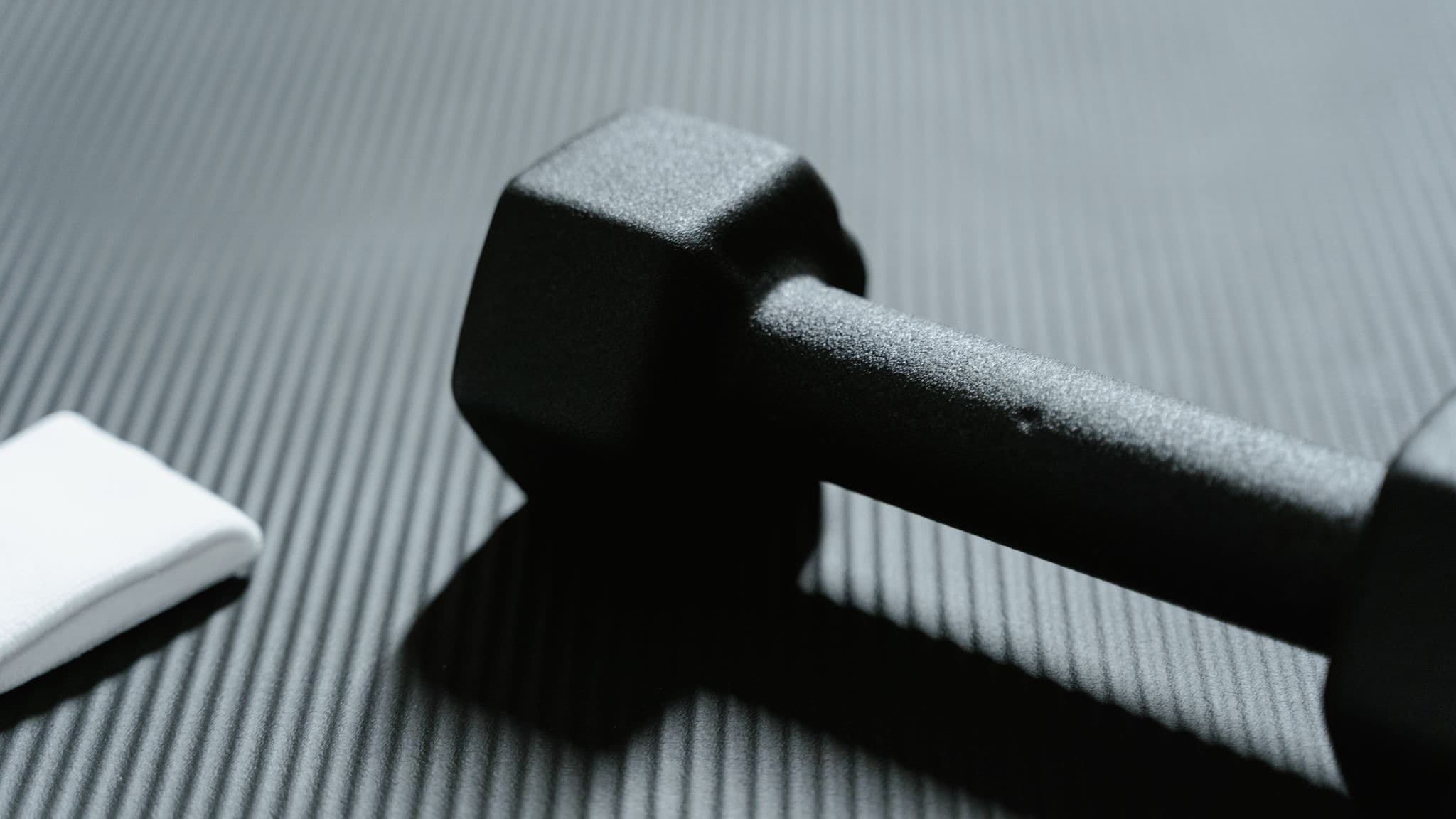
The mind-muscle connection is the practice of consciously focusing on the muscle you are trying to work as you lift, rather than just moving the weight from A to B. It is often dismissed as gym folklore, but it is real and measurable. Directing your attention to the target muscle increases how hard that muscle works during the set, and over a training block that can translate into more growth. It is not a substitute for progressive load, and it matters more at some intensities than others, but used well it is a free way to get more out of the same exercise.
TL;DR
- The mind-muscle connection means focusing internally on the working muscle rather than on the movement.
- Focusing on a muscle measurably increases its activation at light to moderate loads.
- Over an 8-week block, an internal focus produced nearly double the arm-muscle growth of an external focus in one trial.
- The effect fades at very heavy loads, where moving the weight has to take priority.
- It is a tool for hypertrophy and quality of movement, not a replacement for progressive overload.
What the mind-muscle connection actually is
In training, attentional focus comes in two flavours. An external focus is on the outcome or the implement: push the floor away, drive the bar up, move the dumbbell to the top. An internal focus is on the body itself: feel the chest squeeze, contract the lat, drive through the muscle. The mind-muscle connection is that internal focus, deliberately placing your attention inside the working muscle so that you are not just completing a rep but actively contracting the tissue you are trying to develop. For sports skills, an external focus usually wins. For building a specific muscle, the internal focus is the one that earns its place.
What the evidence shows
This is measurable in the lab, not just a feeling. Using surface electromyography, researchers found that simply telling trained lifters to focus on using a specific muscle increased that muscle's electrical activity during the bench press at loads between 20 and 60 percent of their one-rep maximum (Calatayud et al., 2016). In other words, the same weight, lifted with attention on the target muscle, made that muscle work harder. The longer-term question is whether that extra activation actually builds more muscle, and a separate trial suggests it can: over 8 weeks of resistance training, a group cued to use an internal focus gained roughly 12.4 percent in elbow flexor thickness, compared to 6.9 percent in a group using an external focus (Schoenfeld et al., 2018). That is close to double the growth from the same training, with the only difference being where attention was placed.
The same weight, lifted with your attention inside the working muscle, makes that muscle work harder.
When it helps, and when it does not
The mind-muscle connection is not a universal cheat code, and the honest picture is more useful than the hype. The activation benefit in that EMG research appeared at light to moderate loads but not at 80 percent of one-rep maximum, where the demand of simply moving a heavy weight takes over and there is little spare attention to redirect. The same study also found the effect was easier to produce in the upper body than the lower body, particularly for less experienced lifters who have not yet learned to feel their leg muscles working. The practical reading: an internal focus is most valuable on isolation and moderate-load hypertrophy work, and less relevant on a near-maximal squat or deadlift, where your job is to brace and move the load safely.
How to use it well
Applying it is simple, but it takes practice. Slow the lift down enough that you can actually feel the target muscle, especially through the lowering phase. Reduce the load if you are swinging or using momentum, because cheating the weight up is the opposite of an internal focus. Use a light warm-up set to find the muscle before you load it. And be honest about the lift: save the mind-muscle work for curls, rows, presses and machine-based hypertrophy sets, and let your heavy compound lifts be about clean, safe force production. The same deliberate connection underpins our abs activation protocols, where feeling the deep core engage before loading is the whole point.
Where it fits in good coaching
The reason the mind-muscle connection matters at Catalyst is that it is a quality lever, not a shortcut. Progressive overload, lifting more over time, is still the engine of getting stronger and building muscle. But two people can lift the same weight and get very different results depending on whether the target muscle is actually doing the work. A good coach watching every rep can see when a lift has drifted onto the wrong muscles and cue the focus back where it belongs, which is one of the quiet advantages of one-to-one personal training over training alone. The connection is free, it is evidence-backed, and applied to the right exercises it makes the same hour of training do more.
Frequently asked questions
Q. Is the mind-muscle connection real or just bro science?
It is real and measurable. Electromyography research shows that focusing on a target muscle increases its activation at light to moderate loads, and a training study found an internal focus produced nearly double the arm-muscle growth of an external focus over 8 weeks. It is evidence-backed, not folklore.
Q. Does focusing on a muscle actually make it grow more?
It can, within limits. The extra muscle activation from an internal focus appears to translate into greater hypertrophy over time, at least for isolation and moderate-load work. It does not replace progressive overload, which remains the main driver of muscle growth, but it adds quality to each set.
Q. Should I use a mind-muscle connection on heavy compound lifts?
Generally no. The activation benefit fades at very heavy loads, around 80 percent of your one-rep maximum and above, where safely moving the weight takes priority. Save the internal focus for moderate-load hypertrophy and isolation exercises, and keep heavy squats and deadlifts focused on clean, braced force production.
Q. Why can I not feel my legs working the way I feel my arms?
This is common, especially for newer lifters. Research found the mind-muscle connection is easier to develop in the upper body than the lower body. Lower-body muscles often need slower tempos, lighter loads and more practice before the connection becomes reliable, so give it time rather than assuming the technique does not work for you.
Citations
Calatayud, J., Vinstrup, J., Jakobsen, M. D., Sundstrup, E., Brandt, M., Jay, K., Colado, J. C., & Andersen, L. L. (2016). Importance of mind-muscle connection during progressive resistance training. European Journal of Applied Physiology, 116(3), 527-533. pubmed.ncbi.nlm.nih.gov/26700744
Schoenfeld, B. J., Vigotsky, A., Contreras, B., Golden, S., Alto, A., Larson, R., Winkelman, N., & Paoli, A. (2018). Differential effects of attentional focus strategies during long-term resistance training. European Journal of Sport Science, 18(5), 705-712. pubmed.ncbi.nlm.nih.gov/29533715