The Edit · Founder Insights
Trail Running in Singapore: Routes and the Strength to Run Them
A practical guide to trail running in Singapore: MacRitchie, Coast-to-Coast, Bukit Timah and Southern Ridges, plus the strength to run them.
Singapore is flatter and hotter than the terrain trail running was built for, and that changes what trail-ready means here. The routes are real: shaded reservoir loops, a 36km coast-to-coast line, one genuine climb, and elevated ridge boardwalks. The variable that catches most runners out is not distance or elevation, it is the heat and the uneven surface under tired legs. The routes are the easy half of the guide. The strength and stability to run them without getting hurt is the half nobody publishes, so that is where this one ends.
TL;DR
- MacRitchie Reservoir is the best place to start trail running in Singapore: an 11km shaded loop on forest trail and boardwalk.
- The longest option is the Coast-to-Coast Trail at roughly 36km, best run in segments.
- Bukit Timah is the only real climb, and the descent loads your legs harder than the way up.
- In Singapore, the heat and humidity, not the distance, are the variable that ends most trail runs early.
- Trail-readiness is a strength and stability question first; the descents are where trail injuries start.
| Route | Distance | Terrain | Best for |
|---|---|---|---|
| MacRitchie Reservoir loop | ~11 km | Forest trail, boardwalk, roots | First trail, shaded long runs |
| MacRitchie + TreeTop Walk | ~7 km out-and-back | Trail plus suspension bridge | Scenery, moderate effort |
| Coast-to-Coast Trail | ~36 km | Park connectors, mixed surface | Long distance, run in segments |
| Bukit Timah Nature Reserve | ~6 km loops | Steep gradients, paved and trail | Climbing strength, descents |
| Southern Ridges | ~10 km | Elevated boardwalk, ridge | Undulating intro, scenery |
| Chestnut Nature Park | ~8 km loops | Dedicated trail, technical | Technical surface practice |
Why trail running here is its own thing
Trail running in most of the world means altitude, long climbs and cold air. Singapore offers almost none of that. What it offers instead is heat, humidity and a constantly changing surface: tree roots, boardwalk edges, off-camber dirt and the occasional flight of timber steps. That combination asks something different of your body than a flat park run does. The aerobic demand is often lower because you run slower, but the demand on your ankles, feet and deep core is far higher, because every stride lands on ground that is never quite level. The honest framing is that trail readiness in Singapore is less about how far you can run and more about how well your legs cope with uneven load in the heat.
MacRitchie Reservoir, the route to start with
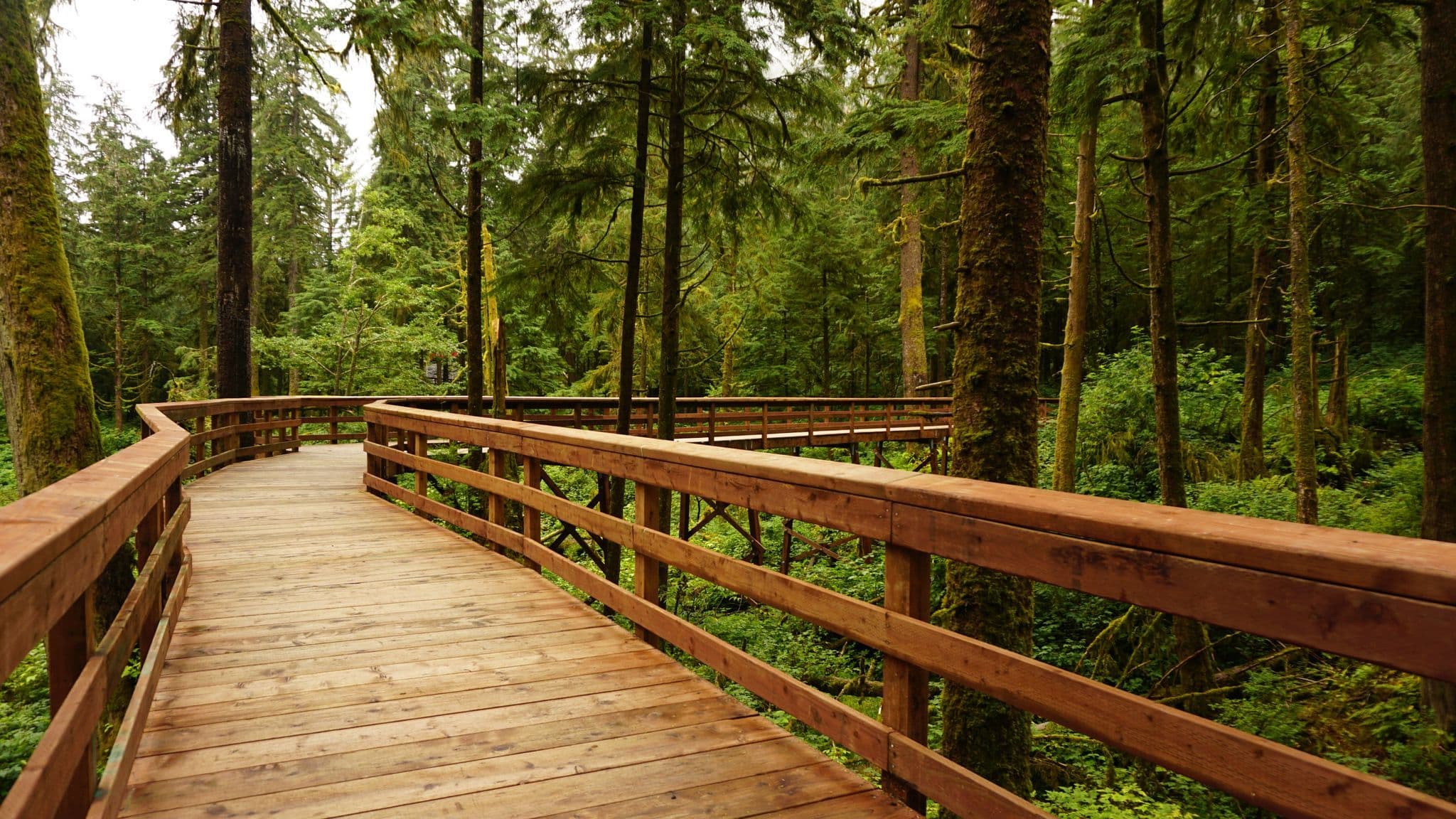
If you run one trail in Singapore, make it MacRitchie. The main reservoir loop is roughly 11km of shaded forest trail and boardwalk inside the Central Catchment Nature Reserve, and it is the most forgiving introduction to trail terrain in the country. The surface alternates between packed earth, exposed roots and timber boardwalk, so it teaches your feet to read the ground without ever turning genuinely technical. The shade matters more than it sounds: a canopy-covered route keeps you out of direct sun, which in Singapore is the difference between a sustainable long run and a heat-limited one.
The popular extension is the TreeTop Walk, a one-way 250m suspension bridge reached on a roughly 7km out-and-back from the Visitor Centre. Run it early. The boardwalk sections get busy with walkers later in the morning, and the trail shares space with macaques and the odd monitor lizard, both best given a wide berth. If you are building toward longer trail efforts, the MacRitchie loop is also the cleanest place to test whether your single-leg stability holds up over an hour of uneven ground, which is exactly what the Y-Balance test for runners is designed to measure.
Coast-to-Coast Trail, the long-distance line
When runners ask for the longest trail run in Singapore, the answer is the Coast-to-Coast Trail: roughly 36km running from Jurong Lake Gardens in the west to Coney Island in the north-east. It is not a wilderness route. Most of it threads through park connectors, gardens and nature areas, with a mixed surface that ranges from paved path to dirt trail. That makes it accessible, but the distance and the exposure are real, and very few people run the whole thing in one go. The sensible approach is to break it into segments, run them as separate long efforts, and treat the full line as a project rather than a single day out.
Bukit Timah Nature Reserve, the climb
Bukit Timah holds Singapore's highest natural point, and it is the closest thing the island has to genuine climbing terrain. The loops are short, around 6km, but the gradients are sharp, mixing a paved summit road with steeper trail paths. The climb is the obvious challenge. The part that catches runners out is the descent. Running downhill is an eccentric load, where the muscle lengthens under tension to control your speed, and it produces more muscle damage than the climb itself. A Sports Medicine narrative review of downhill running concluded that this eccentric work drives most of the exercise-induced muscle damage, with strength reductions that can persist for days. The practical takeaway: if Bukit Timah leaves you sore for three days, the descent did it, and the fix is to train your legs to handle eccentric load before you run it, not after.
Downhill running is a heavy eccentric load, so a rolled ankle or an irritated knee is common on the trails: a physiotherapist settles the acute injury, and we rebuild from a trail injury back to full descending strength so it stops recurring.
Southern Ridges, the scenic ridge run
The Southern Ridges is the most photogenic route on this list and the gentlest introduction to undulating terrain. The roughly 10km line links Mount Faber, Telok Blangah Hill and Kent Ridge via a series of elevated boardwalks, including the Henderson Waves bridge and the Forest Walk. Because most of it sits on raised timber and steel rather than dirt, the footing is predictable, which makes it a good route for getting used to running up and down gentle gradients without the ankle-rolling risk of a rooted forest trail. Run it as a recovery-paced effort or as a scenic way to add rolling elevation to your week.
Chestnut Nature Park, dedicated trail terrain
Chestnut is Singapore's only park built with dedicated trail loops, and it carries the most technical running surface in this guide. The hiking trails wind through secondary forest with roots, dips and narrow single-track that demand more foot-reading than anywhere else on the island. The loops total around 8km, and the value here is specificity: if you are training for an overseas trail race or you simply want your ankles and feet to get comfortable on properly uneven ground, Chestnut is where you build that tolerance under control.
When to run, heat windows and safety
In Singapore, the time of day matters more than the route. Direct midday sun and a high heat index turn a manageable trail run into a heat-injury risk, and the humidity blunts your body's ability to shed that load through sweat. The reliable windows are pre-dawn and the hour after sunset, when the temperature and the radiant load both drop. Carry more water than you think you need on anything over 45 minutes, and treat a pounding heart rate at an easy pace as a heat signal, not a fitness one. I go deeper into the timing logic in our guide to the best times to run in Singapore's heat.
In Singapore, the trail does not test your endurance so much as your ankles, your eccentric strength and your tolerance for heat.
The strength that keeps you on the trail
Most trail guides stop at the map. They will tell you the MacRitchie loop is 11km and the boardwalk is beautiful, and both are true. What they leave out is that the trail asks something of your body a flat park run never does. Every root you clear and every step down off a boardwalk loads your ankle and foot in a way that exposes whatever stability you have not built. Two of the four pillars we measure in the Catalyst Healthspan Assessment, Stability and Strength, are exactly what trail terrain stresses, and they are the two most runners never train directly.
The descents are where it shows up. As the downhill-running evidence makes clear, controlling your speed downhill is an eccentric demand on legs that were rarely prepared for it, which is why trail injuries cluster on the way down rather than the climb. Building eccentric leg strength and ankle stability ahead of time is the difference between a trail that feels like recreation and one that leaves you limping. That preparation is the whole point of the strength training that supports trail mileage we run for runners, and our programmes are built under the medical oversight of our co-founder Dr Luqman Haris, who holds an MBBS, so the loading respects what your body can actually tolerate. If you train outside Singapore or away from the studio, the same framework runs through our online coaching. The aim is simple: stay trail-ready into your 40s and beyond, because readiness is a preparation question, not a willpower one.
Racing on the trails
Once the routes feel like training rather than survival, the natural next step is an event. Singapore's endurance calendar runs from road marathons to trail and obstacle races, and the same strength and heat-management habits that keep you healthy on MacRitchie carry straight over to race day. If you are looking for something to point your trail block at, our roundup of local running events through 2026 is the place to start.
Frequently asked questions
Q. Where can you trail run in Singapore?
The main trail running routes are MacRitchie Reservoir in the Central Catchment, the Coast-to-Coast Trail, Bukit Timah Nature Reserve, the Southern Ridges, and Chestnut Nature Park. MacRitchie is the most popular and the easiest place to start; Chestnut has the most technical surface; Bukit Timah is the only real climb.
Q. Is MacRitchie good for running?
Yes. The roughly 11km reservoir loop is the most popular trail run in Singapore, with shaded forest trail and boardwalk that make it forgiving for newcomers. The TreeTop Walk extension adds a 250m suspension bridge on a roughly 7km out-and-back. Run it early to avoid the walking crowds and the heat.
Q. What is the longest trail run in Singapore?
The Coast-to-Coast Trail, at roughly 36km from Jurong Lake Gardens to Coney Island. It runs mostly through park connectors and nature areas on a mixed surface, and most runners tackle it in segments rather than in a single effort.
Q. When is the best time to trail run in Singapore?
Pre-dawn or the hour after sunset. Direct midday sun and high humidity make heat injury a real risk and blunt your ability to cool down. Carry water on anything over 45 minutes, and treat a high heart rate at an easy pace as a heat signal rather than a fitness one.
Q. Do I need strength training to trail run?
Yes, more than for road running. Trail surfaces load ankle stability and eccentric leg strength far more than flat ground, and the downhill sections are where most trail injuries start. Building stability and eccentric strength before you run technical or hilly trails is what keeps you on them.
Q. Is trail running harder than road running?
It is a different demand rather than simply a harder one. Trail running is usually slower, with a lower aerobic cost but a much higher load on stability, foot control and eccentric strength. In Singapore the heat and humidity add a layer that road runners on shaded routes can sometimes avoid.
Citations
Bontemps, B., Vercruyssen, F., Gruet, M., & Louis, J. (2020). Downhill running: what are the effects and how can we adapt? A narrative review. Sports Medicine, 50(12), 2083-2110. doi.org/10.1007/s40279-020-01355-z
National Parks Board (NParks). Central Catchment Nature Reserve: hiking and nature walks (MacRitchie Reservoir, TreeTop Walk). nparks.gov.sg
If the trails do catch you out, the same gradual progression applies to returning to running after injury as it does on the road.