The Edit · Founder Insights
We see running as training for the decades, not the medal
Running is one of the strongest healthspan tools we have, but the point was never the finish time. Why we train for the decades of function it protects.
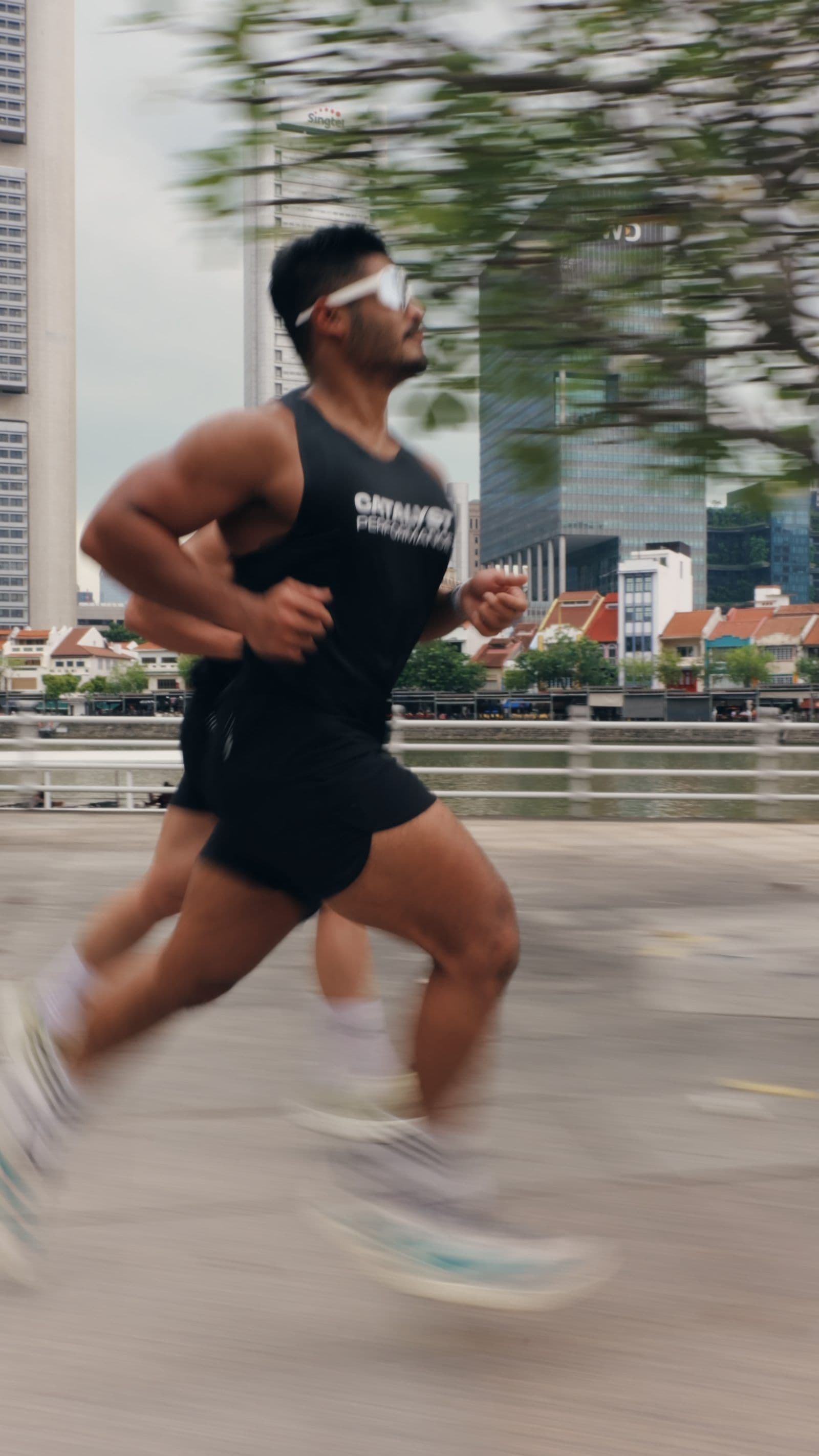
Running is one of the most powerful healthspan tools we have in Singapore, but the point was never the medal. It is the decades of function and independence that running protects, and the strength underneath it that keeps you running at all.
TL;DR
- Cardiorespiratory fitness, the capacity running builds, is one of the strongest predictors of how long and how well you live.
- The goal is not a finish time but function: staying strong, mobile and independent for decades.
- Running without the strength to absorb its load is how most runners get injured and stop.
- We treat running as one pillar of four: cardio, strength, stability and body composition.
Running is a healthspan tool, not a weight-loss tool
Start with what the evidence says. Cardiorespiratory fitness, the capacity that running builds, is one of the strongest predictors we have of how long and how well a person lives.
In a study of more than 120,000 adults undergoing treadmill testing, those with the highest cardiorespiratory fitness had far lower mortality than the least fit, and the researchers found no upper limit to the benefit.
A separate review found that any amount of running was associated with roughly a 27 per cent lower risk of dying from any cause.
This is why cardiorespiratory fitness is one of the four pillars we measure in the Catalyst Healthspan Assessment. It is not a vanity number. It sits closer to a survival number.
The finish time is not the point, the function is
Function is carrying your own luggage up a flight of stairs when the lift is out. It is getting off the floor without a hand to help you. It is staying independent in your 70s and 80s instead of slowly outsourcing your life to other people.
Most people lose this slowly, one unnoticed decade at a time, and only feel it when a task that used to be automatic becomes a decision.
Muscle mass matters too, but as a means to an end. The end is function and autonomy, not the mirror.
Running without strength is how you lose the thing you are training for
Running is repetitive load, thousands of the same stride, and without the strength and stability to absorb it, that load becomes injury.
Most runners who stop do not stop because they lost motivation. They stop because their knees, hips or shins stopped letting them.
Strength training is the most evidence-backed protection we have. A review found it reduced sports injuries to less than a third of the baseline rate, and cut overuse injuries roughly in half.
It is not a nice-to-have bolted onto a running plan. It is the thing that lets the running plan survive.
So we build running on four pillars, not one
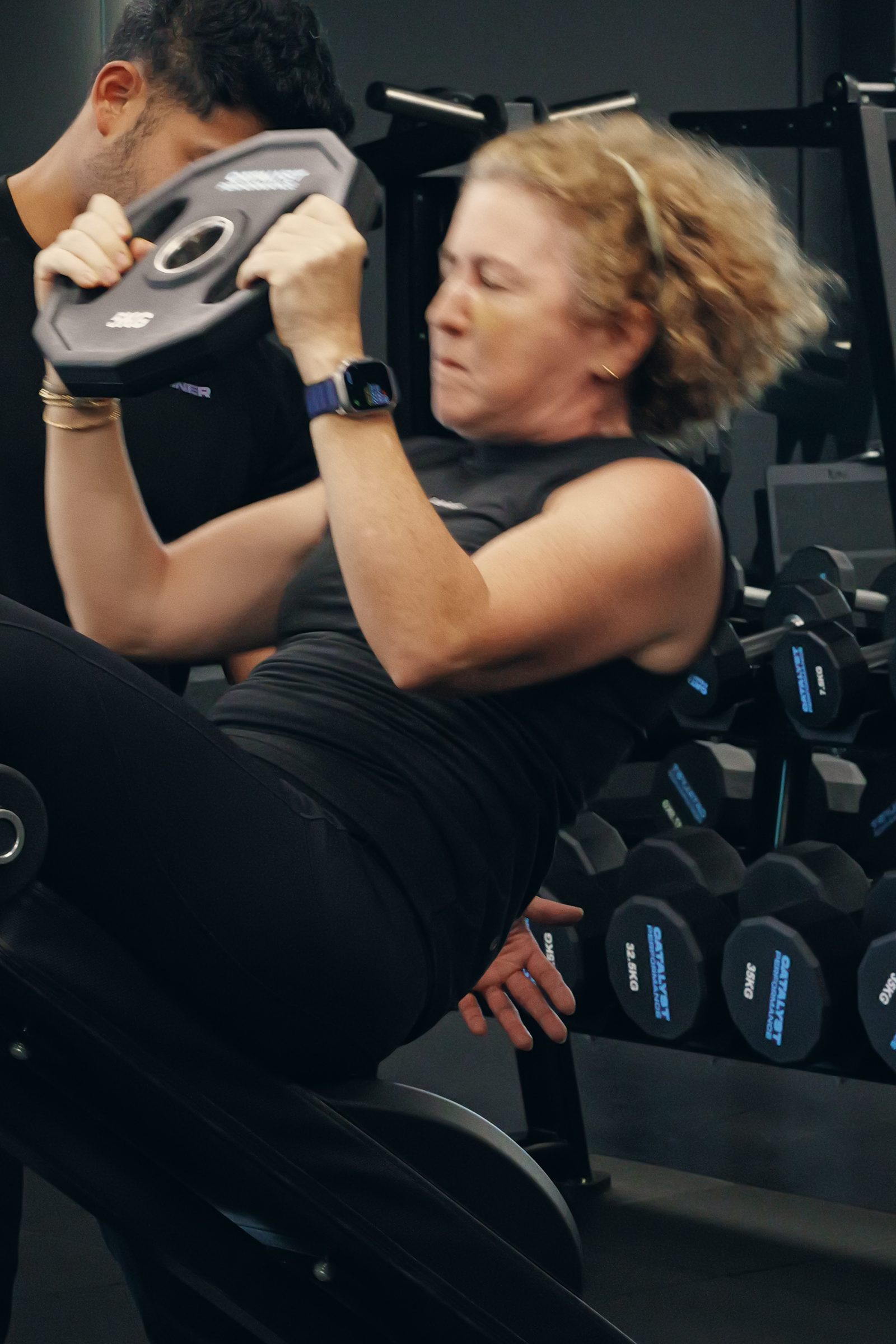
We treat running as one pillar of four: cardiorespiratory fitness, strength, stability and body composition. Running trains the first. The other three are what let you keep doing it.
Strength is the clearest example. Grip strength, a simple proxy for whole-body strength, is itself a predictor of how long you live: in a global study of nearly 140,000 people, every 5 kilogram drop in grip strength was associated with a 16 per cent higher risk of death.
Preparing for a specific race sits on top of all of it, not instead of it.
Ageing is not what slows a runner down. Dropping out of the sport is, and strength is what keeps you in it.
What this means as you train for BYD 2026
Singapore's marathon becomes the BYD Singapore International Marathon in December 2026, and thousands will spend the second half of this year training for it, as I set out in our Singapore running events guide.
Train for the race, but build for the decades. Chase the finish time if you want one, but do it on a base of strength and stability that means you are still running in ten years, not recovering from the year you pushed too hard.
The medal ends up in a drawer. The function you build stays with you.
If you want to know where you stand across the four pillars, that is what the Catalyst Healthspan Assessment is for. If you are already training, that is personal training for runners in Singapore.
Frequently asked questions
Q. Is running enough on its own for a long, healthy life?
Running is one of the best single things you can do, but it mainly trains cardiorespiratory fitness. On its own it does little for strength, and repetitive running without strength raises injury risk over time. For healthspan, running plus strength training beats either alone.
Q. Is running bad for your knees as you get older?
The evidence does not support the idea that recreational running wears out healthy knees. What causes running injuries is load the body is not prepared for, and strength training is the most reliable way to prepare for that load and reduce injury risk.
Q. How much strength training should a runner do?
For most runners, two sessions a week focused on the major movements is enough to see the protective and performance benefits. It does not need to compete with your running. It is what protects it.
Q. I am in my 40s or 50s and want to start running. Is it too late?
No. In Singapore's own marathon, men in their 40s were the fastest age group, and plenty of people take up running well into their 50s and beyond. The key is building the strength base first so the running lasts.
Citations
Mandsager K, Harb S, Cremer P, et al. (2018). Association of Cardiorespiratory Fitness With Long-term Mortality Among Adults Undergoing Exercise Treadmill Testing. JAMA Network Open, 1(6), e183605. jamanetwork.com
Pedisic Z, Shrestha N, Kovalchik S, et al. (2020). Is running associated with a lower risk of all-cause, cardiovascular and cancer mortality, and is the more the better? A systematic review and meta-analysis. British Journal of Sports Medicine, 54(15), 898-905. doi.org
Lauersen JB, Bertelsen DM, Andersen LB (2014). The effectiveness of exercise interventions to prevent sports injuries: a systematic review and meta-analysis of randomised controlled trials. British Journal of Sports Medicine, 48(11), 871-877. doi.org
Leong DP, Teo KK, Rangarajan S, et al. (2015). Prognostic value of grip strength: findings from the Prospective Urban Rural Epidemiology (PURE) study. The Lancet, 386(9990), 266-273. doi.org