
The Edit · Founder Insights
Singapore's fastest marathon runners are in their 40s
We analysed every finish time from Singapore's 2025 marathon and half. What 23,602 runners reveal about age, pace, and who is still running at 40.
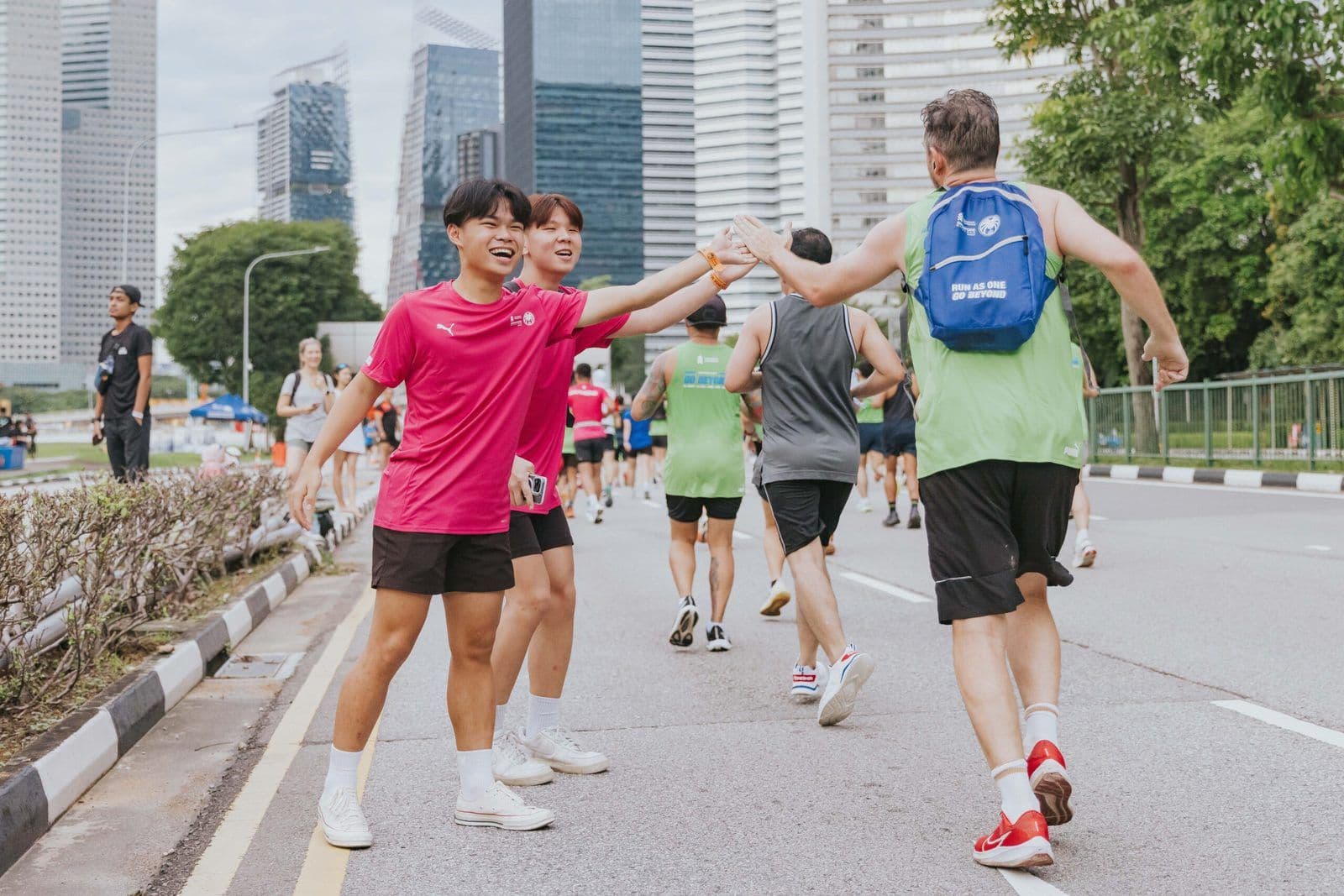
We pulled every official finish time from Singapore's last Standard Chartered Marathon, all 23,602 of them, and the clearest pattern was not the one most runners expect: the fastest age group in the marathon was men in their 40s, and most runners never make it that far.
TL;DR
- The median marathon runner took 5 hours 17 minutes, slowed by Singapore's December heat.
- Men in their 40s were the fastest age group in the marathon, ahead of the 20s and 30s.
- Participation roughly halves every decade after the 30s, so the fast 40s are a filtered, self-selected group.
- More than half the runners flew in from overseas, mostly from around the region.
- The age effect is a men and marathon story: for women it does not appear, and it fades in the half.
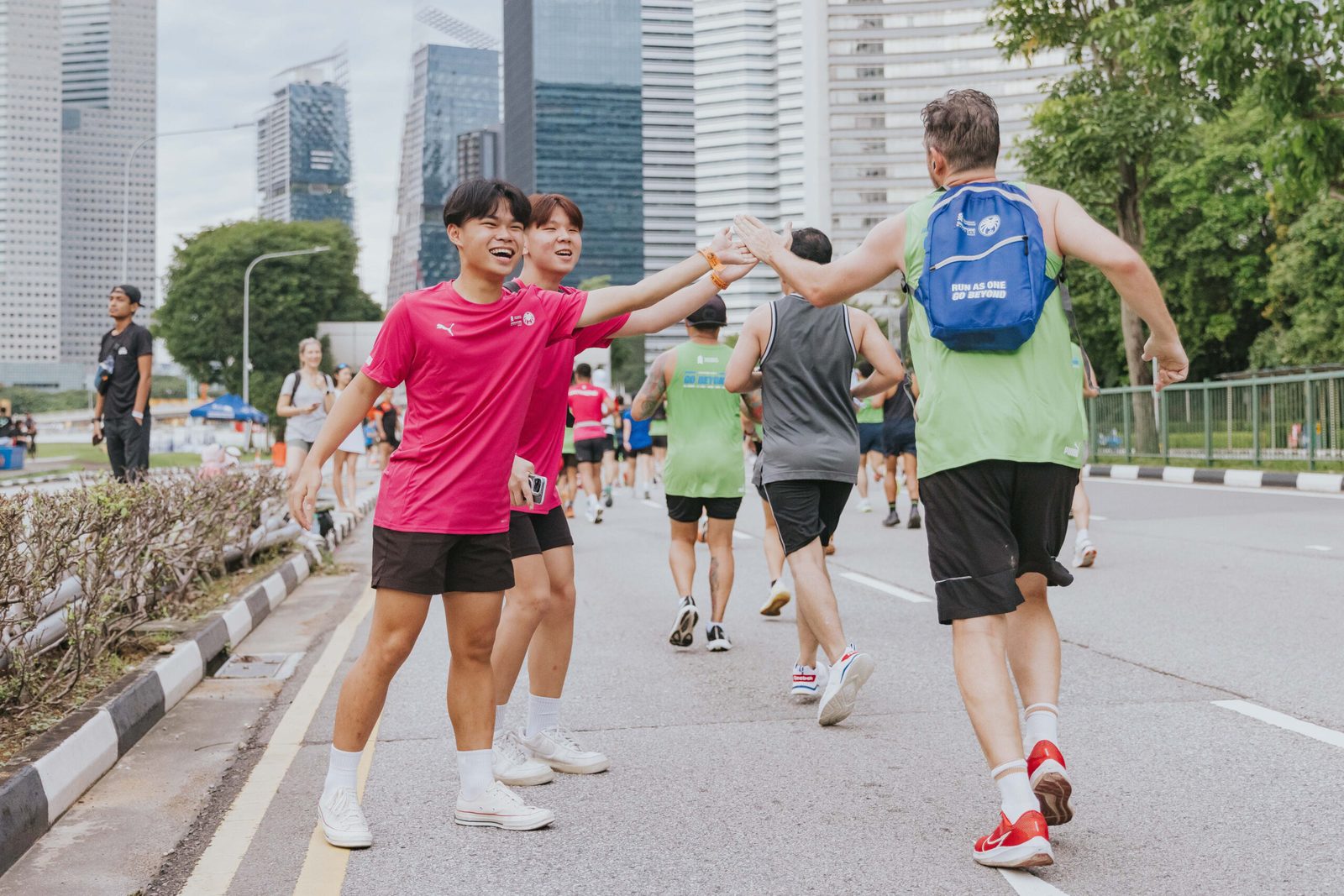
Based on 23,602 official finish times: every runner who completed the marathon (8,931) and half marathon (14,671) at Singapore's 2025 race. Not a survey, not a sample. Every single finisher.
| Race | Finishers | Winner | Median | 90th pct |
|---|---|---|---|---|
| Marathon | 8,931 | 2:15:40 | 5:16:47 | 6:47:11 |
| Half marathon | 14,671 | 1:11:01 | 2:39:11 | 3:24:11 |
How slow is a Singapore marathon, really
Most people carry a number in their head for what a marathon should take. Three hours, maybe four. The reality in Singapore is slower, and it is not because Singaporeans are unfit.
The median marathon finisher in 2025 took 5 hours 17 minutes. Half the runners took longer than that.
The reason is the weather. Singapore's marathon runs in December, at a 4.30am flag-off in the wee hours, in roughly 27 degrees and humidity above 80 per cent, which would add half an hour to a race in London or Tokyo. Compare your time against other runners in the same heat, not an overseas chart.
The fastest runners are in their 40s
Sort the marathon by age and the fastest group is not the 20s. Among all runners, men in their 40s posted the fastest median of any male age group, and held the highest rate of breaking four hours.
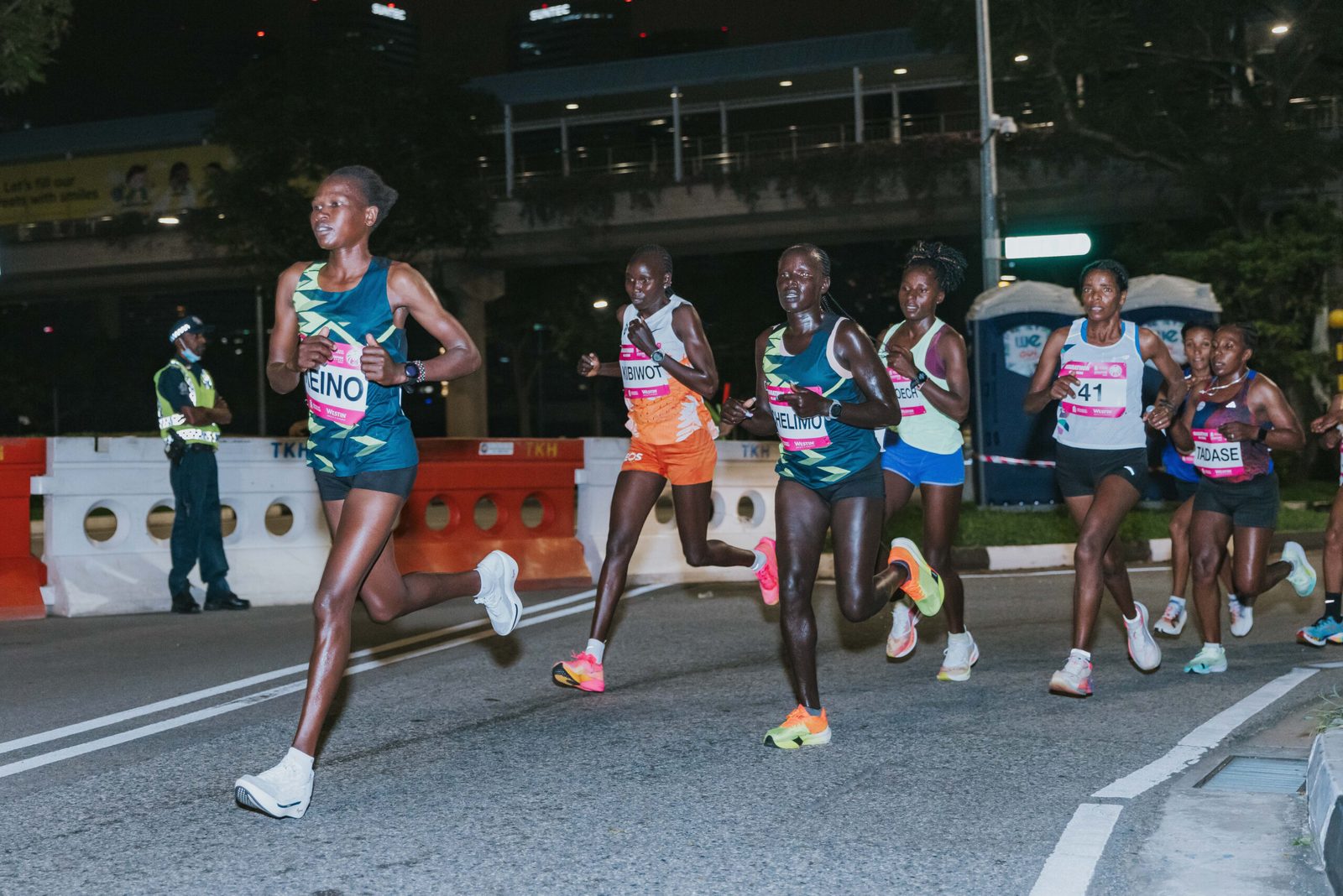
Median marathon finish time by age and gender, Singaporeans:
| Age | Men | Men median | Women | Women median |
|---|---|---|---|---|
| 20-29 | 1,307 | 5:23:14 | 270 | 5:38:04 |
| 30-39 | 975 | 5:10:10 | 180 | 5:21:01 |
| 40-49 | 612 | 5:09:14 | 142 | 5:28:04 |
| 50-59 | 445 | 5:22:55 | 57 | 5:34:54 |
| 60-69 | 137 | 5:48:37 | 22 | 5:50:48 |
Read the men's column. Singaporean men in their 40s ran a median of 5 hours 9 minutes, a full 14 minutes faster than men in their 20s. This is not ageing making people faster. It is selection: the runners still racing at 40 are the ones who trained consistently and stayed durable.
One honest caveat, and it is why we never bunch the genders. This is a men's marathon effect. Women in their 40s ran almost the same median as women in their 20s, and in the half marathon the age edge fades for men and reverses for women.
The drop-off nobody plans for
If the 40s are the fastest, why do so few people talk about it? Because most runners never get there. Participation drops sharply with age, and the drop starts early.
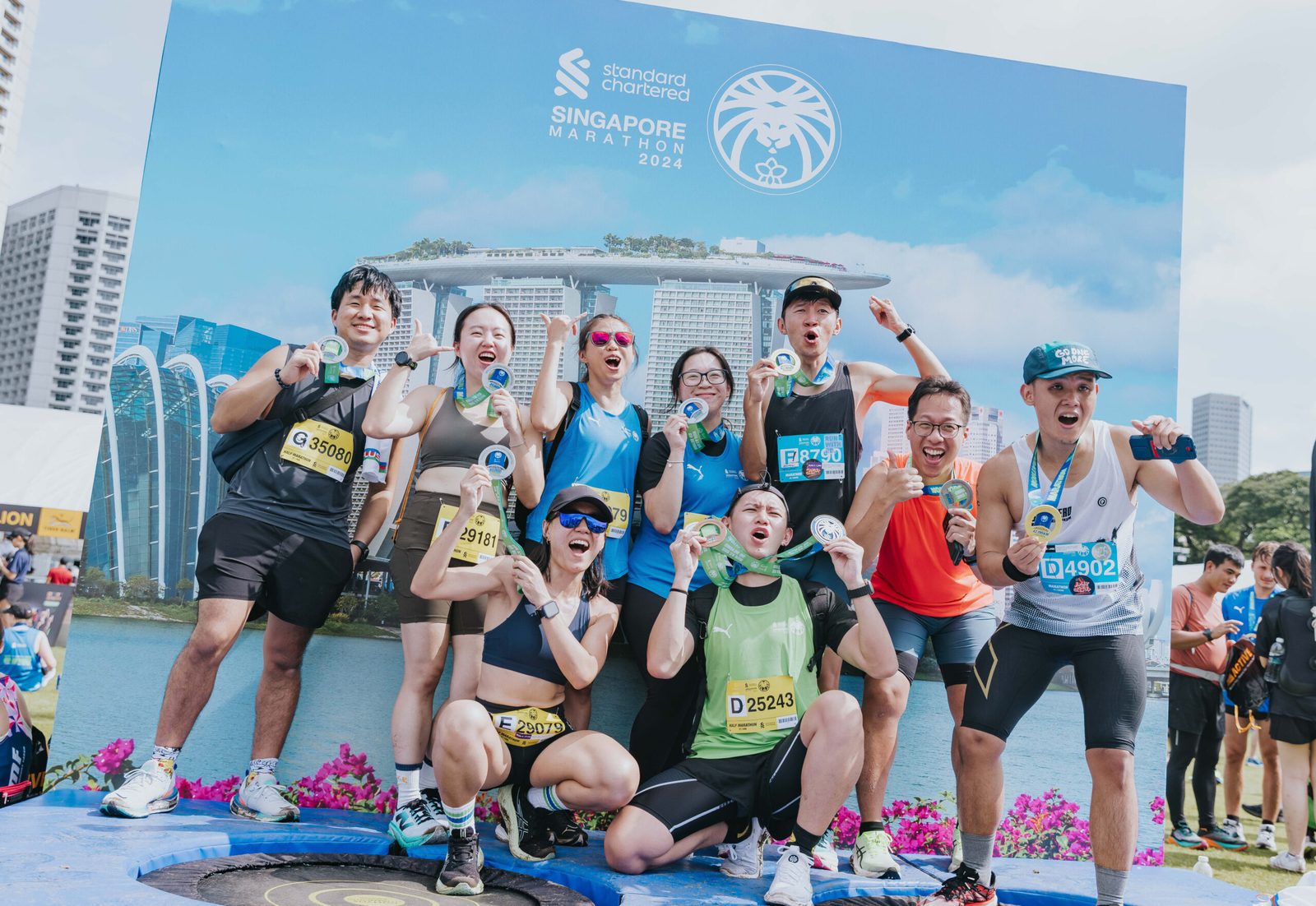
Marathon participants by age and gender, with the drop-off versus the 20s:
| Age | Men | Men vs 20s | Women | Women vs 20s |
|---|---|---|---|---|
| 20-29 | 1,969 | 1.00x | 444 | 1.00x |
| 30-39 | 2,264 | 1.15x | 542 | 1.22x |
| 40-49 | 1,737 | 0.88x | 420 | 0.95x |
| 50-59 | 913 | 0.46x | 179 | 0.40x |
| 60-69 | 252 | 0.13x | 39 | 0.09x |
Participation peaks in the 30s, then roughly halves every decade. By their 60s, only one man runs the marathon for every eight in their 20s. The 40s look fast partly because the people still there are the ones who kept training.
Men and women, kept separate
Bunching the genders hides more than it shows, so we split every cut. The gender gap in the marathon is real, and it moves with age.
| Age | Men median | Women median | Gap |
|---|---|---|---|
| 20-29 | 5:23:14 | 5:38:04 | +15 min |
| 30-39 | 5:10:10 | 5:21:01 | +11 min |
| 40-49 | 5:09:14 | 5:28:04 | +19 min |
| 50-59 | 5:22:55 | 5:34:54 | +12 min |
| 60-69 | 5:48:37 | 5:50:48 | +2 min |
The gap is widest in the 40s and nearly closes by the 60s. For women the healthspan case for strength training is stronger still, because the years around menopause accelerate the loss of both muscle and bone.
More than half the runners flew in
One number reframes the whole event. Singaporeans were a minority of the runners: just under half the marathon and 45 per cent of the half were locals.
| Race | Singaporean | Overseas | SG share | SG median | Overseas median |
|---|---|---|---|---|---|
| Marathon | 4,272 | 4,659 | 48% | 5:20:30 | 5:13:17 |
| Half marathon | 6,654 | 8,017 | 45% | 2:38:42 | 2:39:42 |
After locals, the biggest marathon contingents came from the Philippines, Malaysia, Indonesia and Japan, and in the half marathon Indonesia alone sent nearly 1,800 runners.
| Nation | Runners | Share |
|---|---|---|
| Singapore | 4,272 | 48% |
| Philippines | 866 | 10% |
| Malaysia | 616 | 7% |
| Indonesia | 613 | 7% |
| Japan | 530 | 6% |
| China | 413 | 5% |
The overseas marathon runners were slightly faster at the median than the locals, which fits the profile of a committed travelling runner who trains hard for a destination race.
What this means as you train for BYD 2026
Pull the threads together. The heat makes this a hard race, the people still fast in their 40s are the ones who lasted, and most runners quietly drop out before they get there. The lesson is durability, not talent.
Running is repetitive load, and without the strength and stability to absorb it, that load becomes injury, and injury is the most common reason people stop. A review found that strength training reduced sports injuries to less than a third of the baseline rate, and cut overuse injuries roughly in half. For the build itself, our 12-week marathon training plan for Singapore heat turns these findings into a schedule.
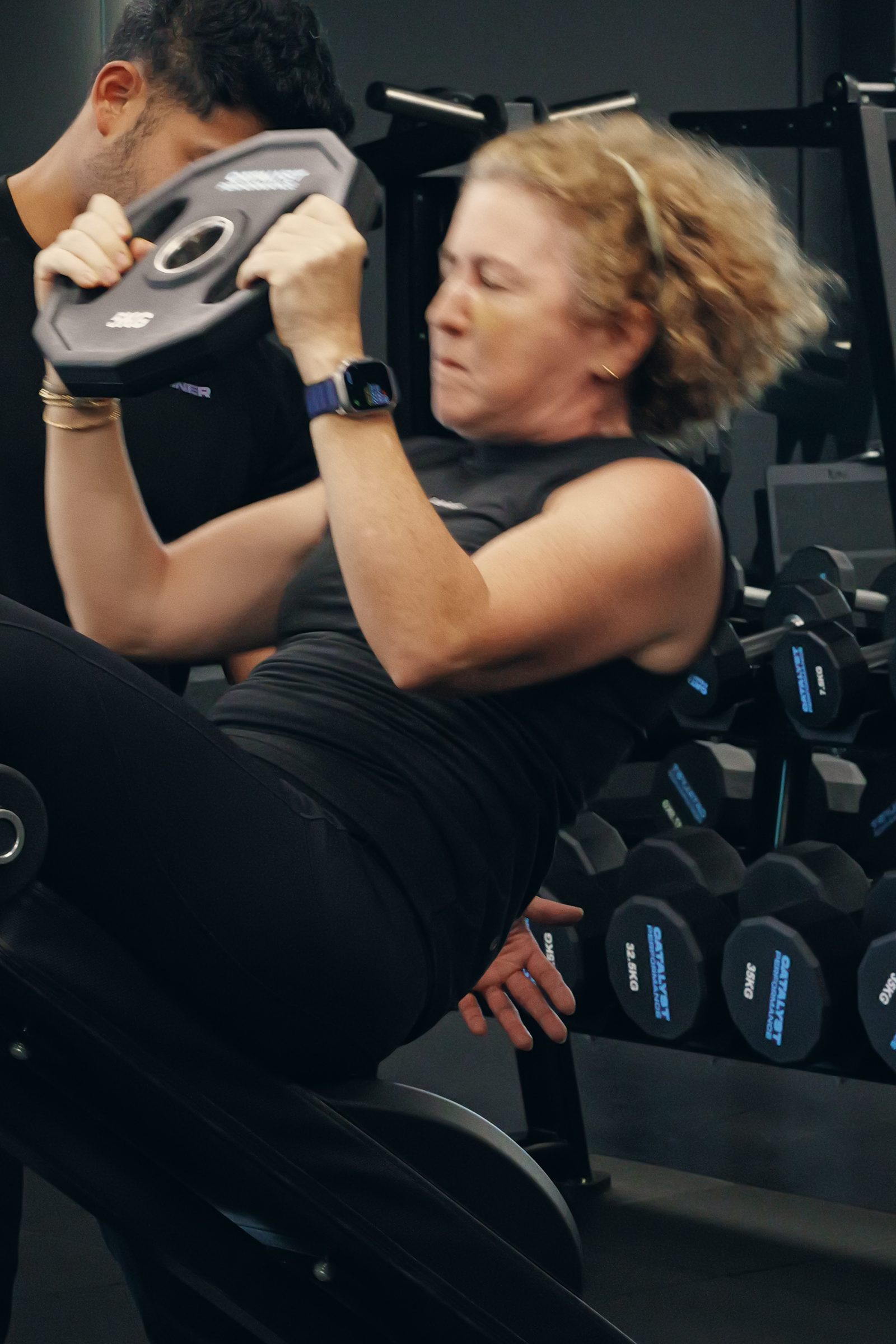
That is why we treat running as one pillar of four: cardiorespiratory fitness, strength, stability and body composition. If you want to know where you stand across all four, that is what the Catalyst Healthspan Assessment measures. If you are already training for December, that is personal training for runners in Singapore. For the bigger picture, start with why we train for the decades, not the medal.
How we did this
This analysis is based on the complete official chip-timed results of the 2025 Standard Chartered Singapore Marathon, covering the full marathon and half marathon. We compiled 23,602 finisher records, de-duplicated by bib number, each carrying gender, age category, nationality and finish time, then aggregated them into medians and percentiles by group. No individual runner is named. Nationality reflects each runner's representing country, a close but not perfect proxy for citizenship. Race photos via singaporemarathon.com. Data compiled in July 2026.
Frequently asked questions
Q. What was the average marathon time at the Singapore Marathon 2025?
The median marathon finisher took 5 hours 17 minutes, and the median half marathon finisher took 2 hours 39 minutes. Singapore's heat and humidity make finish times slower than cooler overseas races, so the fair comparison is other runners in the same conditions.
Q. What age group is fastest at the marathon in Singapore?
Men in their 40s were the fastest age group, with a median around 5 hours 5 minutes and the highest rate of breaking four hours. The effect is specific to men and to the full marathon distance.
Q. How many runners were Singaporean?
Just under half. Singaporeans made up 48 per cent of marathon finishers and 45 per cent of half marathon finishers. The largest overseas groups came from the Philippines, Malaysia, Indonesia and Japan.
Q. Is a five-hour marathon slow?
Not in Singapore. It is the median, which means half the runners are slower. Comparing yourself to a cooler-climate time chart will mislead you. Compare against runners who ran the same race in the same heat.
Citations
Lauersen JB, Bertelsen DM, Andersen LB (2014). The effectiveness of exercise interventions to prevent sports injuries: a systematic review and meta-analysis of randomised controlled trials. British Journal of Sports Medicine, 48(11), 871-877. doi.org