The Edit · Founder Insights
Is a Personal Trainer Worth It? What the Research Shows
What controlled trials found when people trained with a personal trainer versus alone, who benefits most, and how to judge the return.
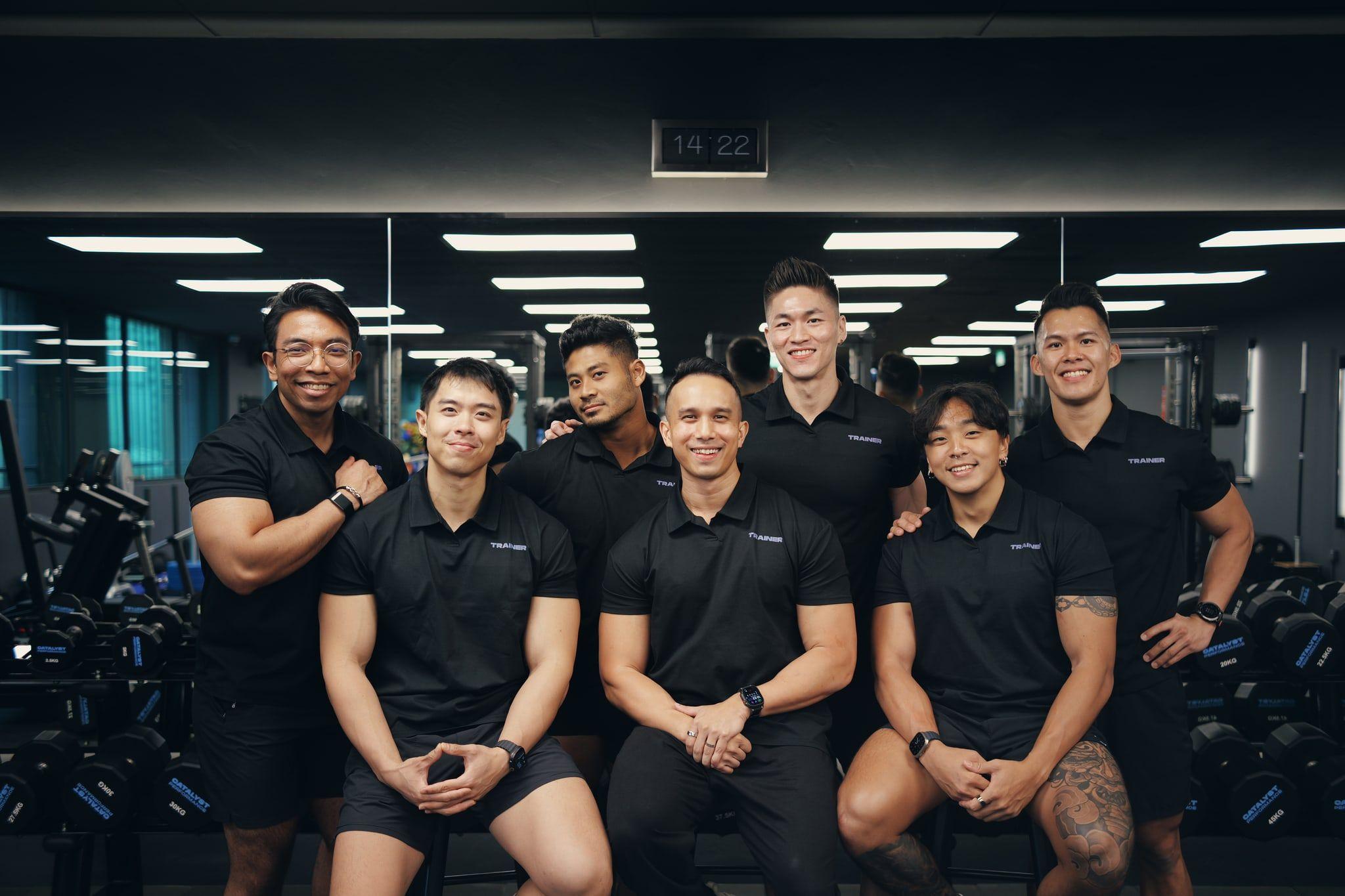
A personal trainer is worth it when you are not progressing on your own, are new to lifting, are over 50 or have a health condition. Controlled trials show supervised training produces heavier loads, faster progression and more muscle than training alone. For experienced, steadily progressing lifters the extra benefit is smaller. Here is what personal training changes.
| Question | What the research found | What it means for you |
|---|---|---|
| Do you lift heavier with a trainer? | Women training with a trainer chose about 51% of their maximum versus 42% alone | Most people working alone train too light to change much |
| Do you get stronger faster? | Supervised men raised training loads faster and ended 12 weeks stronger | Progression is where solo training usually stalls |
| Do you build more muscle? | Gym members with a trainer gained 1.3 kg lean mass in 12 weeks; self-directed members gained none | Structure, not effort, made the difference |
| Does it matter more with age? | Supervised training beat unsupervised for strength and balance in adults over 65 | The case for a coach grows after 50 |
| Do you turn up more often? | Attendance was similar, about 81%, in supervised and unsupervised older adults | The value is in the quality of each session, not only attendance |
TL;DR
- Trials comparing supervised and self-directed training find heavier loads, faster progression and larger strength and muscle gains with a trainer.
- The benefit is largest for beginners, adults over 50 and anyone whose progress has stalled.
- Attendance is not the main difference; the quality and progression of each session is.
- Experienced lifters who are still progressing may need a coach only for periodic programming and re-testing.
- A trainer is worth what you pay only if they measure you, progress you and re-test you.
Most articles on whether a personal trainer is worth it list benefits that sound right but are hard to check: motivation, accountability, expertise. This post takes a narrower approach. It looks at the controlled studies that compared people training with a trainer against people doing the same programme alone, and asks what the trainer actually changed.
The question matters in Singapore because the spend is real. Sessions across the market run from roughly SGD 100 to SGD 350, as our guide to personal trainer costs sets out. At that price, "it helps with motivation" is not a good enough reason. You want to know what you are buying, and whether you are the kind of person who benefits most.
We run a 1:1 training studio in Manulife Tower, so we have an obvious interest in the answer. That is why this post relies on the trials rather than on our opinion, and why section 7 covers the people who may not need a trainer at all. If you are already deciding between trainers, our guide on how to choose a personal trainer is the companion piece.
1. You lift heavier than you would alone
The most consistent finding in this research is also the simplest: people training alone pick weights that are too light to drive much change.
A study by Ratamess and colleagues (2008) asked 46 resistance-trained women to choose the weight they normally used for ten repetitions on four exercises, then tested their one-repetition maximum. Women who trained with a personal trainer chose an average of about 51% of their maximum. Women who trained alone chose about 42%.
The trainer group was also stronger on three of the four exercises, and rated their sessions as harder. That is the pattern in many gyms: people training alone settle into a comfortable weight, repeat it for months and wonder why nothing changes. Strength and muscle respond to effort close to your limit, and loads in the low 40s as a percentage of maximum are usually too light for that, unless the set is taken very close to failure.
A good trainer closes the gap in two ways. They choose the starting load from a test rather than a guess, and they read each set: bar speed, form and how many more repetitions you could have managed. When the last two repetitions look easy, the weight goes up.
In our studio, the first session sets loads from a structured assessment, and the Catalyst training app records every set so the next session starts from the last one, not from memory. Our post on the minimum effective dose of strength training explains why intensity matters more than time spent.
The bonus insight: if you train alone, record the weight and repetitions for every working set. A written log is the cheapest form of supervision there is, and it usually reveals months of identical sessions.
2. Progression stops stalling
Choosing a heavier weight on day one is useful; increasing it steadily for months is what produces results. That is where self-directed training most often stalls.
In a 12-week trial by Mazzetti and colleagues (2000), moderately trained young men were randomly assigned to the same periodised programme, either supervised by a personal trainer or done alone. Both groups got stronger. The supervised group, however, increased its training loads at a significantly faster rate, used heavier loads in the second half of the programme and finished with greater maximal squat and bench press strength.
Note what this means. Both groups had the same written programme. The difference was not knowledge of what to do; it was how aggressively and consistently the loads moved upwards when someone was watching and adjusting.
This is the part of coaching most people underrate. A programme on paper says to add weight when you can. A coach decides when you can, and is usually right more often than you are, because they are not the one feeling the effort of the last repetition.
Progression also needs planning around real life. Late client calls, travel and poor sleep all affect what you can lift on a given day. A coach adjusts the session to the day you are having, rather than abandoning the plan, and that consistency is what compounds over a year. For the difference between a general personal trainer and a specialist, see our piece on strength and conditioning coaches versus personal trainers.
3. More muscle, not just strength
Strength can rise quickly through better technique alone. Muscle mass is harder to change, which makes it a better test of whether supervision matters.
A randomised trial in a fitness club, by Storer and colleagues (2014), assigned 34 male members aged 30 to 44 to either train with a personal trainer on a structured programme or continue training on their own. Both groups trained three days a week for 12 weeks. Lean body mass, measured by DEXA, rose by 1.3 kg in the trainer group and did not change in the self-directed group.
The trainer group also improved chest press strength by 42% against 19%, leg power by 6% against under 1% and VO2 max by 7% against no change. Leg press strength rose in both groups, by 38% and 25%, a difference that was not statistically significant.
This study matters because it reflects how most people actually train: as gym members who already exercise, not as untrained volunteers in a laboratory. The self-directed men were not lazy; they were training three days a week. Their sessions simply did not add up to change.
Lean mass is one of the measures that matters most for long-term health, which is why we track it at every review alongside strength. Our guide to reading an InBody result explains how skeletal muscle mass is reported and what a real change looks like.
The bonus insight: a 12-week study captures the early phase. Over a year, the gap between structured and unstructured training tends to widen, because progression compounds.
4. Closer supervision, better results
If supervision helps, does the amount of supervision matter? One trial answered this directly by varying how many people each coach looked after.
Gentil and Bottaro (2010) randomly assigned 124 untrained young men to an identical 11-week programme, coached either at a ratio of one coach to five trainees or one coach to 25. Both groups increased bench press strength, by about 16% with closer supervision and about 10% with looser supervision. Knee extensor strength rose significantly only in the closely supervised group, by about 12%.
The authors noted that more people in the closely supervised group trained at maximum intensity, and that attendance and training volume did not differ. The difference again came from the quality of each set rather than the amount of work.
The lesson for anyone comparing options is that "coached" covers a wide range. A large group class with one instructor, a small group session and a 1:1 session are different products. Our comparison of 1:1 personal training and small group training covers the trade-offs, and our personal training service is strictly one coach and one client for the full hour.
There is no single right ratio for everyone. An experienced lifter may do well in a small group; a beginner, someone returning from injury or someone learning to lift heavy usually benefits from a coach watching every repetition.
5. A bigger payoff after 50
The case for supervision grows stronger with age, for reasons that go beyond strength.
A systematic review by Lacroix and colleagues (2017) pooled 11 studies of healthy adults aged 65 and over and found supervised balance and resistance training outperformed unsupervised training for muscle strength and power and for several measures of balance. Programmes with 10 to 29 more supervised sessions than the comparison group produced the largest effect on strength and power.
A larger review of 34 randomised trials and 2,830 older adults, by Gómez-Redondo and colleagues (2024), found supervised exercise produced greater improvements in knee extension strength, sit-to-stand performance, walking speed and lean mass, by about 1 kg, than unsupervised exercise. Only the strength result held up in every sensitivity analysis, and the authors called for more high-quality trials, but the direction was consistent.
After 50, loss of muscle and balance carries real consequences: falls, fractures and loss of independence. That makes the margin from supervision more valuable, and the cost of poor technique under load higher. A coach also catches the early signs that a joint needs a different exercise rather than more rest.
Our post on personal training for seniors covers what to look for after 60, and our guide to sarcopenia explains why muscle loss is the quiet risk that most adults underestimate.
6. Attendance is not the point
The usual sales pitch for personal training is accountability: you will turn up because someone is waiting. The research is less clear on this than the marketing suggests.
In the 2024 review of older adults, attendance averaged about 81% in both supervised and unsupervised programmes. In the Gentil trial, attendance did not differ between closely and loosely supervised groups. People enrolled in a structured study tend to attend whichever group they are in.
There is a further reason to be careful with the accountability argument. If the only reason you train is that someone is waiting, the habit tends to disappear when the package ends. A good trainer builds the habit and the skills so that you could keep training if you stopped paying, which is the opposite of a dependency.
That does not make accountability worthless. Real life is not a study, and a booked session is harder to skip than a vague plan. But the stronger argument for a trainer is what happens inside the session: the right load, the right progression and the right exercise for your body on that day.
This shifts the question you should ask before you buy. Not "will this make me turn up?" but "will each hour be better than the hour I would have done alone?" If the answer is no, the attendance alone is an expensive alarm clock.
If attendance is your only problem, a cheaper structure may work: a training partner, a booked class or an online programme with check-ins, such as our online coaching, which suits people who already know how to lift.
7. When you may not need a personal trainer
A personal trainer is not the right purchase for everyone, and saying so is part of giving useful advice.
You may not need regular 1:1 sessions if you have trained consistently for several years, your lifts and body composition are still improving, you log your training and change it when progress slows, and you have no injury or health condition that needs careful management. Most of the trials above found smaller differences in trained participants than in beginners.
Even then, periodic coaching can be worth it. A block of sessions every few months to review technique, rewrite the programme and re-test is a cost-effective middle ground. So is a specialist assessment before a specific goal, such as a race or a return from injury.
On the other hand, a trainer is usually worth it if you are new to lifting, returning after a long break, over 50, managing a condition such as back pain, high blood pressure or diabetes, or have trained for a year without visible change. In each case the trials point the same way: structure and supervision produce more than effort alone.
The honest middle answer: most people benefit most from a concentrated period of coaching at the start, then a lighter cadence once the habits and technique are in place.
A practical test helps. Write down your main lifts from six months ago and today. If the numbers have not moved, or you cannot find them, the evidence suggests a coach will add more than another six months of the same routine.
8. The value over decades
A 12-week trial measures strength and muscle. The bigger reason to train well is what strength does for health over decades.
A meta-analysis of 16 cohort studies by Momma and colleagues (2022) found that muscle-strengthening activity was associated with a 10 to 17% lower risk of all-cause mortality, cardiovascular disease, total cancer and diabetes, independent of aerobic activity. The largest reduction in mortality risk appeared at about 30 to 60 minutes of strength training a week.
That is a small weekly dose. The challenge is not finding the time but making those minutes count, year after year, without injury. That is the job a good trainer does.
This is why we frame training around healthspan first. The look comes with the work, and it is a welcome stop on the way, but the goal is a body that still carries shopping up stairs at 75. Our strength training after 50 guide covers what that work looks like later in life.
Measured this way, a trainer is a long-term investment, and the right comparison is not the cost per session but the cost of decades of easily avoided weakness.
9. Is your trainer delivering?
The trials compared good, structured supervision with self-directed training. They did not test a trainer who counts repetitions and chats. So the final question is whether the trainer you are paying for actually does what the research credits.
Four checks cover most of it. First, did they measure you before programming, with real tests rather than a questionnaire? Second, do your loads and repetitions go up in a planned way, and is it written down? Third, do they re-test on a fixed schedule and show you the result? Fourth, does the programme change when your results or your life change?
Our own personal training programme is built around those checks. Every client starts with the 4-Pillar Healthspan Assessment (body composition, Heart Rate Recovery, stability and strength), trains on a written progression and re-tests at a 16-week Checkpoint. You can see what a first visit involves on what to expect at your consultation.
If your current trainer cannot show you a number that has changed in the last four months, ask why. A good coach welcomes the question.
Watch for the warning signs too. Sessions that look the same every week, a programme that lives only in the trainer's head, no record of the weights you lifted and no re-test date are all signs that you are paying for company rather than coaching. None of the trials above tested that kind of session, and none of their results apply to it.
Good coaching is also visible in what the trainer says no to. A coach who swaps an exercise because your shoulder is irritated, or holds a load steady because your sleep has collapsed during a heavy work week, is protecting the long-term progression that makes the sessions worth paying for.
How to decide whether a trainer is worth it for you
Start with your situation, not the price list. If you are new to lifting, over 50, managing a health condition or stuck after a year of training, the evidence favours supervision, and a block of 1:1 sessions is likely to pay back.
If you are an experienced, steadily progressing lifter, consider a short block of coaching for an assessment and programme review, then train on your own with a log and re-test every few months.
Either way, begin with a measured baseline. Our 4-Pillar Healthspan Assessment shows where you stand on the four measures that matter most for long-term health, and gives you something concrete to judge any trainer against. Prices for ongoing sessions sit on our pricing page.
Most people training alone are not short of effort; they are short of progression.
Frequently asked questions
Q. Is a personal trainer worth the money?
For most beginners, adults over 50 and anyone who has stalled, yes. Controlled trials show supervised training produces heavier loads, faster progression and more lean mass than the same programme done alone. It is worth the money only if the trainer measures you, progresses you and re-tests you.
Q. How many sessions a week with a personal trainer do I need?
Two sessions a week is a sensible minimum for strength and muscle, and three suits most people with a clear goal. Experienced lifters can train with a coach once a week or less and follow the programme alone on other days.
Q. Can I get the same results without a personal trainer?
Some people can, especially experienced lifters who log every session and progress their loads deliberately. Most people training alone choose lighter weights and progress more slowly, which is why supervised groups tend to finish trials stronger.
Q. How long should I use a personal trainer?
Long enough to learn the main lifts, establish a progression and see a measurable change, which usually takes at least three to four months. After that, many people move to fewer sessions with periodic re-testing.
Q. Is a personal trainer worth it for older adults?
Yes, the evidence is strongest here. Reviews of adults over 60 and 65 found supervised training improved strength, balance and lean mass more than unsupervised programmes, and both approaches were safe.
A personal trainer is worth it when they change what happens in each session: the load, the progression and the exercise choice. That is what the trials measured, and it is what you should expect. If you are weighing options now, read our guide on choosing a personal trainer, then look at how our 1:1 personal training is structured.
To start with a measured baseline rather than a guess, book the 4-Pillar Healthspan Assessment at our Manulife Tower studio. You leave with a written report on body composition, Heart Rate Recovery, stability and strength, and a clear view of whether coaching would help.
Citations
- Ratamess NA, Faigenbaum AD, Hoffman JR, Kang J. Self-selected resistance training intensity in healthy women: the influence of a personal trainer. Journal of Strength and Conditioning Research. 2008;22(1):103-111. doi:10.1519/JSC.0b013e31815f29cc
- Mazzetti SA, Kraemer WJ, Volek JS, Duncan ND, Ratamess NA, Gómez AL, Newton RU, Häkkinen K, Fleck SJ. The influence of direct supervision of resistance training on strength performance. Medicine and Science in Sports and Exercise. 2000;32(6):1175-1184. doi:10.1097/00005768-200006000-00023
- Storer TW, Dolezal BA, Berenc MN, Timmins JE, Cooper CB. Effect of supervised, periodized exercise training vs. self-directed training on lean body mass and other fitness variables in health club members. Journal of Strength and Conditioning Research. 2014;28(7):1995-2006. doi:10.1519/JSC.0000000000000331
- Gentil P, Bottaro M. Influence of supervision ratio on muscle adaptations to resistance training in nontrained subjects. Journal of Strength and Conditioning Research. 2010;24(3):639-643. doi:10.1519/JSC.0b013e3181ad3373
- Lacroix A, Hortobágyi T, Beurskens R, Granacher U. Effects of supervised vs. unsupervised training programs on balance and muscle strength in older adults: a systematic review and meta-analysis. Sports Medicine. 2017;47(11):2341-2361. doi:10.1007/s40279-017-0747-6
- Gómez-Redondo P, Valenzuela PL, Morales JS, Ara I, Mañas A. Supervised versus unsupervised exercise for the improvement of physical function and well-being outcomes in older adults: a systematic review and meta-analysis of randomized controlled trials. Sports Medicine. 2024;54(7):1877-1906. doi:10.1007/s40279-024-02024-1
- Momma H, Kawakami R, Honda T, Sawada SS. Muscle-strengthening activities are associated with lower risk and mortality in major non-communicable diseases: a systematic review and meta-analysis of cohort studies. British Journal of Sports Medicine. 2022;56(13):755-763. doi:10.1136/bjsports-2021-105061